In the grand scheme of things, spending a month on the road in Europe with a GPS, mobile phone, and a credit card isn’t exactly pushing the boundaries of adventure travelling.
Still, I wanted to try the lifestyle – for a month anyway – and see what it was like to be a motorcycle nomad and keep travelling. The longest I spent in any one place was three nights, and I did this twice – Split in Croatia and the Black Forest in Germany. In both cases, three nights were enough, and I could have been talked into leaving a day early if I hadn’t already paid for the bed.
So, after a month on the road, what did I learn, and perhaps more importantly, does any of it matter? Let’s find out.
Why
That question popped into my head about halfway through the month. Why am I doing this? I wasn’t fed up or despondent but noticed I had little interest in looking around towns or visiting tourist spots.
It was more the challenge of reaching the destination for the day and the journey that inspired me. Perhaps that is why I rode for three days in torrential rain when I could have parked up and watched the rain fall from the warmth of a guest house.
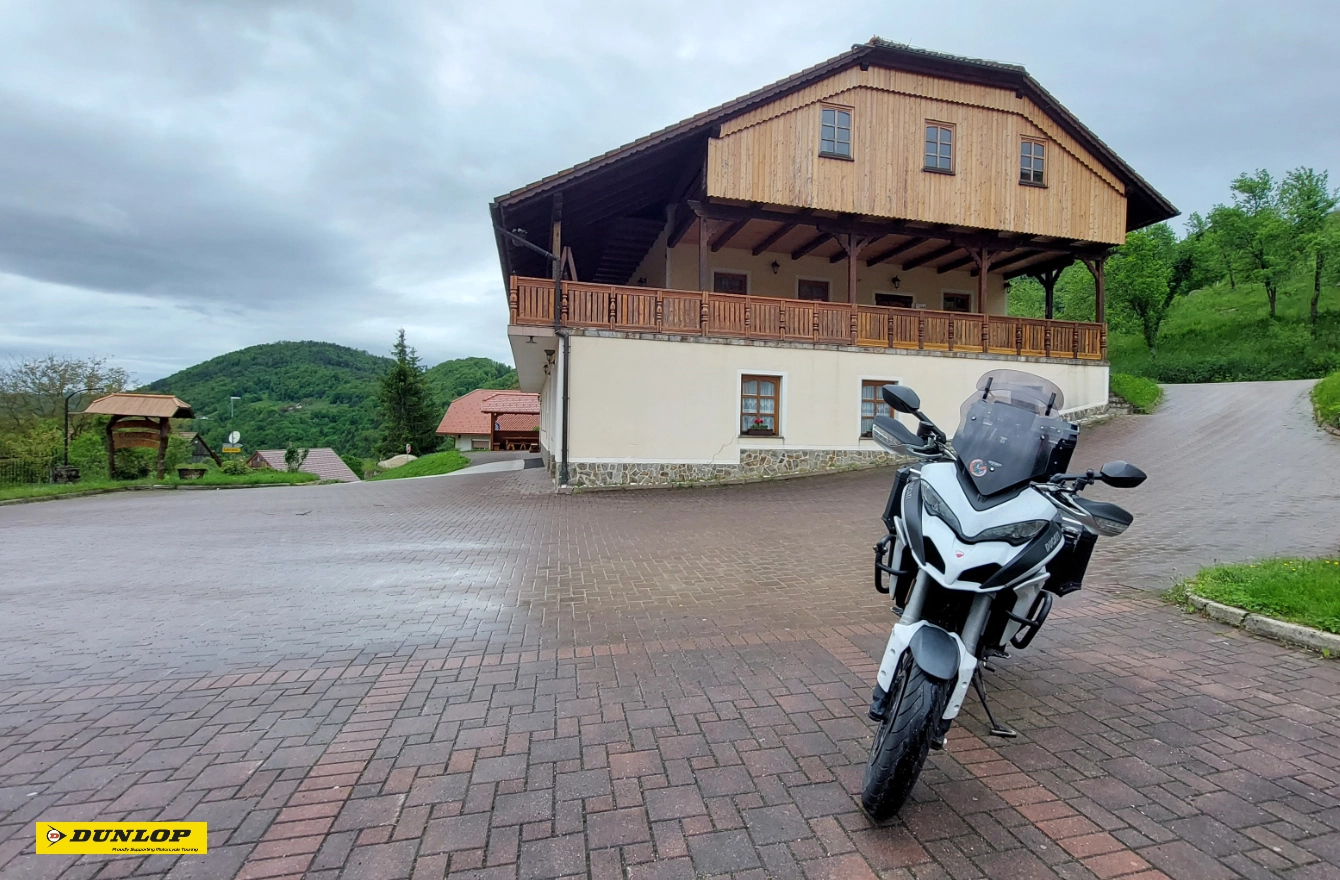
Circumstances also put some very long days hanging on the throttle on my agenda. Still, the challenge of completing them was my goal, along with the slightly self-indulgent feeling of satisfaction when arriving at the planned night stop.
Night Stops
YouTube can distort the passage of time. The sequence of episodes on some of my favourite channels suggests that you arrive one day and depart the next, but that doesn’t leave time for the boring but necessary stuff.
The longest run of different places each night I managed was six – or was it five? – by which time, along with being a little punch drunk from the miles, I needed to sort out the fundamentals of life. The thrilling and exciting activities such as washing clothes needed to be addressed, and not every night stop had a washing machine or somewhere to dry clothes, ready for a next day departure.
I’m guessing, but the episodic YouTube channels must ride one day and then spend the next day off camera, but in the same place doing the boring jobs. Even then, it is a tight and repetitious cycle that takes a lot of focus to keep repeating.
With practice, my video editing skills would improve. At a push, I could have created one video a week if I had maintained my nomadic lifestyle and kept moving. If I’d switched to stopping two nights in each place, perhaps two videos would have been possible.
However, the level of planning needed to keep a schedule like that running is immense. Far easier is the routine of a four or five-day trip, during which you capture an inordinate amount of video and then edit it when you return.
Consumables
The UK and America share the same concept of motorcycle dealers. Finding somewhere to buy tyres, oil, and other consumables like chain lube has never been a problem for me in either of these countries. Motorcycle consumables must be available in Europe, but I couldn’t find anywhere selling them.
Google searches would recommend mainline dealers, but when the nearest one was typically 80-plus kilometres off my route for the day, I kept heading towards my destination, hoping my luck would change.
Eventually, somewhere in Austria, I spotted a line of BMW GS 1250s outside a BMW car dealership and was offered a litre of BMW oil, the same grade as the Multistrada uses, for 50% more than I pay for Motul 15w40 in the UK.
At those prices, I decided not to ask about chain lube and opted to use the expensive BMW oil and a rag each evening to keep the chain lubricated. So, as with tyres, where the local bikers get their supplies remains a mystery to me.
Perhaps my poor German was asking the wrong questions, and I didn’t translate the answers correctly. And don’t get excited when you see a Husqvarna sign. In the Black Forest region, they are most likely selling chainsaws.
There was one Honda dealer I walked past in Split, but at the time, I didn’t believe I would need anything extra. So, note to self for next time: Take more motorcycle consumables than you think you’ll need. You can always bring them home.

Dunlop Tyres
Having been caught once before with a worn tyre and needing to find a replacement while touring, my month on the road started on a set of brand-new Dunlop Roadsmart IVs, and I was thankful I did.
There is still some meat left on the rear, but after five thousand miles, mixing up Alpine twisties with fast-flowing coast roads and some autobahn blasts, the rear is on its way out, and the 190/55 profile accentuates the wear pattern.
Given that I had trouble finding chain lube, finding a tyre would have taken a lot of forward planning. It must be possible, but the chances are that I would have ended up paying main dealer prices, as fitting a 190/55 with tyre levers in a hotel car park wouldn’t be the best idea I ever had.
The other reason behind starting with new tyres was not knowing what the weather would deliver. Although I was heading south and hoped the weather would keep improving the further I went, the opposite happened.
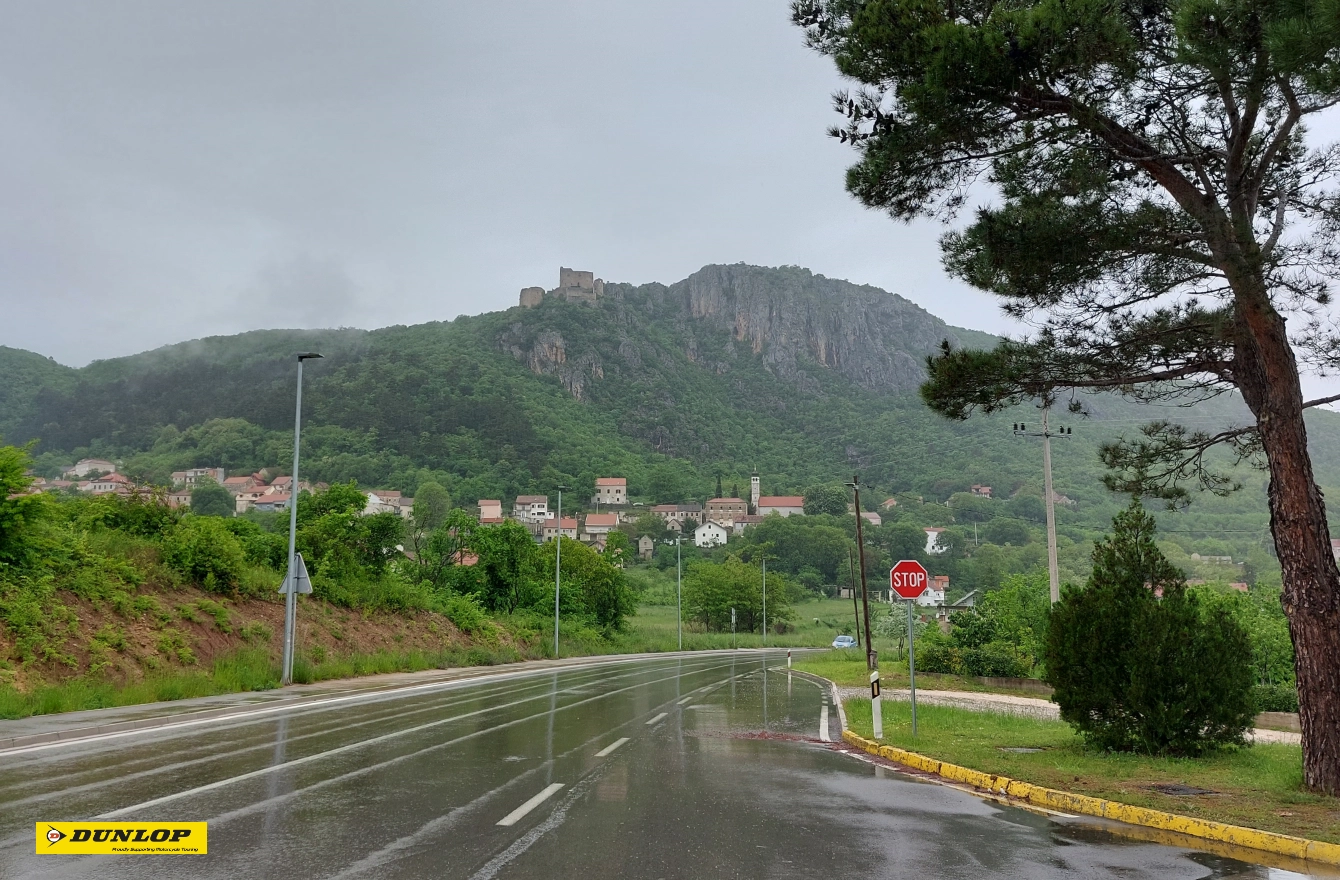
Thanks to an unusual U-shaped bend in the Jetstream, a week of rain, which included three days of continual heavy downpours – bringing floods to parts of Italy, Slovenia and Croatia – was something I rode through. However, throughout my three-day soaking and the days on the damp and dry roads, the Dunlop Roadsmart IVs never twitched once.
Even when riding on rain-soaked roads with surprise patches of standing water deep enough to cause a bow wave that soaked my boots, the Dunlops never gave me anything to think about. Choose your tyres carefully, as mother nature can be fickle, and finding a replacement tyre isn’t as easy as calling SportsBikeShop.
Luggage
This debate will rage, and I don’t think I’m closer to an answer. My SW-Motech hard panniers were outstanding. Not a drop of the rain made it inside, and my supermarket carrier bags I use as inners made packing and unpacking at each stop a five-minute activity. Whenever I stopped during the day, I could walk away from the bike, knowing everything was secure.
The downside to the SW-Motech hard panniers are the superb seals. They are so good at keeping the weather out that I got a little condensation on the inside from some of the mountain passes.
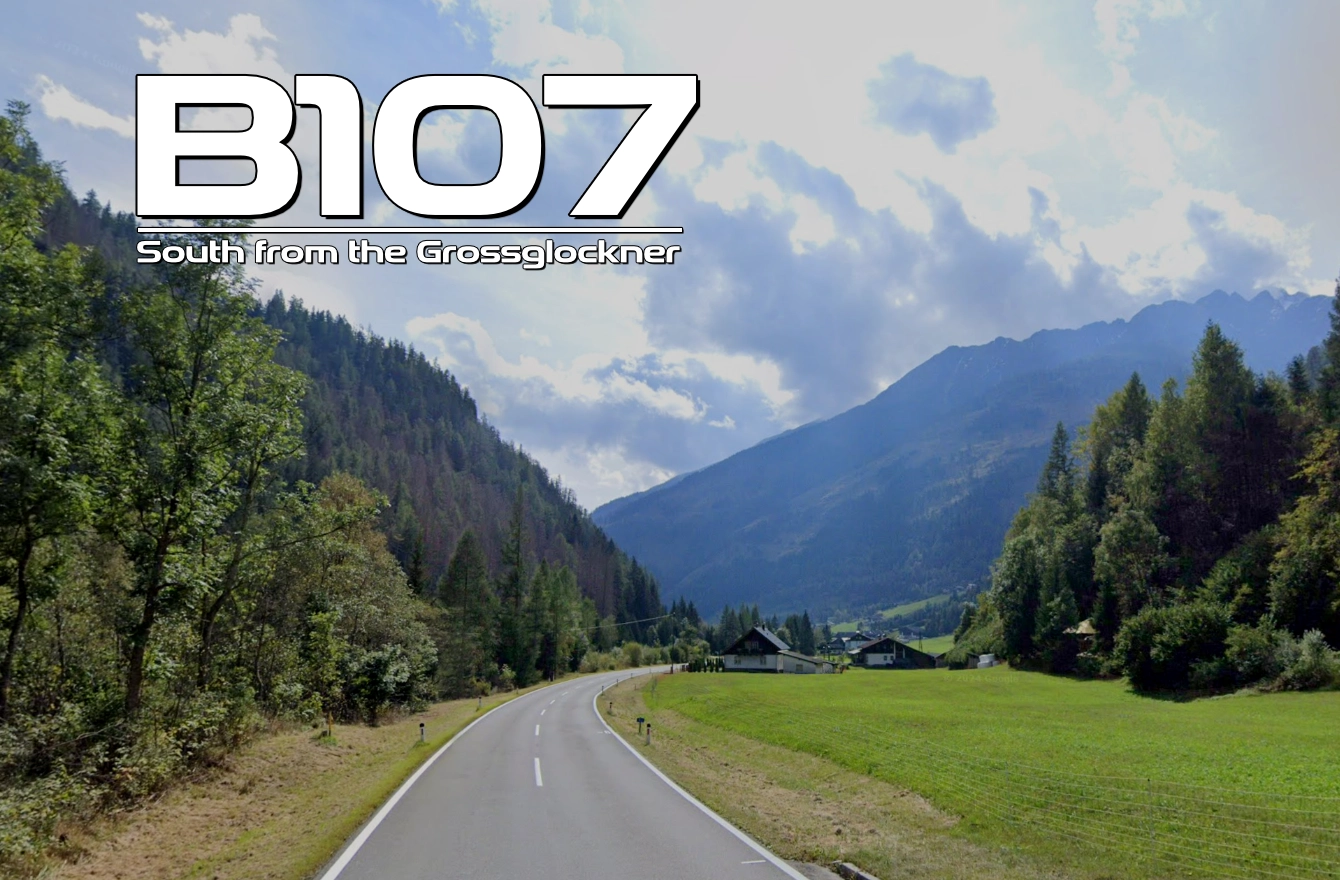
The B115 in Austria climbs to around 1200 meters (4,000 feet), and on the day I rode it, the temperature dropped from 14 °C at the bottom to 2 °C before warming back up again as I descended. Cold air doesn’t hold as much moisture as warm air, which is how condensation forms in the panniers.
The supermarket bags help keep the contents out of the trickle of water that collects in the bottom of the pannier, but condensation is the payoff for nothing getting wet from the rain.
Weight, width, vibration and a tendency to pack stuff you won’t need because hard panniers have the space are all quoted as possible downsides to hard luggage.
Other than the tendency to overpack, I can’t say that any of the other claims have been an issue for me. I’ve seen panniers made from no end of oddball metal cases – one gent had even made some from milk churns – but mine weigh 5Kgs empty, which is considerably less than the dreadful factory luggage.
Tough, secure and making great seats when camping for the night, hard luggage brings a lot more to the party than just a box to put things in.
There are a lot of soft luggage and dry bag options available that are waterproof, and these breathe more than hard panniers and, consequently, don’t have as much of a problem with condensation. The main trade-off is security and some of the convenience.
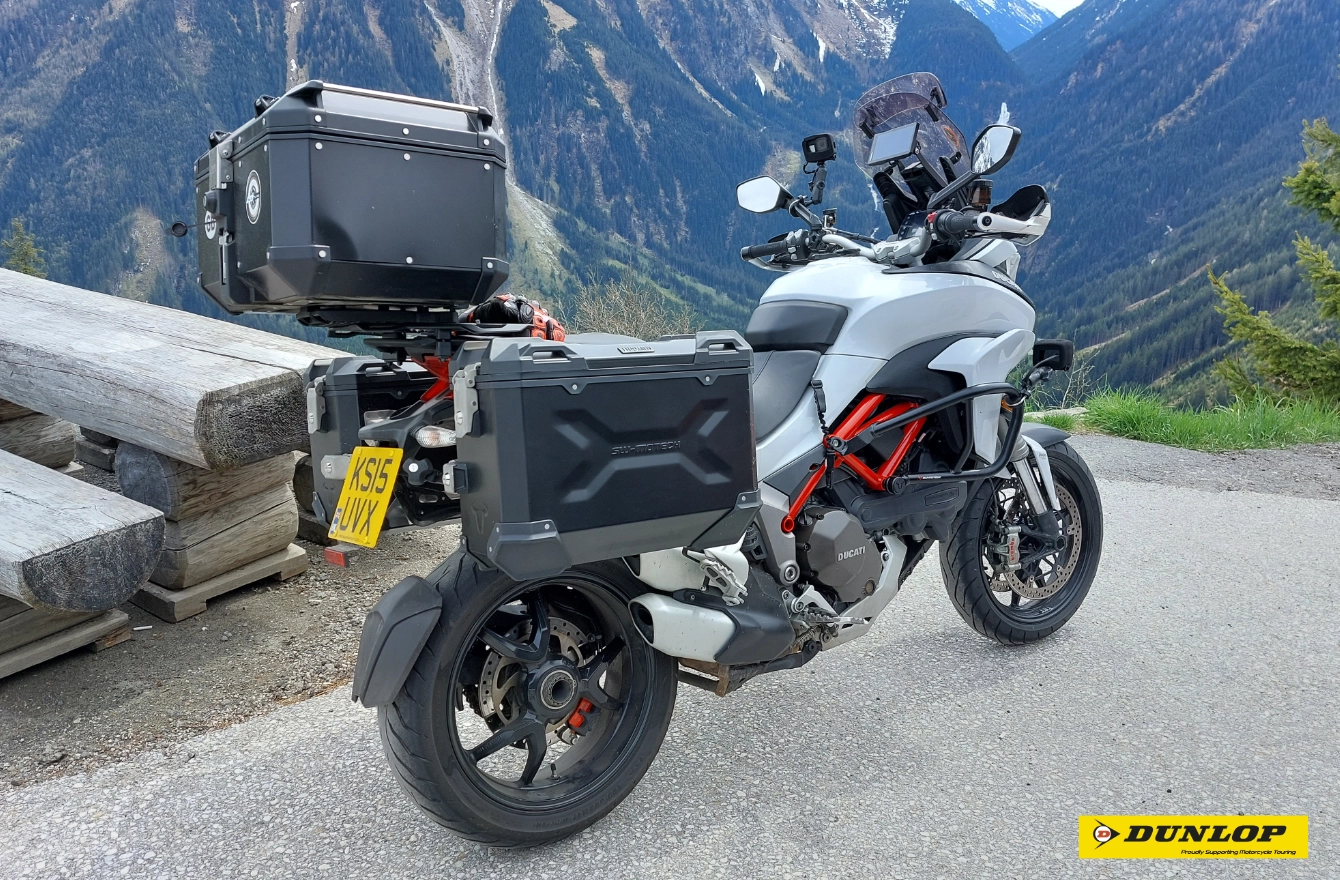
Cost, however, is a significant consideration. For less than £300, you can buy an SW-Motech 65-litre Pro TravelBag – that’s roughly the cost of the mounting frames needed for the hard luggage and only a little less than I can carry in the two 37-litre panniers.
Although designed to mount across a rack, where usually a top box would sit, the most common place to find them is strapped across the pillion seat, which naturally won’t delight your pillion if you tour two up.
I have the smaller 32-42 litre Pro Travelbag and a tank bag, both made from the same 1680D Ballistic Nylon, and although both come with rain covers, I’ve never found the need for them … well, almost.
In one day-long ride in prolonged torrential rain, the contents of the tank bag did get damp, but given the amount of rain, being damp – rather than sodden – was quite an achievement.
If I was doing it all again, I still don’t know which way I would go. The 65-litre Pro Travelbag keeps the weight centralised and is a highly cost-effective solution. Then again, the Trax ADV Panniers are secure, waterproof and will take more abuse. Just don’t change motorcycles too often, or you’ll end up with a collection of mounting brackets.
Another Month on the Road?
Arriving home, my immediate reaction was, “Been there. Done that. Time for a different adventure”. A few days later, I’m mellowing to the idea of doing it again but struggling to find a destination that would need a month on the road.
Another consideration is cost. The further south from the Hook of Holland and Calais I travelled, the more the costs reduced. Fuel alone was the most expensive in Germany and parts of France. Austria was 15% cheaper, and Slovenia and Croatia brought another 15% reduction. The same was true for accommodation and meals. If you want to be a nomad, head south. Your bank balance will thank you.
And now, it is time to get back to reality. Daisy – the Multistrada – is filthy, the Editor wants words written, and I need to arrange a Desmo service. That is going to hurt.