

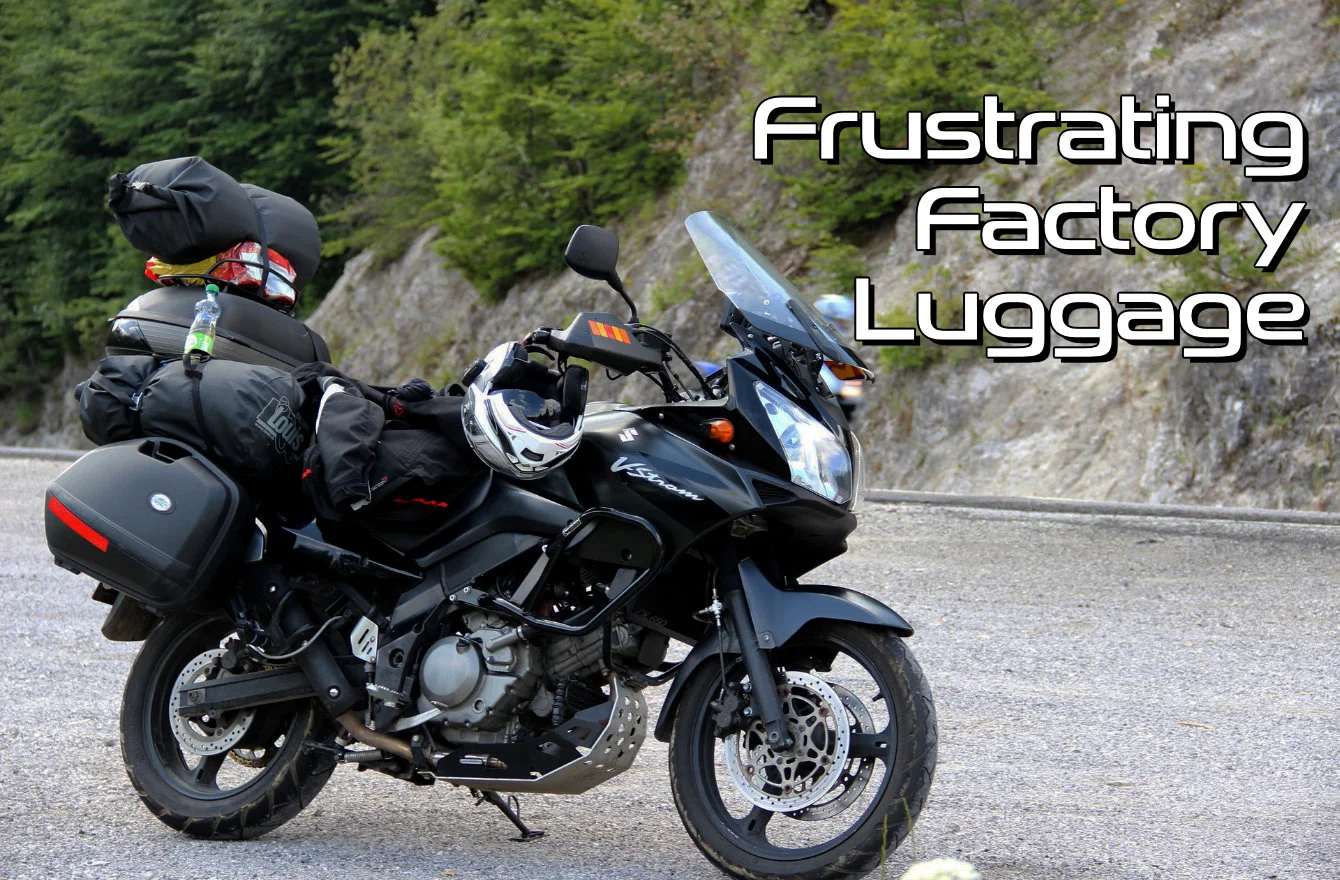

Then there is the second form of rebranding. This is typically where the top box is a copy of one the luggage company already makes, but the panniers are bespoke and have been messed about with to make them aesthetically pleasing. This is what I’m suffering on the Ducati, and something I’ll get back to in a moment.
The half is where an established motorcycle luggage manufacturer – who knows better – ends up producing the impractical luggage a latte drinker in a design studio came up with.
This usually ends up in the same bucket as OE tyres – something the end user (you and me) wish they had never done. Best to say nothing more about these design disasters and pretend they never happened.
There is Expensive …
This is the part I understand the least – why motorcycle manufacturers believe they can charge more for the same thing.
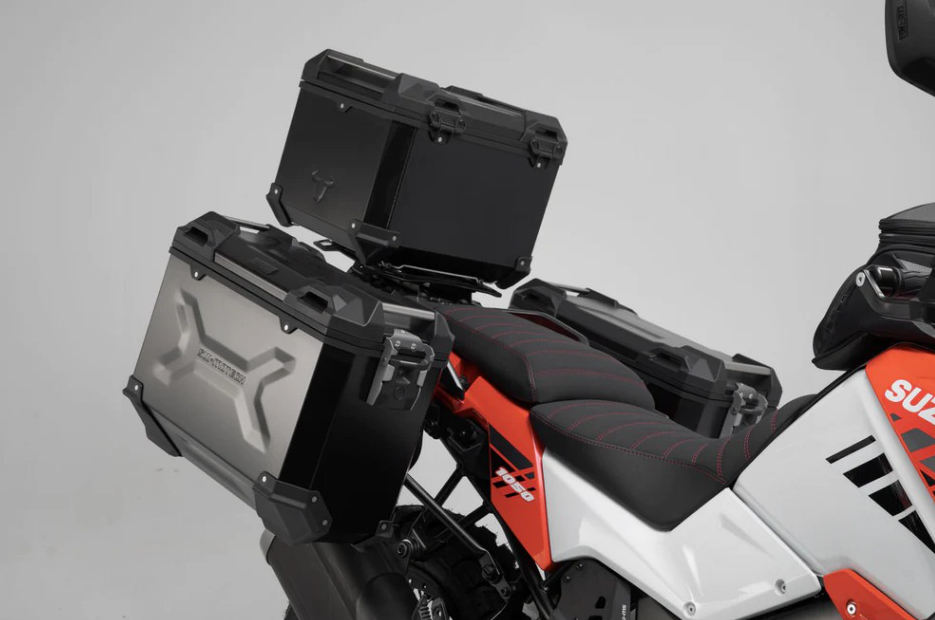
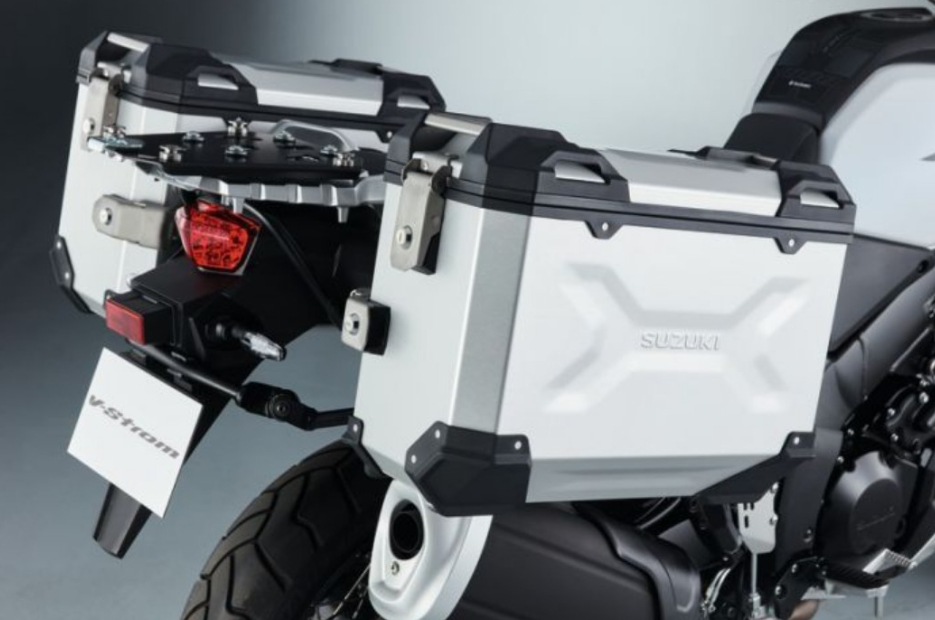
Using the Suzuki Accessories website, I priced up two 37-litre side cases, an aluminium top box, the frames to mount everything, and the locks, which Suzuki lists as a separate item for some reason.
The total cost from Suzuki was £1,971.86. I then searched for the same luggage from SW-Motech, and as far as I can tell, it is the same luggage, and the cost was £1,621 or £350 less.
Perhaps the extra money Suzuki charge is to cover the half a day in the garage it would take to fit them. Then again, the luggage direct from SW-Motech includes anti-theft fasteners and two TRAX M/L expansion bags.
I think – make that, I know – I’d save the money, fit the luggage myself, and get the extra bags. The £350 saving I’d put towards the next 14 tanks of petrol.
… And Ducati Expensive
Ducati recently reconfirmed their desire to be a premium brand, which appears to involve adding a premium to their luggage prices.
The typical Ducati top case looks to be a rebranded 47-litre Givi Monokey, which retails at SportsBikeShop for £160. For the same top case, Ducati is asking £491.33 plus £106.50 for the colour panel inserts. Ducati would like £597.83 for a £160 Givi top case. Yes, I’m definitely confused.
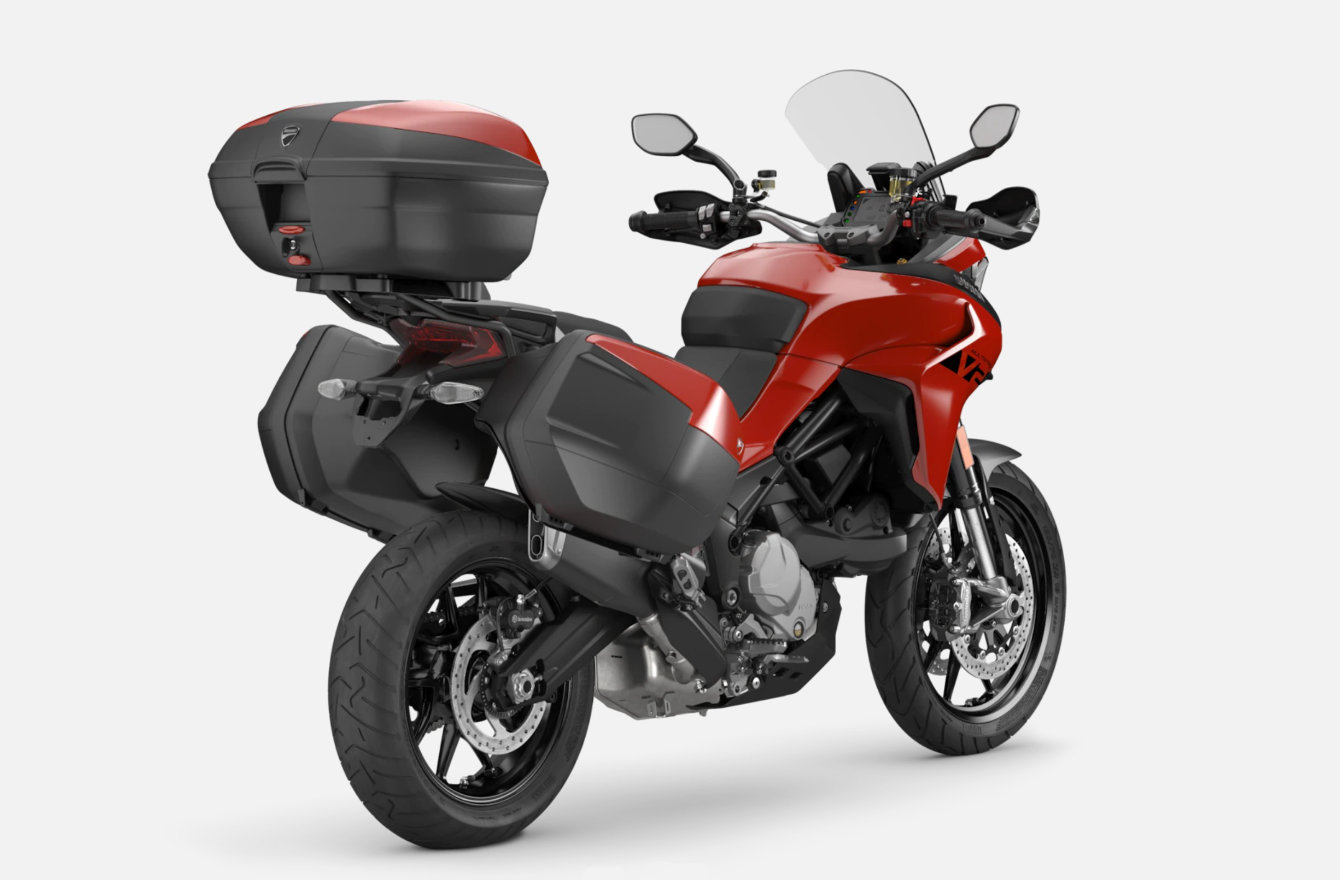
Add in the mounting rack for the top case, two Ducati plastic side cases, again with the required – but extra – colour inserts, and the Ducati website informs me I’ll be spending £1,647.18 for the full factory luggage set.
Should I wish to go for Ducati metal side cases, then the price increases to an impressive £3,092.96, plus the £597.83 for the top case.
Again, using SW-Motech as a comparison, they will sell me a full set of aluminium luggage, along with all the brackets and fasteners, for £1,657. Assuming I’m reading their website correctly, the luggage set includes two 45-litre side cases, internal bags, and anti-theft locks for the quick-release frames. A big step up from the Ducati offering.
Ergonomics
Have you ever wondered why suitcases and the boxes things come in are rectangular? I hadn’t until I tried packing the aesthetically pleasing factory luggage on a Triumph Tiger I had several years ago.
In keeping with the design of the factory luggage on the Ducati Multistrada we recently bought, the Triumph’s top case was Givi, and the side cases were the clamshell design, where half the storage capacity is in the side case door.
They look great from the outside, with recessed carrying handles and a scoop cut out to go around the exhaust so that everything is symmetrical when attached to the motorcycle. But when it comes to packing them, they are a nightmare.
Because of the aesthetically pleasing external shape, the inside isn’t designed for carrying capacity. Half the available space is in the clamshell door, which hinges 90 degrees when opened.
To get around the packing issues, I pre-pack things in plastic bags, but to ensure I can mould them to the irregular internal shape of the side case and door, I end up with a large collection of plastic bags and no idea where my toothbrush is.
If I maximise the space by stuffing small things into the nooks and crannies, I have the problem of items falling out when I open the side case at the roadside.
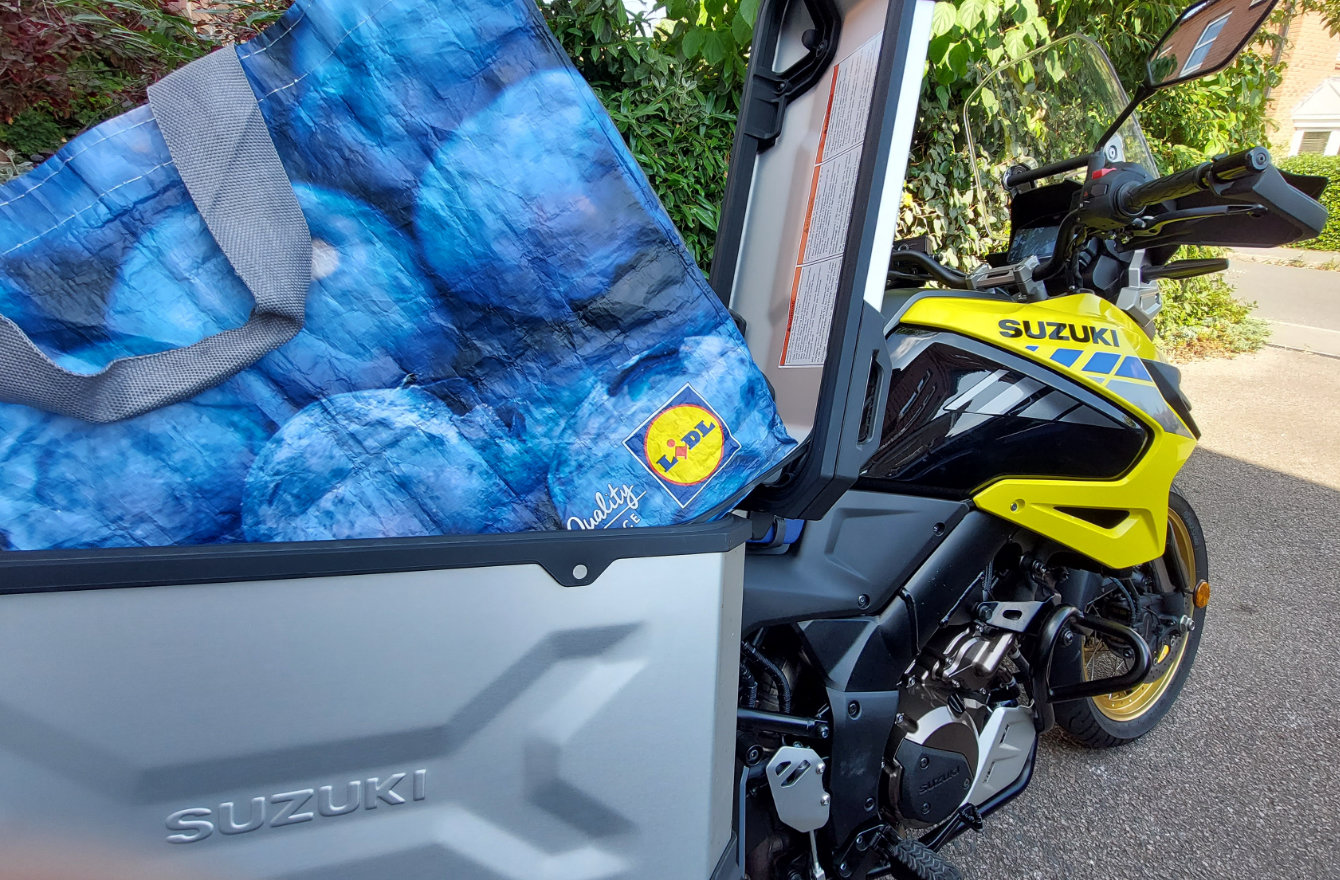
Compare this to the perfectly shaped Lidl bag-for-life that makes a superb – and highly cost-effective – inner bag for a 37-litre rectangular side case.
So what …?
Factory luggage does a job. It gives us a rather odd-shaped but secure location we can fill with – some of – the things we need while touring. So, what is the problem?
For me, it is mainly frustration. Factory luggage is a wonderful concept. If I’m buying a motorcycle to travel, and there is a luggage option direct from the factory, this should be a reason to rejoice.
But frustration swaps places with enthusiasm the first time anything other than a (metaphorical) pair of trainers and a clean T-shirt need to be carried.
Even if I never work out that I paid too much for the factory luggage and should have gone to one of the after-market specialists, my first thought with every tour is wondering if I should bother with the factory luggage or strap a bag to the back of the seat. [See Touring Tail Bags]
Riding motorcycles is sheer joy, and touring is the joy with a cherry on top. Not somewhere I want hassle and frustration.
Luggage For Life
Whereas factory luggage is typically designed to fit the models in a specific range, after-market luggage only needs a change of brackets. The mounting plates match the cases, and it is only the plate brackets that are motorcycle specific.
When I change bikes, all I need are replacement brackets and the luggage moves with me.
This also means that one set of aftermarket cases can work for several bikes in a garage. The brackets to move a pair of Trax ADX side cases between a Ducati Multistrada and a BMW R1250GS cost £253 for the mounting brackets and plates, plus £23 for the Trax ADV specific mounts.
The kit for a Yamaha Tracer 9 is £239 plus the Trax mounts.
Bottom Line
Most of the time, aftermarket luggage is better designed, costs less, is of equal or higher quality, and transfers to your next or other motorcycles.
So why do we buy factory luggage? Seriously. Why?











3 responses
Good point. If it is on a PCP deal then it is £10 a month more. Still badly designed an frustrating to use.
I guess when stuff all goes on finance these days not many people look at the cost or think about how good it might be down the line.
This is so true