
CBR500R – 4 Pot – 12,500rpm
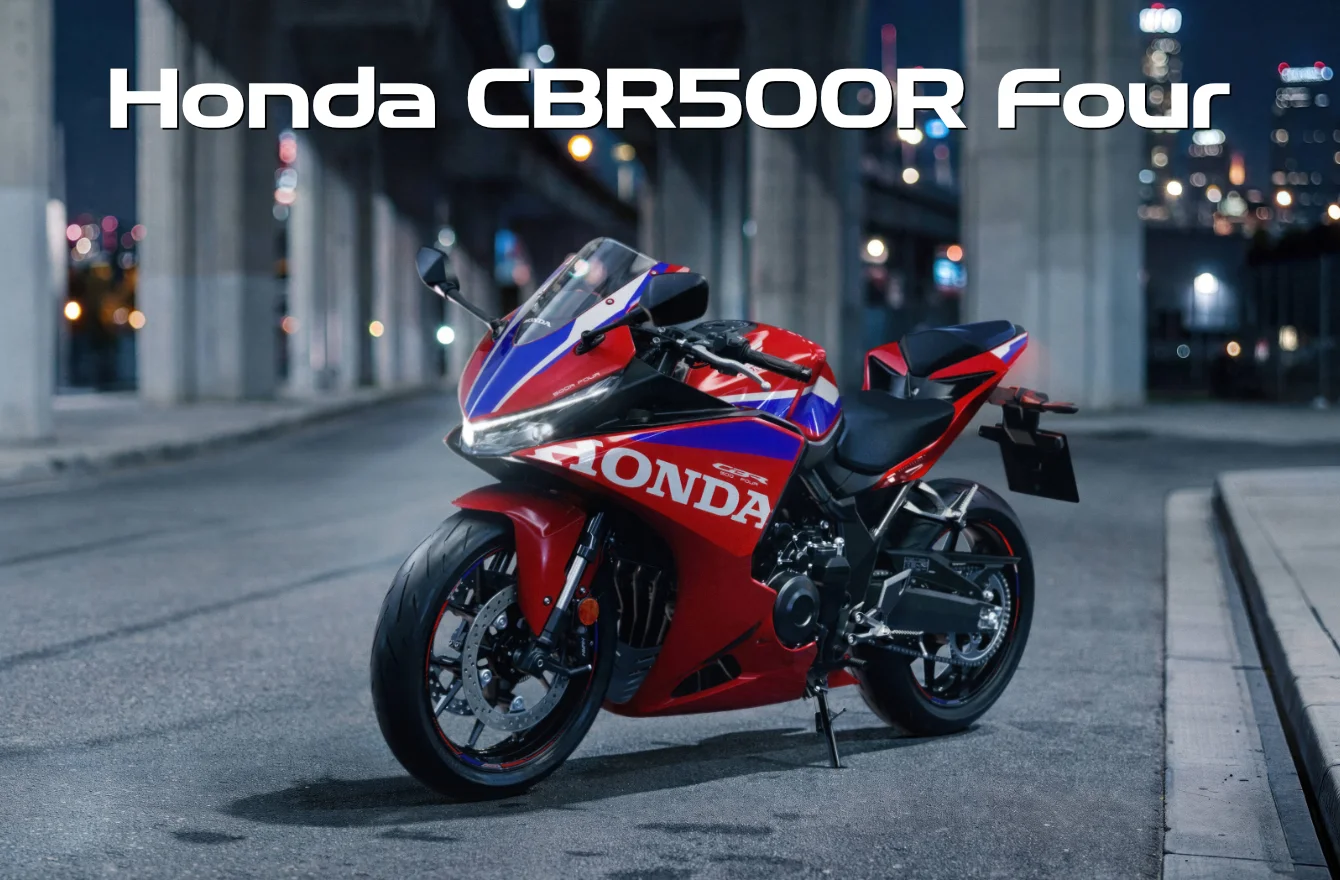
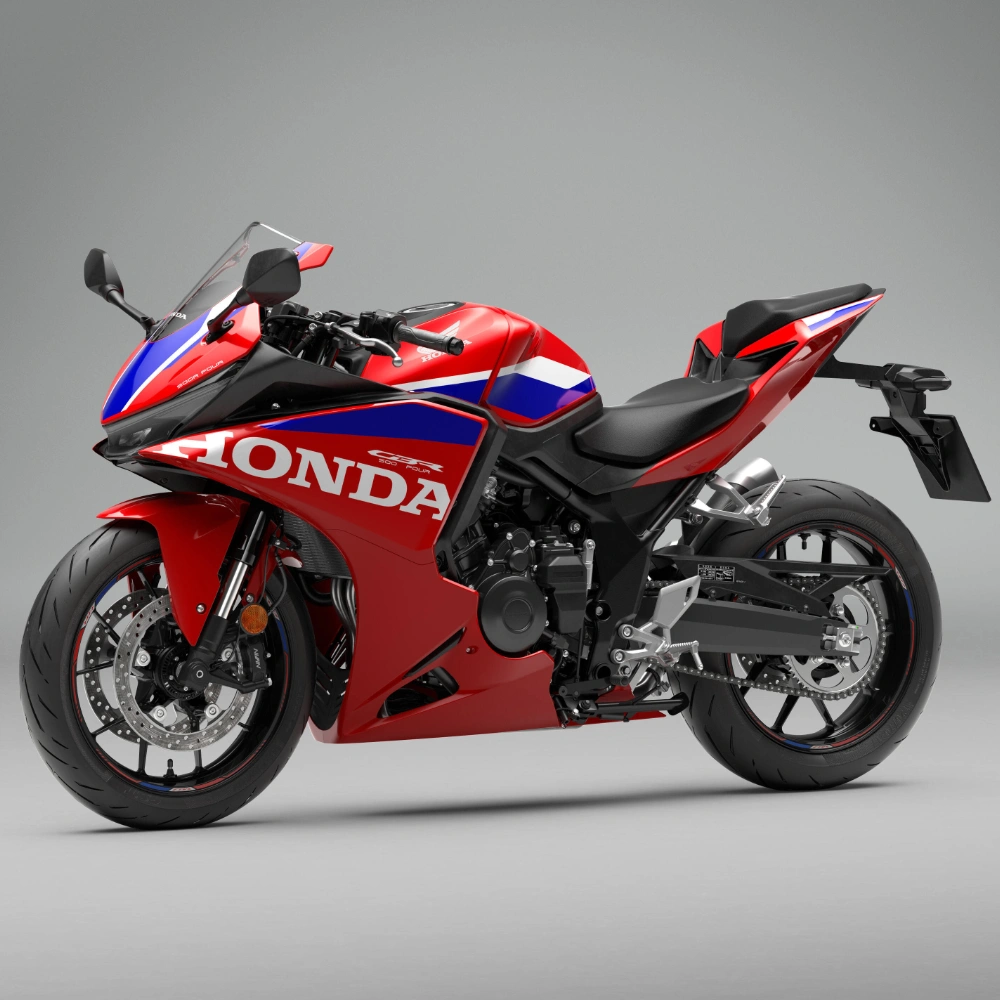
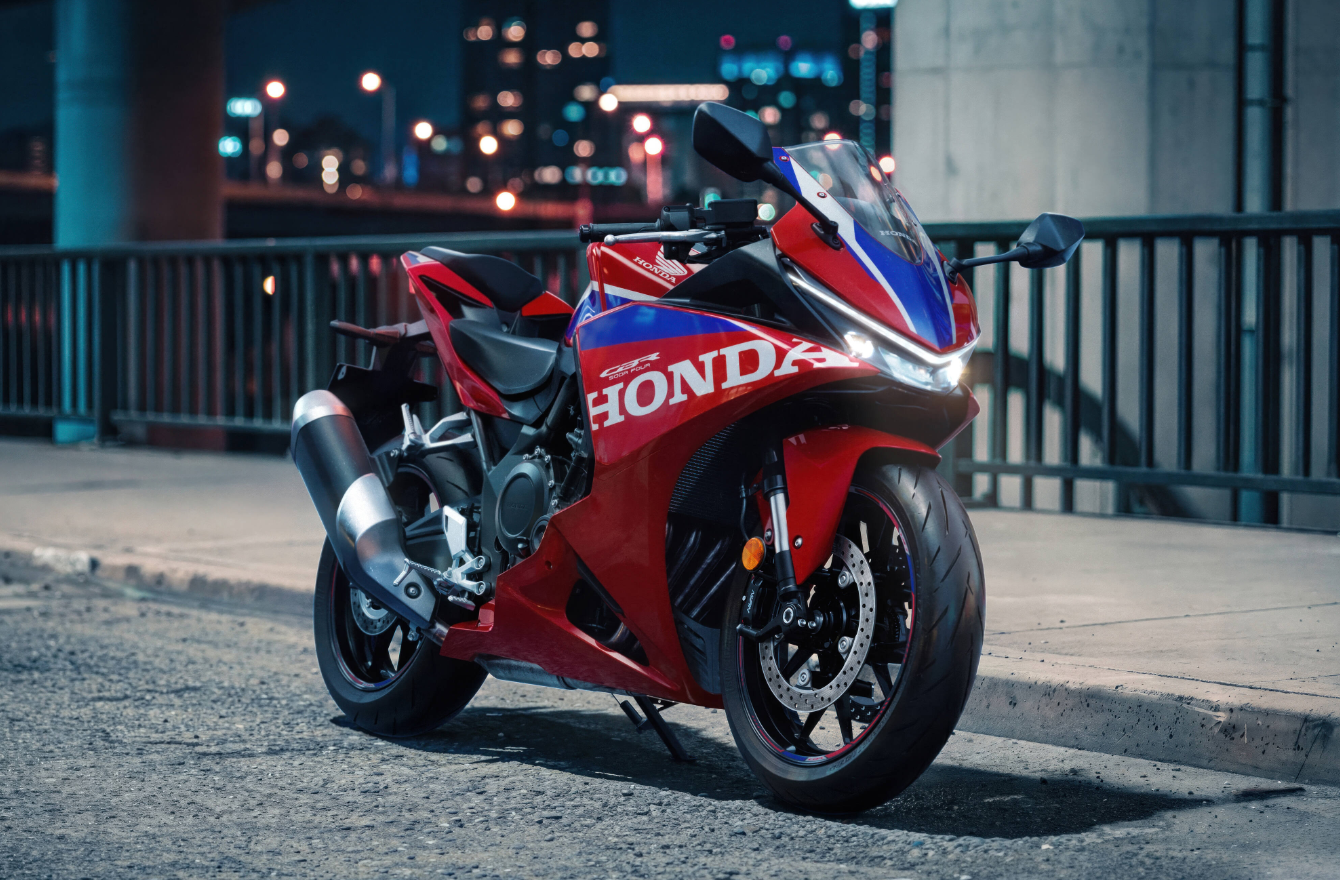
At the heart of the CBR500R FOUR is an all-new, liquid-cooled, DOHC 16-valve inline-four. Capacity has grown from the 400cc unit used in the Japanese-market CB400 SUPER FOUR, bringing a claimed 51.8kW (approximately 70hp) of peak power and 46.3Nm of torque.
Peak power arrives at 11,000rpm, with maximum torque following at 10,500rpm. The redline sits at 12,500rpm, which should provide ample opportunity to enjoy the particular musical pleasures of a four-cylinder engine working for its living.
Honda has fitted dual ram-air ducts beneath the headlights, feeding a downdraft intake system designed to improve throttle response. Different-length intake funnels help optimise airflow, while also contributing to that distinctive induction soundtrack. The 4-2-1 exhaust takes its styling cues from the 1975 CB400 FOUR, adding a touch of heritage to an otherwise thoroughly modern package.
Inside the engine, nickel-silicon carbide cylinder-wall plating reduces friction and saves weight, while Diamond-Like Carbon-coated valve lifters further reduce friction. The compact engine layout also helps centralise mass, benefiting the handling. [Absolutely – WTF ~ Ed.]
For riders restricted to an A2 licence, a 35kW version will also be available; then, once licensed accordingly, ask the dealer to remap it.
E-Clutch
Honda’s E-Clutch comes as standard, and it’s more than a glorified quickshifter. We reviewed the Gen1 version in 2024: Honda CB650R
Working alongside Throttle By Wire, the system lets riders pull away, stop, and change gear without touching the clutch lever. Just use the gear pedal and let the electronics manage clutch engagement. E-Clutch also includes a blipper for downshifts.
The clutch actuator sits within the left-hand engine cover, managing engagement based on factors including engine speed, throttle position, and gear selection.
There’s also scope to tailor the feel. Riders can choose Hard, Medium or Soft shift-pedal settings, independently for upshifts and downshifts. The system can even suggest a downshift through the instrument display when it decides you’re asking too much of a high gear.
Naturally, the conventional clutch lever remains in place and can be used whenever required. You can also switch off the E-Clutch when the bike is stationary and in neutral.
Rider Modes
Throttle By Wire also brings three standard riding modes: STANDARD, SPORT and URBAN.
STANDARD provides a balanced combination of engine power, engine braking and Honda Selectable Torque Control (HSTC).
SPORT delivers the most aggressive power setting with reduced engine braking and traction-control intervention.
URBAN softens power delivery and increases traction-control assistance.
Two USER modes allow riders to customise the three systems across their available settings, with the option to switch HSTC off.
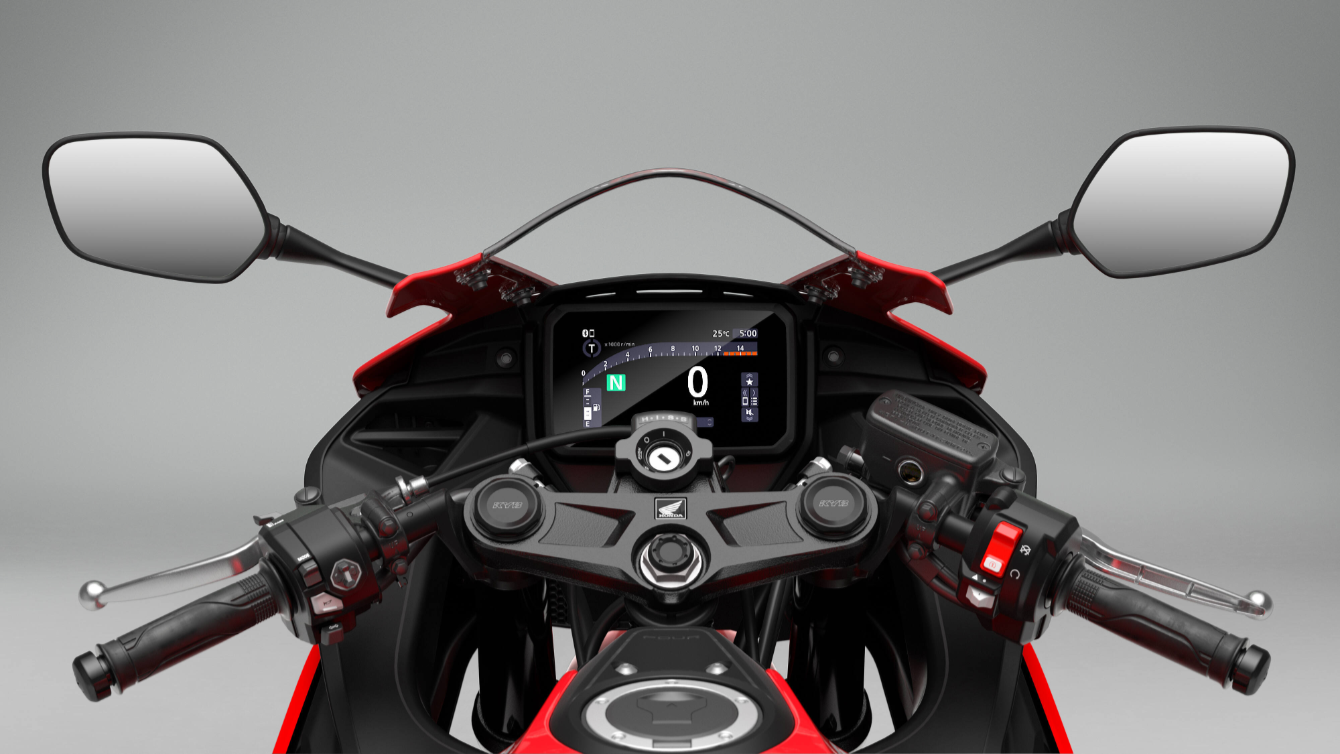
Backlit switchgear and a five-inch colour TFT display help you navigate the menu options. In other words, the technology is there if you want it, but you won’t need to carry a laptop in the tank bag to make basic adjustments.
Bottom Line
Honda often sees gaps in the market that others don’t. The E-clutch CBR500R does seem a little out of place when, in the same press kit, came news of the CBR600RR that makes 119BHP but does need you to hang on while the engine internals rotate at 14,250rpm.
Which, if you are interested, equals a peak piston speed of 70 mph and 475 changes of direction per second for each of the four pistons.
Which makes the CBR500R peak piston speed of 63mph and 400 changes of direction at 12,000 RPM look positively pedestrian.