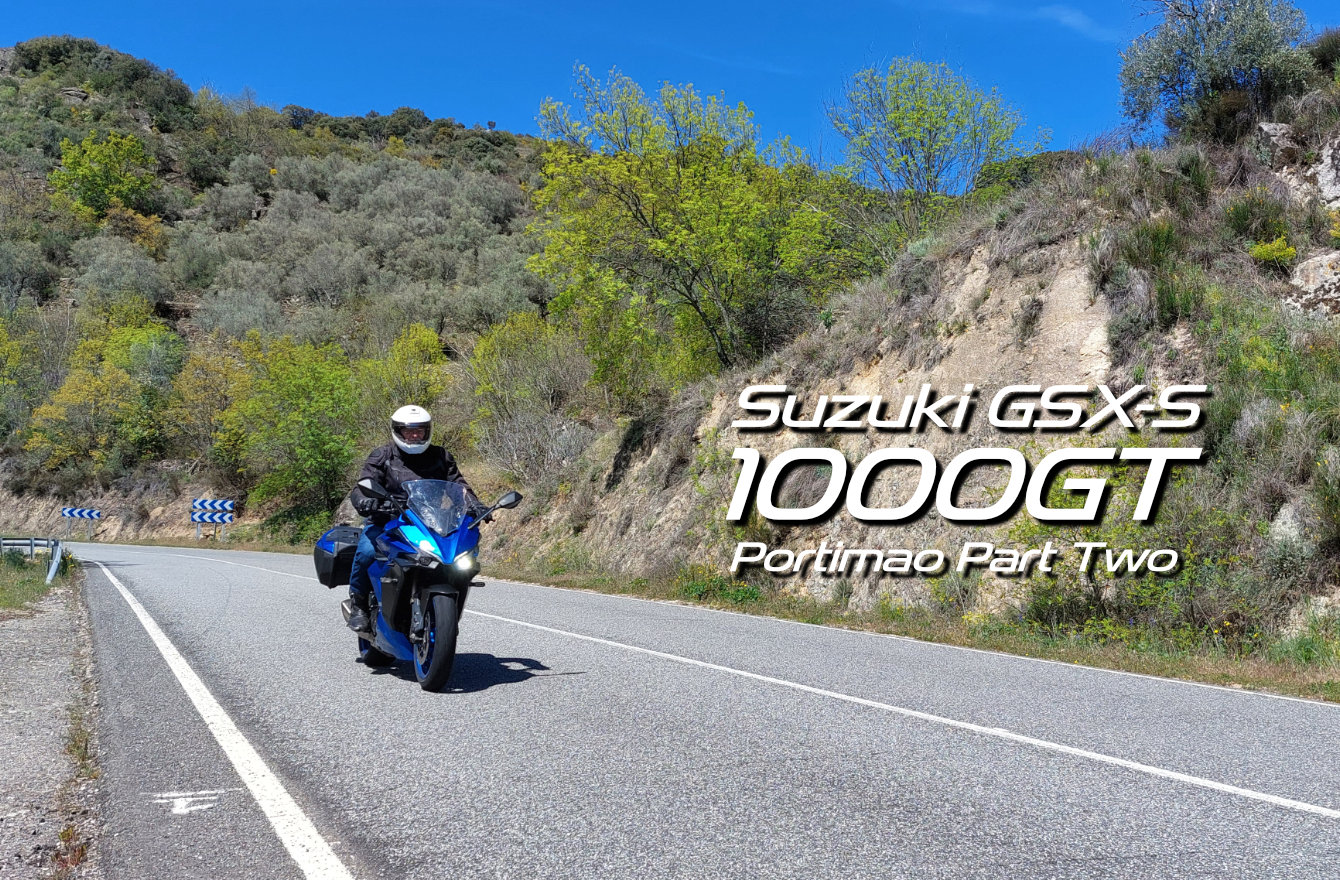
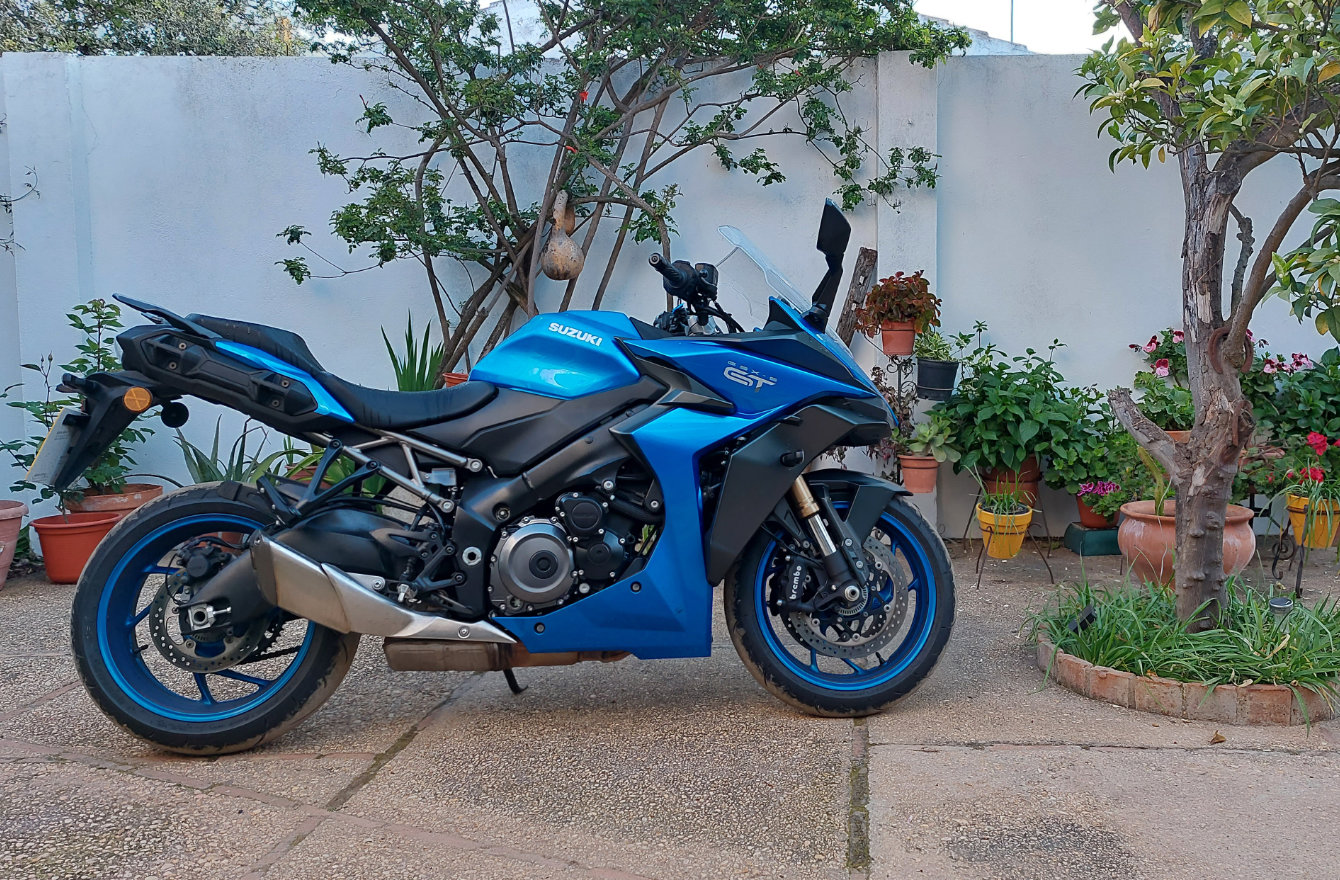
Having ridden 3,000 miles across Spain and Portugal on the Suzuki GSX-S1000GT, sadly, we are now sat on a boat heading back to the UK.
It has been a great ten days riding on every type of road you can imagine. We have had cool mornings and hot afternoons, and one day, it just rained all day. We have ridden on motorways, even if they were mainly in the UK heading to Portsmouth. We have had the excitement of sweeping mountain curves, revelled in open backroads between fields and carved through city traffic at rush hour.
By the time we return the GT to Suzuki at Milton Keynes, we will be just a few miles short of our 3,000-mile road test target. Best not to mention this to Carle, or he will take the long way to Milton Keynes.
After all that riding, the inevitable question is, what do we think? Has Suzuki designed the ultimate Grand Tourer?
The AS-227
If there was a highlight from amongst all the roads, it would have to be the AS-227 in northern Spain, similar to the exciting part of Applecross, only 30 kilometres longer.
We rode it south to north and started with the tight mountainous hairpins and never-ending 90-degree corners, which eventually ease out and become fast flowing bends, arcing between jaw-dropping scenery.
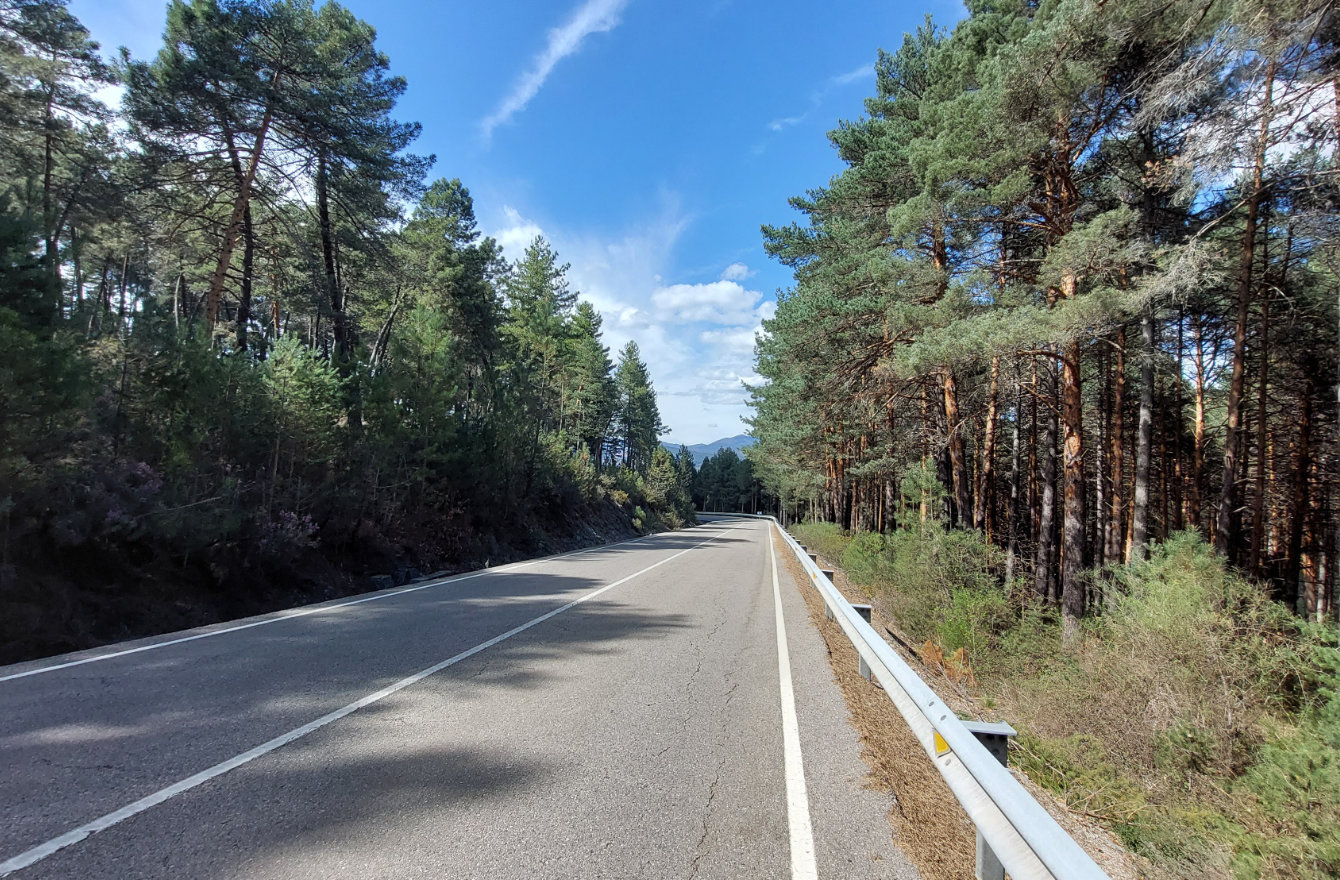
If there was a road that would highlight any weakness in the Suzuki, it would be here. Downhill heavy braking into tight, slow corners, followed by short blips on the throttle before getting back on the brakes once again.
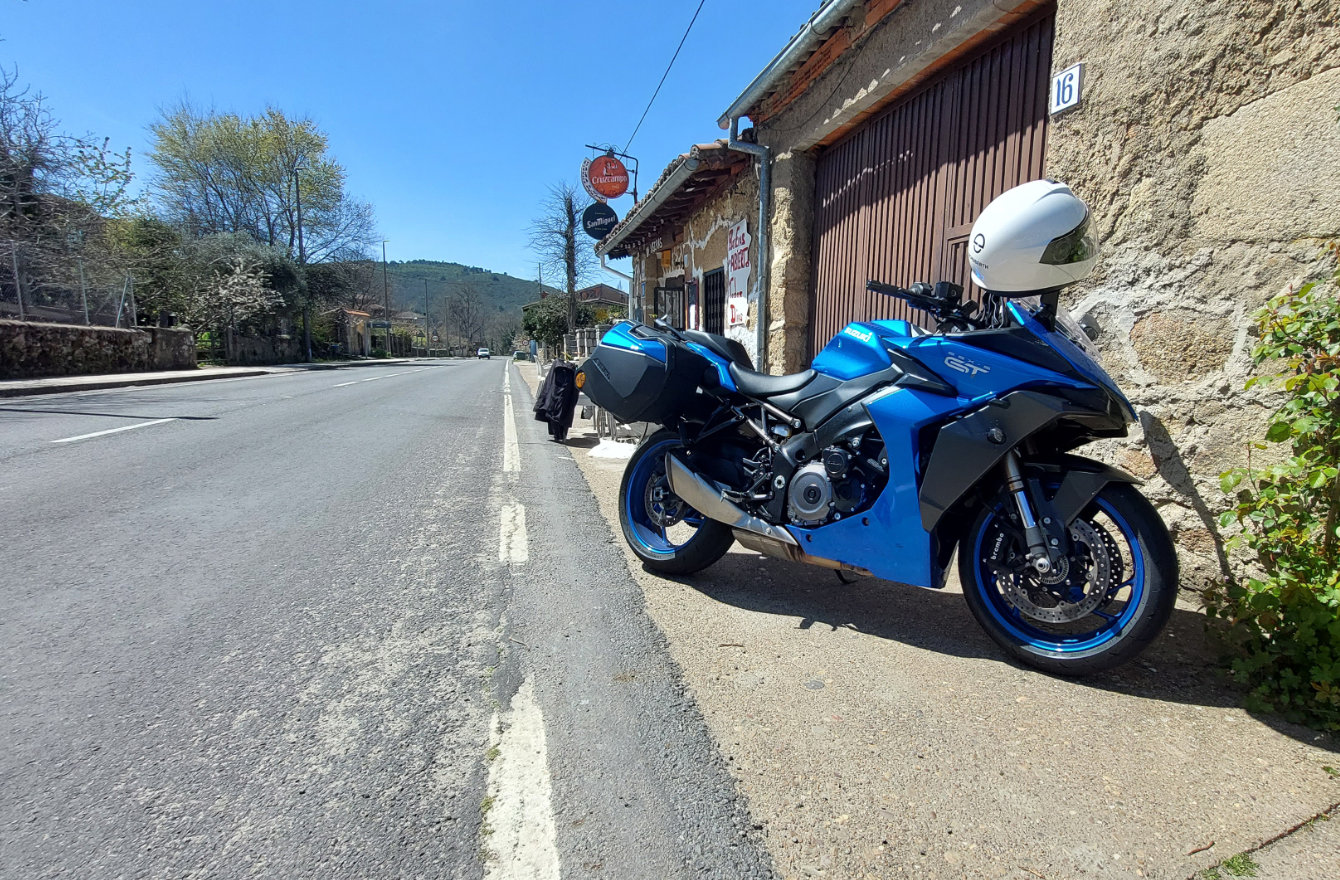
When we stopped to take a photo, Carle still had a smile on his face and was perhaps slightly miffed that I’d stopped to record the moment rather than just carrying on.
Ten Day Comfort
If like me, you are coming from riding adventure bikes, the footrests on the GSX-S1000GT are set slightly higher than expected, especially when compared to the riding position for your upper body.
Yet, after five minutes of wondering why the Suzuki designers opted for this layout, neither of us gave it a second thought. If you are a sports bike rider, you will enjoy the more relaxed foot position.
The same quandary is true of the screen. It looks as if it is angled too low and will do nothing but blow wind and rain in your face. The reality for us has been that once over 40mph, the wind helps remove what little pressure there is on your wrists and keeps your visor clear when it is raining hard.
Conversely, behind the excellent MRA screen on the Tracer, I did have to stick my head out the side to help clear the rain.
Unlike the Tracer 9GT, the seat on the Suzuki has been a comfortable place to spend the last ten days. If it hadn’t been for some make-shift modifications involving duct tape and a piece of thick foam, I’m not sure I would have made it home on the Tracer – but that is a different story.
Comfortable to ride over long distances. Capable on all the roads we rode, including those with the knackered road surfaces that would’ve suited an adventure bike, what is there that we didn’t like about the Suzuki GSX-S1000GT?
Truthfully, not much. The cool mornings did highlight the lack of heated grips. It is easily solved with £50 to Oxford Products, but it does feel like an omission on a Grand Tourer that comes with panniers. Still, it is an easy fix, and I’m sure heated grips from SportsBikeShop will be cheaper than those from the official Suzuki accessories catalogue.
And other than that, we are stuck thinking of something to complain about, so we decided to play Motorcycle Top Trumps instead.
Inevitable Comparisons
We are not interested in proving which one is better because that will depend entirely on what you want from a motorcycle. Nonetheless, there were a few moments where we thought … “If only my bike had that”
USB Ports
Sometimes it seems as if USB powered devices control the world. They are everywhere, not least of which is a GPS and mobile phones.
Which left us wondering why Yamaha decided to put the 12volt cigarette lighter style auxiliary power port behind the screen rather than the more useable 5V USB slot connector Suzuki chose to install.
I’m sure there is a perfectly logical explanation available, but given the option, we decided Suzuki won that round of top trumps.
Navigation
Suzuki should also win this round of top trumps, as the Yamaha doesn’t come with any navigation options. Of course, to be precisely correct neither does the Suzuki, but it does come with Suzuki MySpin.
The MySpin was developed by Bosch Mobility Solutions and has been licensed by Suzuki, Ducati, and others. Using Wi-Fi rather than Bluetooth to send display data to the bike’s screen can be troublesome to configure, especially if you are doing it at home, where your phone is trying to connect to your home Wi-Fi signal.
The concept is excellent, and if you are familiar with Google’s Chromecast, the idea is similar. A detailed map with route information is sent from your phone to the bike’s display (via Wi-Fi). Your speed and RPM are still displayed, and with a headset connected, you also get turn by turn instructions.
We could only find one navigation application – Sygic – that supports MySpin, and at the time of writing this, Sygic doesn’t support loading a predefined route. You could set a destination and request the fastest or most economical route, but no preferences for twisty roads.
Consequently, we spent most of the time following our predefined routes using the excellent MyRouteApp running on a phone or the Garmin Zumo XT on the Yamaha.
Handling
Our opinions are at different ends of the spectrum when discussing handling. The Suzuki feels like a traditional sports bike, but thankfully without the need for masses of electronics to make it rideable. Yes, the Suzuki has traction control, ABS and is ride-by-wire with cruise control, but has traditional suspension.
This is why the Yamaha wins this round. The semi-active suspension does give a marginally plusher ride. Perhaps a later version of the Suzuki GT will include the customary electronics suite to help attract more riders away from the latest generation of electronically sanitized sports bikes.
The GSX-S1000GT is a very stable, planted motorcycle that you can hustle through the mountain twisties. The Yamaha is lighter steering but reacts more to changes in tarmac. Both are excellent.
Fuel Consumption
Looking at the numbers, this is an easy win for the Yamaha with 55mpg playing against 44mpg for the Suzuki. Yet, for your extra cash in the tank, you get 30 more BHP, more torque, and an extra cylinder. There are no prizes for guessing who would win the traffic light GP.
If you rag the throttle and use all the power most of the time, then you are going to drink more dinosaur juice. Suzuki, though, is one step ahead of us and has tuned the GSX-S1000GT’s power delivery to give a useable blend of sports bike performance with touring torque.
The Suzuki is a Grand Tourer, and one of the required characteristics of a GT is the ability to cross continents at speed and in comfort. You don’t get that with smaller capacity, more eager engines. You need an excess of power.
Engine Map
One of the delights you get from riding the Yamaha is the fat bulge of torque in the middle of the rev range. It makes riding the roads less travelled, easy work as you roll the throttle on and off to match the bends in the road.
Suzuki has taken this concept a stage further and built a 150BHP motor that turns out 106 Nm of torque and will pull in 6th gear, fully loaded, from 30mph. And we do mean pull. Not cough and splutter, snatch at the chain and begrudgingly accelerate.
Suzuki GSX-S1000GT Sweet Spot
If you are finding your full fat, high caffeine sports bike a little cramped, and are choking on the idea of joining the Germans on a GS, or activating the ginger gene and buying a KTM, then the GSX-S1000GT is somewhere you need to be looking.
Conversely, if it is a step up, you are searching for. Something that will give you a relaxed platform to munch through miles without becoming so detached from reality that you may as well have gone in the car; then again, the Suzuki GT is somewhere you should be looking.
Close to the sports bike you want to be on when you arrive at the twisties, but with the ability to travel long distances in comfort, the Suzuki really is a true Grand Tourer.