Low Weight
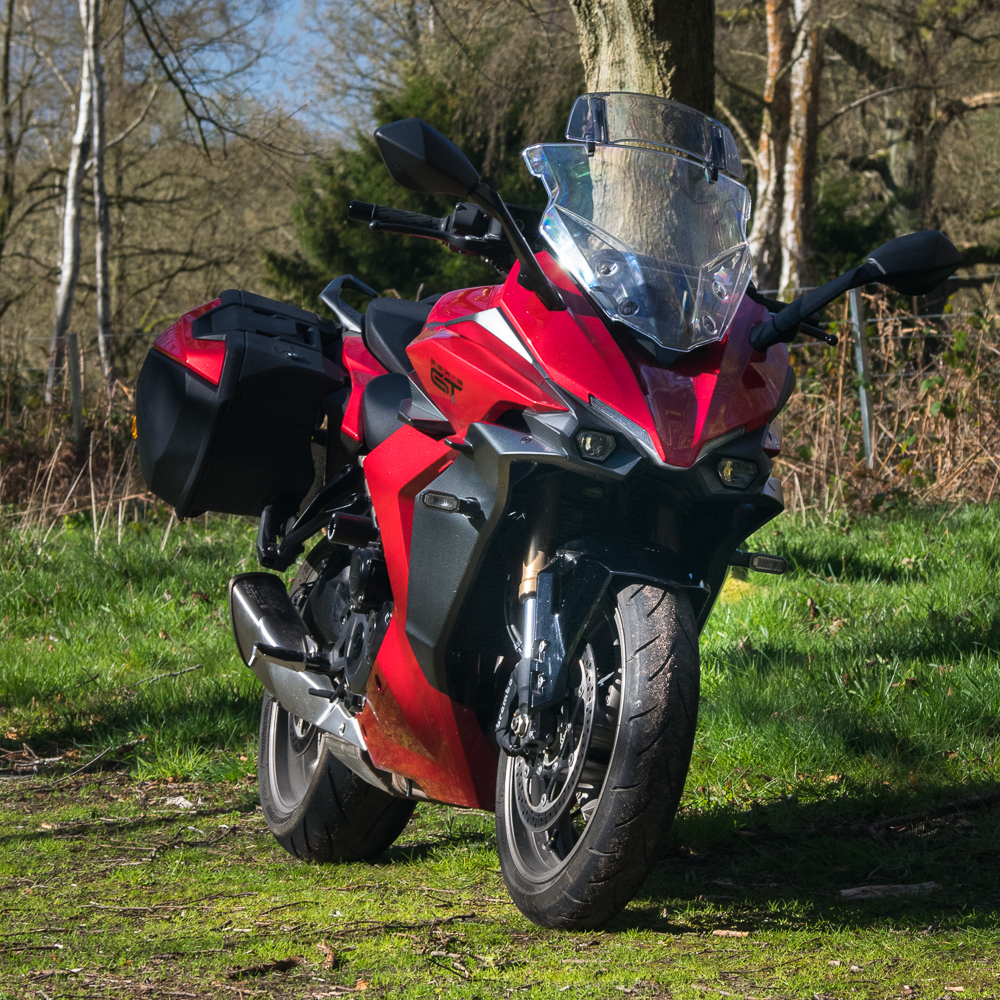
Along with its noticeable low seat compared to “adventure” bikes, the GSX-S1000GT carries its weight low. The cornering transition from left to right and back again is a beautifully smooth arc with no noticeable weight shift from one side to the other.
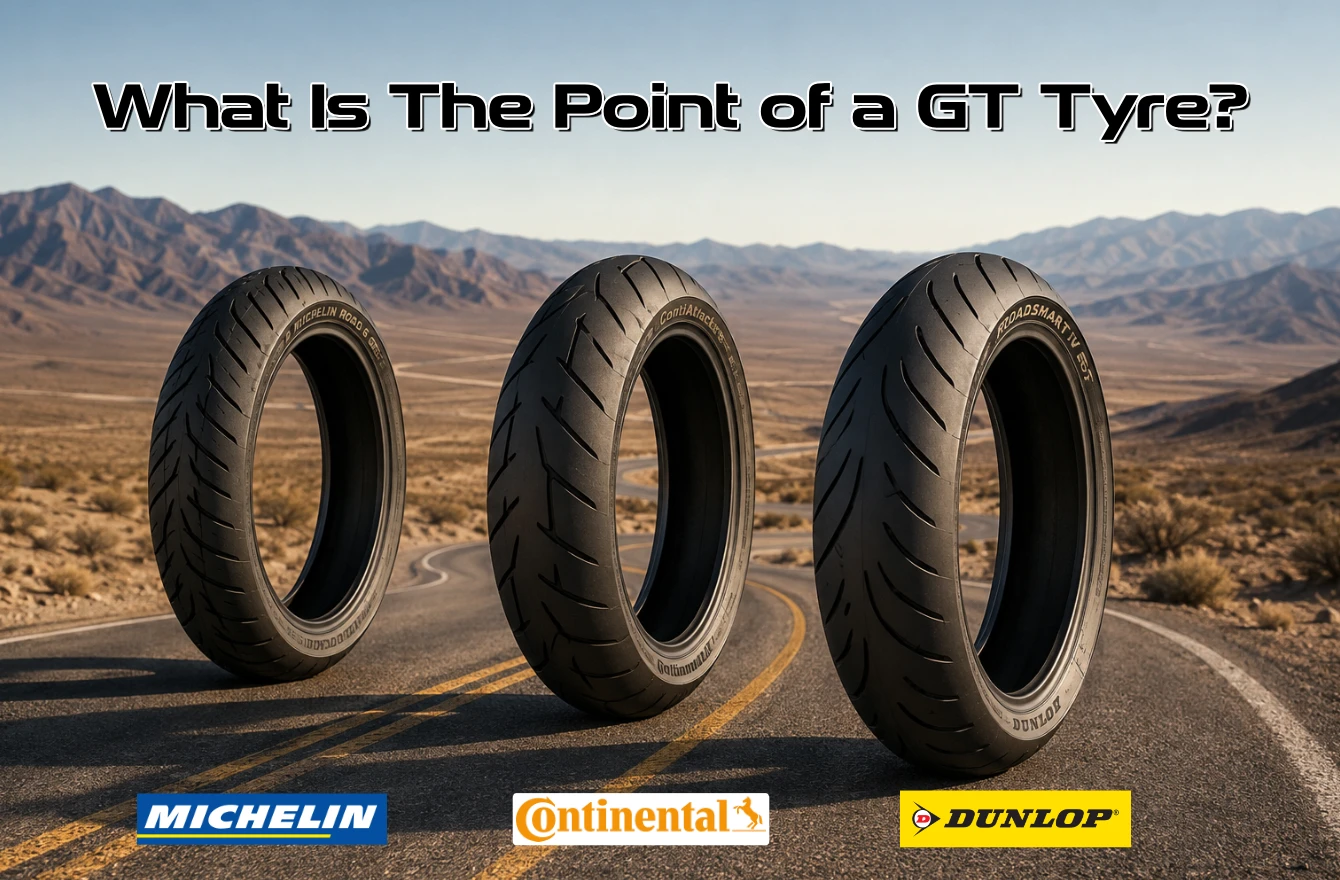
It is a glorious feeling peeling between roundabouts or sweeping between a succession of left-right flicks on the back roads. The tyres help. Rather than running the OEM Dunlop tyres, the GT is wearing Bridgestone S22s, which suit the bike and my riding style.
Fuelling
It is impossible to mention the fuelling without paying the compulsory journalistic worship to the 1000cc K5 engine from the GSX-R1000.
The four-across-the-frame Suzuki engine is an updated and reworked version of the K5, tuned for today’s road conditions and emission laws. Generally, at this point, you’d be forgiven for thinking that Euro 5 emissions mean the engine is asthmatic, but the GSX-S1000GT engine is anything but.
The fuelling and engine combination allow me to smoothly navigate traffic at 30 mph in first gear and ride the same roads in fifth gear – at 30 mph – on cruise control.
The power delivery has no lumps, bumps, or soggy parts. The engine isn’t hunting for fuel, and there is even torque to accelerate with if you are in fifth at 30mph—albeit slowly.
Power
At the other end of the scale, the motor is a screamer. With the throttle in A mode, the front tyre will lift off the tarmac under hard acceleration. It doesn’t stand on the back wheel but pin the throttle to the stops, and the front gets light in the first two gears.
By the time you ask the whipped cream and baby oil smooth, quick shifter for 3rd gear, you will be heading rapidly towards a very awkward conversation with the local constabulary should they witness your sampling of the power and torque the GSX-S1000GT brings to the party.
Perhaps it is enough to say that the continual wave of power from the 152PS/106Nm engine – that’s 150BHP/70lb-ft – is more than most of us are likely to be able to use consistently on the road.
Where Can I Find …
- Suzuki GSX-S1000GT – Official Page
- Value For Money – First Thoughts on the 2025 GT
- Portimão & Back – 3,000 Mile Road Test
- Suzuki GSX-S1000GX – 10 Day Road Test
- Crash Bungs – MGS Performance
- Puig Frame Sliders – Pyramid Plastics
Vibes
In modern slang, the buzz describes a good thing; on a motorcycle, though, not so much. On the GT I’m riding, there is an irritating resonance through the pegs at around an indicated 80mph.
Add a few more revs, and it stops. A few revs less, and it hasn’t started. It is just annoying that it occurs at an indicated speed that most of the motorway traffic sits at.
The answer is Odour Eaters or any other training shoe sole insert. I only found this because my winter boots are too big when I’m not wearing thick winter socks, and Senior Management suggested Odour Eaters to take up the slack.
Otherwise, for me, the GSX-S1000GT is like riding a magic carpet. Smooth.
Technology
There is just the right amount. I’ve played with MySpin; Suzuki’s connect your phone, select your destination and see the route on the bike’s display app. Connecting it was simple enough, and it looks OK, but a longer ride “up north” in a few weeks will indicate if it has the features of something like Calimoto or MyRouteApp.
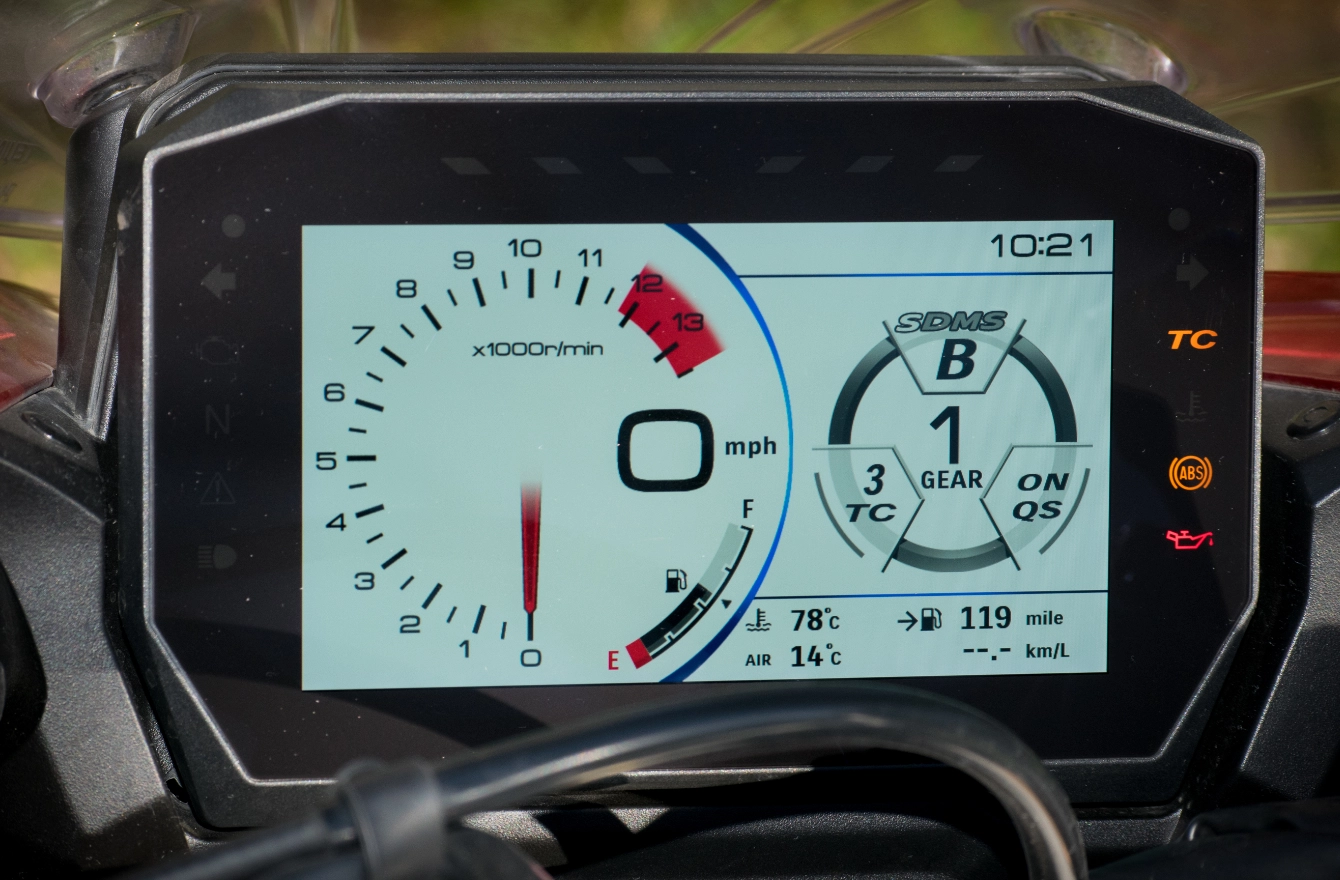
When it comes to riding, the GSX-S1000GT doesn’t have umpteen different riding modes … Suzuki takes a much more practical approach. There are three throttle modes: A, B and C. All three do the same thing, it is just how they achieve it.
We think A stands for Anarchy because the fuelling is very direct. Merely glancing at the throttle will be interpreted as a desire to go faster.
B stands for Beautifully Blended, which perfectly describes the relationship between throttle movement and engine response in this mode.
And finally, C is comfort mode, which has compliant fuelling mixed with an almost lazy throttle response.
Pick a throttle mode and match it with the amount of traction control you want, and you are good to go. There aren’t multiple menus to navigate, and you don’t need a laptop to program it. All the control you need in a few simple settings. Impressive.
Suspension
The suspension isn’t electronic; you have to set it yourself with a highly technical tool called a screwdriver. If you want essentially the same motorcycle with an upright riding position and electronic suspension, go for the GSX-S1000GX.
The GSX-S1000GT has preload, rebound, and compression damping adjustment on the front and preload and rebound on the rear. I only wish it had a remote preload adjuster on the rear, but it doesn’t really matter that much.
Once I’d worked out where I wanted the suspension, I never changed it, other than when I added a click after loading the panniers for a three-day weekend trip.
Report Card
As you might have gathered by now, I like the GSX-S1000GT. It doesn’t need excessive technology because it is a solid, well-designed bike. It easily goes fast enough to stir your soul and has excellent slow-speed manners. It will scratch and tour with equal commitment and comes with Suzuki’s seven-year service-activated warranty.
There is always room for improvement, so no bike gets 10 out of 10. I’ll take a mark off for the well-intentioned but hard-to-pack panniers and another for the brakes that look like they should stand the GT on its nose, yet their performance doesn’t match that expectation. They are very effective but take a while to become accustomed to.
Bottom Line
Suzuki’s GSX-S1000GT is easily 8 out of 10 all day long. And with these words now written … yes, I’m going for another ride.