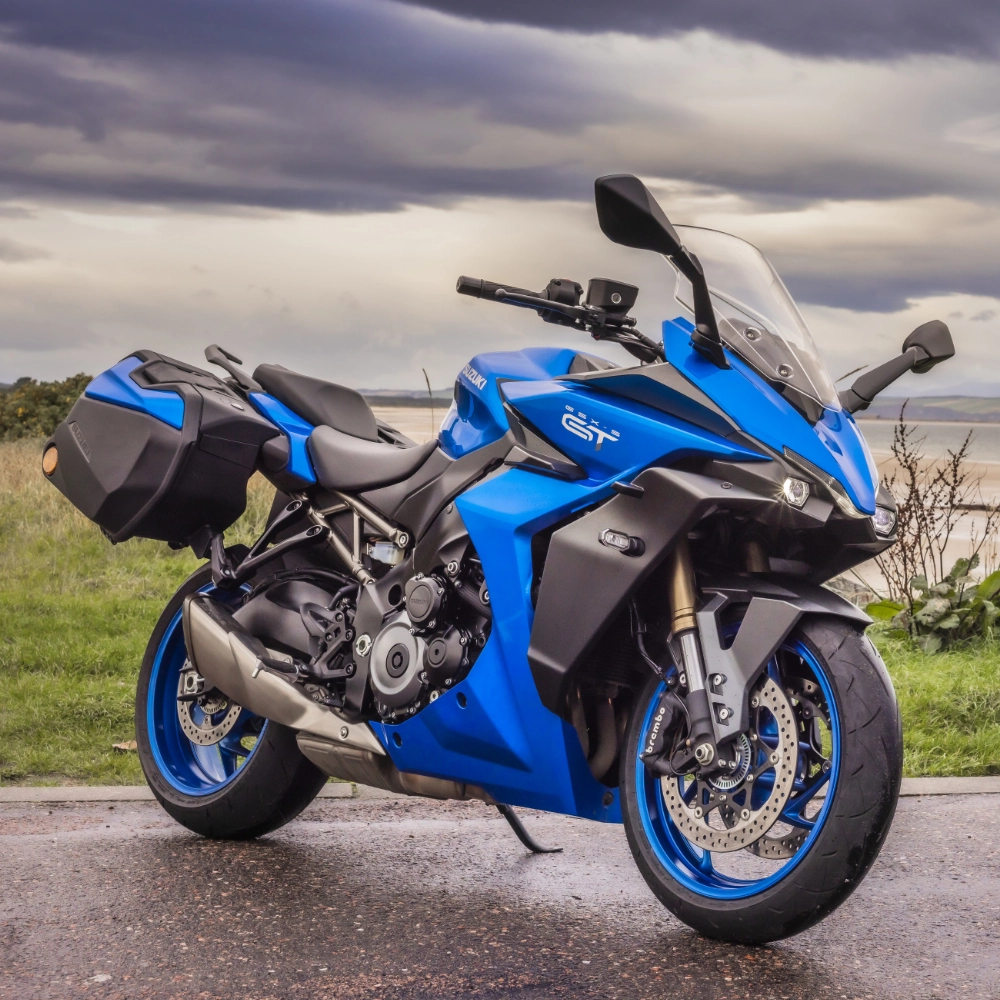
Modifications
Other than swapping the end can, adding some crash bungs, and the normal debate over which screen is best, there are surprisingly few modifications discussed on the GT forums until you get to the subjects of vibration, headlights, and rear tyre sizes.
We can’t understand the discussions about vibration. Three years ago, the only vibrations we could find were when we tucked our feet tightly into the frame. This was an unnatural riding position, so it was never going to be a problem. If the engine was producing vibrations, Suzuki had engineered them out of the rider contact points. For us, the ride was smooth.
So, the first test to complete with the GSX-S1000GT we have on loan from Suzuki will be a long motorway run at various RPM settings. Thanks to cruise control, these are a lot easier and more scientific than they once were.
For the headlights, living close to the Lincolnshire Wolds, where there are long stretches of unlit roads between the towns and villages, will provide lots of opportunities to see how well the headlights work when there is no other lighting to assist.
Reading back through the previous articles, I’d commented on how easily it was to pick out the GSX-S1000GT’s headlight, so comments about poor road illumination on the forums were surprising. Another one to add to the list of things to test
50 or 55
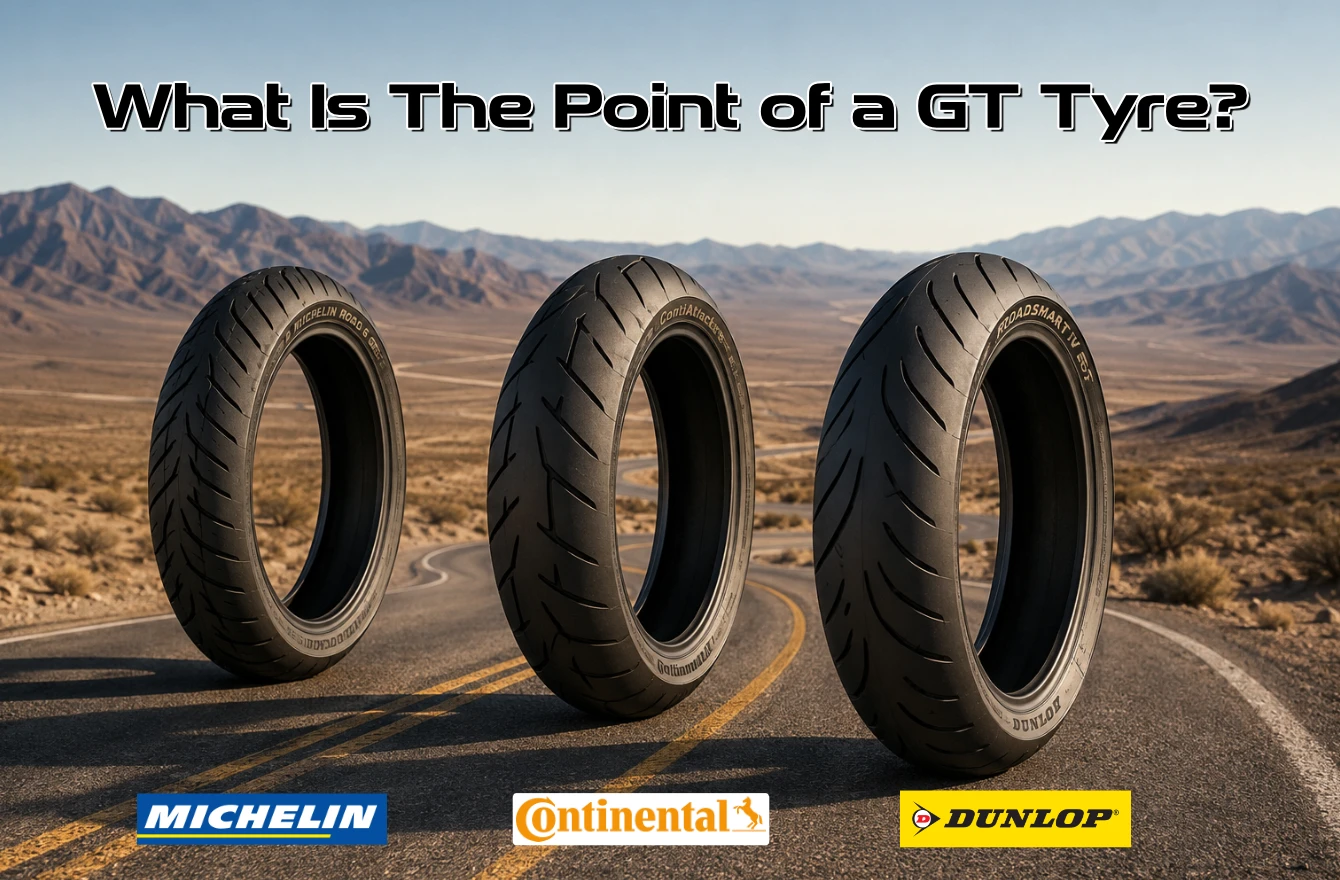
Perhaps the most common debate, though, is over the size of the rear tyre. The GSX-S is fitted with a 17-inch 190/50 out of the factory, which is often attributed to the GSX’s perceived slowness to turn.
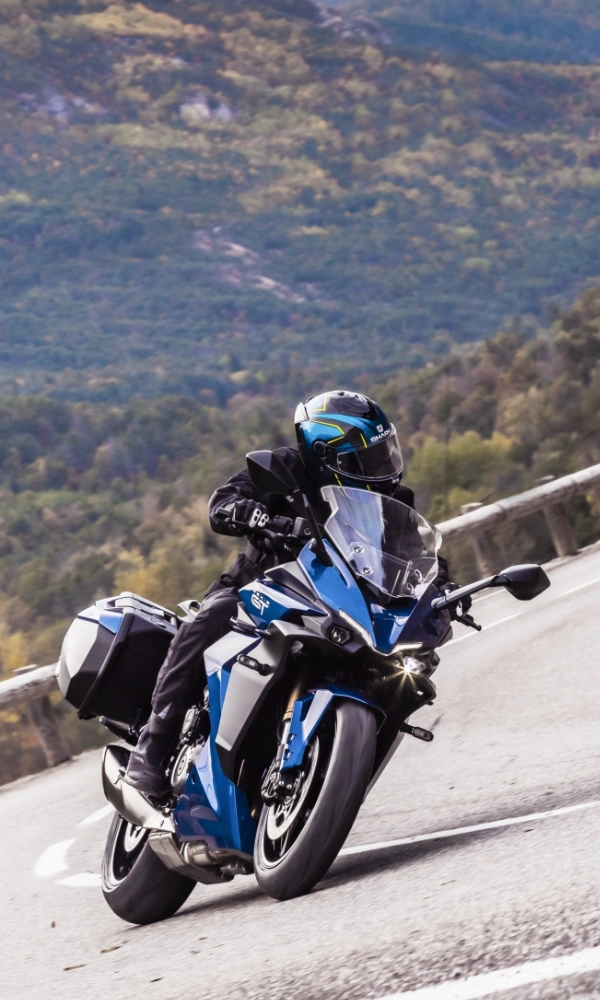 I remember the GSX-S/GT not being the nimblest of motorcycles through left-right-left twisties, but that I accepted as it is a Grand Tourer in the truest sense of the title – High Speed, continent crossing in comfort is where the GT came into its own.
A common change to alter the handling is to fit a 190/55 rear tyre. The theory is that the 190/55 is taller – the 55 tells us it is 55% of the 190mm width rather than 50%, and therefore, the angle from the highest point of the tyre to the rim should be steeper.
Mathematically, it all adds up, but 190/55 doesn’t describe the tyre’s shape, only its width and height. The tyre could look like a pyramid or a balloon; the math applies equally to both shapes.
Traction ABS and Speed
Changing the size of the rear tyre can impact the traction control, ABS, and even speedo readings, although most speedo readings are generated by gearbox sensors.
For the traction control and ABS to work, they need to understand the behaviour of the rear wheel. If the tyre size is changed from the factory-fitted size, any electronics that use the standard tyre size in their calculations will arrive at a slightly wonky answer if a different size tyre is used.
Ultimately, how fast the GSX-S1000GT turns will come down to the shape of the tyre, the one thing manufacturers never seem to discuss. It also follows that as we had chewed through the tyre on the last GT we tested, that might have been the most significant contribution to finding the handling progressive rather than immediate.
Typically, my reaction to all of this would be to fit Dunlop RoadSmart IVs in the factory-recommended sizes and be happy.
But then again, I’m biased, having never had a bad experience with genuine Dunlops. Perhaps it is time to try a set of Bridgestone, Pirelli or Metzeler tyres and see if they turn faster.
To be continued …