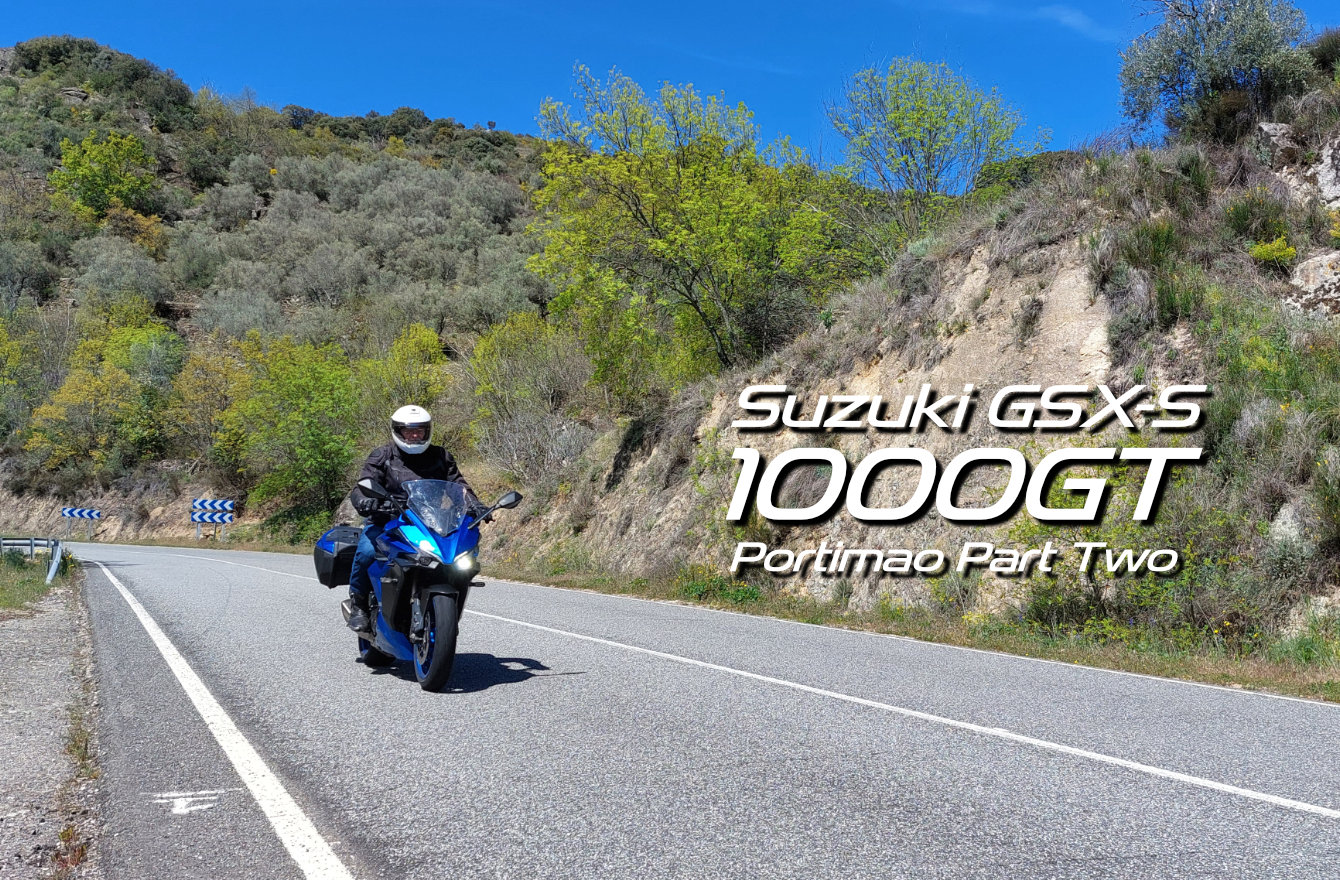

Yesterday, the Suzuki GSX-S1000GT and I discovered some very straight Spanish backroads and a flock of sheep.
Motorways are a necessary evil. When you need to get somewhere, they can be a wonderful invention, while at other times, they are the spawn of Satan. It all depends on what you need.
Having a couple of days to get to Portimao, we have taken to the Spanish backroads, which, if you have never ridden them, are well worth seeking out if you want to cover distances quickly.
Along with smooth road surfaces, and compelling curves, they are normally free of traffic. I’ve occasionally found one I should have avoided, but generally, they are a delight to ride.
Having spent the morning on the N623 crossing the hills, the afternoon required a diversion due to a closed road. Asking the Zumo XT to take the twisty route, we hoped to avoid arrow-straight roads. Alas, even the back roads in this part of Spain go from A to B without deviation.
But first the sweeping roads across the hills, then I’ll get to the sheep.
The N623
There are so many invigorating roads in Spain that I don’t think a definitive top 10 could ever be listed. By the measure of Spanish roads, the N623 might not be epic, cosmic, or make that top ten list, but on a bright sunny day, the grippy – traffic-free – tarmac was a delight.
A mixture of hill climbs, sweeping bends, panoramic cross views – helpful when maximising “efficiency” – and with the occasional hairpin thrown in to make sure you are paying attention, the N623 is everything we needed to establish the Grand Tourer credentials of the Suzuki GSX-S1000GT.
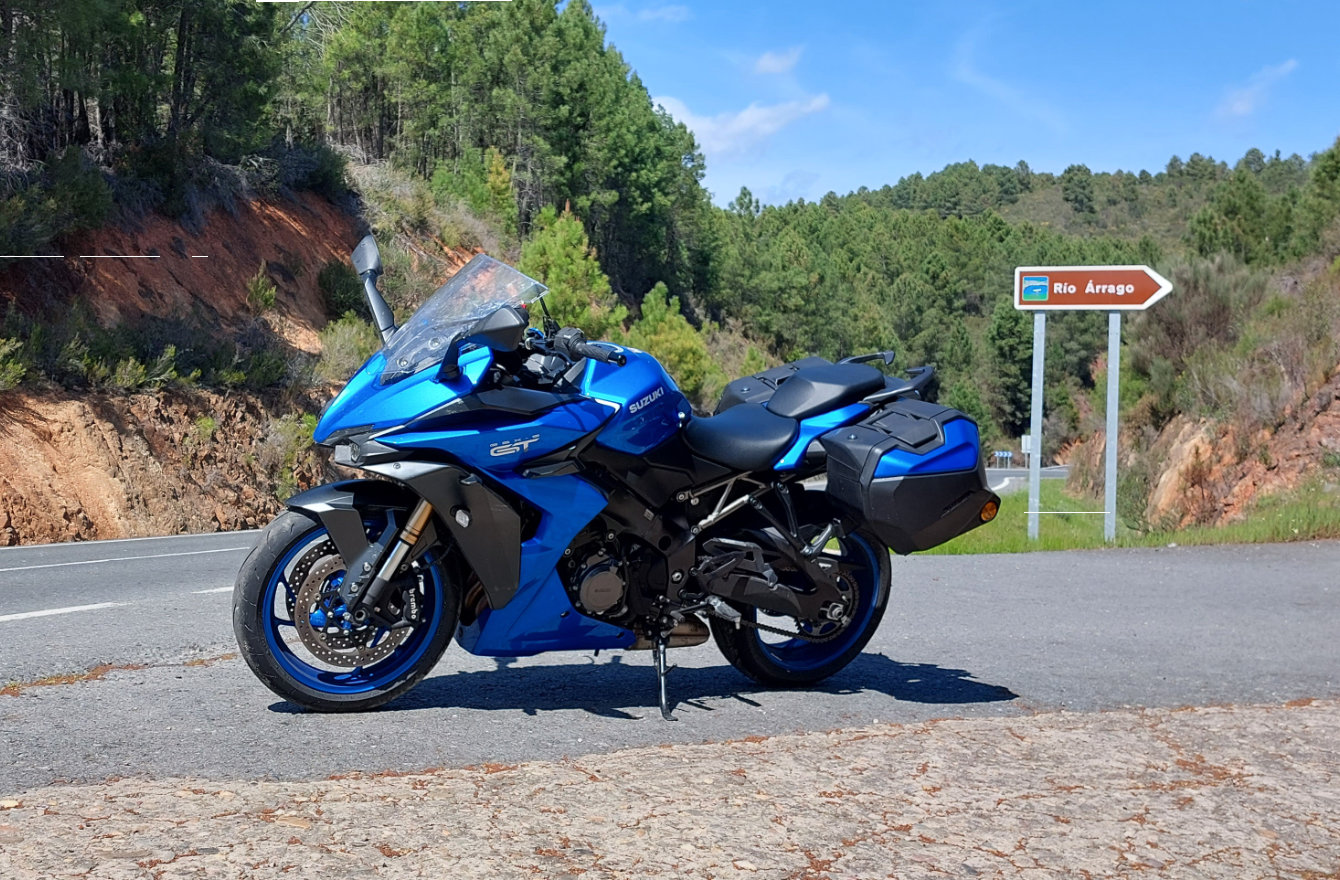 GT Mile Munching somewhere in Spain
GSX-S1000GT Brakes
It is interesting how two of us can interpret the same bike in different ways. Carle finds the brakes are just how he likes them. Initially, they feel as if nothing is happening, and as he gradually increases the pressure, the Brembo callipers bring the Suzuki to a stop.
Alternatively, I would prefer more initial bite to the brakes, and then I back the pressure off to control the rate at which I’m slowing.
The difference is most likely the pads that are fitted. Switch the OEM ones out for sintered double H pads, and I’ll be happy. What we do both agree on, though, is that there is more than enough braking power for the 150BHP the engine produces.
Quick Shifter
Again, we have a difference in opinion. Carle’s view is that the Suzuki quick shifter isn’t as tight as he would like it and prefers the one on his KTM 1290, whereas I think the Suzuki quick shifter is better than the one fitted to my Yamaha Tracer 9 GT, especially on lower RPM downshifts.
It is more a question of personal preference than anything else. All three quick shifters do an excellent job, and all three have personality quirks that you need to work with to get the best from them.
Travelling in traffic through the centre of Salamanca, I loved the ease with which the Suzuki quick shifter would allow me to pop between first, second and back to first. Perfect for lane carving and staying alive around some of the strangest roundabout traffic rules – or perhaps that should be lack of rules – I’ve seen. It doesn’t seem to matter what lane you are in; just do what you want(!)
Direction Change
Some of the articles I’ve read have suggested that the GSX-S1000GT has heavy steering, and one even went as far as to compare the steering to that of a barge. I can’t comment on what bike they had been riding, but it certainly wasn’t the GSX-S1000GT I was on.
Is the Suzuki Grand Tourer heavier to steer than the Yamaha 9GT? Yes. Is it heavier than the KTM 1290? According to Carle, who rides the KTM daily? No, the KTM is less keen to change direction than the GSX-S1000GT. Does the Suzuki GT steer as quickly as the Fireblade? No.
So, where does that leave us? The Suzuki GSX-S1000GT is designed to be a Grand Tourer with sports bike capabilities. Suzuki could have designed the GT to change direction faster, but would that have been at the cost of the impressive high-speed stability?
Exploring the capabilities of the Suzuki across some of the backroads that crisscross the farmlands in the middle of Spain, the Suzuki GT proved just how stable a high-speed continent crosser the bike is.
No weaves or wobbles. No steering damper is required, and no blurred vision from rock hard suspension: just arrow-straight, high speed, relaxed travel that you can use on any road. One of the traits of a true GT.
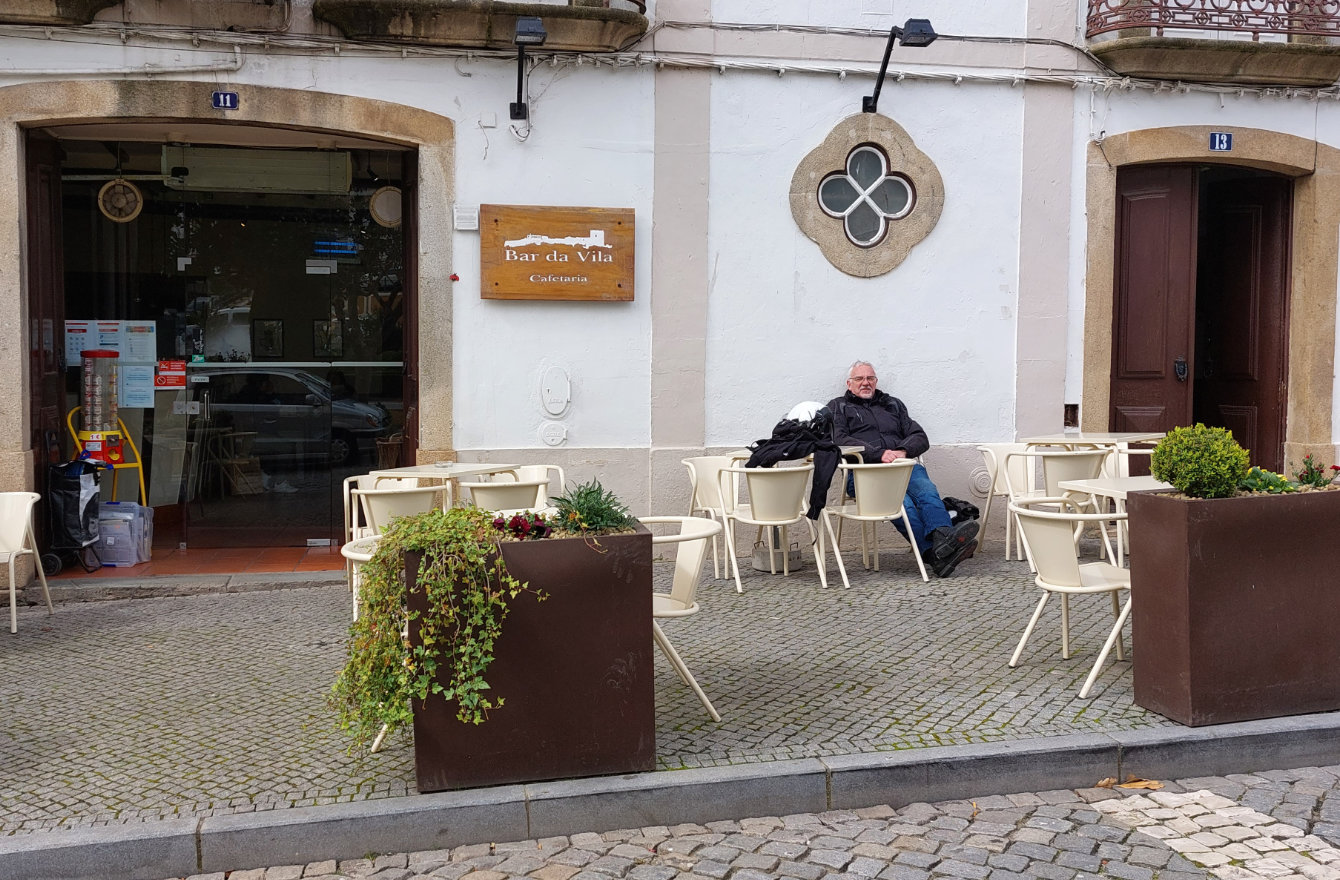 This man will road test for coffee.
Holding the Line
It isn’t uncommon for something that likes going straight to want to continue doing this, even when you want to travel in a curve. The trick for motorcycle manufacturers is to balance the two requirements out. Make the bike stable in a straight line, but not so stable that it resists our instructions to arc smoothly around corners.
How they achieve this differs not only between manufacturers but also from bike to bike.
I can’t use the same cornering technique on the Suzuki as I use on my Tracer 9GT. The two motorcycles require a different approach to get the most out of them. To get the most from the Suzuki, I found the GT preferred to be lined up early and powered through a corner.
Nothing like the technique that, for me, gets the best from the Yamaha, where, despite my attempts not to, I always seem to turn in too early.
Whereas the Yamaha is lighter in a corner, the Suzuki is a lot more planted and holds the trajectory you put it on resolutely.
In building a Grand Tourer, Suzuki has given the GSX-S1000GT the handling you would expect from a GT. Stable. Predictable. Planted. The clever bit was making it equally capable when riding the twisting backroads across the hills in southern Portugal.
The Sheep
Most of us head to Spain for the roads. Some of the National “N” roads can make you start to dribble with delight. Get a little more adventurous and onto the EX, CL, and even RU labelled roads, and you will spend more time on the side of the tyres than you do on the centre.
In the region northwest of Madrid, there is a lot of farmland and with it comes the straight roads running between the fields, interconnecting the small villages.
I prefer these roads over the motorways, and because there is little or no traffic on them, you can cover a lot of distance in a short amount of time.
Covering such a distance – in the shortest amount of time good manners would allow – I was looking far, far into the distance, wondering when the next bend might appear.
Somewhere down the road, I thought I could see it, and it looked to have straw bales on the outside of the bend. However, on closer inspection – which didn’t take long to occur – the straw bales appeared to be moving.
With the distance between me and the moving straw bales now reduced significantly, I could see that this was, in fact, a flock of sheep, complete with a shepherd and four or perhaps five sheepdogs. I mention all of this because it is how I discovered just how good the brakes are on the GSX-S1000GT.
There was never any danger or a conflict. Nonetheless, a flock of sheep does focus the mind when grabbing for the Brembos.
Coming to a controlled stop 20 meters from the sheep, the shepherd and the dogs kindly ushered the sheep to one side of the narrow road, and we were on our way again. One of the dogs did seem to think that I needed to join the flock and chased me. Or perhaps he just wanted a closer look at the Suzuki.
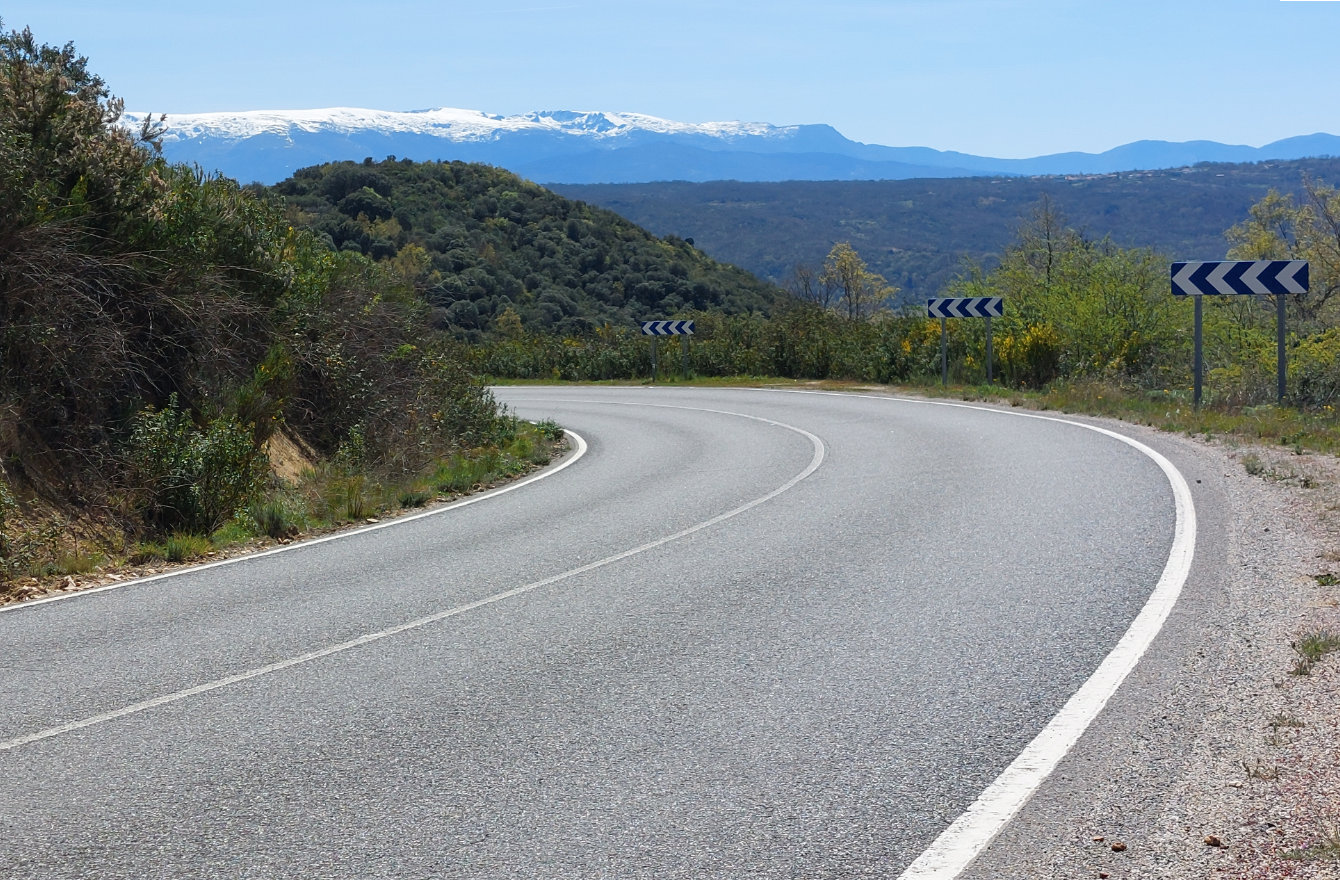
Chewing on Tyres
The 150BHP and 106Nm of torque the GSX-S1000GT kicks out has presented us with a small problem. In the 1,500 wonderfully invigorating miles we have ridden to reach Portimao, we have chewed up most of what was left of the Dunlop Sportmax Roadsport 2 that the Suzuki came shod with.
We can’t be sure, but we suspect that the tyre now has around 4,000 miles on it, and whereas it is legal, we are not sure if there is enough tread left to get back to Suzuki at Milton Keynes.
The answer is easy; we are buying a new rear tyre. Our problem is that tomorrow is Sunday, and we need to be travelling early on Monday morning. Oh well, such is life. A new tyre is the price to be paid for the fun we have had wearing it out.