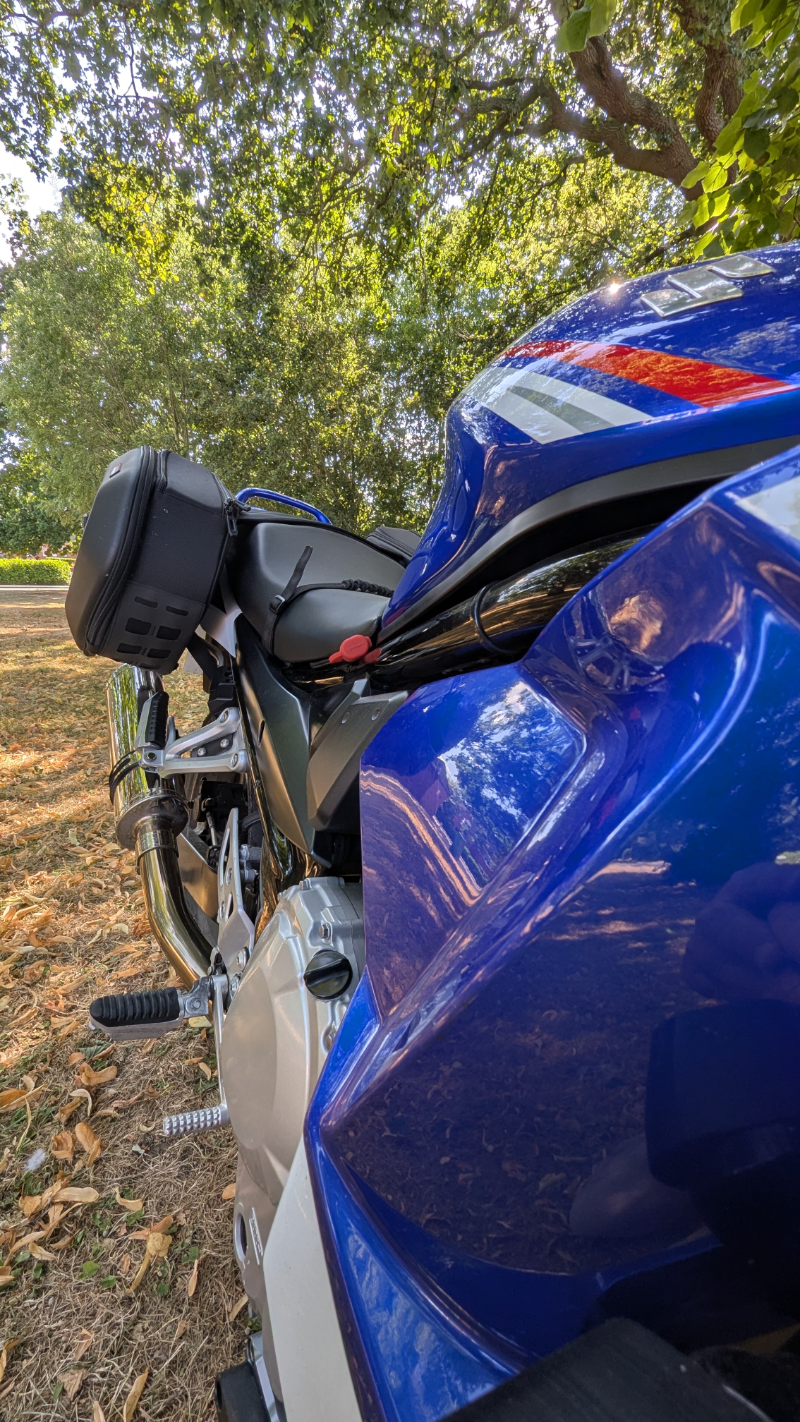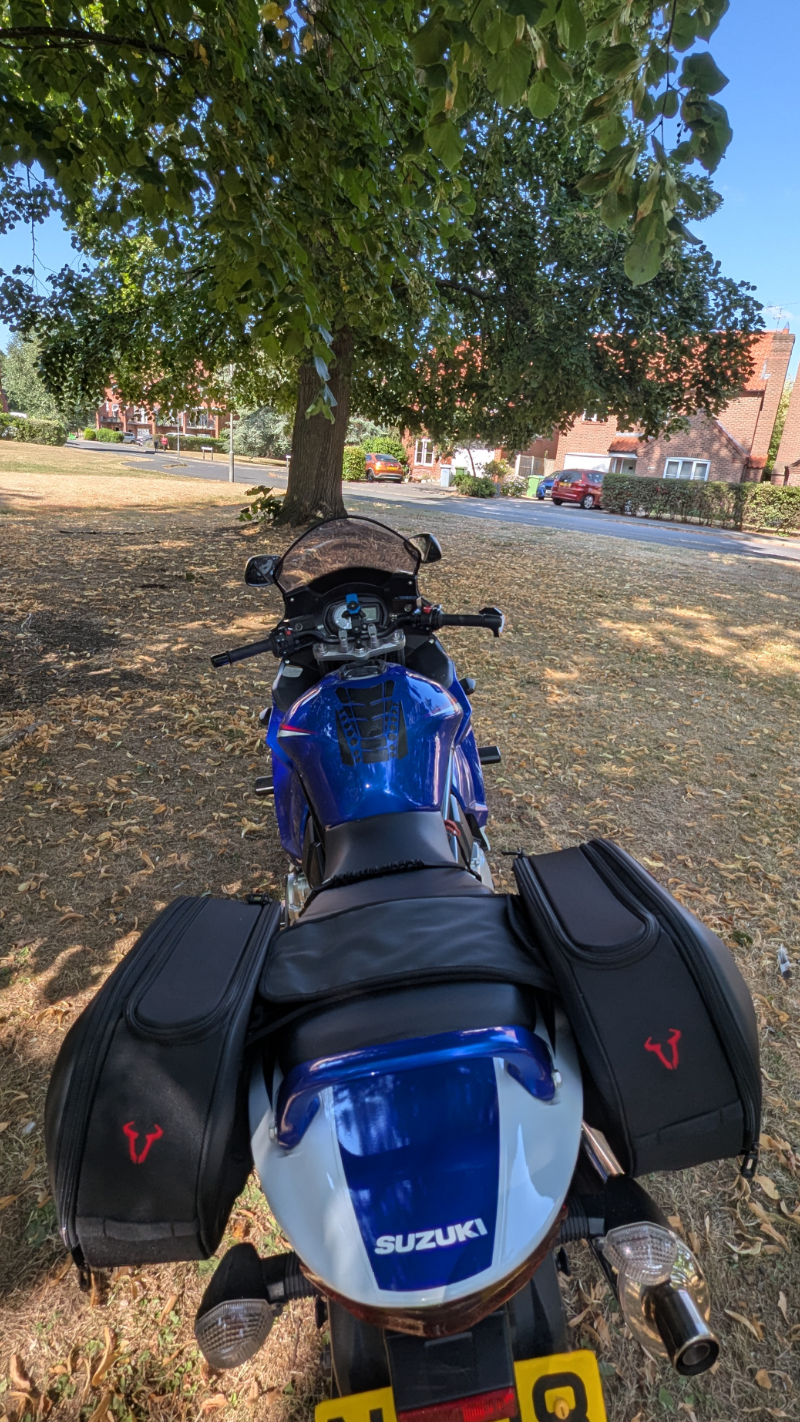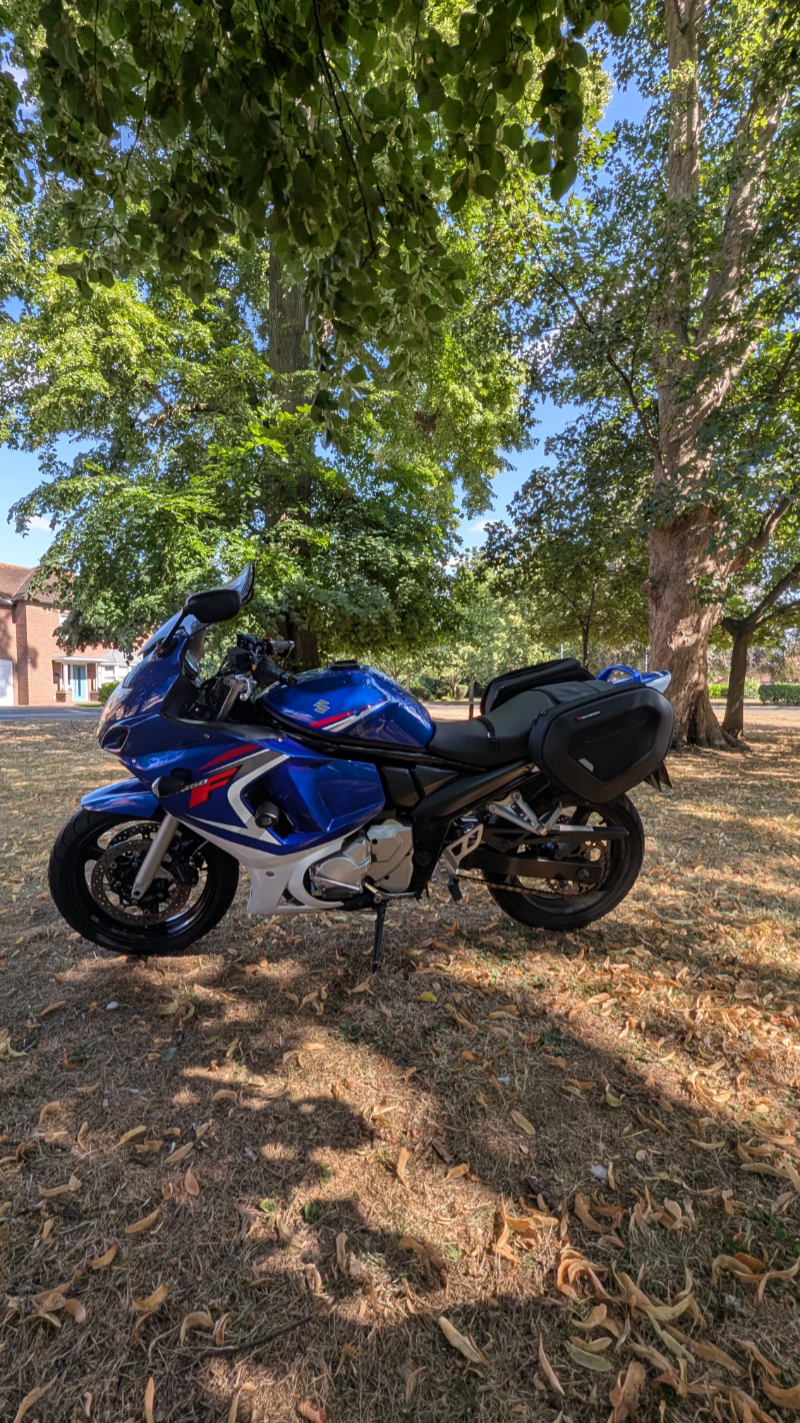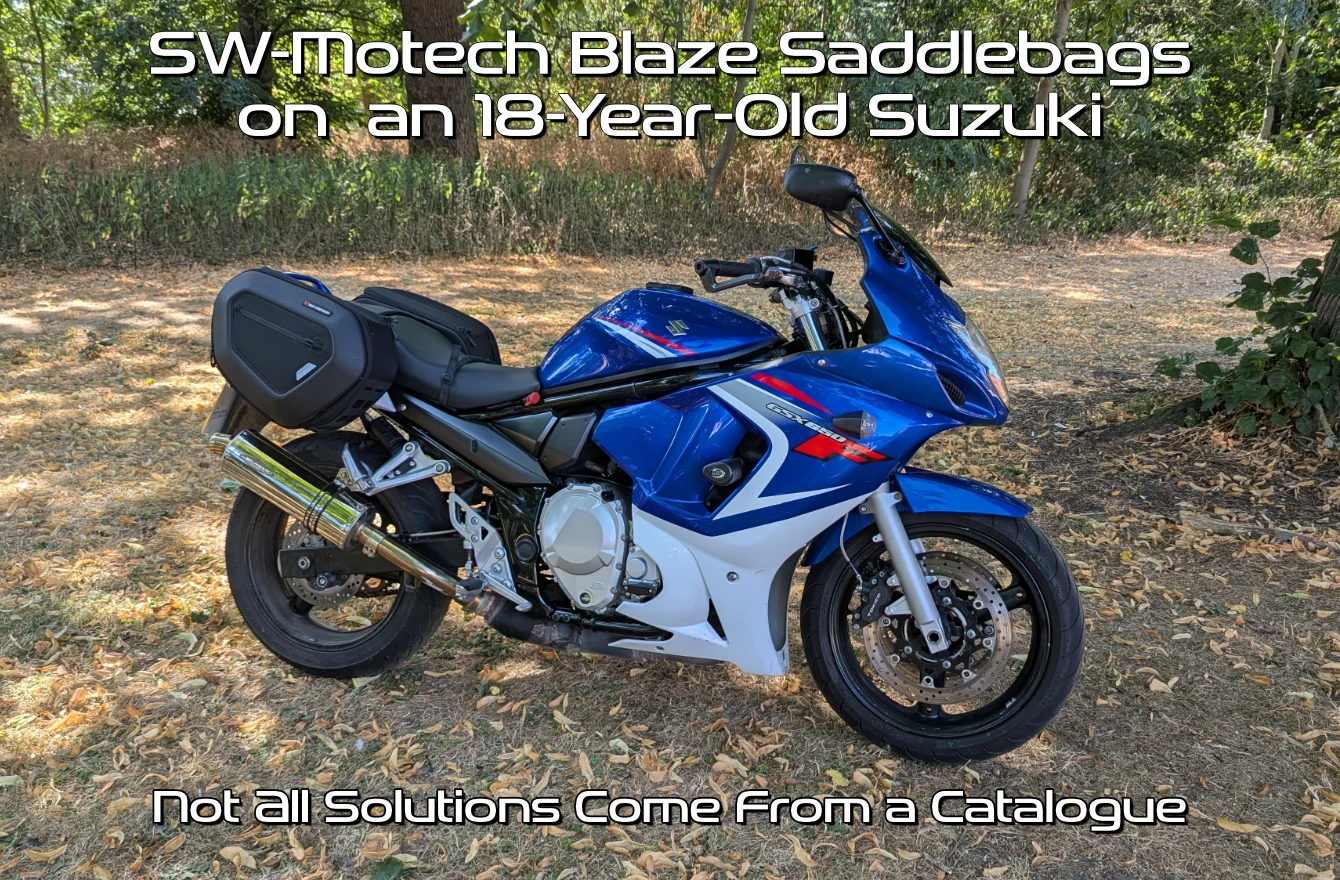

A few months ago I had Suzuki’s very engaging GSX-8TT on test. As the road test plan involved camping in Scotland, a set of SW-Motech Pro Blaze Saddlebags was the obvious answer to the luggage question, as they are the same design as the official Suzuki ones.
Having ridden all over the country, and used the saddlebags on a long weekend camping trip, I came away thoroughly impressed by both.
The bike is a cracking all-rounder, and the saddlebags were so practical and simple to fit that I wondered why no one had come up with this idea earlier (as far as I know).
After the bike was returned, I planned to fit the saddlebags to my GSX650F.
The Pro Blaze system uses discreet support arms to keep the bags away from the bike’s moving parts. To mount the arms, there are bike-specific mounting kits which ensure the arms are in the correct place; the bags are easy to take on and off and don’t flap around like distressed laundry at motorway speeds.
The arms themselves are easily disconnected from the bike-specific mounts, so there is no “scaffolding” usually associated with saddlebags on show when you are not using them.
When you take everything off, you’re left with a motorcycle that still looks like a motorcycle, not a mobile shelving unit.
Getting Old
SW-Motech make mounting kits for an impressive range of motorcycles, yet you can understand why my faithful old 18-year-old Suzuki GSX650F isn’t one of them.
Now, before anyone asks why I wanted to fit premium modern luggage to an 18-year-old sports tourer, I’d argue that’s exactly the sort of bike that deserves it.
The GSX650F has quietly become a dependable old friend. A good one on Facebook Marketplace or eBay will cost you around £2,200, and that is where I found mine.
It starts on the first push of the button, runs beautifully, is comfortable, surprisingly capable, and easy to work on. Other than replacing the fork seals, a set of decent tyres and general servicing, it has cost me nothing.
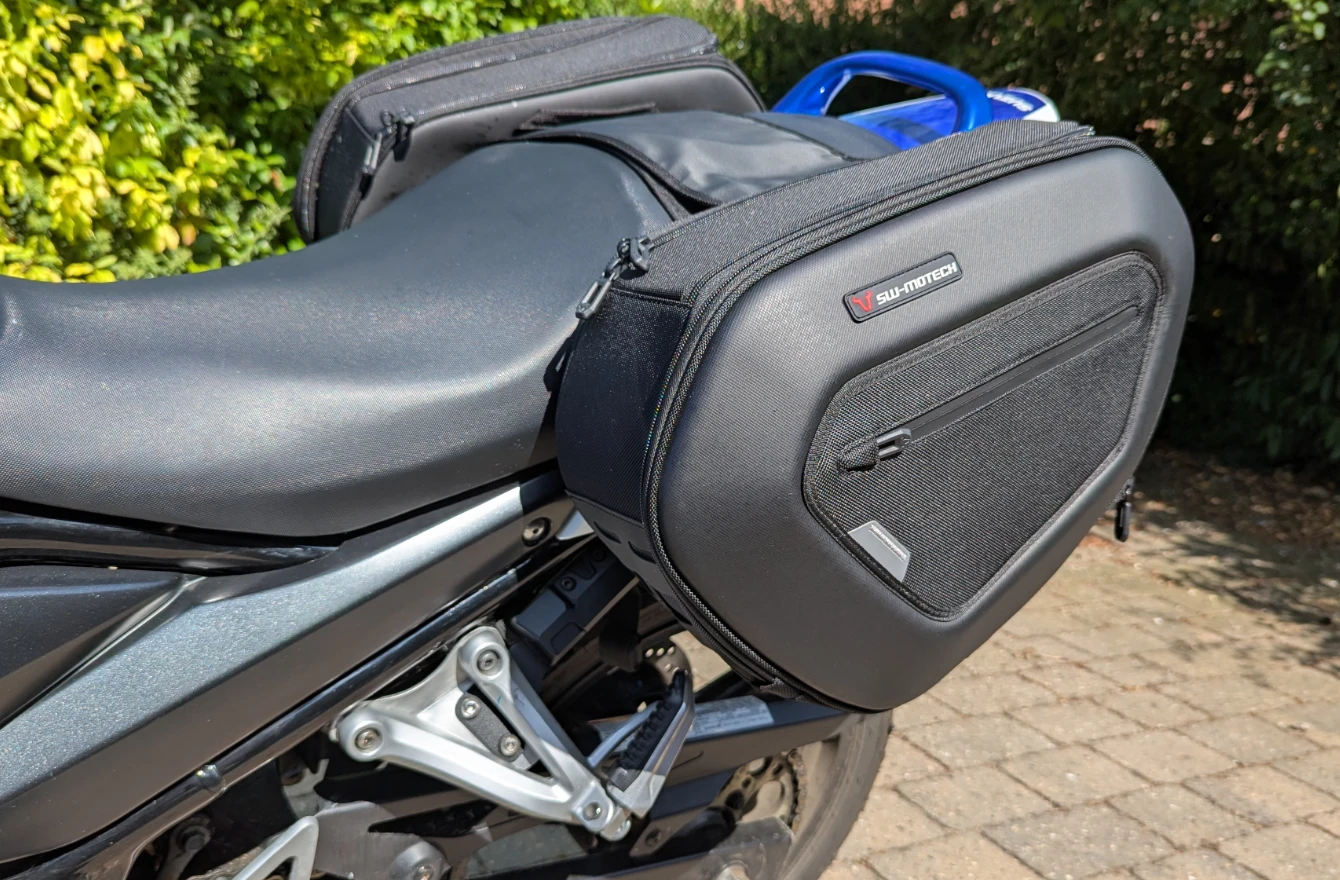
And I’d argue that I won’t have £5,000 more fun on a £7,000 bike. Yes, there is a lot of fancy stuff missing, but the only upgrade I needed was replacing the headlight bulbs with LEDs to overcome the less-than-impressive standard ones.
The only thing that has stopped me from taking longer trips on the GSX-650F is the lack of decent luggage. I could – and have – strapped a bag on the back, but I was looking for something a little more refined.
Some people fit the luggage from the 1250 Bandit, but that leaves me with the scaffolding problem. In my head, all I needed to do was work out how to attach the SW-Motech brackets.
Can’t Be That Hard
My first thought was that I could adapt the brackets from the Suzuki-8TT. Err .. No, that didn’t work, and so over the following weeks I demonstrated, with admirable consistency, why I have never been employed as a design engineer.
I held various cardboard templates against the bike at improbable angles while convincing myself they were “nearly there.”
I bought bits of aluminium strip that looked wonderfully promising until they bent like warm liquorice, because I had no idea what I was buying.
There may even have been a brief period where cable ties entered the conversation. Not as a serious engineering solution, obviously… but long enough for me to realise I’d gone through all five stages: Denial (I don’t need them) – Anger (why doesn’t this fit) – Bargaining (cable ties would work) – Depression (will I ever get this sorted) – and arrived at Acceptance.
Acceptance that I need to find someone who knows what they are doing.
Each To Their Own – Etto
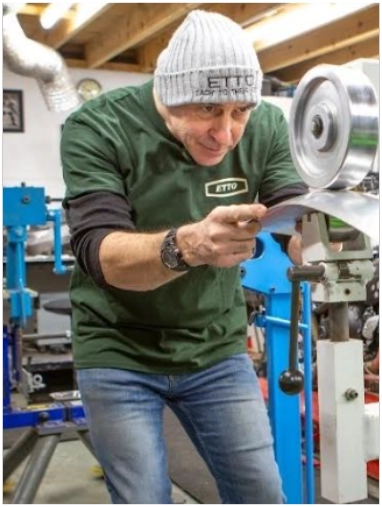 Actually finding someone wasn’t entirely straightforward, but after a lot of phone calls, and falling off my chair at some of the proposed costs, the magic words “Speak to Etto” were whispered in my ear.
Like many genuinely talented craftspeople, Etto doesn’t seem particularly interested in advertising himself to the world. Those who know him simply point you in his direction with the sort of quiet confidence usually reserved for recommending a good tailor.
“Speak to Etto” was about as much information as anyone gave me; I finally managed to find his website – ettomotorcycles.uk – through a post on Instagram.
Based out of his workshop, Etto has that rare ability to look at what appears to everyone else to be an impossible problem and quietly begin measuring things while the rest of us are still scratching our heads.
I arrived carrying a collection of SW-Motech parts, several abandoned ideas and what little remained of my engineering dignity.
Rather than politely explaining why none of my plans would work, Etto simply started looking at the bike and nattering to me about what I wanted, while a succession of blues songs played in the background.
With a good idea of what was needed, we were quickly down to the finer points of load paths, clearances around the exhaust, suspension movement, and how the support arms needed to sit so that the saddlebags retained everything that makes the Blaze system so good in the first place.
The Build
Once the design was settled, first up was a metal template, made from something thin and easy to work with. The first attempt was close, but not exactly right. The second template was spot on.
More time is spent getting it “wrong,” so getting it right is easy. One screw hole was slightly off on the first attempt, so a second template was needed to get it perfect.
It was fascinating to watch proper fabrication taking place. Production-strength aluminium alloy was measured, cut, shaped and smoothed with the sort of precision that makes you realise there is a world of difference between making something fit and making something properly.
There’s a temptation to think of brackets as little more than bent bits of metal. Good brackets aren’t.
They’re structural components that have to carry weight, resist vibration, clear moving parts, avoid bodywork, line everything up perfectly and still disappear visually once fitted.
The finished pieces looked as though they’d always belonged on the Suzuki, although I do need to paint and lacquer them, or perhaps a very thin powder coat.