
Suzuki GSX-8TT: Retro Intent, Modern Precision
Suzuki’s middleweight renaissance continues apace, and the GSX-8TT arrives as perhaps the most stylistically assured of the Hamamatsu firm’s parallel‑twin lineup.
Built on the same bones as the naked GSX-8S and the faired GSX-8R, the GSX-8TT leans hard into a retro-inspired brief without sacrificing the core dynamic competence that has made the platform such a success.
As always, the devil is in the details, so stick the kettle on … let’s dive in.
One Platform, Four Personalities
Before diving into geometry and tyre profiles, it’s worth setting the scene. All four bikes — 8S, 8R, 8T and GSX-8TT — share the same 776cc, utterly magnificent parallel twin, a steel frame, a cast aluminium swingarm, and broadly similar architecture. Yet Suzuki has been careful to tune each variant toward a subtly different rider expectation.
The GSX‑8S stands as the pure naked: upright, wide bars and completely unfiltered. The GSX-8R adds a fairing and clip-ons above the yoke and is slightly more front-end-focused due to its weight distribution.
Between the GSX‑8T and GSX-8TT, Suzuki has created a meaningful distinction through styling and the subtle knock‑on effects it has on the ride.
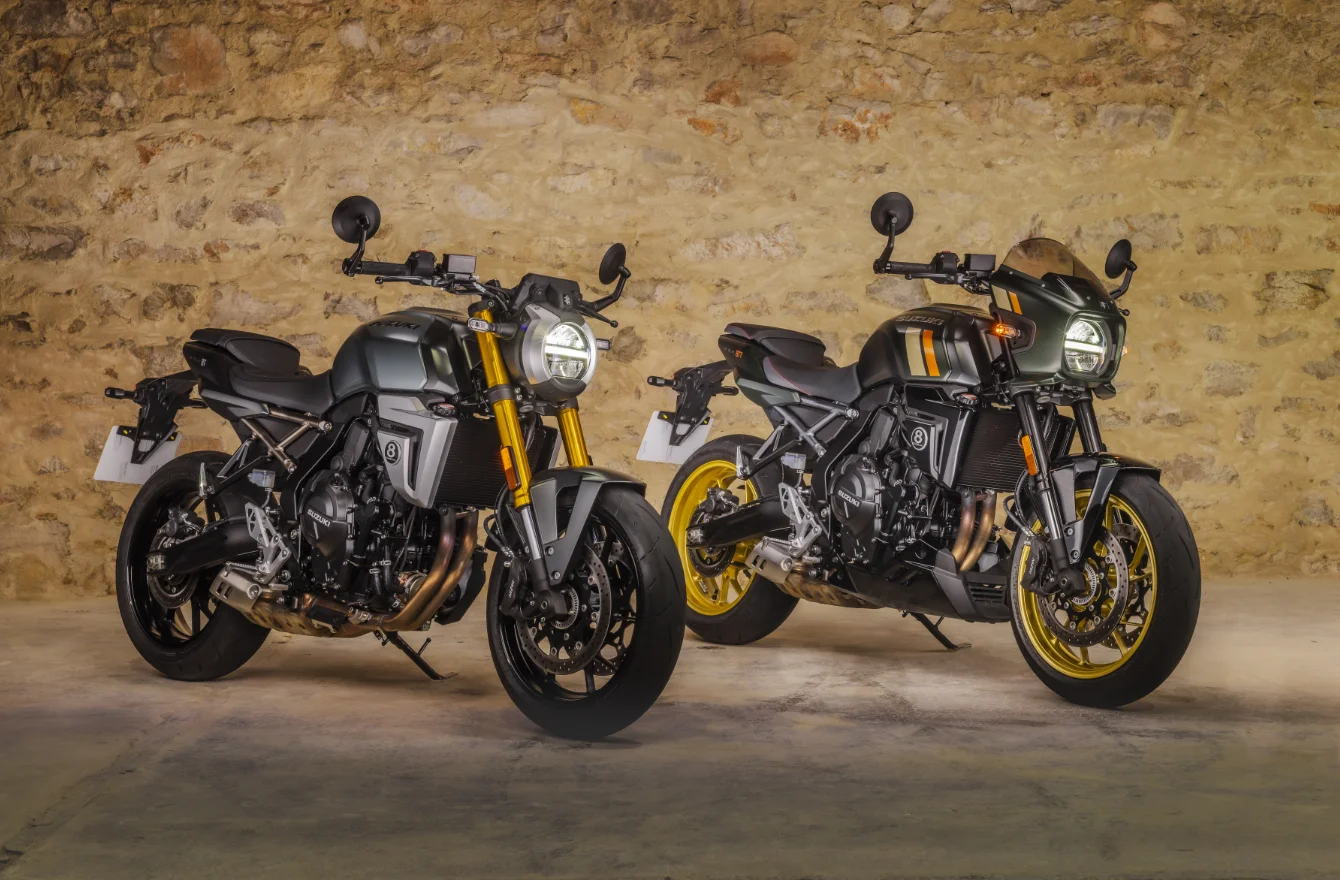
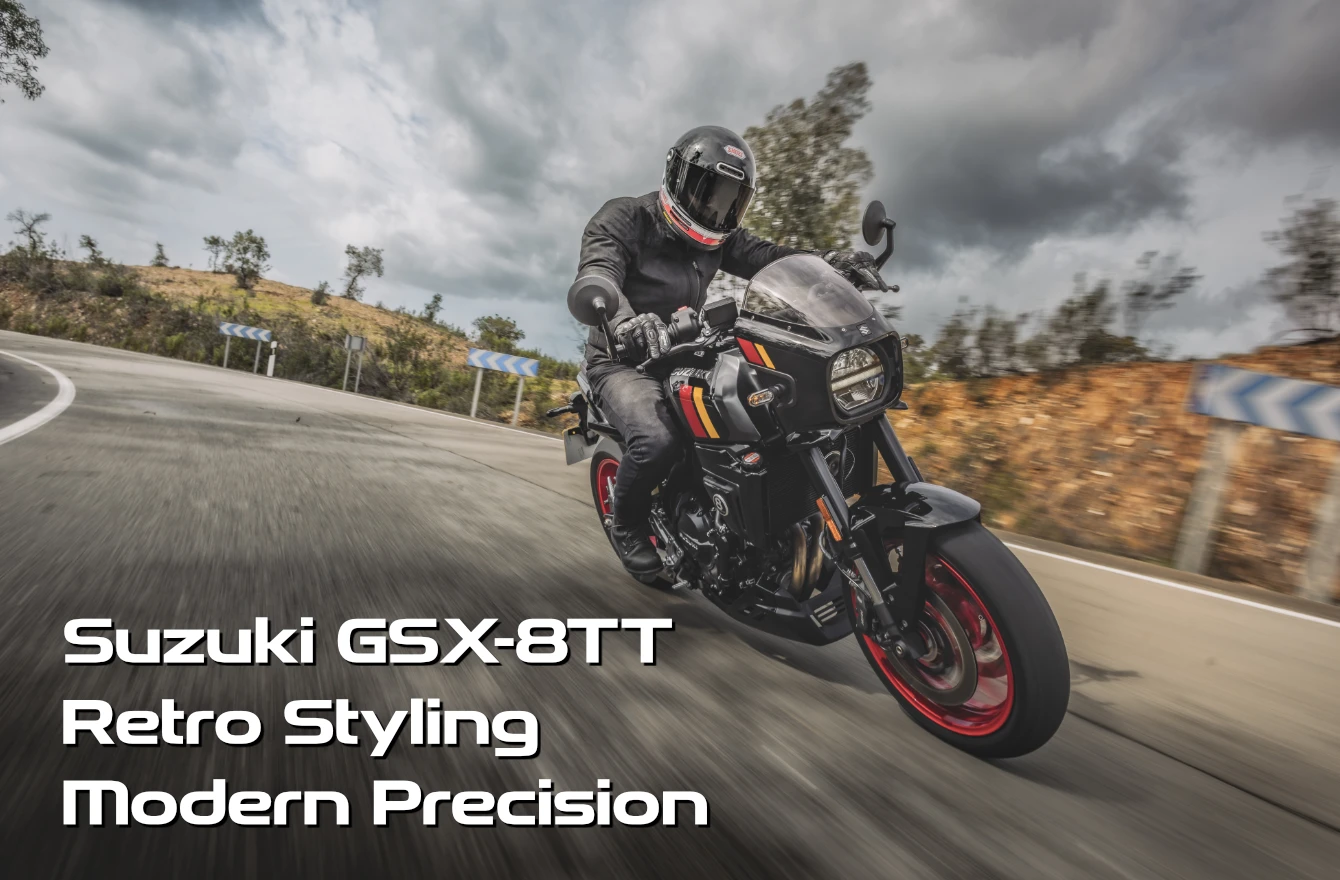
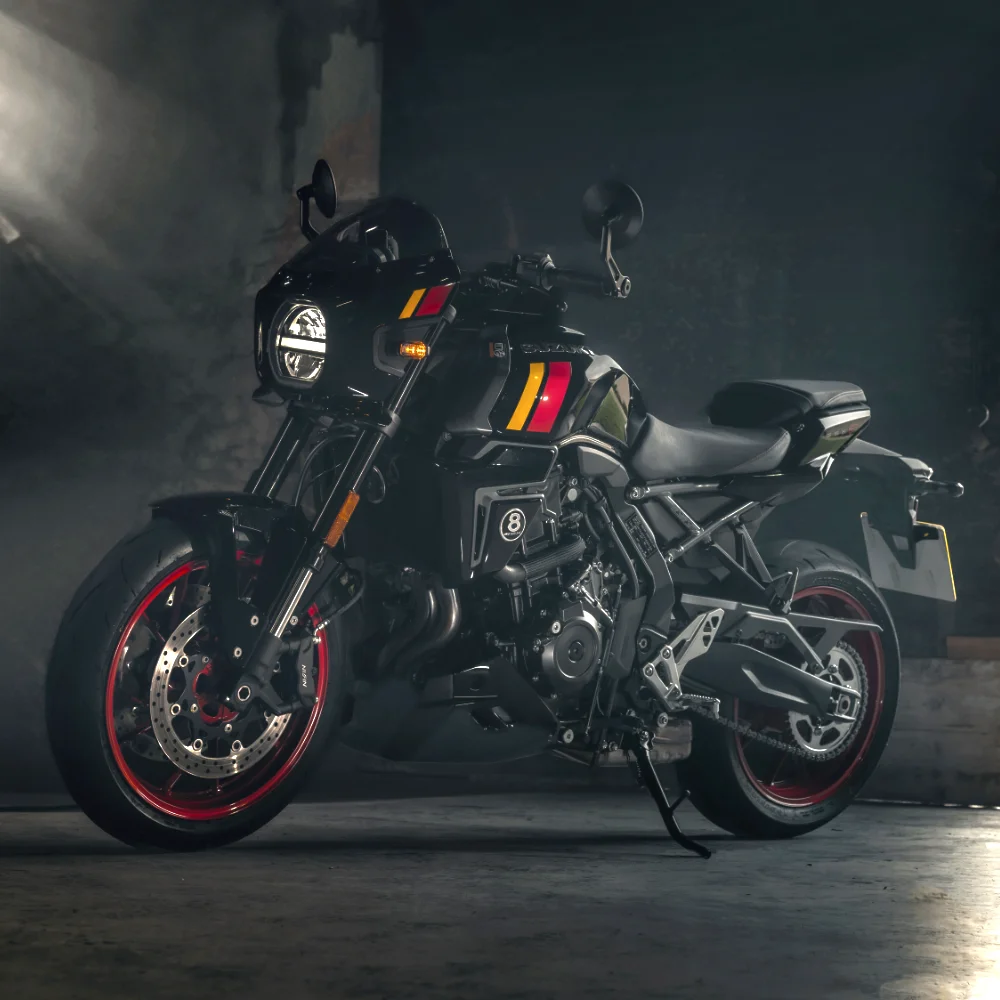
Aesthetically, the GSX-8TT adds a factory headlight cowl, a belly pan and a more detailed seat finish, all of which push it toward a classic endurance‑racer aesthetic. In contrast, the 8T remains the cleaner, more conventional street bike.
On the move, those visual changes translate into small but noticeable differences. The GSX-8TT’s added frontal mass and slight aerodynamic benefit give it a more planted feel at speed, with reduced wind blast making it the more comfortable option on faster roads and when chasing a BMW [~cough! – Ed.]
In contrast, the 8T feels fractionally lighter and more eager on turn-in, responding even quicker to steering inputs, and the GSX-8TT isn’t slow to turn.
The distinction is subtle, and perhaps the GSX-8TT’s style also affects how we ride. Exposed and naked on the 8T, bringing out a smidgen more hooligan, while the GSX-8TT triggers the endurance racer ethic, just as committed but in it for the long haul, rather than the sprint.
Frame Geometry and Steering
The core chassis geometry across the range remains conservative but effective. A rake angle in the region of 25 degrees and a trail just shy of 105mm places the Suzuki GSX-8TT firmly in the real‑world performance camp rather than track-day extremities. Regardless, it still turns bloody quickly.
The wheelbase sits around 1,465mm, a figure that strikes a pleasing compromise between stability and agility.
Where the GSX-8TT distinguishes itself is not in wholesale geometry changes, but in the comfortable yet agile riding position it invites.
Compared with the 8S, the GSX-8TT’s bar position is fractionally lower and narrower, shifting a touch more weight onto the front wheel. It lacks the 8R’s forward pitch but avoids the absolute upright sail‑like stance of the naked. The result is a riding position that naturally biases the rider toward a controlled turn‑in without demanding excessive commitment.
On the road, this translates to a bike that flows rather than attacks. The 8R, by comparison, feels keener on initial tip‑in — its fairing and front‑biased ergonomics encouraging a slightly sharper entry line — while the 8S can feel a shade lazier at speed, particularly when loaded.
All of that said, the 8S was harder to catch along the country lanes when we took it to Wales for a long weekend, but the 8TT wasn’t part of that adventure.

Swinging Arm, Angles and Drive Behaviour
The aluminium swinging arm across all four models is of comparable length, designed to centralise mass and provide predictable rear grip. Its pivot position relative to the final drive sprocket has been chosen to minimise squat under acceleration while still allowing the rear suspension to work effectively over uneven surfaces.
On the GSX-8TT, the sensation under drive is notably composed, especially when banging out of a corner, fully on the herbs.
There’s less of the squat‑and‑go shuffle you might associate with budget middle weights, and more of a flat, controlled surge forward. Compared with the 8R, which feels fractionally tighter and more taut under aggressive throttle, the GSX-8TT relaxes the experience just enough to make imperfect roads less of a negotiation.
The swinging arm angle works harmoniously with the linkage shock, delivering progressive compression that suits both steady touring and Sunday scratching. It’s not aggressively sporty, but crucially it avoids feeling underdamped or vague — a balance the 8S occasionally edges toward when pushed harder.
Tyres, Profiles and Speed‑to‑Turn
Suzuki wisely fits conventional yet versatile tyre sizing across the range: a 120/70 ZR17 front and 180/55 ZR17 rear. This choice immediately places the GSX-8TT in familiar territory for riders stepping up from smaller machines while keeping replacement options broad and affordable.
The size combination offers a neutral steering profile. The 120-section front avoids excessive tip-in sharpness, while the 180-section rear ensures stability under power without resisting direction changes. In practice, the GSX-8TT exhibits a linear relationship between speed and lean input — what you might call predictable responsiveness.
OEM tyres are Dunlop SportSmart 2, which I’m guessing are single compound. They worked well on the B roads, and there was the occasional scrape from the footpegs when getting excessively exuberant at roundabouts.
Compared directly, the 8R can feel a fraction quicker across the first few degrees of lean, thanks to its more committed stance and aerodynamic loading at speed. The 8S, meanwhile, trades some of that immediacy for leverage; wide bars make rapid corrections easy, albeit with a slightly less precise feel at higher velocities.
The GSX-8TT lands in a sweet spot. It doesn’t flick like a Super Sport, nor does it meander like a relaxed roadster. Instead, it offers a steady, confidence‑inspiring arc into corners — the kind of behaviour that builds trust over distance rather than dazzling in the first mile.
As always with tyres, the tyre’s profile isn’t fully described by the numbers. A pair of Dunlop SportSmart IVs would be an ideal upgrade for those wanting a balance between sports rubber and all-day, all-weather usability.
Engine Character: Torque Where It Matters
At the heart of it all lies Suzuki’s 776cc parallel twin, complete with a 270‑degree crank that mimics a V‑twin firing order. Peak power hovers around 84bhp at roughly 8,500rpm, while maximum torque sits close to 78Nm at about 6,800rpm.
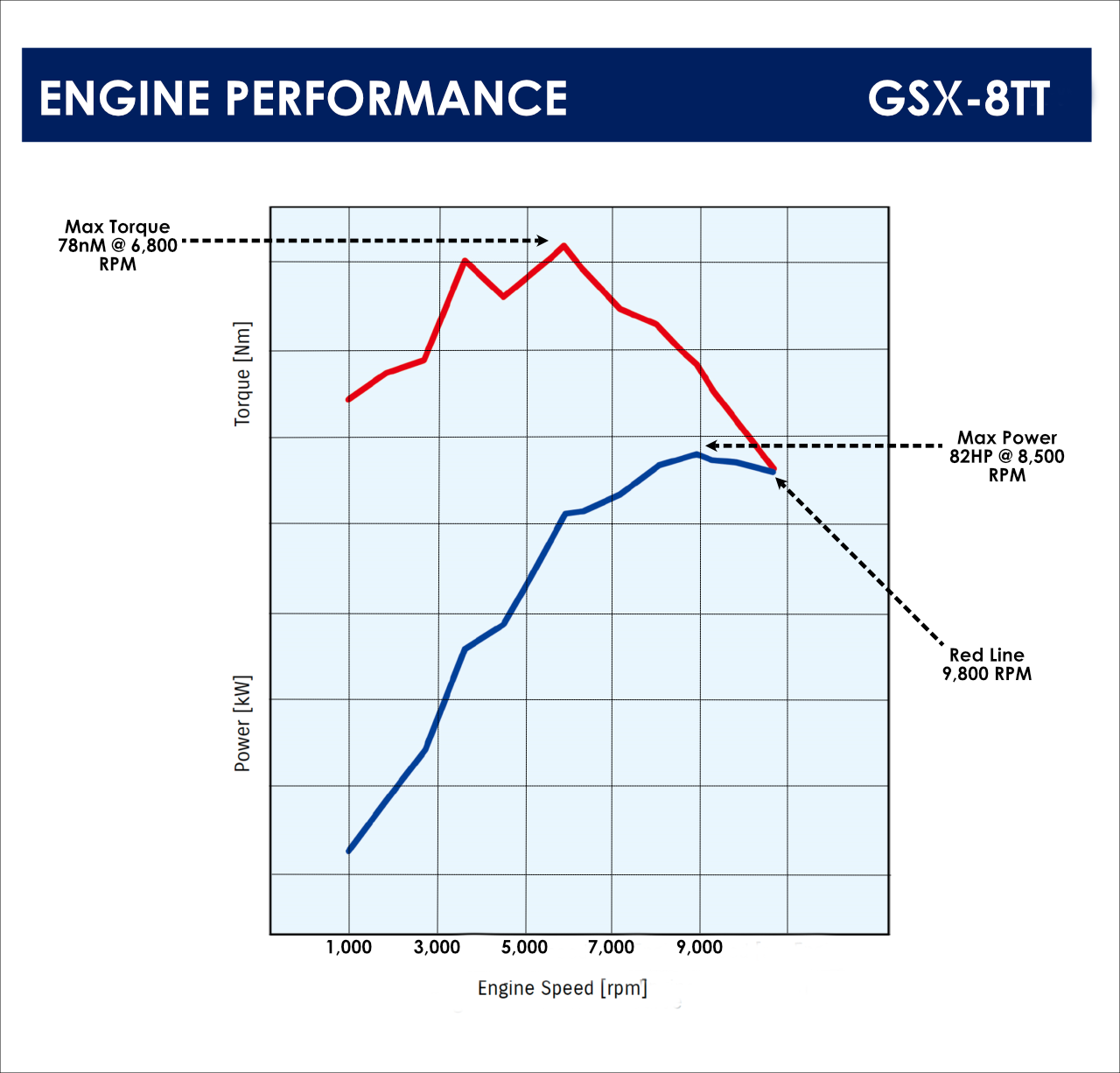 Numbers aside, it’s the delivery that matters. The engine’s strongest suit is its accessible midrange. From 3,000rpm onward, the motor delivers a broad, usable torque range that makes overtaking effortless and urban riding undemanding. There’s no need to chase the redline; in fact, doing so feels slightly at odds with the engine’s relaxed character.
In the GSX-8TT, this trait is amplified by the bike’s overall tuning. Where the 8R encourages stretching the upper revs — helped by its sportier ambience — and the 8S feels content anywhere, the GSX-8TT gently nudged me towards a short‑shift riding style.
Surf the torque, keep the revs between three and seven thousand, and the bike rewards you with smooth, tractable progress.
Real‑world riding benefits are clear. Rolling exits from corners feel controlled and assured, with enough grunt to drive forward cleanly without upsetting the chassis. On longer rides, the engine’s lack of buzz at motorway speeds contributes to reduced fatigue — something that can’t always be said of more highly strung middleweights.
Speed, Stability and Everyday Usability
At speed, the GSX-8TT’s blend of geometry and ergonomics delivers notable composure. The slightly more forward‑biased stance compared to the 8S helps anchor the front end, reducing the faint lightness some riders notice on naked bikes at motorway pace. Yet it avoids the 8R’s tucked‑in feel, making it more forgiving over long distances.
Cornering stability remains a highlight. Once set in a line, the chassis maintains its trajectory with minimal correction. Mid‑corner bumps are absorbed without drama, thanks in part to the balanced suspension setup and well‑judged swinging arm dynamics.
Suzuki GSX-8TT Equipment and Options
Suzuki hasn’t overcomplicated the GSX-8TT’s specification. Standard equipment includes a full electronics suite: ride modes, traction control, and a bi‑directional quick shifter — all now expected in this category.
A TFT display provides clear information, while LED lighting completes the modern package.
What differentiates the GSX-8TT is how these features are integrated into its retro aesthetic. The styling may nod to the past, but there’s no compromise in functionality.
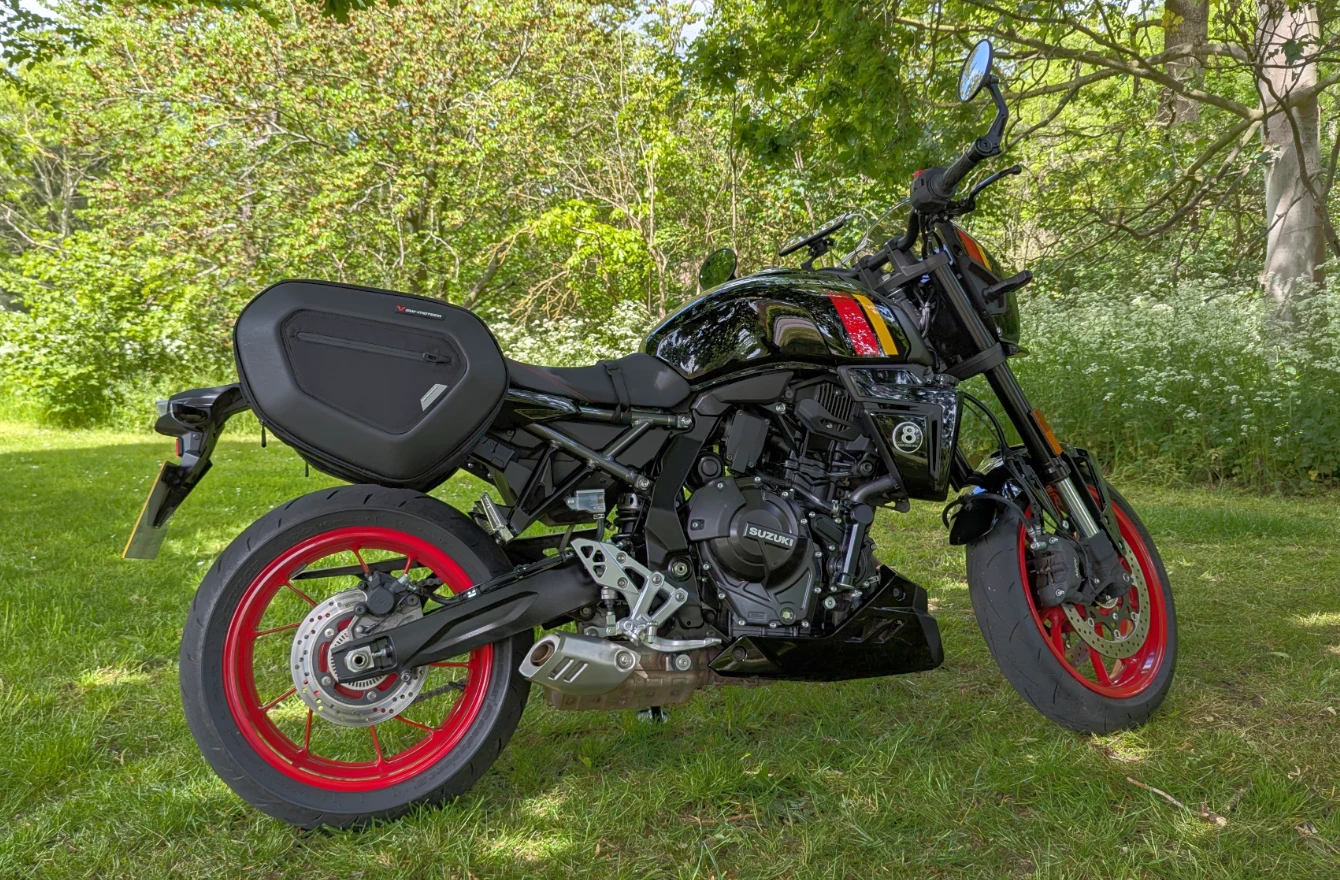
Optional extras are where owners can lean into the bike’s character. Expect cosmetic upgrades such as flyscreens, seat cowls, and heritage-inspired trim, alongside practical additions such as heated grips, to arrive from aftermarket manufacturers.
For luggage, I chose SW-Motech’s excellent Blaze soft panniers. The minimal scaffolding and easy fitment, coupled with SW-Motech’s reputation for quality, were all the encouragement I needed. A full review of the Blaze soft panniers and how they performed during a camping trip on the GSX-8TT will be in an upcoming article.
Bottom line
The Suzuki GSX-8TT is not a revolutionary motorcycle in the mechanical sense — and it doesn’t need to be. Instead, it refines an already strong platform into something more emotionally engaging without losing sight of real‑world usability.
Where the 8S is honest, and the 8R is focused, the GSX-8TT is nuanced. Its geometry fosters confidence, its chassis delivers composure, and its engine excels where road riders actually live: the midrange.