



For the past six weeks, I’ve been riding the Voge DS900X. This in itself isn’t perhaps the most noteworthy news, but the Voge road test has asked several very different questions.
Typically, reviewing a motorcycle is relatively straightforward. It starts with understanding what the manufacturer intended when they designed the bike and then thinking about how well it does that and how it compares to other motorcycles that aim to do the same thing.
Comparing a BMW S1000RR to an NC750 doesn’t work for obvious reasons, but the question of the Voge DS900X is more complex than just comparing it to the BMW F900GS or any of the other 800-900cc adventure-styled motorcycles.
There are so many factors to consider – I will need to break this down.
First Elephant – Price
At £9,000 plus the on-road costs and fully loaded with refinements other manufacturers list in their options catalogue, the Voge DS900X can’t be ignored. The only options we could think of that it doesn’t have are an accessory bar above the full-colour 7-inch TFT, a full-size rear hugger, and Apple Car Play / Android Auto integration.
Everything else is included in the base price: heated grips, heated seat, tyre pressure monitors, blind spot radar, three-piece metal luggage, centre stand, cruise control, keyless ignition and more. There is even a built-in front-facing dash cam!
A BMW F900GS with a similar specification has a list price of £16,000, and that is without the luggage. To keep things fair, there is an Akrapovic exhaust to subtract, as the Voge DS900X comes with a good-sounding but standard exhaust.
When all those figures are combined, the Voge DS900X costs around £8,000 less than the BMW. That is elephant number one.

Second Elephant – Quality
The next strong emotion is typically about build quality and the dig-in-the-ribs question, “Has it rusted to pieces yet?”
The easy answer to that is No; no, it hasn’t. Having taken some of the bolts out – a surprising number of which have spline drive centres and standard hexagonal outer heads – they aren’t furring up and look to be good quality items.
The only visible sign of corrosion I’ve had is on the gear lever ball joints. It was surface corrosion and easily cleaned off.
It is hard to predict what will happen in a year or two, but several Voge DS900X are on long-term loan to riders who have taken them on some wild adventures without any issues.
One of the Voge owners I spoke with had ridden his Voge 525 through winter and most of the following summer before trading it. He clearly stated he hadn’t had any corrosion problems. The vibration on his Voge 525 finally had him switch to an NC750; nothing related to build quality or reliability.
Depreciation
Depreciation is a figure that can be made to look good or bad, depending on what answer you would like.
The BMW850GS – the model before the F900GS, appears to have a staggeringly good resale value.
Looking on Autotrader, I found several 2021 models of the F850GS, all with approximately 10,000 miles on the clock, advertised for an average price of £7,250. According to the internet, a new F850GS cost £8,250 in 2021.
Factor in some inflation on money and work the buttons on a calculator, and I came up with 17% depreciation over 3 years. Impressive stuff.
I did the same calculation for a standard BMW F900GS, using a six-month-old GS with 1,500 miles on the clock that I found on Autotrader for £10,000. I calculated that to be a 12% drop in six months.
The specifications of all those motorcycles differed. Some had heated grips and centre stands, while others came with pannier racks but no luggage. Most, however, were a plain Jane with no accessories.
So, how do we compare the depreciation figures on the Voge DS900X to the BMW F900GS?
When you start with a low initial purchase price, the DS900X can depreciate significantly and yet in real terms, you lose less money. You start by not spending £8,000, but you still have all the benefits of the standard Voge equipment.
If the Voge was only worth £3,000 when it was three years old, I’d have lost £6K, but I’ve not spent £8K on extras. And if I buy a more expensive bike on a PCP deal, I have to give my motorcycle back at the end of the agreement or find the extra money for the ballon payment.
Did I lose £6,000 in depreciation with the Voge or save £2,000 by not buying the BMW?
Statistics: You can use those numbers to prove almost anything. What matters is how good a motorcycle the Voge is for the money.

Value for Money
If you don’t want engine bars, integrated spotlights, tyre pressure monitors, heated grips, a heated seat, etc., the F900GS becomes a better value proposition.
But that isn’t the real world. We typically want heated grips, engine bars, etc., on a motorcycle.
Taking a long, hard look at the extras that the Voge comes with as standard, there are a couple I could live without.
Blind Spot Radar is excellent, but I still look behind me. Tyre pressure monitors are fascinating. When I get the rear tyre warm, the pressure goes up 4 PSI, while the front only increases by 2 PSI. It is a quick and easy way to ensure I have the correct tyre pressures each morning, but using a pressure gauge takes two minutes.
I’ve never missed having a heated seat before I rode on a freezing cold day, and even with my Keis heated kit on gas mark 4, the heated seat was a joy. It is a strange feeling, but most welcome. Would I buy one? I’m thinking not, but damn, on that day, in those temperatures, it was delightful.
But that is about it. I could exclude the metal panniers because I prefer the SW-Motech dry bags, but I don’t have to buy a bag or panniers as the Voge comes with them as standard.
No matter which way I look at it, whether I want them or not, the whole Voge DS900X package is outstanding value for money. It doesn’t matter if I want all the features it has. They are fitted as standard, and I don’t have to use them if I don’t want them.
Perhaps the more interesting question is how much lower the cost of a Voge DS900X would be without them. At BMW prices, Voge could give the bike away if they didn’t fit so many extras.

It appears that Voge has taken the opposite approach to KTM’s “Pay to Play” approach. Voge decided that fitting something is where the cost is, so why not simply include it in the price?
The quick shifter is fitted, so enable it. Fitting heated grips or standard grips costs the same, and if the heated grips are made in China anyway, why not fit them?
Bosch IMU comes as standard, so Voge opted to turn all of those features on. As Voge was fitting a TFT screen, they may as well fit a 7-inch one.
The philosophy makes marketing sense. Riders for whom cost isn’t a factor will always drop £20-£25K on a motorcycle or a PCP deal. For riders for whom value is more of a consideration, Voge has decided to dominate the market.
But there is a third elephant that we need to discuss. All of the accessories and features do not make a motorcycle. It is all about the ride.
Suspension
Whoever was riding the Voge before me either set the KYB suspension oddly or the standard settings were very unusual. The rear didn’t react when I opened the throttle. That digging-in, planted feeling wasn’t there, and the front felt as if it was too high and disconnected, perhaps due to my lack of familiarity with 21-inch front wheels.
Faced with fully adjustable front and rear suspension and only a passing knowledge of what to change, I took two clicks of preload from the rear. After that, the Voge felt much happier on corner exits and didn’t try to rattle my fillings out on bumpy back roads.
Improving the feeling on the front illuded me, so I gave the Voge to an Africa Twin rider, who, after half an hour, told me the Voge felt normal, although the suspension needed some minor personalisation.
Considering the Voge is loaded with three-piece metal luggage, including a top box that is chest height and often packed with my associated crap, the handling is predictable.
Someone who knows how to tune, rebound, preload, and compression damping, along with how the changes to front and rear suspension interact and influence each other, will be able to maximise the KYB suspension’s flexibility.
With my limited suspension knowledge, I have the Voge DS900X in a good place, but more improvements are needed; it will just take me a while to work them out.
A steering damper is fitted as standard, which raised a few eyebrows, but after making my initial changes, the Voge hasn’t given me anything to worry about. It goes where I point it and soaks up the undulations in the average British road.
Throttle and Fuelling
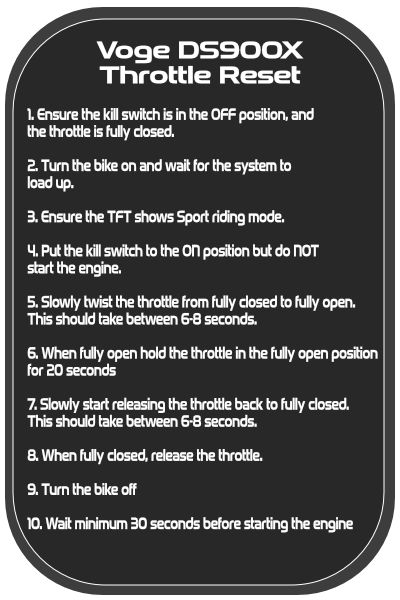 Early attempts to improve the overall ride were hampered by a throttle that felt disconnected. There was a large dead spot when first opening the throttle, which often left me wondering when the power might arrive and in what quantity. It’s not the best feeling when wet roads are covered in winter grime.
Thanks to the large Voge community on the Internet, there is a simple fix for remapping the throttle, which tells the electronics how far to open the throttle bodies.
The process resets the closed and fully open positions and defines the range the throttle works with. After that simple reset, the throttle connection greatly improved, and the mystery of what would happen each time I opened the throttle was gone.
The internet suggests that this ten-minute task is repeated at regular intervals. How regular that is will depend, I assume, on how many times you open the throttle to cause the drift.
Once done, remapping the throttle exposed how good the fuelling is. Riding through town, I could pick and hold the exact speed I wanted. What to ride at either twenty-seven or twenty-eight miles an hour? No problem. Do you want to do an indicated forty-one in a forty? Again, it’s not a problem.
Sweet Spot
As it is winter, the number of opportunities to get fully on the herbs has been limited. For the first week, I was trudging about using 3,000 RPM and taking life steadily. The bike felt flat, but this was because I was riding it like a wet weekend in Bournemouth.
The sweet spot is between 3,500 and 6,000 RPM. Never mind what gear you are in. The gear you want is the one that gives you the required speed and places the RPM in the sweet spot. Doing this made rolling through the bends on one of my favourite back doubles an absolute delight. In the sweet spot, the engine pick-up is quick and delivers a welcoming surge.
It could be said that all bikes ride better when you are in that sweet spot, yet the Voge changes personality on the smallest of margins. Keeping the revs up and the engine bubbling is how I extracted the maximum enjoyment and kept the quick shifter motivated.
Quick Shifter
Downshifting is better done sooner rather than later. The concept of box changing – dropping more than one gear in rapid succession – didn’t deliver the best results. Shifting down through the gearbox as the speed reduces and keeping the revs in the sweet spot was how I could revel in a succession of slick downshifts helped by the auto-blipper.
Going up through the gearbox is fine when the throttle is pinned to the stop. Yet, the sensitivity of the quick shifter’s gear lever sensor would benefit from being configurable.
 Unless you are committed to the gear change, the system can easily interpret an upward caress of the lever as the desire to change and cut the fuel and ignition. Without my foot introducing the mechanical movement to select the next gear, the Voge would reintroduce the fuel and ignition.
It is an odd sensation. Everything cuts for a moment and then comes back at the same RPM and in the same gear. There is nothing wrong with the system; it just needs to be less eager to get involved, especially when I’m riding in winter boots.
Upshifts work best when the throttle is wide open. Short shifting using the quick shifter is possible, but it isn’t the most refined process. A short stab on the clutch lever produces a much better result.
Brakes
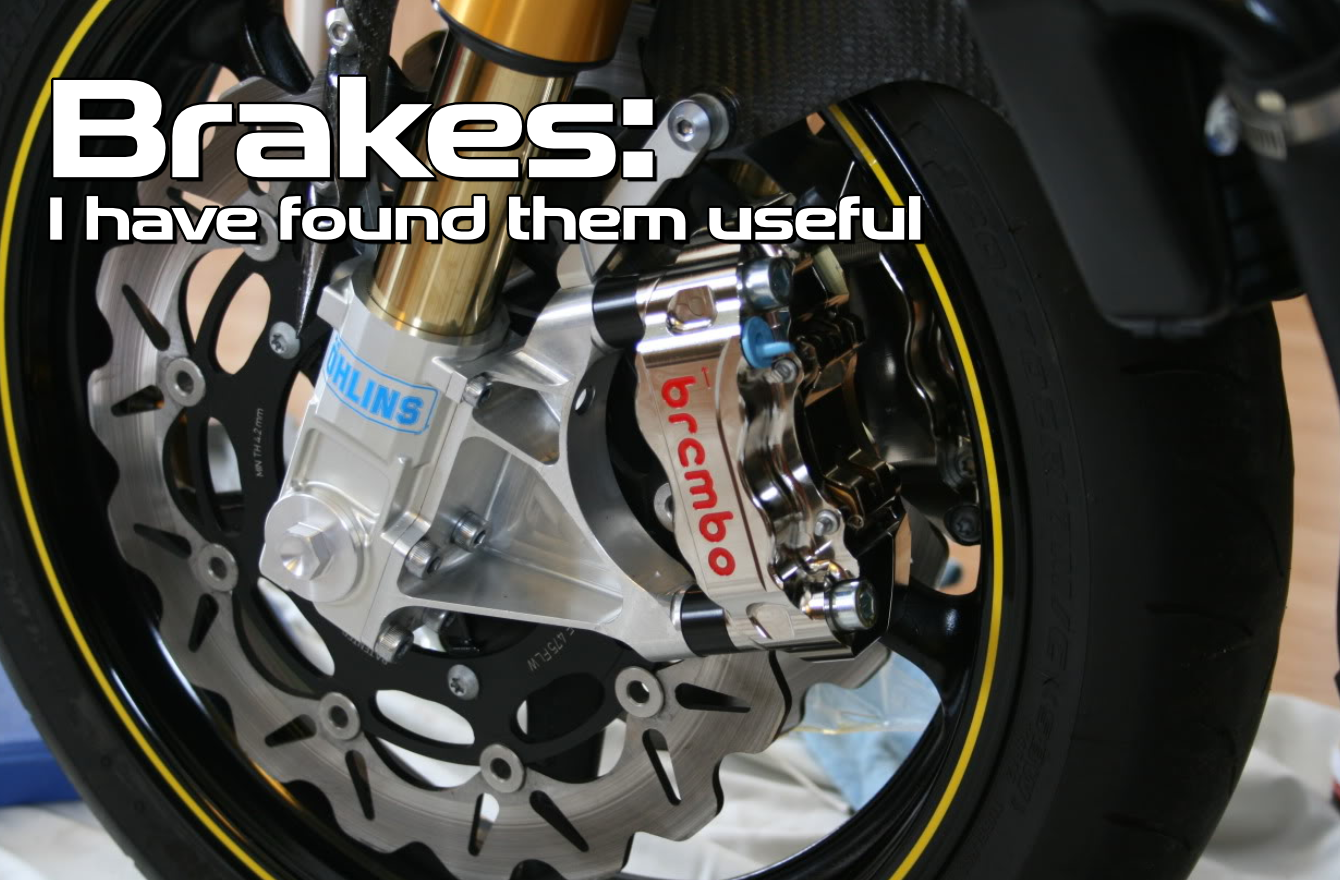
Having worked out how to get the Voge DS900X going, knowing that the brakes will haul me to a stop is a comforting thought. They are excellent, especially the rear. There is a good amount of feel, which allows for some gentle finessing of the brakes and enough power to bring you to a halt quickly if the situation arises.
The rear brake has a short but effective range of travel and enough feel to trim a little speed mid-corner if you so desire. But make no mistake—it is highly effective if you stomp on it.
Voge DS900X Bottom Line
The Voge DS900X has everything. Even the metal luggage has removable liners, which are easier to clean and kinder on the contents than having them rattle about in an unpadded metal box.
The Voge isn’t perfect. Despite all the accessories and options, there isn’t a range-to-empty display. The pins on the luggage catches are fiddly and unwanted on a cold day, but these are all minor irritations.
Nevertheless, perhaps the biggest elephant in the room is that the Voge DS900X should have every other manufacturer running for cover. It should have no competition.
If you are buying on capability and value for money, then the Voge is class-leading, and yet there is a reservation, almost a resistance to buying one.
Although the Voge DS900X has all the desirable elements, it needs configuring and refining to get the most out of it. As a package, it isn’t as good as the options and quality parts say it should be.

The Voge DS900X has the potential to be epic—genuinely epic— and redefine the motorcycle market.
However, to overcome the elephants and change the unfounded negative bias by building real brand trust, irritations like the quick shifter, the lack of a solid base setting for the KYB suspension, and the throttle mapping need to be resolved.
In other words, refinement is all the DS900X needs, but it does need those sharp edges smoothing.
At £9,000 (+ OTR), it is brand new and fully loaded with extras, so the Voge DS900X should be an easy choice. But for the same money, you can buy a low-mileage Honda NT1100 with most of the same extras.
But don’t discount or ignore the Voge. With the refinement issues resolved, China could quickly become a dominant force in the European motorcycle market.










3 responses
You forgot to mention the Voge engine is made by Loncin, the same engine as in the F850 or F900. Loncin makes engines for Honda, BMW and others.
I have the 2025 version and the luggage is now optional, although if you opt for this you get it for half the normal retail (£600).
Also, it now comes with full Sat Nav vis Mapbox and you can cast your phone to the TFT^ to use any App you have on your phone, such as Waze.
I still have my GS, but after a month of riding the Voge, the GS will not be sold.
An absolute superb bike in every way.
Depends on what you want from a motorcycle. I love V-Stroms so I’m biased. Nowt wrong with the Voge – It will all come down to personal taste.
Voge vs V Strom 800, what’s your verdict?