



Touring Norway on a motorcycle appears to have displaced both Spain and Croatia as the place to visit.
With our phones able to navigate across the globe and tell us what is around the next corner, riding to the furthest corners of Europe is becoming more commonplace.
Yet, the problem with touring Norway is that just getting there is a tour in itself. Depending on your choice of ferry, you are riding either 360 or 635 miles to a boat that will then take you and your motorcycle to Norway, and that is after the trip to get to the Netherlands.
But that is the fun; the journey is what it is all about. Like many, we picked Nord Cap as our ultimate destination and targeted several other places we wanted to visit on our way there. Trondheim is, of course, on the list, but that might be a problem … more on that later.
Armed with scribbled notes and many helpful suggestions [Helpful is a relative term ~ Ed.], we let Dave loose on the internet to work it all out.
After drinking almost all the tea we had in the office, Dave announced that a Motorcycle tour of Norway that met all our requirements, including Nord Cap, would likely take six weeks if we wanted to do it properly.
Pin the throttle, and Nord Cap and back could be done in eight days, but with seriously reduced fun and too much time spent on boring roads. It’s time for a rethink.
Cutting it down
We could cut days from the journey by shipping or renting bikes in Oslo and flying out to collect them. If it takes two flat-out days to get to Oslo and two days back, we could replace these with a day flying in either direction.
Renting a motorcycle would be even easier, but expect to pay around £1,250 per week. If, like me, you want the joy of riding your own bike, there are companies that will ship your motorcycle to Norway in the summer months.
That could take two or more days off the overall trip—you still need to factor in flying either way—and then there is the complication of carnets, customs paperwork, agents, and shipping fees to contend with. Nonetheless, it is a viable option and often used by Irish riders who are even further from Norway than we are in England.
There are reports of a new ferry planning to start in 2026, a year later than when I first looked at their website. Bergen Cruise Line. But this might fit perfectly with Dave’s plan, so we’ll keep an eye on developments.
Nord Cap has been described as a long way to go for a photograph. However, to use that well-worn phrase, “We only regret the rides we didn’t take”. Nord Cap will be visited, just not on our first Norwegian adventure.
By then, either the new ferry will be up and running, or we can take the fast route past the things and places we have already visited—or at least that is the hope. And if the ferry isn’t running, that is a problem for future me to try to solve.
Getting to Norway
To misquote an Irish friend: If you want to get to Norway, I wouldn’t start from here.
The bottom line is that travelling from the ferry port in the Netherlands to Norway takes a minimum of two days. There isn’t enough time between arriving in Rotterdam and the closest ferry – Keil – departing to do it in one day.
If you are going to try and do it all in one day, you must cover 360 miles in five hours, which requires averaging 70mph. A night stop in Bremen is much more appealing.
With all of that said, what are the options for getting to Norway?
Ferry Kiel to Oslo
Although the ferry from Keil to Oslo is expensive, at around £900 return, it keeps you moving while sleeping.
The ride from Hoek of Holland to Kiel is 360 miles, some 260 miles less (one way) than the ride to Hirtshals for the shorter crossing to Norway.
The Keil ferry sails once a day, departing at 2pm local time. Allowing an hour for check-in, you need to be there by 1pm local time at the latest.
Subtract from the £900, 500 miles worth of fuel and the cost of a night stop each way and the price starts to look better.
Ferry Hirtshals to Kristiansand
This is perhaps the most popular with UK bikers because of the timing. Splitting the 635 relatively dull miles from the Netherlands to Hirshals in Denmark over two days takes the pressure off covering long distances on an exacting timetable.
The ferry crossing takes between two and a half hours and four hours depending on the ship, and depending on what day you cross, there are either two or three crossings to choose from (9:30, 14:30 and 22:30). As I write this, a return ticket for one passenger and a motorcycle with a reserved seat costs approximately £120.
We are planning a night stop after crossing the German-Danish border (c.420 miles) and aim for the afternoon ferry out of Hirtshals.
This will put us in Kristiansand in the late afternoon. We will stop there overnight and start our Norwegian tour the next day.
Ride Through Sweden
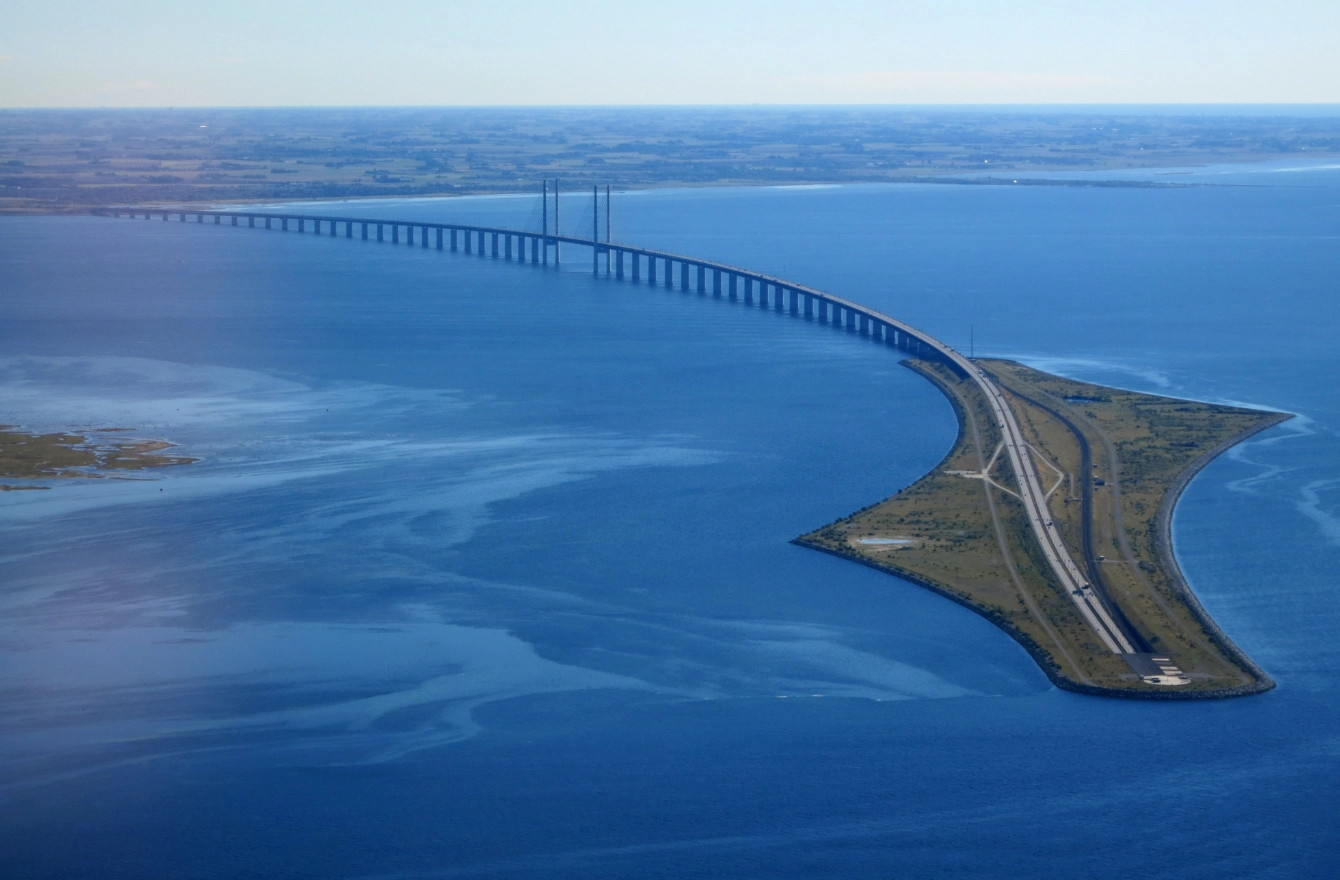
If you have the time, you might want to use the magnificent tunnels and bridges linking the Danish islands to Sweden.
After disembarking the ferry in the Netherlands, it is 415 miles to the next ferry in Puttgarden (near Kiel). This ferry departs every 30 minutes, 24 hours a day, and takes you to Rødby.
A hundred miles further on, you will reach the start of the tunnel in Copenhagen, where you will ride to Malmo, Sweden.
The 2.5-mile-long Danish tunnel exits on the artificial island of Peberholm, where you join the 5-mile-long Øresund Bridge to Malmo in Sweden. From Malmo, it is 290 miles to the Norwegian border and another 70 miles to the port in Oslo.
In total, it is 900 miles from the Netherlands to Oslo, and that is using the motorways. Making that ride interesting would easily add another couple of days to the journey.
The GPX files for each of the options are below.

Norwegian Road Ferries
Touring Norway on a motorcycle will almost certainly involve using the road ferries that cross the fiords and connect the spectacular islands to the equally magnificent – larger – parts of Norway.
Opinions on how to deal with the road ferry charges differ.
Some say you don’t need the ferry pass; just show up and have them read your number plate.
That is one way of doing it but experienced Norwegian tourists tell me that this incurs an “invoice fee” for each ferry crossing.
Others say you pay the fare when you board, and that is all you need to do.
Perhaps the easier and cheaper way is to use one of the Autopass Tag services, but there are a couple of wrinkles to be aware of.
The most common solution for Norwegians is the AutoPass tag (AutoPASS). However, AutoPass doesn’t issue tags; for that, you use one of their approved suppliers, a list of which is on their website.
If you don’t want your tag to incur charges when you ride on toll roads – motorcycles don’t pay tolls on PUBLIC roads in Norway – you’ll need to apply for an exemption.
Exemptions require more paperwork, and some of the conditions are hard to meet when applying with a foreign-registered motorcycle.
Plough your way through all of that, and a 10% discount on your road ferry charges is your reward.
The most convenient answer looks to be FerryPay. This only covers the Norwegian Road Ferries, and there isn’t a discount, but it does avoid the “invoice fee” for each crossing.
The other great advantage is that you can register a credit card instead of needing your International Bank details as the payment method.
Good To Know
Having picked your route, decided on an approach to road ferries, and finally arrived in Norway, you might think about having a beer to celebrate. This is when you’ll discover how expensive booze is in Norway.
The same goes for eating out. The last time I was in Norway, a McDonald’s ice cream (£2 in the UK) cost me £6. Supermarkets and cooking your meals are the cost-effective answers.
Whereas Norway has a low density of speed cameras, it takes a very dim view of speeding and rewards transgressors of its speed limits with excessively large fines for their indiscretions.
Conversely, Germany reportedly has the lowest speeding fines in Europe. What you do with that information is your business.
Norway has a right-to-roam or Wild Camping law. You can pitch your tent anywhere in nature as long as you are 150-200 meters away from anyone else. The Norway Guide website has more details on wild camping and other Norwegian customs.
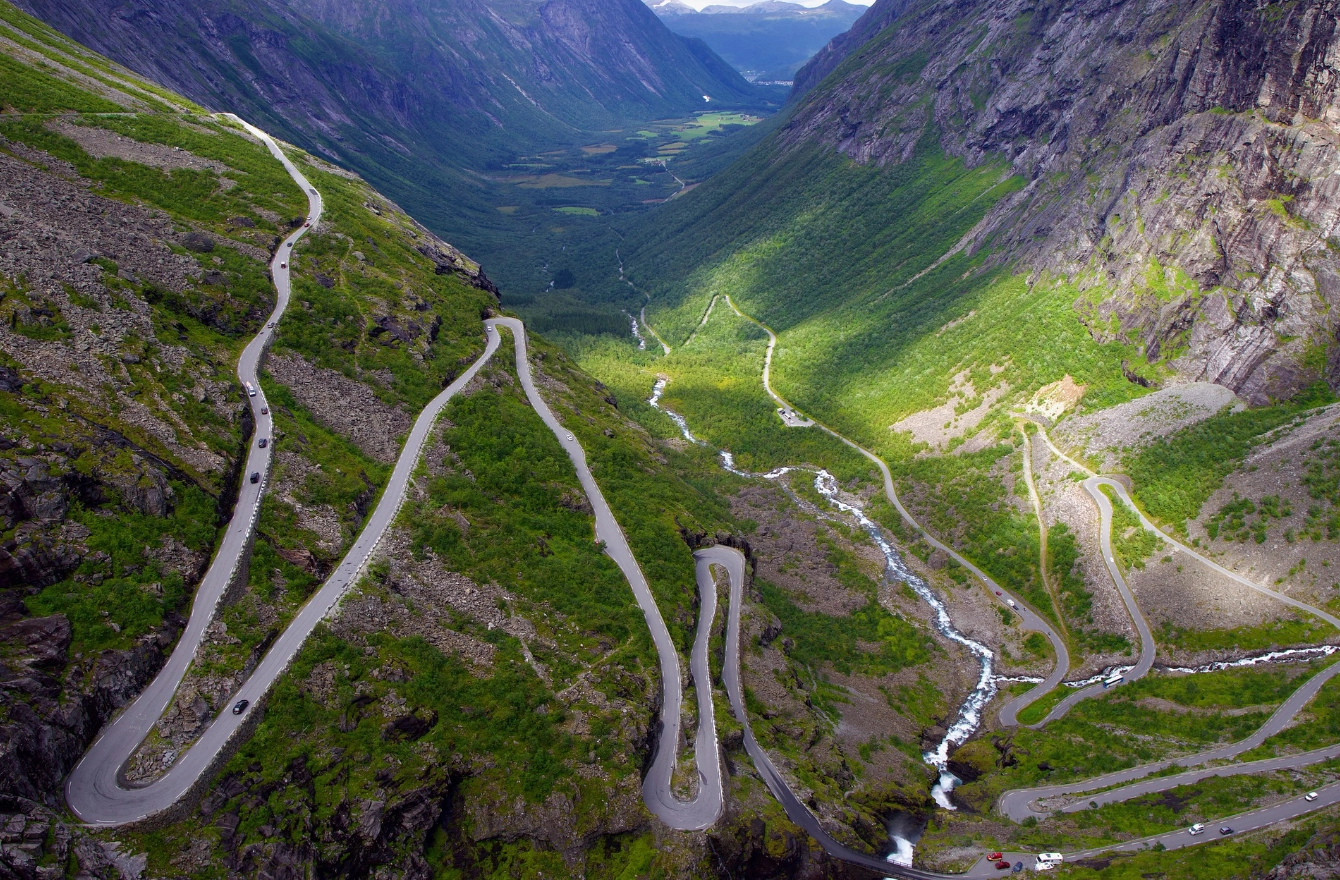
It is also worth noting that the famous Trollstigen Road is closed until 2025 due to rock falls.
Normally open between June and October, the 19-hairpin road endured several rock falls in the early months of 2024, and the decision has been made to close it until safety measures are implemented.
I blame the Trolls.
Touring Norway – The Routes
The first three routes below are the three ways we considered when working out how to get to Norway. Either of the ferries gets our vote. Sorry Sweden.
The fourth route is a baseline for a nine-day, 1350-mile loop of southern Norway that combines many of the “must-see” places and roads to ride.
Considering Norway’s size and the never-ending list of inspiring places to visit, we will have missed some. But that is the beauty of Norway, and that is why touring Norway on a motorcycle is so high on most riders’ bucket lists.
The route includes a ferry trip along the Lysebotn fjord, assuming the road is open.







One Response
The prices of the motorcycle rentals went down after covid in Norway. Some are now cheaper than the ones in UK. Fly and ride is the best option now in my opinion.