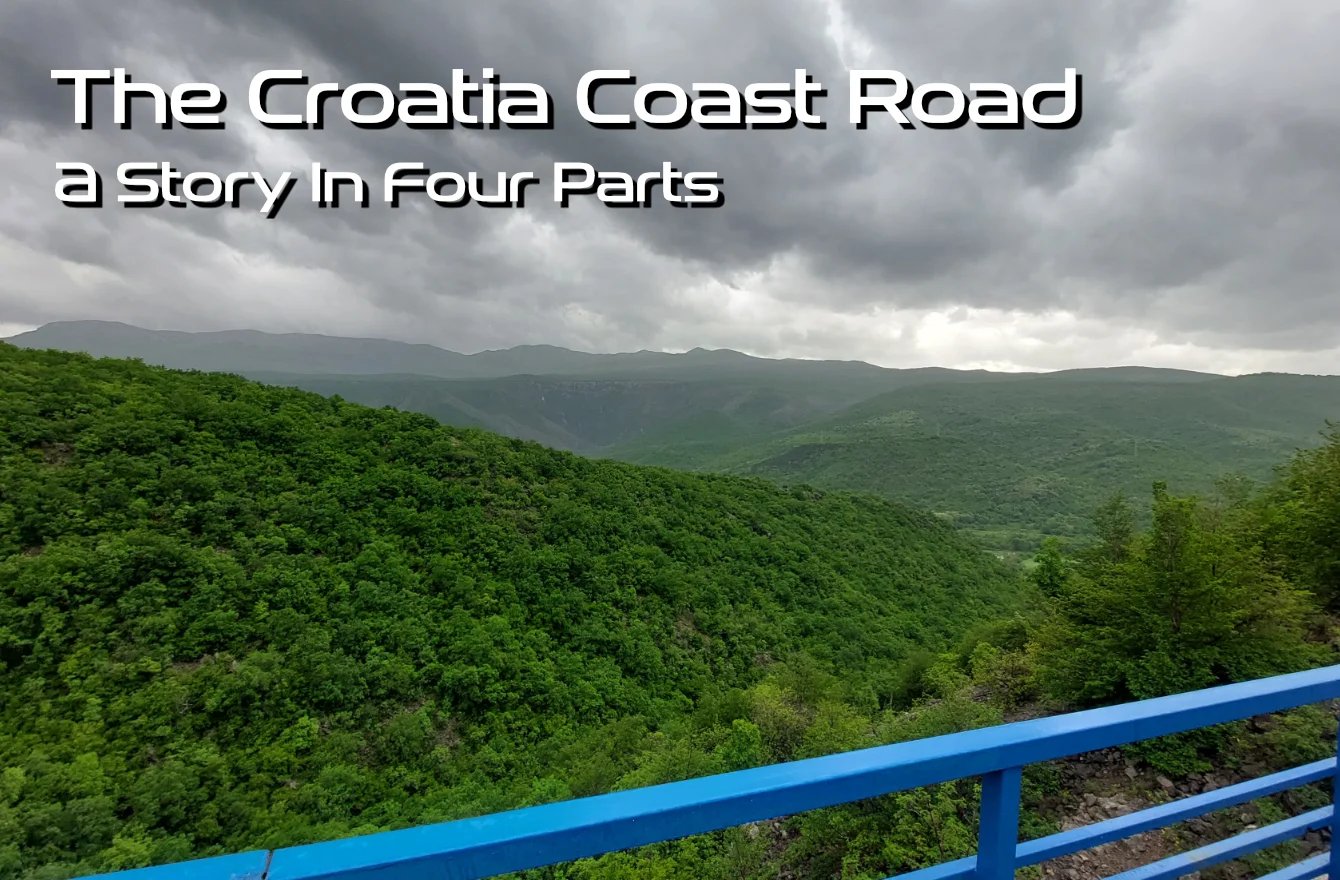

The Croatia Coast Road: Is this a road to have on your bucket list, or is there just one section driving the hype? There is a lot to consider, so let’s get into it …
Having twisted and turned the Multistrada over the Julian Alps and across another mountain pass covered in thick fog, I spent the night at “Hostel Pod”, located next to the lake in Ukanc.
It was an interesting place to stay. A cross between a backpackers hostel, Cell Block H and the place the school Geography field trip stayed when you were fourteen.
Following two beers and a solid night’s sleep, I was heading for Povile and the start of another of the must-ride roads. This time the Croatia Coast Road – Povile to Split.
But before that came 160 miles of riding more wonderful roads. Nothing really stands out beyond “wonderful”, which has become the new normal. Roads 409 and 212 in northwestern Slovenia eventually become the 213 and cross the border with Croatia at Babno Polje.
If I sound dismissive, I have no intention to. It is simply that awesome has become an everyday occurrence on that part of the route. If you transplanted these roads into the middle of the UK, we would flock to them.
I keep reminding myself to take it all in and not become complacent. As a wise man (or woman) once said … “This too will end”.
Croatia Coast Road – Povile
The Coast Road in Croatia runs from Kaljevica south to the town of Split, but the bit everyone talks about is the section south from Povile to the old bridge at Maslenica. It is 80 miles (roughly), the first 50 of which are covered in the “sure grip” tarmac surface.
The hotel owner in Povile shared the delight he took from destroying the rear tyre on his bike in 800 kilometres (500 miles), such is the grip level in those first 50 miles.
My problem, on the day I got to ride that section, was that it was raining, which did curtail things slightly, but even then, the 80 miles to the old bridge were grin-inducing and kept tempting me to open the throttle.
Croatia Coast Road – Split
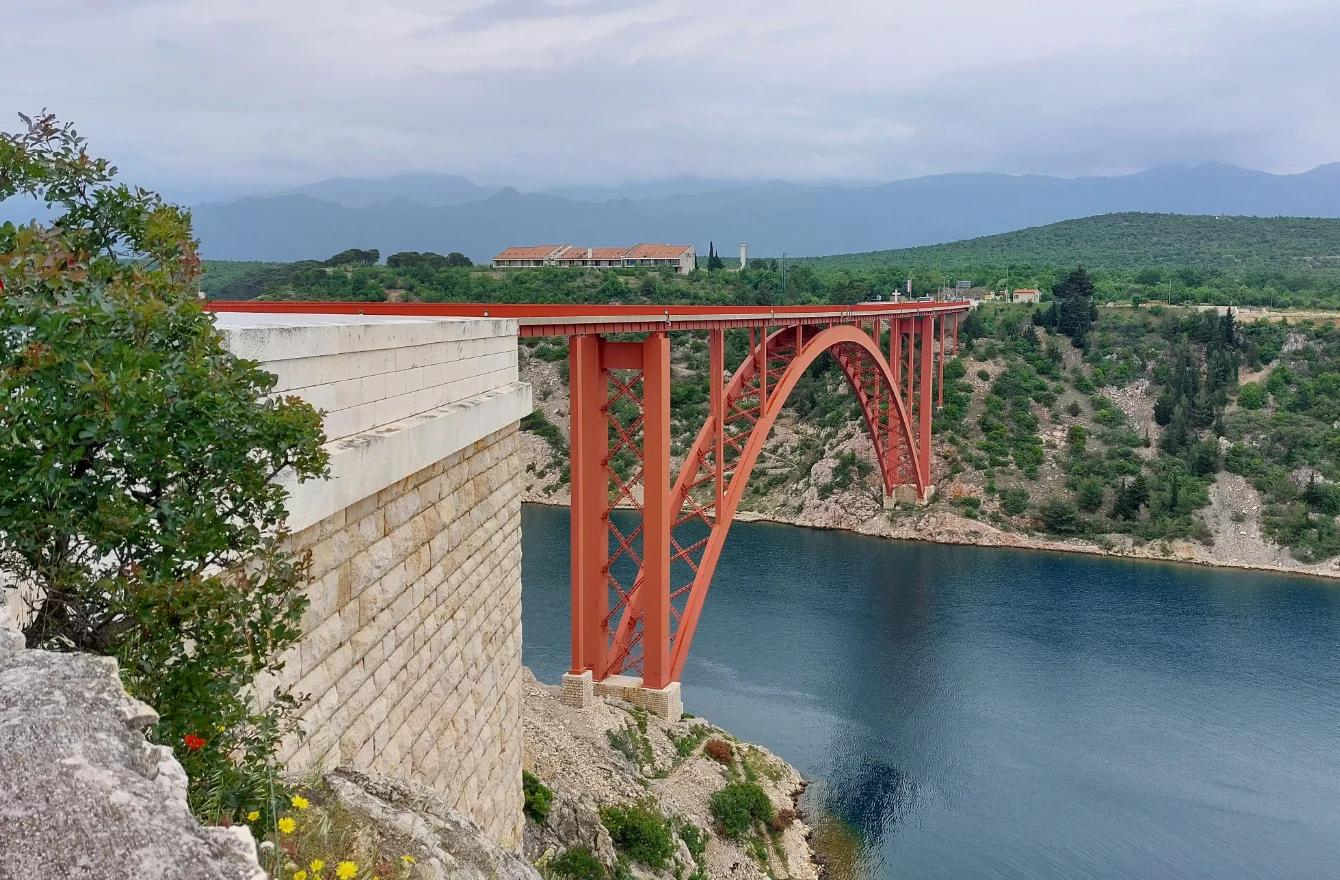
Taking the D8 to the old (red) bridge over the Maslenica Straight, rather than paying the toll to use the fancy new bridge that is part of the A1 motorway, marks a noticeable change in the enjoyment level of the Croatia Coast Road.
From the old bridge down to Split, the road was a succession of reduced speed limits and no-overtaking zones. Even wide-open U-shaped bends with excellent cross views carry a 40 KPH (25mph) speed limit. That said, having witnessed the inability of many a camper van to stay in their lane, perhaps the speed limits are necessary.
When the speed limit does increase, and dashes replace the solid white line, it is only for the shortest of distances. If you want to hone your forward planning and overtaking skills, this is the road to ride. You need to be fully on the herbs at the very start of the dashed line to stand even half a chance of making the overtake cleanly.
However, Murphy’s Law functions just as well in Croatia as it does in other parts of the world, and as soon as you are let off the leash, there will be a line of oncoming traffic, all just as bored as you are and looking for an overtake.
It is 100 miles from the bridge to Split if you take the D8 coast road, but it feels at least twice as long. Perhaps that is why there is a fancy new motorway – the A1 or E65 if you prefer Euro Numbers – and it is one of the few times I’d say the motorway is the better option.
Croatia Coast Road – Dubrovnik
Having stopped in Split for a few days, it was time to finish riding the Croatia Coast Road, with the section from Split to the Fortress in the Prevlaka Nature Park at the southern tip of Croatia.
For the first hour, it rained, and when it rains on the Coast Road, it seems to take the job seriously.
Although it rains heavily in the Black Forest region of Germany, it is with Teutonic efficiency. It rains as if someone opened the taps and then will stop just as efficiently. In Croatia, rain is more of a never-ending affair.
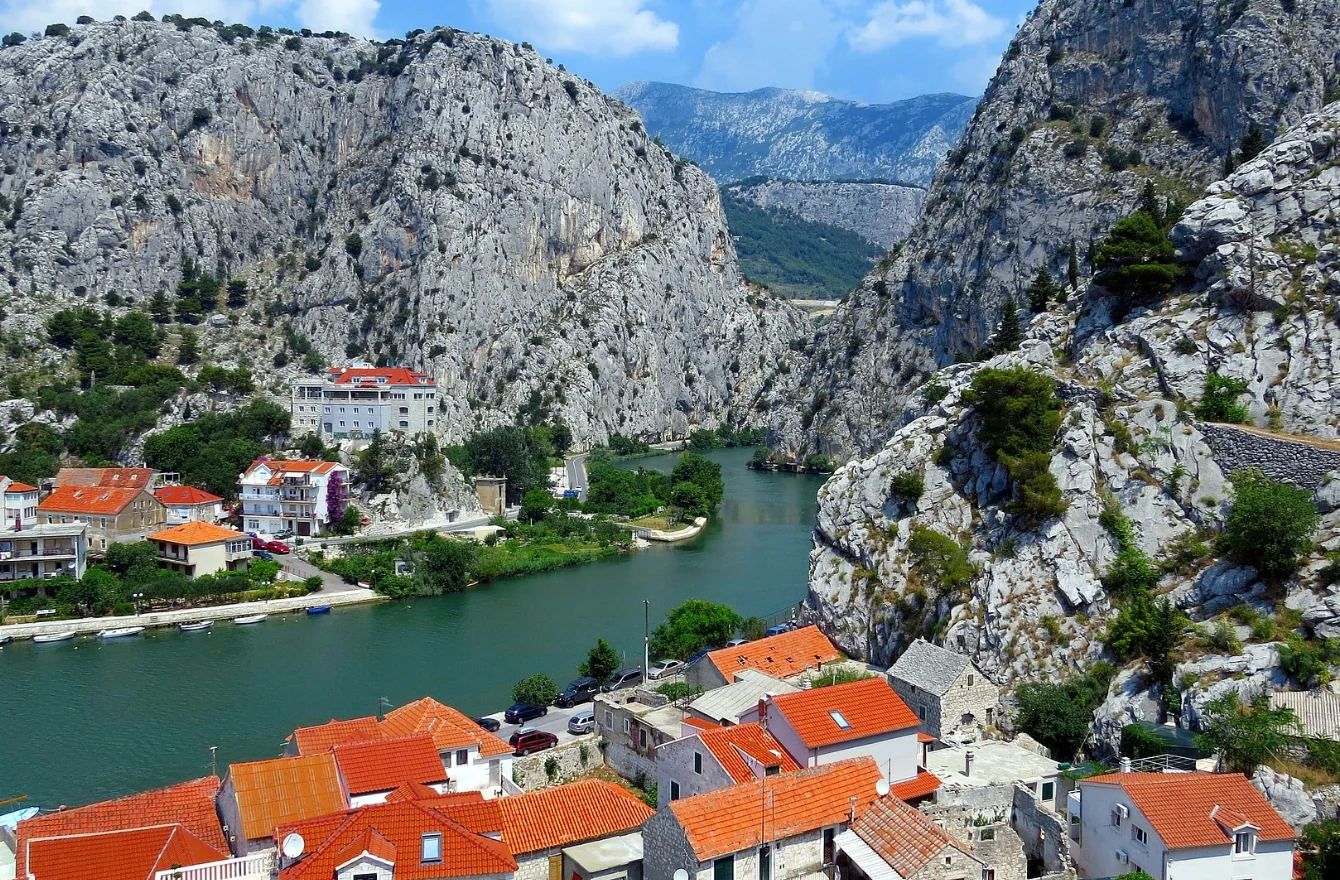
It rained for the trip through the delightful town of Omis, with its harbours flanked by granite walls, and on to the excellent Pekara Palma Café at Baška Voda, just 30 miles south of Split.
The cafe is on the left, and the bakery is on the right. The huge apple pastry was 1.5 euros, which brightens any rainy day.
Thirty miles in an hour isn’t much of an achievement, and in my defence, part of it was working out how to get out of Split and onto the D8. But given the weather, the sometimes annoyingly slow and arbitrarily observed speed limits sometimes make sense.
Variable Limits
When I was riding out of Split early that morning, I was aware of a Police van several vehicles ahead of me and was careful to keep pace with it and the surrounding traffic. Then I noticed we were all doing 70KPH in the 50KPH section.
The road was wide, the traffic light – unlike the rain – and the Police van seemed totally unperturbed that they and everyone around them were speeding.
Compare that to the events a few hours later in the day, when a police car with a radar gun was waiting to catch people who hadn’t slowed to 70KPH from a 90KPH section between towns.
The further south I went, the better the riding became. The rain eased off, the roads dried, the overtaking zones improved, and the speed limits more in keeping with what you might expect. Of course, you will still get stuck behind camper vans and have to factor in how aggressively some of the locals drive, but compared to the run into Split (see above), it was an enjoyable ride.
Civil Engineering
Being the coast road, the scenery in places is stunning. Still, perhaps the most remarkable part is the Pelješac Bridge and the nearby tunnels built to provide a fixed link between the two pieces of Croatia without having to take a trip through Bosnia and Herzegovina’s short coastal strip at Neum.

Overshooting Dubrovnik, I was aiming for the Prevlaka Nature Park and the fortress overlooking the mouth of the Bay of Kotor, the most southerly point of Croatia. Unfortunately, when I got there, it was closed for renovations.
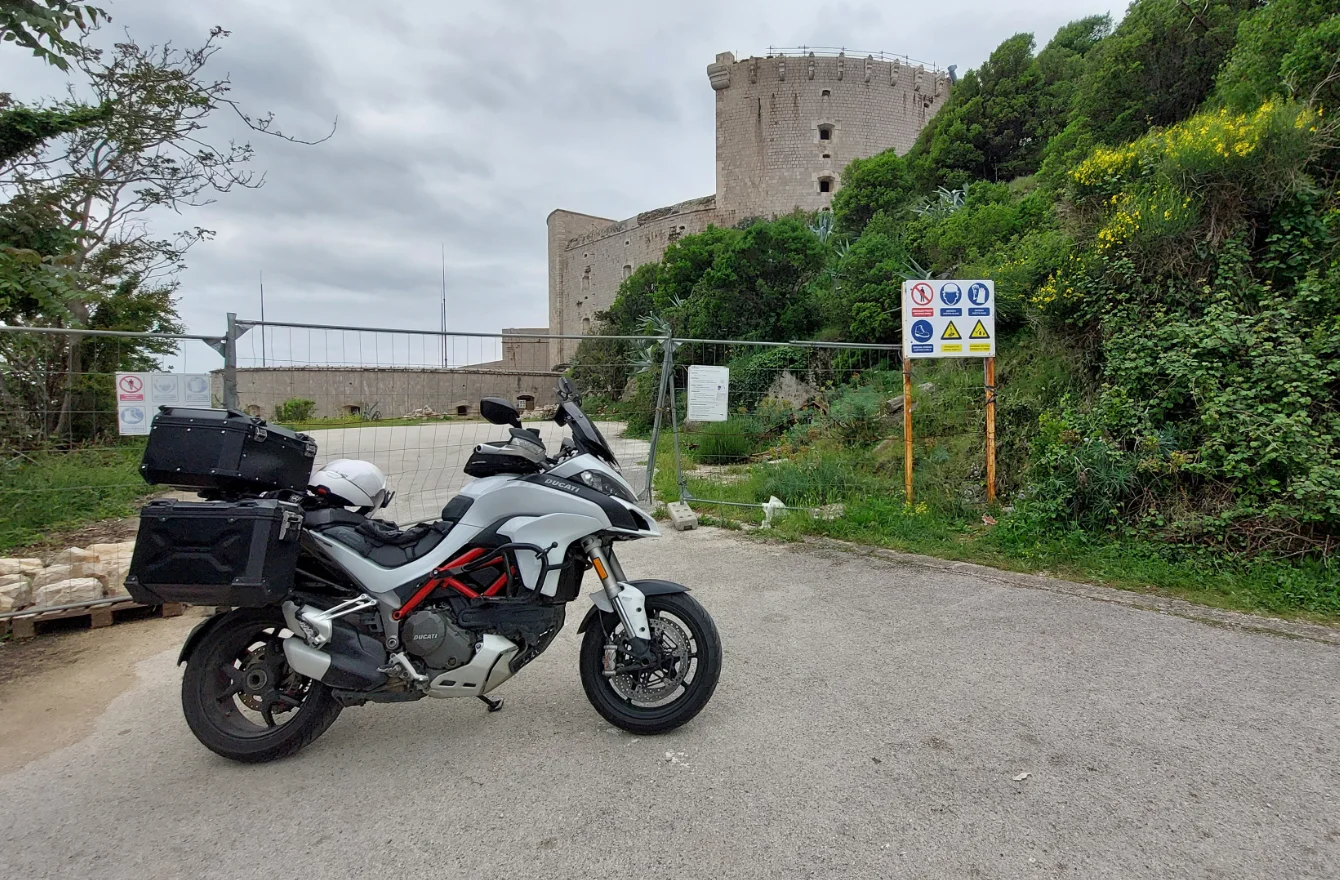
I’d taken the D6240 rather than the D8 road, which would have been more direct. It also would have had more petrol stations on it, and by the time I was riding back, I was in fuel-saving mode.
Limping into the petrol station by Dubrovnik airport, running on the proverbial fumes, I arrived just after a dozen German bikers, all of whom were queuing for the pumps. The lady in the petrol station looked rather perplexed at the rabble of polite, if rather grubby, bikers dressed in different shades of dayglow waterproofs.
I did wonder where the Germans had been, but it wasn’t the time to ask. Perhaps they went to the border and then turned around, as I didn’t see them at the Fortress. Or maybe German insurance covers Bosnia, unlike mine.
Yet as it was starting to rain again, it was time to find a bed for the night.
Croatia Coast Road – Going North
Thanks to a U-shaped bend in the Jetstream that encompasses Italy, Switzerland, Slovenia and Croatia, it was still raining the following day and would most likely stay that way for at least two or three days (it did!).
My colleague is staying in Dubrovnik for a few days and then catching the ferry to Italy. I’m heading back to Austria and Germany, and there was nothing else to do but to cover up, shut up and get on with a day in the rain.
I’ve ridden in worse rain, but never rain that was so heavy and lasted so long, and as Croatia’s coastline rises quickly, in the towns, the rainwater runs down the side roads and exits across the main coast road as fast-flowing streams.
Out of the towns, it is better, but I still opted to follow about 100 meters behind a camper van and watch for when he went through the bigger torrents.
Shortly after crossing the Pelješac Bridge at Ploče, I had a choice to make and opted to use the motorway. Yes, motorways suck, but I wasn’t going to get anywhere on the coast road.
The traffic – including me – was moving slowly, and my options were to spend longer in the rain at a slower speed or less time in the rain at a better speed. As the motorway would also bypass Split, that was the decision made.
The A1 (E65) motorway is a work of art. I’ve never been on one with such a steep climb gradient, but you’d never notice it if it weren’t for the dramatic sight as you approach it.
Superb tarmac, non-slip white lines, just about empty of traffic, a few tunnels to keep me interested and an easy way to cover 50 miles in short order, all for 2 euros. On a motorcycle, remember to avoid the automatic machines and go to the manned booth, or you risk being charged the wrong amount.
A Different Country
Leaving the motorway at Sestanovac, which is parallel with Omis – an important detail for later – and riding the D60 and D1 to the night stop at Knin was like being in a different country.
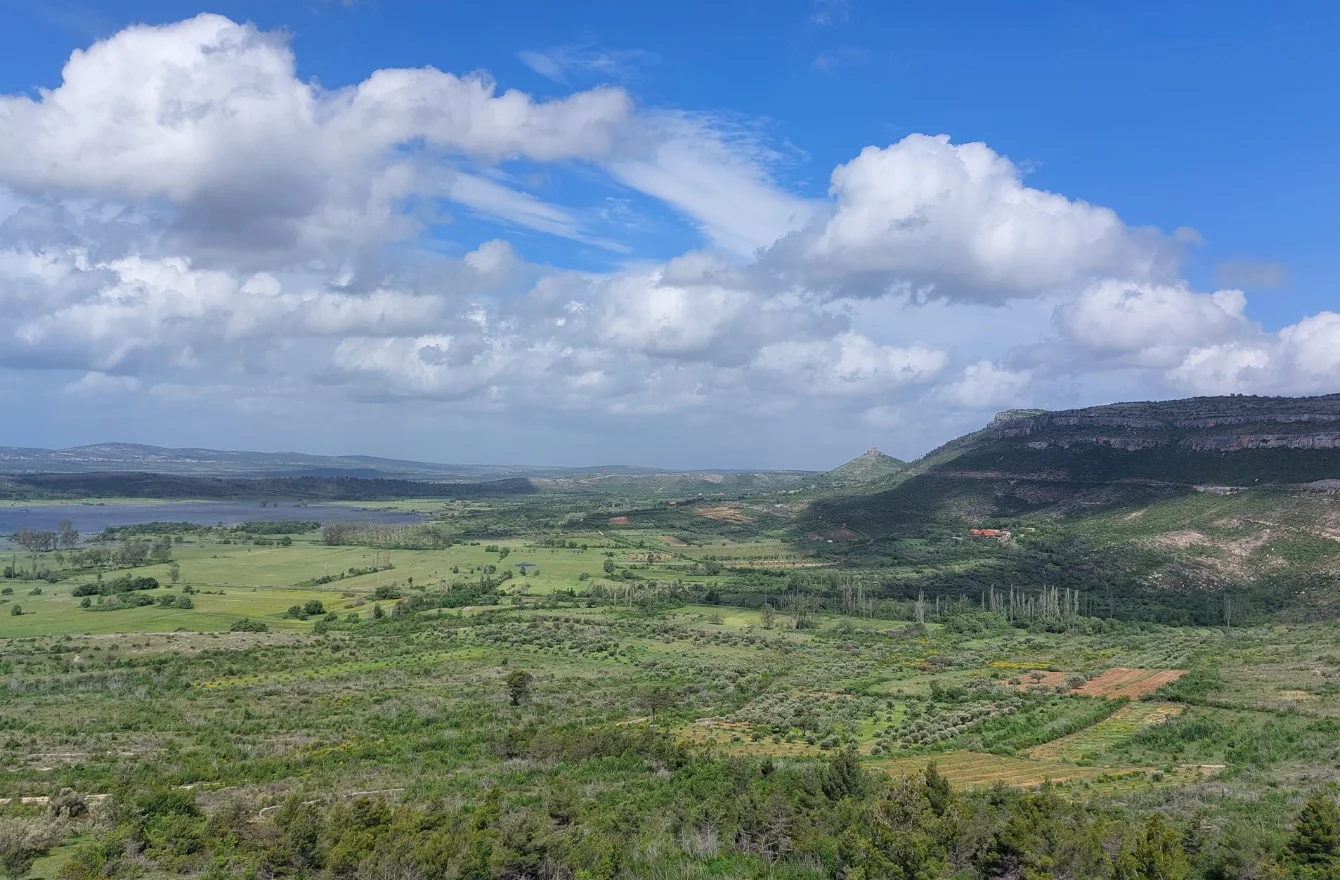
Gone was the packed-in, overflowing Croatia where you have to check how much of a slope there is before trusting the side stand, and in its place, a lush and green Croatia with rolling hills and roads to drift along even in the pouring rain.
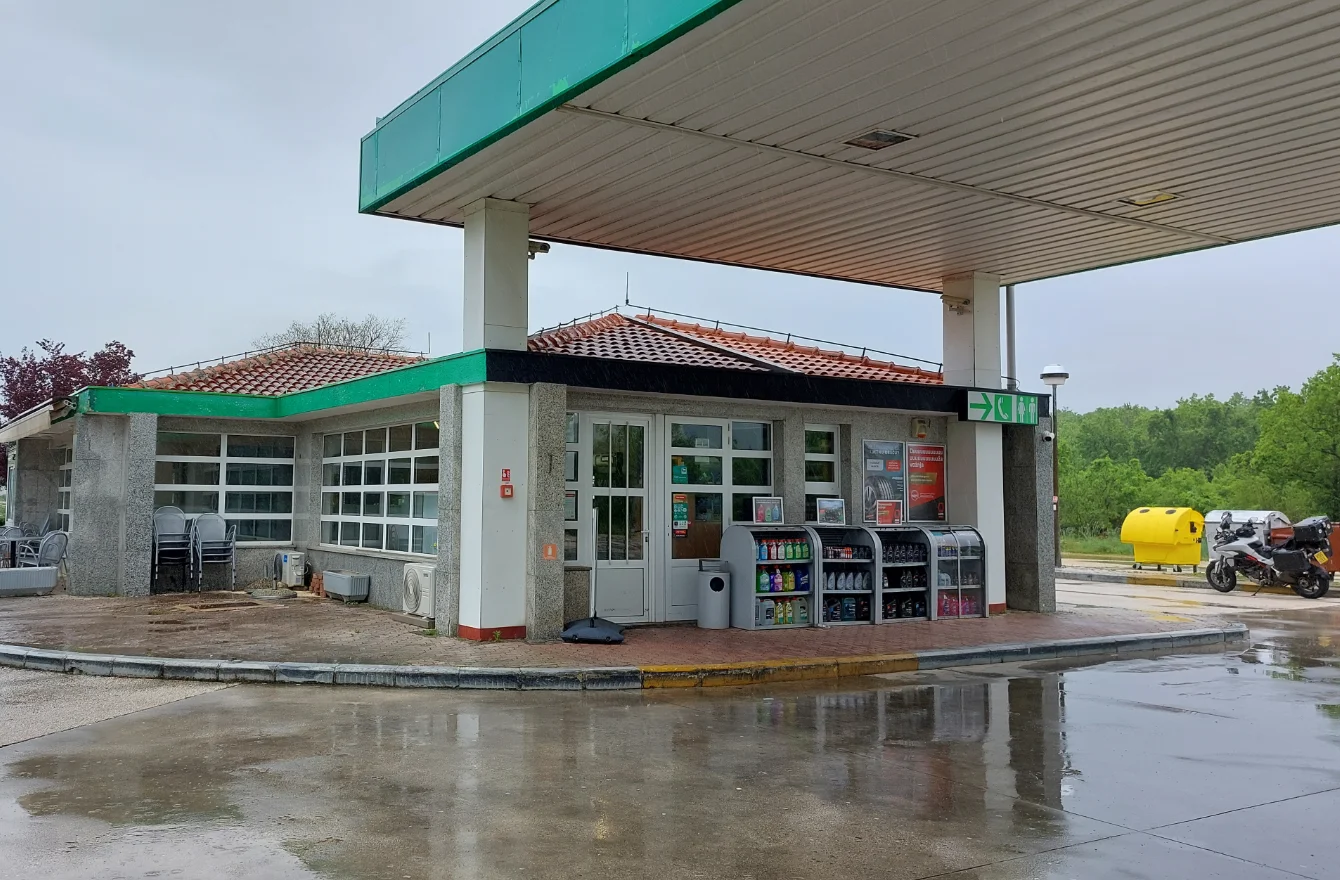
Despite the quiet and curvaceous road, it was time to take a break, and at random, I picked the average-looking garage in the photo below as it was the next one I came across. You’ll find it shortly after the turn onto the D60, a few kilometres after Cista Provo.
The rain had soaked through everything. My laminated textiles, the Oxford Rain Seal over suit, my Keis heated jacket – never underestimate the joy of a heated jacket on a rainy day – and everything else I was wearing.
I was happy to get a takeaway coffee and drip outside, but the two people running the garage/café were having none of it. They plugged in radiators for me and encouraged me to spread out my textiles and rain suit to dry. Their hospitality and understanding were gratefully received, all for the cost of half a tank of petrol, an oversize Twix and a cup of coffee.
As with Haus Elena in the Land of a 1000 Hairpins article, if you are on the D60 and need fuel and a coffee, please stop there and help me repay the kindness of two total strangers to a very wet biker.
Doing It All Again
The Croatian Coast Road is impressive. The scenery in places is jaw-dropping, and in other parts, the Coast Road is a seemingly never-ending sequence of towns and explosive development.
If I were doing it all again, I would ride the same route into Povile and then ride the best 80 miles of the coast road to the bridge at Maslenica, where I would change onto the A1 (E65) until the D70 turn off and night stop in Omis.
From there, south, the coast road is acceptable, or you can loop back to the motorway and follow it to the D425 turn-off to Ploče and the Pelješac Bridge.
Considering everything I’ve read about the Croatian Coast Road, I think people are referring to the 50 miles south from Povile, which is definitely worth riding. Otherwise – for me and everyone is different – go inland. There is a whole different Croatia to discover.