



If you have been following Itchy Boots on YouTube recently, you will know that Noraly has had her bike stolen twice. Each time she has managed to recover the bike, thanks to a hidden Apple AirTag.
As I’m an Android user, I’ve been surfing the internet, looking at the Android versions of an Apple AirTag and trying to decide if Tags are a viable alternative to a full-featured tracker.
There’s a clear cost case for Tag over a Tracker, so let’s explore the options: Android Find Hub, Apple Air Tags, or a full-featured Tracker? Which is Good, Better and Best?
Bluetooth
At a recent trade show, one of the vendors was giving away entry-level Android-compatible Tags from a company called Tile. It was the usual deal: sign up for our marketing blurb, and we’d give you this freebie.
That is how I ended up with a couple of Tile Small Tags. Given that they are only an inch (2.5 cm) in diameter and communicate via Bluetooth, I wondered how this device could report the location of my motorcycle when I was no longer in Bluetooth range.
To use the Tile Tag, first, I needed to download their specific phone App and register my Tag with my phone. The App is also used to find other Tile Tags and report their location.
Each time my phone is within range of any Tile Tag, my phone reports that Tag’s location, which is how Tags get around the short-range limitation of Bluetooth.
The Bluetooth signal is encrypted, and the Tile App runs in the background on my phone. Walk past a tag, and the App on your phone connects to the tag and reports its location.
I can be 200 miles away on a road test, and if a fellow Tile user walks past my garage, in Bluetooth range of my bike, the Tile Tag hidden on the bike pings the App on my phone, and its location is updated.
The Number of Users
Currently, Apple AirTags lead the market, with approximately 1 billion users worldwide, and because only Apple sells iPhones, they can enforce a single Tag system on their customers (although Apple are loosening their death grip – slightly).
Assuming the same percentage of people use Tags on Apple as on Android, Apple still wins, but the gap is closing. Around 54% of the mobile phones sold are Apple, and the rest are Android.
The issue with Android is that it is an open technology. Unlike the Apple-Sphere, you don’t have to sell your soul to Satan to start your own Tag club. Hence, there are several manufacturers, such as Tile, that offer a range of Tags.
Google Find Hub
Google (the people who created Android) has now formed their own Club – Google Find Hub – and have invited independent Tag manufacturers to join. Based on Android’s Find My Device, this is the next evolution of the service.
With all the manufacturers of Android Tags now having a common platform, the number of Android devices looking for your “Works with Google Find” Tag is starting to rival the size of Apple’s network.
I purchased some Tags from MiLi to test if the Google Find Hub was any good at tracking my motorcycle.
Other manufacturers in the Google Find Hub Club include Chipolo, Eufy, Motorola, Pebblebee, Pixbee and Rolling Square, to name but a few.
All models connect via Bluetooth, with a few also adopting Ultra-Wideband (UWB) technology that Apple Tags use.
UWB is a short-range wireless communication technology that enables high-precision location tracking. In the context of Google Find Hub, UWB allows you to locate Tags with centimetre-level accuracy, far beyond what Bluetooth alone can offer.
You will, however, need a UWB-enabled Android phone, which is typically only found on high-end phones, or an iPhone.
Where Can I Find …
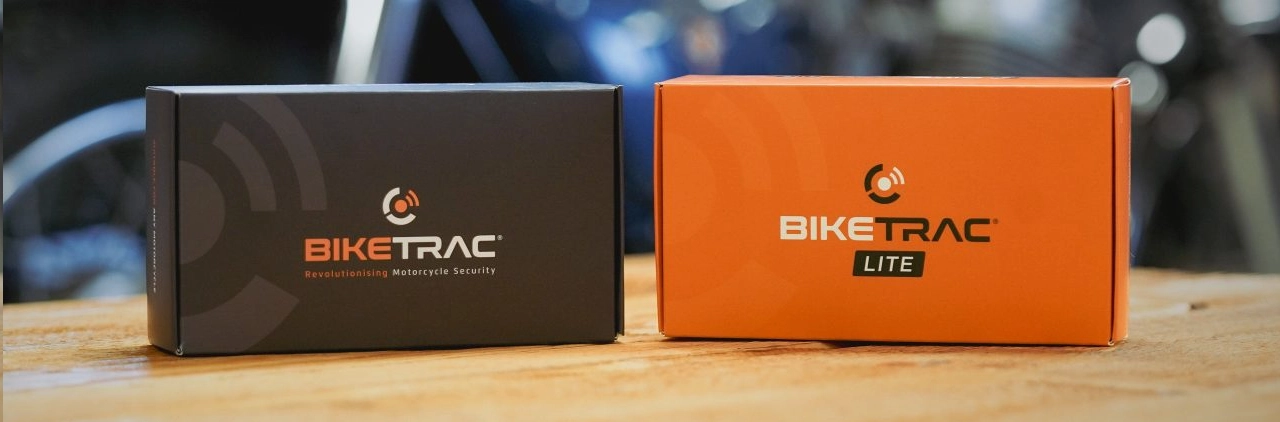
- BikeTrac – High End Motorcycle Tracker
- Guardian Bell – UK Based Track and Recovery
- MoniMoto – No Frills GPS Cellular Tracker
- Android Find Hub – Video from 9to5Google with lots of cool details
- MiLi Tags – Chinese Android Find Hub Tags
- AirTag – Information on Apple’s AirTag
Do Tags Work?
Naturally, all of the Android Tag manufacturers claim that their Tags are the best on the market. I’ve no idea if their claims are valid. The ones from Motorola seem to get good reviews, but the options and prices vary.
Ultimately, from a motorcycle security point of view, we only have one question … “Where’s my damn Bike?”
Having installed an Android Tile Tag (the freebie) on my bike, I went 60 miles away on a different bike and asked my phone what it thought was happening.
Sure enough, the Tile Tag reported that my motorcycle was still in the garage, but the location information it was reporting had been established from my phone when I left the garage.
No one else with the Tile App on their phone had connected since I had. The size of the “club” your tag belongs to is a significant factor, and my guess is that for Android users, Google Find Hub is where we need to be.
MiLi Tag
The MiLi Tags are a step up from the freebie Tile Tags, not least of which is that they are powered by a replaceable coin-style battery, but most importantly, they work with Google Find Hub.
Registering the Tag with my phone could not have been simpler, and to see if they are any better at updating their location, I hid one on my Honda NT1100, rode to the local chain brand coffee shop, parked the bike out of range of my phone and waited.
While I was sitting there drinking my overpriced fancy coffee, I could see that the MiLi Tag was receiving occasional updates from random phones.
Out of town, however, the story remains the same. If the bike had been dumped in a remote location, the chances of someone passing by and updating the Tag reduce significantly. That said, all the Tag needs is one phone to ping it, and you know where the bike is.
Battery Life
The one big issue with Android Tags, and I’m guessing it is the same for Apple Tags, is that running the App on your phone drains the phone’s battery.
I got about 10 hours of phone life from a fully charged battery if I left the Tile App running on my phone. The Android Find Hub is much less demanding on battery life, and although I used more battery each day, it was manageable.
If I turn the App off, then I’m no longer looking for other people’s Tags and reporting their location. If everyone does this, the chances of your Tag being found reduce significantly.
In both cases where Itchy Boots found her motorcycle with an AirTag, it appears the bike had been abandoned close to where it was stolen from.
No complaints, the Tags did precisely what they were designed to do. If they had found the bike 30 miles away, that would have been very impressive.
GPS Cellular Trackers
This is the other end of the spectrum when it comes to tracking your motorcycle’s location. GPS is used to establish the position of the Tracker, and the Cellular network is used to report the Tracker’s location back to a monitoring system.
As location updates can be (almost) constant, not only can GPS Trackers tell you where your motorcycle is in real time, they can also indicate the direction and speed it is travelling in.
GPS Trackers are typically connected to the motorcycle’s battery and can also detect when the engine is running. Or, more precisely, if the battery is receiving a charge.
If the battery is receiving a charge and the motorcycle is moving, then there’s a good chance you’re riding it. If the engine isn’t running and the bike is moving, then the GPS Tracker can send an alert to you and the monitoring company.
I know this works as I had a GPS Tracker fitted to a Triumph Tiger several years ago. I pushed the bike out of the garage to wash it, and received a call from the Tracker monitoring company to ask me what was going on.
Tracker Communications
The notifications are typically sent to the Tracker monitoring company via SMS messages or using Cellular Data. The SIMs are typically ‘multi-network roaming’, so they’ll hop across networks to transmit the data. Some older Trackers were tied to one network with the obvious limitations.
If the Tracker can’t find a cellular network, it buffers the journey data and transmits it later once a connection is established.
The cost of the messages is covered in the annual subscription, and with 97% of the world’s population living somewhere with a mobile phone signal, finding a network to call home through is all but guaranteed.
Flat Battery
 For the nay-sayers’ claim that a “Tracker flattens the battery”, our experience indicates that this is total bollocks. It is more likely that it was due to an old battery or faulty wiring, and it would likely have gone flat even without the Tracker.
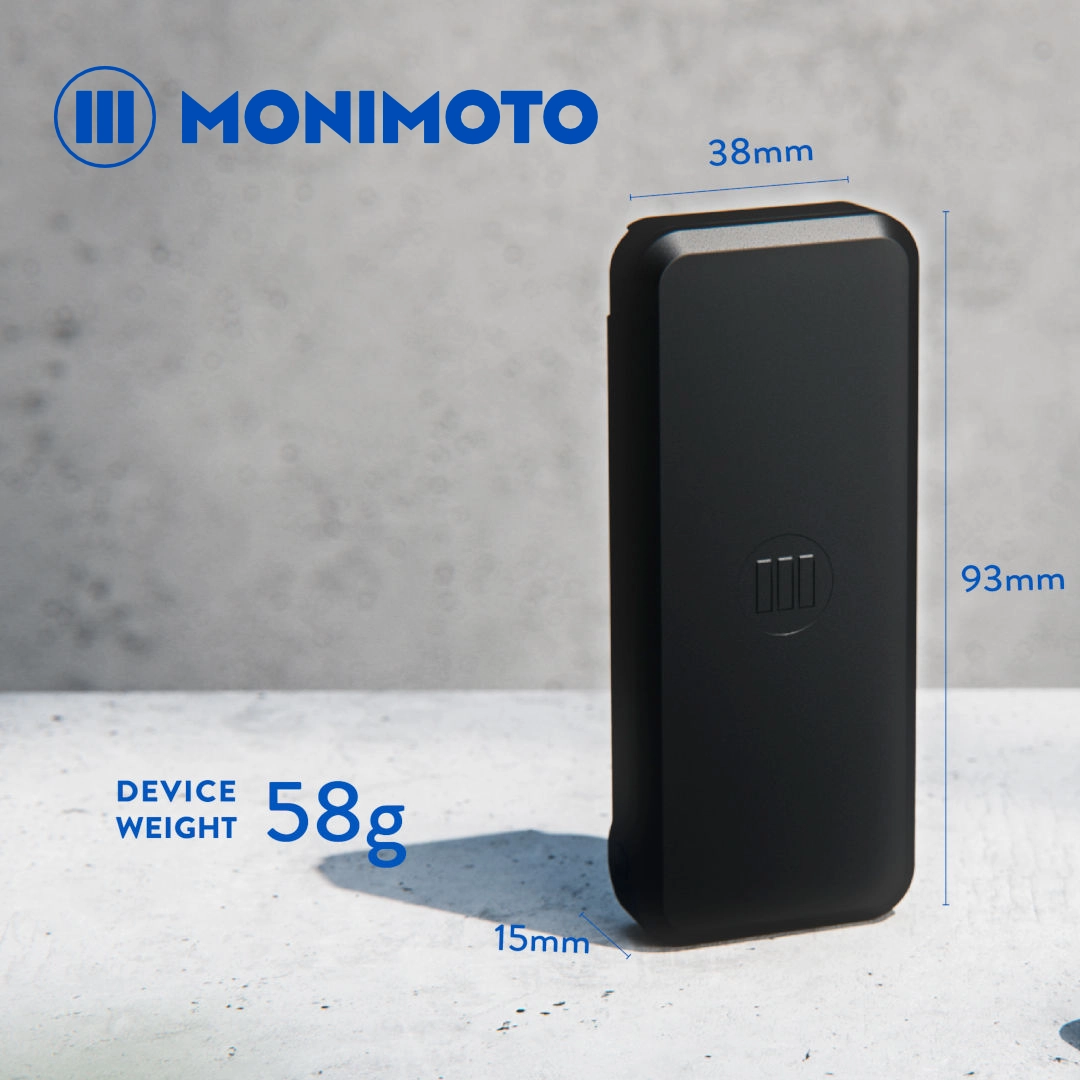
There are also Trackers like the MoniMoto 9 that are USB rechargeable, with a charge typically lasting around 9 months (according to the manufacturer).
There is no connection to the motorcycle. When the battery power in the MoniMoto 9 gets low, the unit calls you and tells you it is time for a recharge.
Most of the modern wired Trackers have a sleep mode. If the motorcycle hasn’t moved for several days and the ignition hasn’t been turned on, the Tracker still responds but enters low power, semi-hibernation mode.
Some also have an internal battery, so if the bad guys disconnect the motorcycle’s battery in the hopes of disabling any tracking devices, they are not fooling anyone.
It’s worth noting that lithium batteries can cause problems. Traditional lead-acid batteries rest below 12.8V, lithium bike batteries tend to sit much higher, sometimes over 14V.
If the Tracker bases its sleep routine on vehicle battery voltage or detects a battery charger being connected, it may never go to sleep if a lithium battery is installed.
Tags or Trackers?
If ever there was a case for “You pay your money and you make your choice”, Tags and Trackers are it.
Free products are never going to be that good. Android Tags aren’t expensive, and there always seems to be a deal somewhere. Functionality varies, but you do get what you pay for.
There are Trackers for the budget-conscious and those at the high end of the market, offering 24-hour monitoring and alerting. Bike Trac and Guardian Bell even offer a recovery service. How far that service will go is a question I don’t want to ask, in case I like the answer (yes, I said like).
Good
The freebie end of the Android market is useful when you lose your keys at home, but it’s not much use for finding your motorcycle unless you’re standing right next to it.
To be of use, the Android Tag has to be part of the Google Find Hub Network. The tags are small and low-cost. Hiding a couple on your motorcycle is a 10-minute job.
There is no way for the bad guys to know they are there, but if they are professionals, they’ll have a Bluetooth jammer with them.
They are better than nothing, but you are relying on the goodwill of other Android users, running the Google Find Hub App on their phones and living with the battery drain to be effective.
With Android phones set to start using GPS information in the Find Hub, this technology continues to evolve and improve.
Better
This has to be the Apple AirTag. They have all the same benefits and issues that are present with Android, but the size of the iPhone market and the single technology choice make the coverage for Apple AirTags a compelling argument.
And yet, as a motorcycle Tracker, they are still dependent on other people running the Apple AirTag App if your motorcycle isn’t within range of your phone.
An AirTag will also warn an iPhone user if a tag not registered to them is moving with them. The feature is designed to stop stalkers from tracking you. All a thief has to have is an iPhone, and they’ll soon discover the bike has a tag on it.
Perhaps this is why Itchy Boots has had her bike abandoned each time it has been stolen.
I’ve not seen that on Android Tags (yet), but I’m sure it is there … somewhere.
Best
A purpose-built Tracker remains the best solution. Yes, they are significantly more expensive than Tags and typically come with a subscription for the locate and optional recovery service, but you get what you pay for.
The chances of a Tracker being out of mobile phone signal range are minimal. Trackers can actively alert you when your motorcycle is moved without your knowledge, rather than waiting until you discover it is missing, and depending on your Tracker options, you can even have your bike recovered, all as part of the package.
Which only leaves the question … Does the thought of wanting to inflict medieval torture on those who steal motorcycles make me a bad person?














One Response
I think it’s worth clearing up that for the air tag to have its location relayed people don’t need an “Apple Airtag App”… from what I’ve read all capable Apple devices will automatically relay your AirTags location without asking. Also worth mentioning that if an AirTag linked to someone else’s device has followed you for a certain period of time it will start making a loud noise. This is an anti stalking tactic from Apple. However with a razor blade or flathead you can easily crack open the AirTag case and remove this speaker making it silent. There are a few guides on youtube. If you’re going to use an AirTag this is a must.