
There was a time – not long ago – when the UK motorcycle scene was being quietly reshaped by a new breed of dealership.
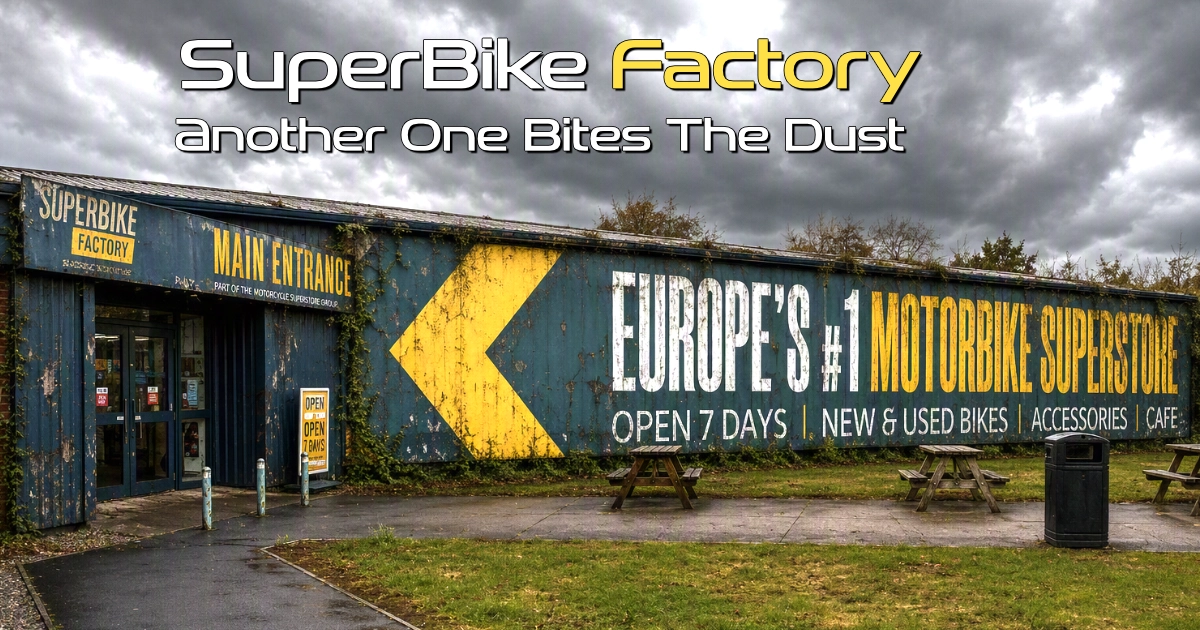
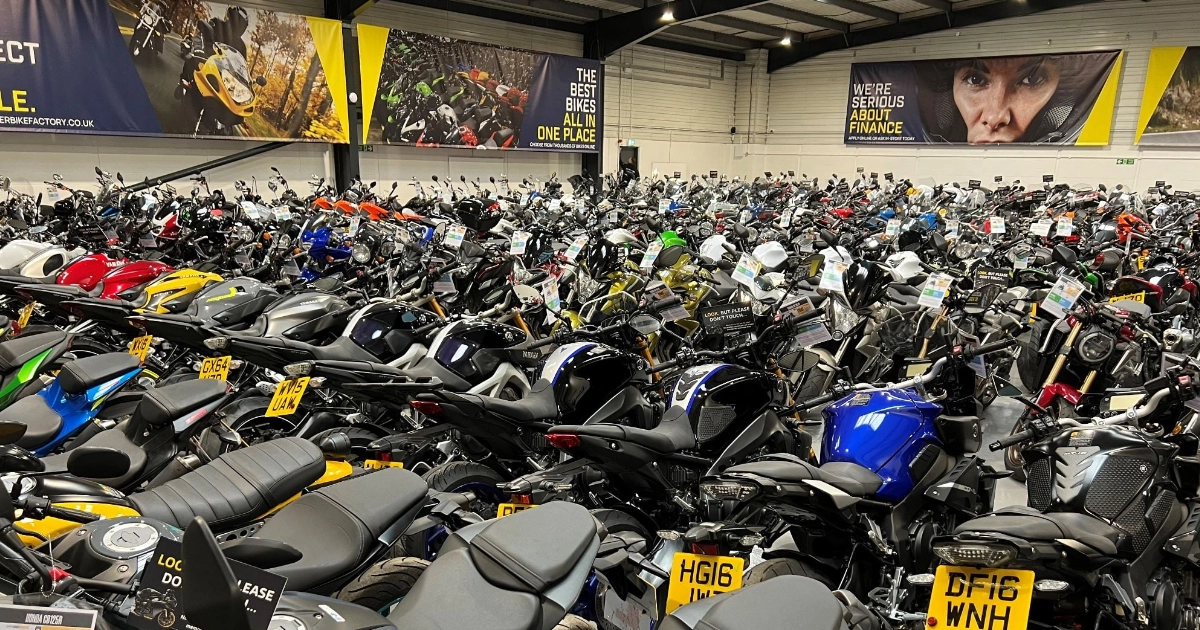
Not your traditional “cup of tea, have a wander, mind the dog” sort of place, but vast, echoing warehouses stuffed with motorcycles like some sort of two‑wheeled IKEA.
Rows upon rows of bikes, all lined up with military precision, waiting for you to wander in, point at one, and be relieved of your money, and if you didn’t have the money, no worries … finance, which reportedly was one of the nails in the Superbike Factory coffin.
The Warehouses
Three names came to define this era: Completely Motorbikes, Superbike Factory, and Big Moto. The first two have now face‑planted into administration, while Big Moto soldiers on, presumably looking around the battlefield wondering how it became the last man standing.
Some argue that CMC should be on that list too. I’ll let you decide.
Naturally, when two out of three companies in a niche sector go pop, the conspiracy theorists start warming up, positive that there is a connection. Except… there isn’t.
There’s no cross‑connection between the directors or shareholders of these companies. None. Zero. Nada. The Companies House records read like three entirely separate soap operas, each with its own cast of characters, plot twists, and inevitable cliff‑edge endings.
Superbike Factory had its private‑equity‑flavoured corporate structure; Completely Motorbikes was run by its own family‑centric leadership; Big Moto is its own independent beast. No shared directors, no shared holding companies, no shadowy cabal of warehouse overlords.
Now What?
With the conspiracy theories safely parked, we arrive at the practical questions: what happened and what will happen to the thousands of motorcycles sitting in the cavernous halls?
The figure widely reported is a pre-tax profit of about £8.5m on turnover of around £83m, but I’m not sure that is correct. Looking at the SuperBike Factory accounts sent to Companies House, they show:
| Financial Year End | Turnover | Profit Before Tax |
| 31 Dec 2022* | £44.613m | Loss of £3.063m |
| 31 Dec 2023 | £82.270m | Loss of £8.141m |
| 31 Dec 2024 | £82.284m | Loss of £19.081m |
*2022 was an 8-month year; the company changed its year-end date
So, I think someone misread the report for the year ending 31 December 2023; it is a loss of £8.1m, not a profit as many are reporting, which dramatically increased in 2024 to a loss of a further £19.1m
Being £27m in the hole isn’t always a problem if you have assets (bikes) worth more than that, or you can meet the interest payments of the loans.
But things didn’t look that rosy, and then there is the FCA’s investigation into motor finance commission.
The Finance Trap
The motorcycle industry is heavily dependent on PCP and HP finance, and there is a black cloud hanging over the motor trade as a whole about some shady practices when it came to arranging finance.
If a dealer is going to make £1,000 profit on a bike, but the finance company will pay a £400 commission if you get the buyer on finance, guess what the dealer wants to sell you – Finance
The slightly shady part starts when we think of a bike as so much per month.
Assume you are going to finance £5,000 over 3 years. At 8% interest, the monthly repayments are £156.67, and at 9% interest they are £158.99 – just £2.32 per month more. Nothing, right? The commission the dealer makes, however, is considerably more. They could have done it cheaper but didn’t. That is what the FCA are investigating.
I’ve no idea if this applied to SuperBike Factory; however, their own accounts reportedly warned about the availability of motor finance and the effect regulatory changes could have on their business model.
Add all of that together, and it looks like a loss-making business, with no upturn in sales or profit margins to be seen, so the backers – the Enact Fund managed by Endless LLP – decided enough was enough. Call in the Administrators and get what we can for what we have.
The Administrator’s Playbook
Administrators are not romantics. They do not gaze wistfully at a row of Triumph Tigers and think, “Ah yes, freedom, adventure, the open road.” They think: “How fast can we turn this into cold hard cash?”
And when you’re staring at 1,800‑plus motorcycles, you don’t sell them one by one. You don’t polish them. You don’t photograph them at sunset. You don’t write lovingly crafted descriptions about how the previous owner was “mature” and “only rode it on Sundays.”
You shift them.
The Fire Sale
Option 1. Bulk Trade Buyers – Big, Fast, Brutal
The most likely outcome is a giant, industrial‑scale sale to a dealer group capable of swallowing hundreds of bikes in one gulp.
This is the administrator’s dream scenario: one negotiation, one invoice, one massive movement of stock. It’s the motorcycle equivalent of selling a herd of cattle.
I do wonder if Big Moto, the last survivor, isn’t considering feasting on the fallen.
Option 2. Auctions
Anything that isn’t snapped up in bulk will almost certainly be punted through the auction houses:
- BCA for the mainstream stuff
- Copart for the cosmetically challenged or slightly dented
- Aston Barclay – now owned by BCA – Handy for a lifestyle split of models
- Bonhams MPH if anything genuinely fancy turns up
Auctions are fast, brutal, and efficient. Bikes go in, money comes out, and administrators don’t have to deal with tyre‑kickers asking whether the bike has ever been wheelied.
Option 3. Finance Company Buy‑Backs
Some bikes may be tied up in finance agreements, meaning the finance companies themselves may step in to reclaim or repurchase units.
If someone lent them money secured against stock, then they might have their own plans and reclaim the bikes they are owed.
Option 4: The Phoenix Company
Sometimes, after a collapse, a new company rises from the ashes — often run by former staff or management — and sells the remaining stock directly. There’s no sign of this yet, but it’s not uncommon in the automotive world.
Bottom Line
The rise of warehouse‑style motorcycle retail was impressive, dramatic, and occasionally a bit ridiculous — like buying a 1980s Italian motorcycle and expecting Japanese reliability.
But its fall has been equally dramatic, leaving thousands of bikes in limbo and riders wondering whether they will get the bike they were buying.
The truth is simple: No conspiracies. No shared directors. No shadowy cabal. Just three companies, three separate stories, and two unfortunate endings.
The administrators will do what administrators do: sell everything quickly, efficiently, and without sentiment. And if you’re patient, sharp‑eyed, and willing to brave the auction circus, you might just ride away on a bargain.
And the everyday riders caught in the middle of all this? The golden rules apply with every dealer, big, small and anywhere in between:
- Always pay the deposit on a credit card – No exceptions
- Only pay the balance when you are collecting the bike
- Only release the money from the finance company when you are collecting the bike
Administration happens fast. You could be paying for the bike at 5pm one day, and find the doors locked at 9am the next. Only give the dealer the money as you collect the bike.
If you want to read what happened to Completely Motorbikes, click here.