
Before we start, a disclaimer. I am not legally trained; this is not legal advice, and this article is not designed to help anyone evade responsibility for offences they may have committed.
These are my thoughts on roadside conversations with the Police.
If you’ve been riding it like you stole it and a police officer wants a word, that’s between you and them.
The purpose of this article is simply to help motorcyclists understand the types of questions commonly asked during roadside conversations with the local Constabulary and how to communicate politely without volunteering unnecessary information.
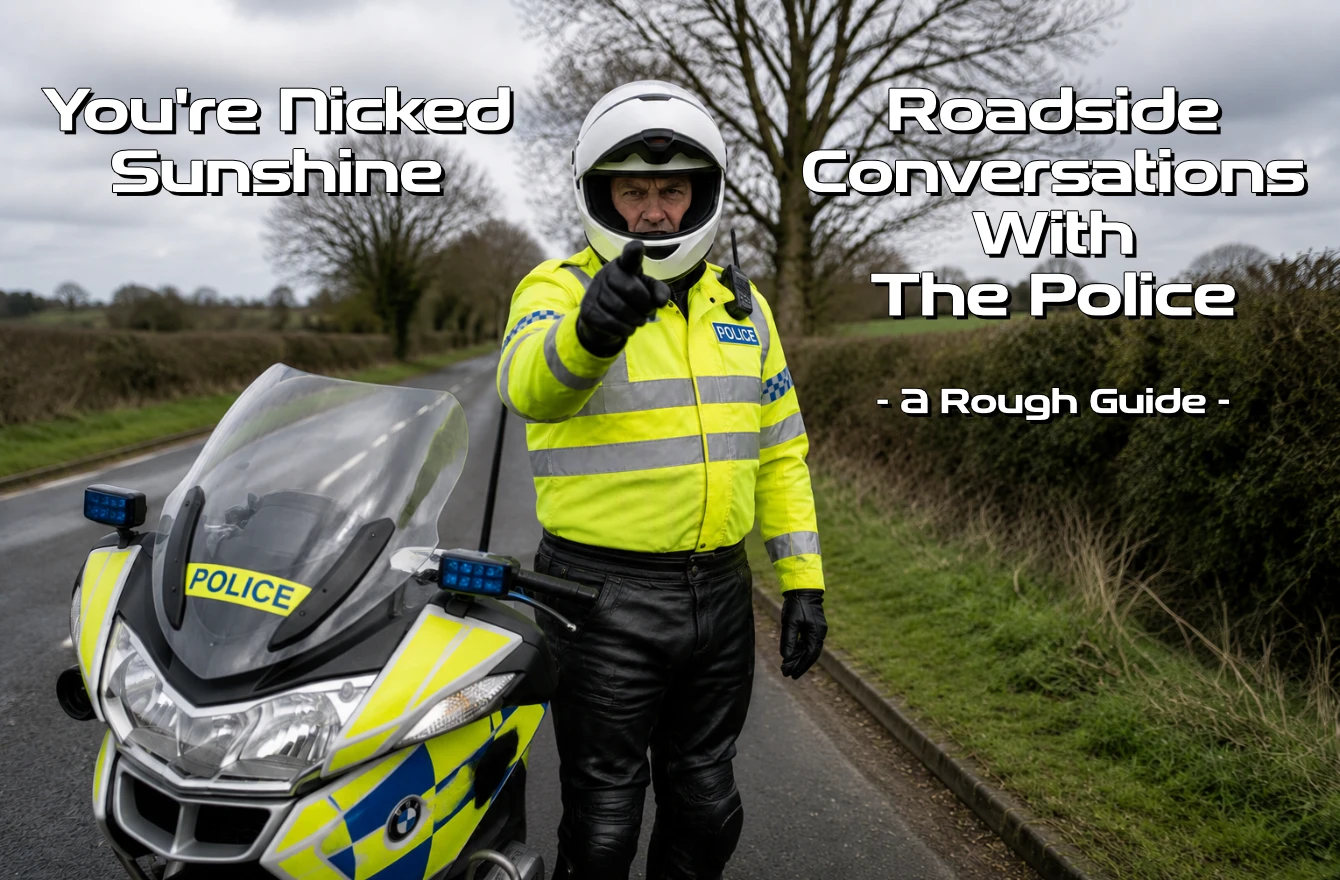
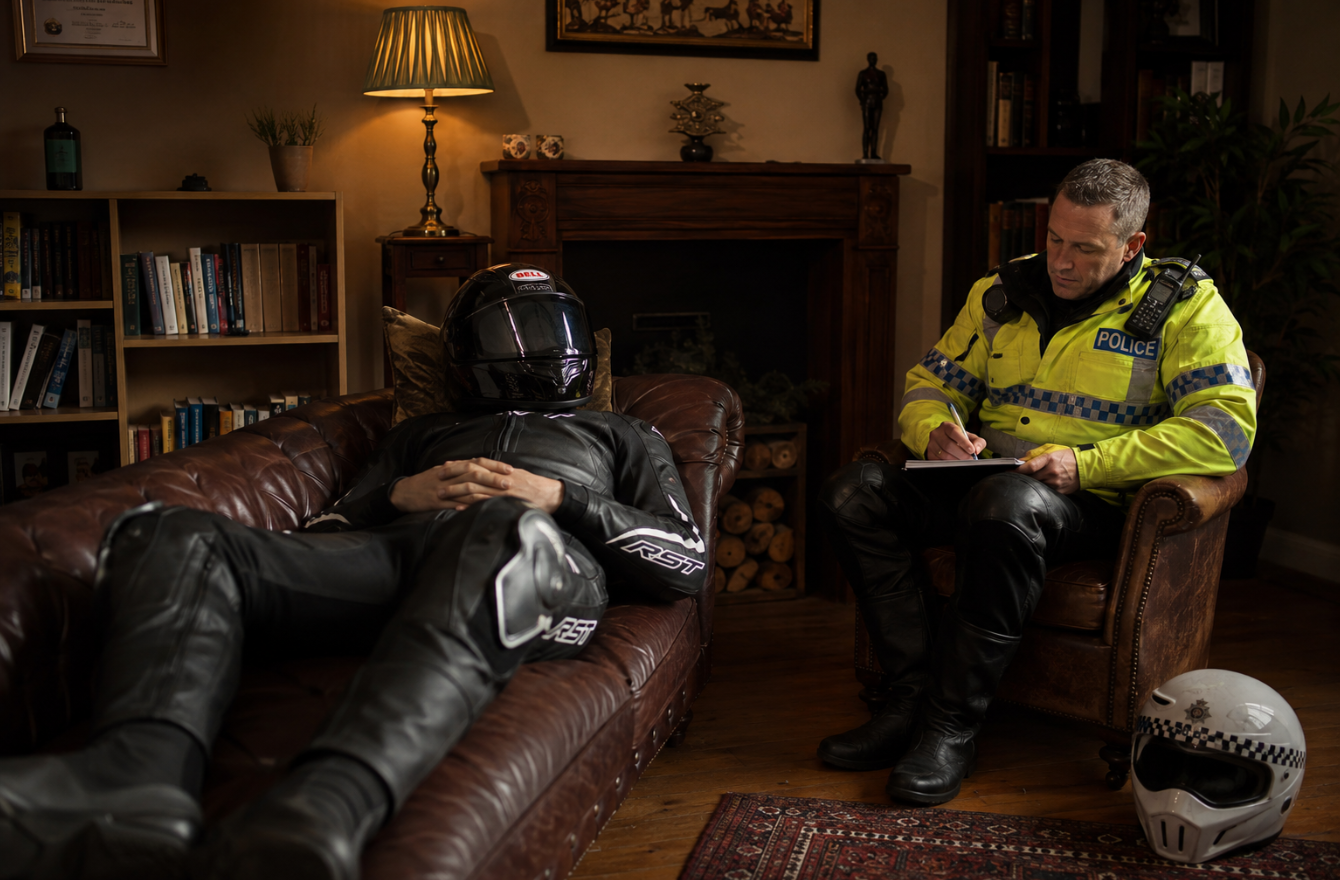
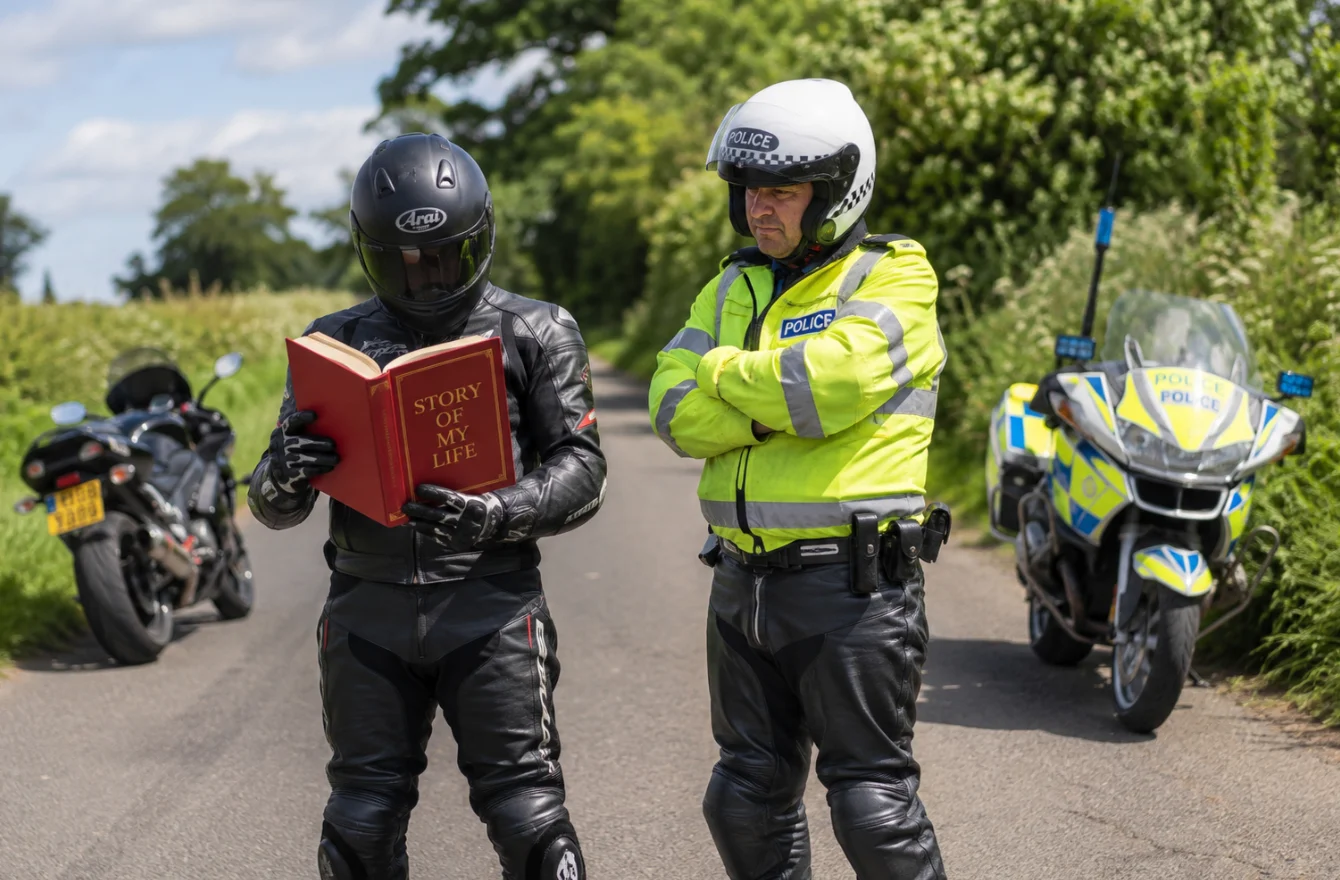
And before the beloved Karen gets all worked up about wasting Police time taking stupid photos … They’re fake. (Derr!)
Roadside Conversations
Most riders at one time or another will have seen blue lights appear in their mirrors. You pull over and then comes that first leading question.
“Do you know why I stopped you today?” At first glance, it seems perfectly reasonable. Friendly, even.
But experienced riders, drivers and lawyers alike will tell you that roadside conversations are rarely friendly chats and tend to follow a fairly predictable pattern.
The officer is gathering information, assessing your demeanour, confirming facts, and occasionally seeing whether you’ll happily fill in any evidential gaps for them.
The key is not to be difficult; be polite, calm and only answer what was asked, but without dropping yourself in the shit.
The Opening Gambit
The classic opening question is: “Do you know why I stopped you?” Or its close cousin: “Do you know what speed you were doing?“
Many people immediately start guessing. “Was I speeding?” “Did I go through that amber light?” “I might have been a bit quick coming off the roundabout.”
The problem is that you’ve just supplied information that may not have existed a few seconds earlier.
A polite response might be: “No officer, I don’t know why you’ve stopped me” or “As you have stopped me, I assume there is a reason”
Notice the difference. You’re not arguing. You’re not being confrontational. You’re simply declining the invitation to speculate, and you are answering the question. Just saying “No” if you were doing 80mph in a 60 zone could open the door to riding without due care and attention.
If the officer believes you were travelling at a particular speed, they can tell you. There is usually little benefit in guessing on their behalf.
You might be tempted to say “Because I slowed down to let you catch up”, but trust me, it isn’t going to end well if you do.
Have You Had Anything To Drink Today?
This question often appears entirely routine. Sometimes it is. Sometimes it forms part of an officer’s assessment of whether a roadside breath test may be appropriate.
If you have consumed alcohol, honesty is generally sensible. Lying to the police rarely improves a situation.
A straightforward response might be: “I’ve nothing to declare,” or “I’ve not consumed any alcohol today” or “Yes, officer, I had one pint with lunch several hours ago.”
What riders should avoid is volunteering a complete social diary.
The question is whether you’ve consumed alcohol, not where you were, who you were with, what pub you visited and how many packets of pork scratchings were involved.
Answer the question that was asked.
Where Are You Coming From Today?
This is one of the most common questions during a stop. Often it is simply conversational. Sometimes it helps establish context. Sometimes it is designed to see whether your answers remain consistent throughout the encounter.
Many riders immediately launch into a detailed explanation involving three counties, a café stop, an argument about tyre pressures and a visit to their aunt’s house.
A simpler response is perfectly acceptable: “I’ve been out riding today” or “I’ve come from a friend’s house”
Similarly, “Where are you going?” Can often be answered with, “I’m heading home” or “I’m travelling to meet family.”
Both of these answers can lead to follow-up questions; perhaps the best answer is to say, “I’d rather not answer questions, officer. I have my license if you would like to see it.”
You are not normally required to provide a minute-by-minute itinerary of your day.
The Friendly Search Request
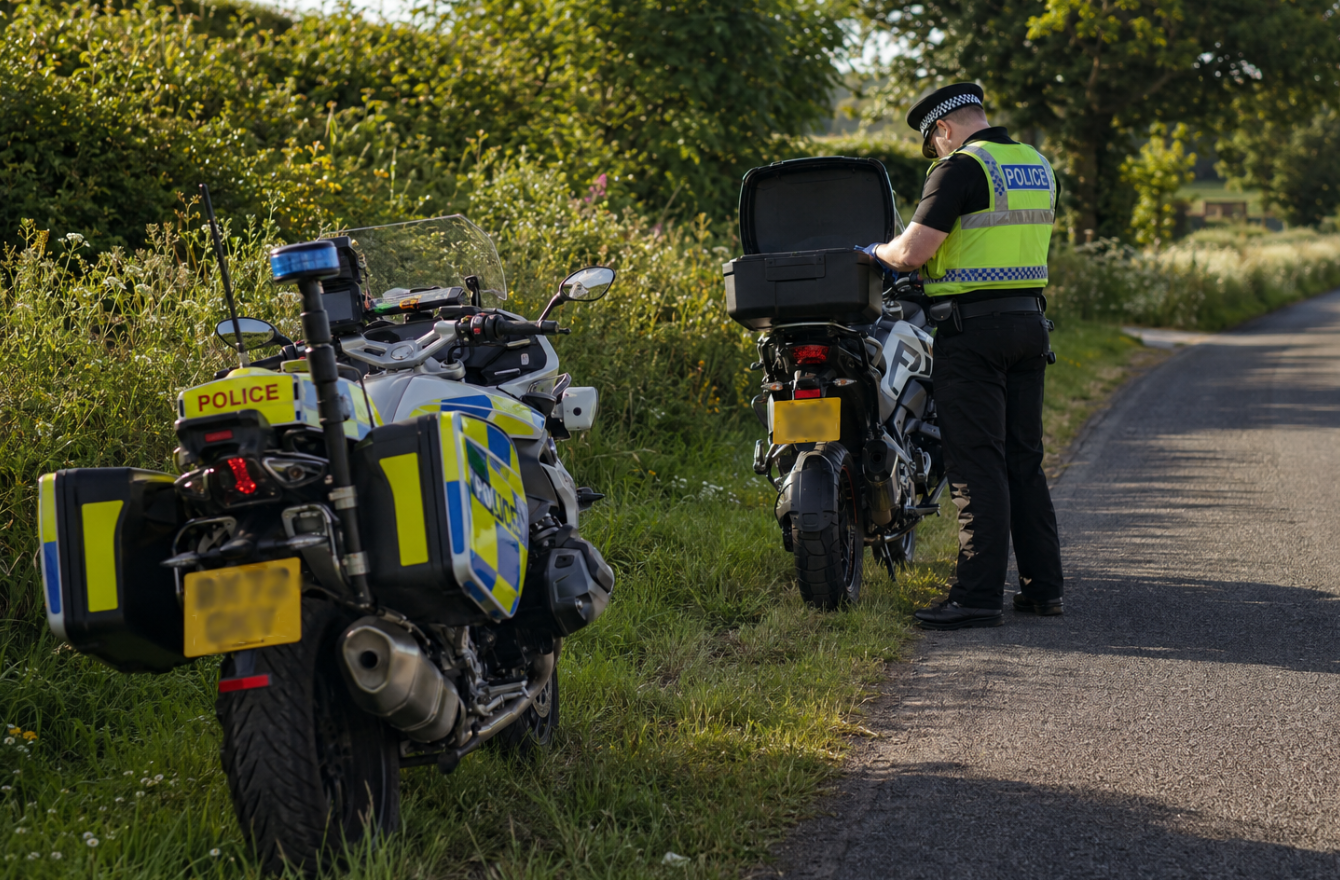
Motorcyclists often encounter a variation of: “Do you mind if I have a quick look in your top box?”
Notice the wording. The officer is not necessarily stating that they are conducting a search, but are asking for your consent.
Many people hear a police officer ask a question and assume they have no choice. That’s not always the case.
A calm response might be:
“Officer, are you asking for my consent, or are you exercising a power to search?”
That isn’t being awkward. It’s clarifying the situation.
If consent is being requested, you can politely decline: “I’d prefer not to consent to a search, officer.”
If the officer has a lawful power to search, they will usually tell you and explain the basis for it. The important thing is understanding the difference between consent and authority.
You Seem Nervous
Almost everybody is nervous when stopped by the police. Some people become nervous when ordering a coffee. Being nervous around uniformed authority figures is hardly unusual.
Occasionally an officer may comment: “You seem nervous.”
This can be difficult because there is no perfect answer. Denying it sounds defensive. Agreeing may encourage further questioning.
A polite response could simply be: “This isn’t something I experience every day, officer, but I’m fine, thank you” or “I think most people are a bit nervous during a police stop.”
You don’t need to explain your life story. You certainly don’t need to start listing reasons why you might appear anxious.
And NEVER ever say “I’m wondering if I’m going to get done”.
Can I Search You?
Eventually the conversation may move beyond a request and become a direct statement. The officer may say they intend to conduct a search.
At this stage, the sensible approach is usually cooperation without volunteering information.
You can ask: “Under what power are you conducting the search, officer?” and “Am I being detained for the search?”
Those are reasonable questions. If a lawful search is being conducted, physically resisting or arguing on the roadside is rarely productive. Disputes about legality are generally resolved later, not in a lay-by while traffic thunders past.
Your Bike Was Flagged…
This one tends to get people’s attention. The officer might say: “Your bike came up on our system” or “Your vehicle was flagged.”
Sometimes this relates to ANPR systems; other possibilities include the Motor Insurance Database and intelligence reports.
Other times it can be simply because the computer said so for no good reason, otherwise known as an administrative oversight (translation: the policeman is fishing).
The temptation is to start guessing. “My insurance definitely isn’t cancelled.” “I only changed the plate last month.” “My mate borrowed it last week.”
Again, resist the urge.
A perfectly reasonable response is: “Can you tell me what it was flagged for, officer?”
Allow the officer to explain rather than trying to identify possible problems on their behalf.
The Golden Rule
The biggest mistake riders make isn’t refusing to answer questions. It’s answering questions that were never asked. Remember, police officers interview people for a living. They are trained to get as much information as they can from a seemingly innocent question.
For example:
Officer: “Do you know what speed you were doing?”
Rider: “I wasn’t looking down at the exact speed, but I know I accelerated quite hard coming away from that roundabout because I was trying to overtake a van.”
The officer asked for one piece of information. The rider provided four. That doesn’t mean the officer has done anything wrong. It simply means the rider talked too much.
Bottom Line
The best strategy for roadside conversations is remarkably boring. Be polite. Be respectful. Don’t argue.
Provide documents when legally required. Follow lawful instructions.
But equally, don’t feel obliged to solve the investigation for the officer. If asked whether you know why you’ve been stopped, it’s perfectly acceptable to say you don’t know.
If asked for consent to search, it’s perfectly acceptable to clarify whether consent is actually being requested.
If asked where you’re going, politely decline to discuss your plans, or if you do answer, say as little as possible.
And if you’re nervous? Congratulations. You’re a human being.
The reality is that most police officers are simply doing their job and most roadside conversations end without drama. The aim isn’t to “beat the system” or win a courtroom battle on the hard shoulder.
It’s to understand that there is a difference between being cooperative and signing off on your own penalty points.
Sometimes the wisest thing a rider can say is also the simplest:
“Yes, officer.” – “No, officer.” – “I’m not sure, officer.”
And then wait for the next question – Don’t start talking!