As the damp and soggy weather is coming, I’ve just spent an hour in the garage fitting the Pyramid Plastics Fender Extenders to the Yamaha Tracer 9 GT.
I shouldn’t need to do this. If motorcycle manufacturers produced motorcycles with less aesthetic and more functional mudguards and rear huggers, then fitting fender extenders, mudguard extensions, hugger extension or even extenda fendas – call them what you will – would not be necessary.
But that isn’t the world we live in, and thankfully there is Pyramid Plastics to help correct the manufacturer’s shortcomings.
Pyramid Plastics
Like so many things in my life, I first came across Pyramid Plastics when I had my V-Strom. Whereas Suzuki had done their usual excellent job with the front mudguard, the rear shock and subframe were protected by little more than a rubber flap. For £100, I could have an all-in-one, fibreglass chainguard and rear hugger from Pyramid Plastics. Five screws later, and the shock and the rear of the V-Strom were protected.

I also caught our monosyllabic colleague Roger surfing the Pyramid Plastics website after a stone flicked into the radiator of his new GSX-S750. The stone strike was followed by a depressing shower in hot coolant and the equally depressing bill for a replacement radiator.
Pyramid Plastics have been in the fender extender and rear hugger business for the past 30 plus years and is based a short bike ride away from the office. Being open to any excuse to ride a motorcycle, I opted to collect the extenders for the Tracer 9 GT from the factory and spent an enjoyable 20 minutes chatting with them.
Did you know they still have a designer who builds moulds and models by hand? It might not be the “modern” way of doing it, but to see a skilled craftsman putting the individual attention into creating something, is always more gratifying than something churned out by a computer.
Yamaha Tracer 9 GT
The exhaust and oil filter on the Tracer 9 GT are exposed to the elements. Nothing is protecting them from whatever flies up from under the front wheel. I fitted a radiator guard as part of the deal when I bought the bike, but there has always been that nagging thought at the back of my brain that I should fit front and rear fender extenders.
If I’m honest, the first and only place I looked for my fender extenders was Pyramid Plastics. Having been through their design process, fender extenders for the Tracer 9 GT and a number of other new models are now available on their website.
The extenders are fast and straightforward to fit, and considering the extra protection they will bring to the fancy electronic suspension on the rear of the Tracer 9 GT and the winter crap they will keep off the downpipes and oil filter, the extenders are perhaps the simplest and most beneficial modification you can make.
Fitting the Fender Extender
Rule one is no brake cleaner or other solvents. The adhesive on the double-sided sticky pads does not work if you use a solvent cleaner. There is a cleaning swab provided with every hugger and extender. Use that, having first removed the noticeable road grime with soap and water. Some of the more aggressive motorcycle cleaners contain solvents, so sticking to soap and water is the safest option.
Once washed, use the cleaning wipe provided to remove any soap or solvent residue that might hinder the pads from forming a strong bond.
 While the mudguard is drying, arrange the sticky pads on the fender extender. I did perhaps go a little over the top with the sticky pads, but I figured they were only going to sit in a draw for the next year before I finally threw the unused ones away, so I may as well use them.
When the mudguard is dry and with the sticky pads arranged, remove the tape on the pads to expose the second sticky side. Take a deep breath while you worry slightly about getting the extender aligned correctly, and then lightly attach the extender.
Don’t apply any pressure until you are sure it is where you want it. Whereas the pads are incredibly sticky, I found I was able to remove and adjust the alignment on the fender extender, providing I only gently placed the extender where I wanted it.
Once aligned, apply pressure to secure the fender in place and apply clamps while the glue sets. I bought my clamps from Amazon for a few quid, but any clamp will do. In addition to the sticky pads, Pyramid Plastics also provide four nylon rivets. However, using the nylon rivets isn’t compulsory, and as the thought of drilling 4mm holes in my mudguard didn’t fill me with joy, I found something else to do for the next 18hours while the glue set.
Once the glue on the pads has cured, you can use all your preferred cleaners on your bike. Solvents are not a good idea for regular cleaning anyway, and as rinsing your bike is part of cleaning it, there won’t be any problems.
Rear Hugger Extension
Fitting the rear hugger extension follows the same process used for fitting the front, but with the added advantage of not having to remove the factory hugger.
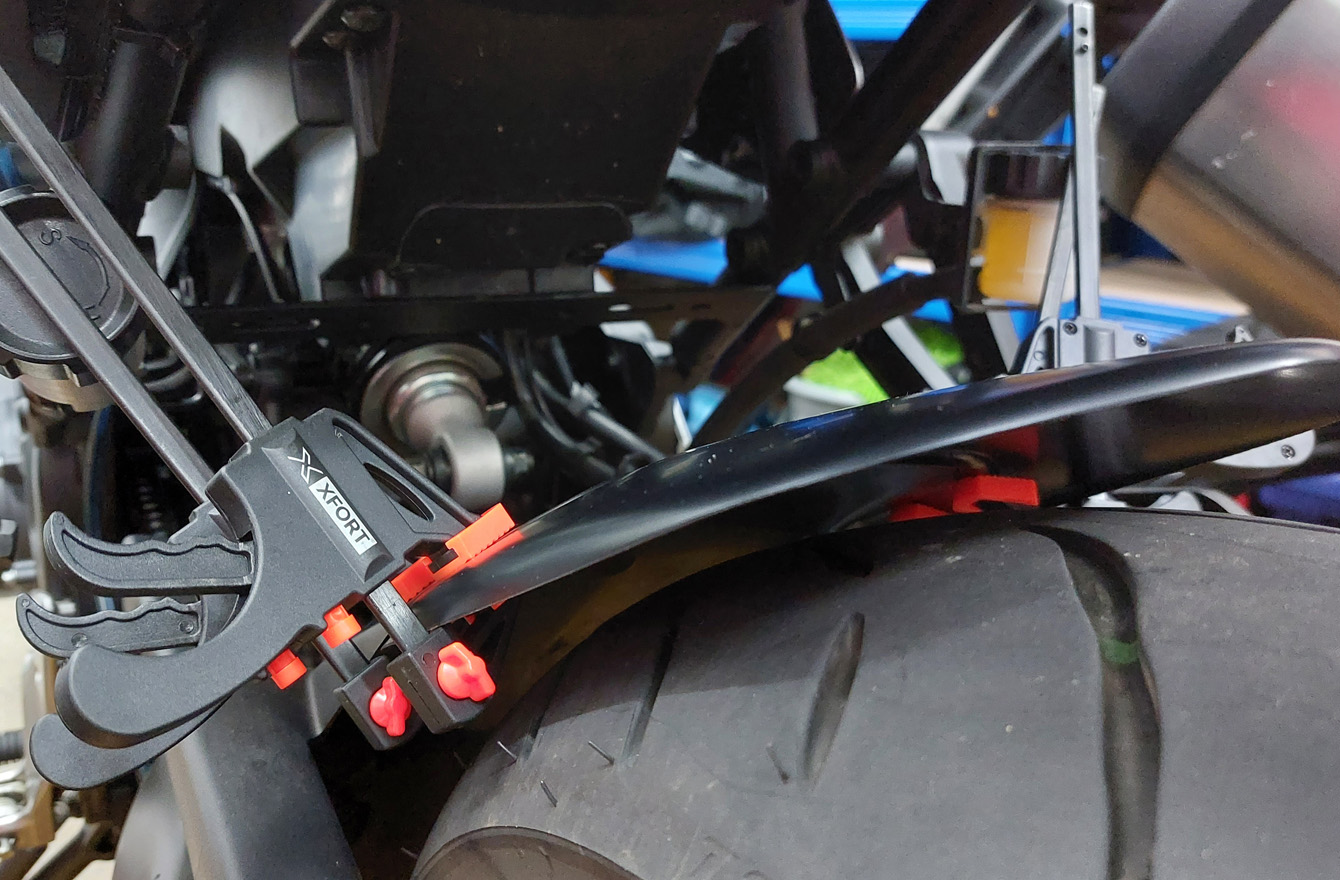
It may be different for other motorcycles, but the factory rear hugger on the Yamaha Tracer 9 sits high enough to be able to clean the inside and fit the hugger extension without having to remove the factory hugger. Attaching the clamps was mildly entertaining, but the rear hugger was securely attached after a night in the garage with the clamps pressing the extension in place.
Time
Bizarrely, I had thought the job would have taken longer. Perhaps I was judging the time it would take by the wrestling match I’d had with a few of the screws on the V-Strom after they had been covered in crap for 10,000 miles before I tried to remove them. (Should have gone to Pro-Bolt)
I can’t think how the job of fitting the fender extenders to the Tracer 9 GT could have been made any easier. And now to clean the road grime off the exhaust downpipes and polish them. That is definitely going to take longer.
Clarity
Pyramid Plastics supplied front and rear hugger extensions to us free of charge. As with all of the items we test, our Product Testing Philosophy applied.
More on the Yamaha Tracer 9 GT