



Two of my colleagues have been trying to talk me into motorcycle camping. They have been working on me since autumn 2021, and I even gave in a little bit in December ’21 [see Motorcycle Camping], but I still managed to avoid it.
The discussion is a well-worn path. We need to go somewhere. They say let’s camp. I explain that there are these things called Bed & Breakfasts, or if you are in Europe, there is no end to excellent Pensions and Guest Houses (Germany), Gites (France), Farm Stays (Italy), and all those in Spain.
With such a diverse selection of places to stay for half the price – or less – than the same accommodation in the UK, why camp? Beds, a roof over my head, and hot showers win every time.
Regardless, the never-ending rebuttal that I can’t knock it until I’ve done it can’t be ignored. So, they have finally persuaded me to go motorcycle camping, but with one condition—the Budget.
The Motorcycle Camping Budget
When looking for overnight accommodation—the sensible kind—I only need the basics: clean, dry, and quiet, with a good shower and somewhere to eat breakfast. Typically, finding those things also addresses the need for motorcycle security. Avoiding cities and town centres reduces the chances of waking up to find out you are walking home.
As I’m not paying city centre prices, I can typically find a bed for the night for around £50 to £60. Sometimes, I have to undershoot the preferred destination. Other times, it is a twenty-mile diversion to the back end of nowhere, but I figure it is worth spending £5 on petrol to save £25 on overnight accommodation.
So, my budget for equipping myself for motorcycle camping is based on three nights in a B&B, and to keep it simple, we rounded this to £200.
From that, I need to get a tent, sleeping pad, and a jet-boil-style portable gas stove so that each day can start—as it always does—with coffee.
If, after three nights, I think motorcycle camping isn’t for me, it has cost me nothing other than a few nights sleeping in a field. I could even argue that selling the stuff I bought would recoup £100.

I am cheating a little, but I figured most of us would have access to a sleeping bag, so buying one didn’t need to be included in the cost. This made my colleagues happy, as they had to kit me out without blowing the £200 budget.
The Tent
We all know to shop around for the best price when buying motorcycle accessories and clothing, and this seems to apply twice as much for camping equipment.
The tent my colleagues selected for me is a Coleman Cobra 3, which I think is because one of them has the Coleman Cobra 2 and is secretly hoping I won’t like motorcycle camping, and he will be first in line for a cheap upgrade.
As I write this article, Coleman Cobra 3 tents range in price, according to Google, from £180 at Camping and General to £85 from WowCamping, where mine came from. (Best place in 2026 is GoOutdoors)
A few other websites offered the same tent for £65 but were always out of stock. These websites are either overrun with orders, or perhaps that is a come-and-look price.
[Editor’s Note: In the week since taking delivery and writing the article, WowCamping are now out of stock. A new model might be coming out, or perhaps Coleman has just discontinued the tent. Whatever the reason, a reasonable two/three-person tent can be found for around £90, delivered.]
The Lone Rider ADV tent is a popular option on YouTube videos. Fans of the product include Kinga Tanajewska @onherbike and James Richardo from Midlands Motor Bikers. However, at £370, it was the entire budget and more.
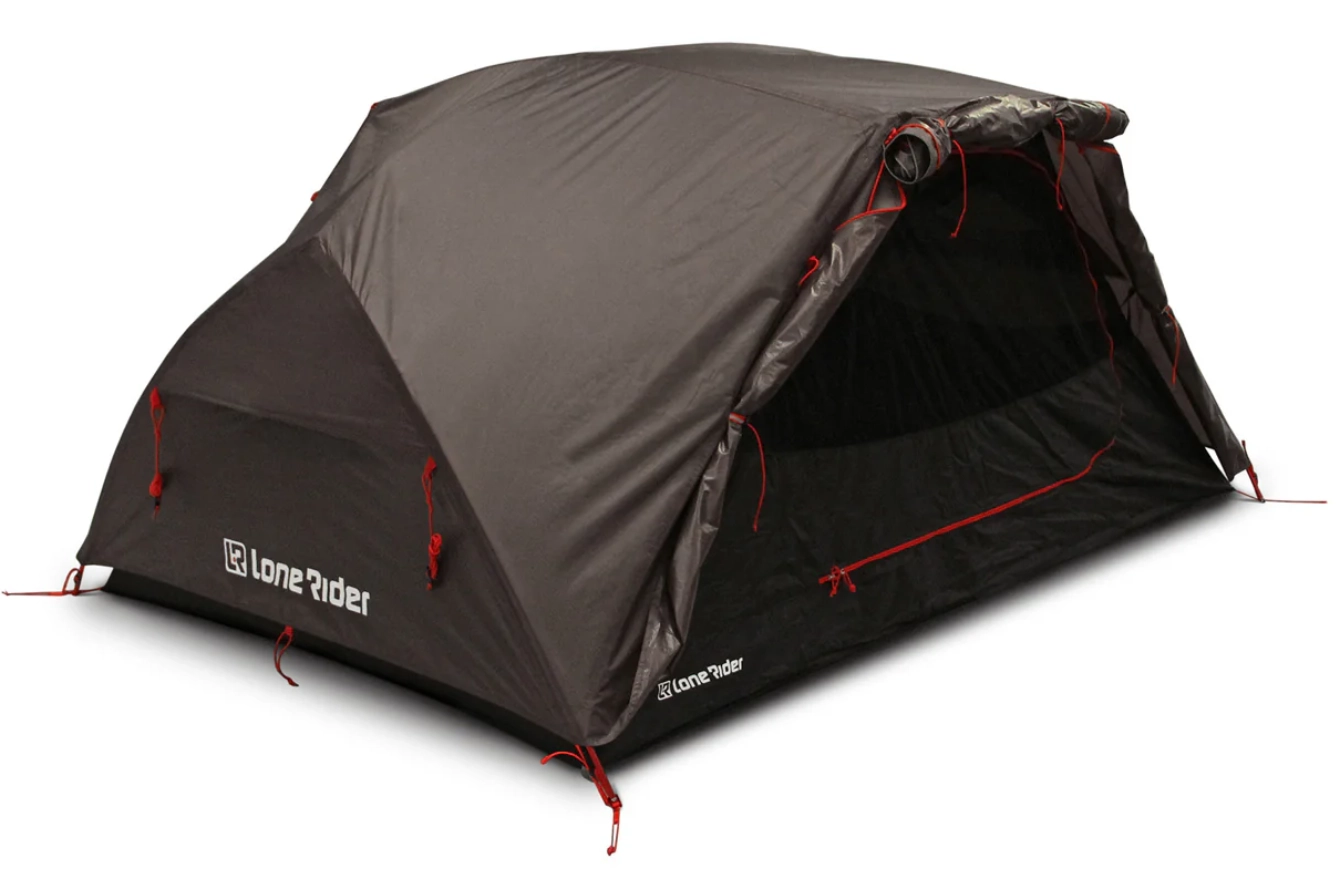
If I ever get that serious about motorcycle camping, maybe I’ll upgrade. Until then, my £85 (£90 delivered) Coleman Cobra 3 tent, with its 3000mm hydrostatic head rating, compared to the Lone Rider’s 10,000, will suffice.
Sleeping Pad
Before age and the longer-term effects of throwing myself at the scenery a couple of times took hold, I would have slept on the floor. Thankfully, some clever people have decided that this is a daft idea and have come up with endless ways to make sleeping on the ground comfortable.
Air mattresses and camp beds aren’t new ideas, but if it is going on a motorcycle, whatever I’m sleeping on needs to pack down small, weigh a kilo or perhaps two at most, and not require several hours of going red in the face while trying to blow it up.
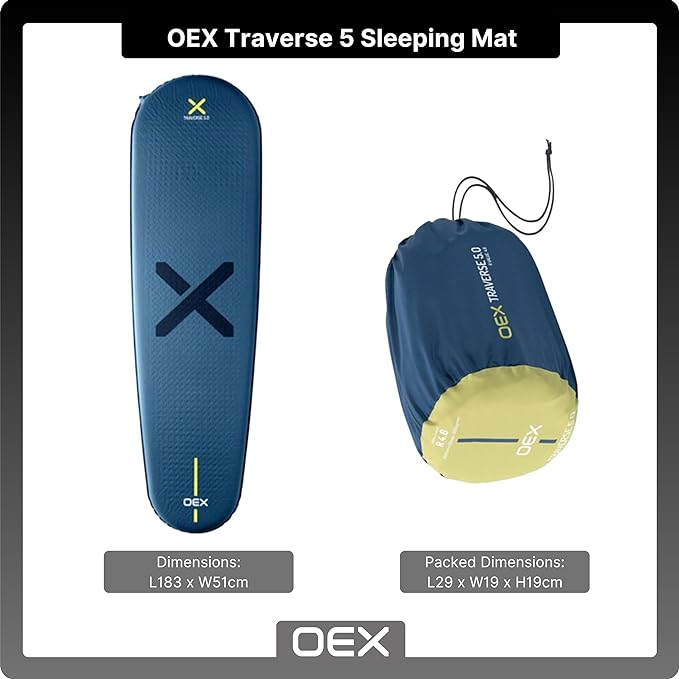
The most common shape for sleeping pads is similar to a surfboard. When inflated, they are anywhere from one to five centimetres thick. Then comes the all-important R rating, which defines the pad’s resistance to body heat loss. Think of it as an insulation rating.
Heat loss occurs when the ground chills the air in the sleeping pad, and you lose body heat thanks to the cold pad. The higher the pad’s R-value, the more resistance it has to body heat loss.
 How comfortable and warm I am each night will directly affect my sleep, and I’m very fond of sleeping. Given its importance, I opted to choose the sleeping pad myself rather than follow whatever my colleagues recommended.
The price range and I assume the quality of sleeping pads is beyond belief.
There is one that is popular on Youtube, often marketed with the strapline “Stop: I’ve found the perfect sleeping pad” or “The search is over ….”.
At £150, or two very comfortable nights in a B&B. I filed that sleeping pad under the “Never going to happen” category, and carried on searching.
Eventually, I settled on an OEX Traverse 5.0 with an R rating of 4.6 out of 6, which cost me £30 from GoOutdoors. I’m still not sure that a mattress in a B&B isn’t a better idea. I’ll let you know.
[Editor’s Note: Go Outdoors are out of stock; the link now goes to Millets, where it is £35]
Gas Stove
There is yet more science and clever technology to embrace when it comes to gas stoves. The days of the humble Primus stove are long gone, but they have been replaced by an assortment of burner heads that attach directly to a gas canister.
Some of these are little more than a valve, burner head, and a platform for a pan to sit on. If the minimalist approach is your goal, then £20 and a match will get the job done, but you will need to invest in a pan or two.
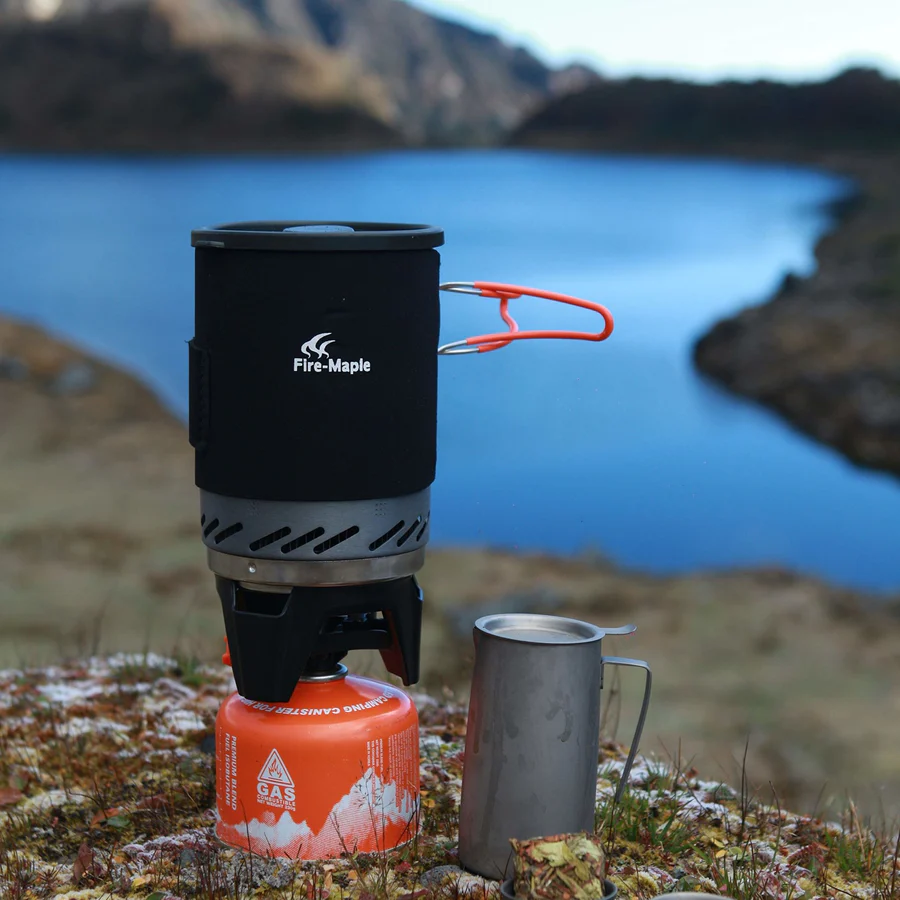 The first complete burner head and pan set start at £35, and then we get into the designs that improve the burner head’s efficiency. Jet Boil is the headline manufacturer, and at £165, the kit comes with everything you need except food and drink.
The “Jet Boil” design uses “heat flux rings” (sometimes referred to as a heat exchanger), which are meshes outside of the burner head that maximise heat transfer to the pot rather than allowing heat to escape out of the sides.
I went with the Fire Maple FMS-X1, which has all the same features as the Jet Boil but at a third of the price (£50).
[Editor’s Note: The prices and availability of camping equipment appear to change each day. The best place to buy the Fire Maple is direct from the manufacturer, where the price is … as I type these words … £39.50 plus delivery – The price tomorrow – Who knows?]






3 responses
Having read the Scottish Outdoor Access Code, the requirement appears to be that you may not just ride (or drive) to your chosen spot and camp. Rather, you should park in an appropriate location and walk/hike to your chosen wild camping spot.
Full details are in the Scottish Outdoor Access Code which you can find here – https://www.outdooraccess-scotland.scot/
Thanks for the heads up. We’ll look into that
Please stop repeating the myth that “free camping is permitted in Scotland.” The Scottish Outdoor Access Code specifically excludes ‘wild camping’ when used in combination with a motor vehicle. It’s okay if you are back packing, cycling or kayaking, but even then there are provisos.