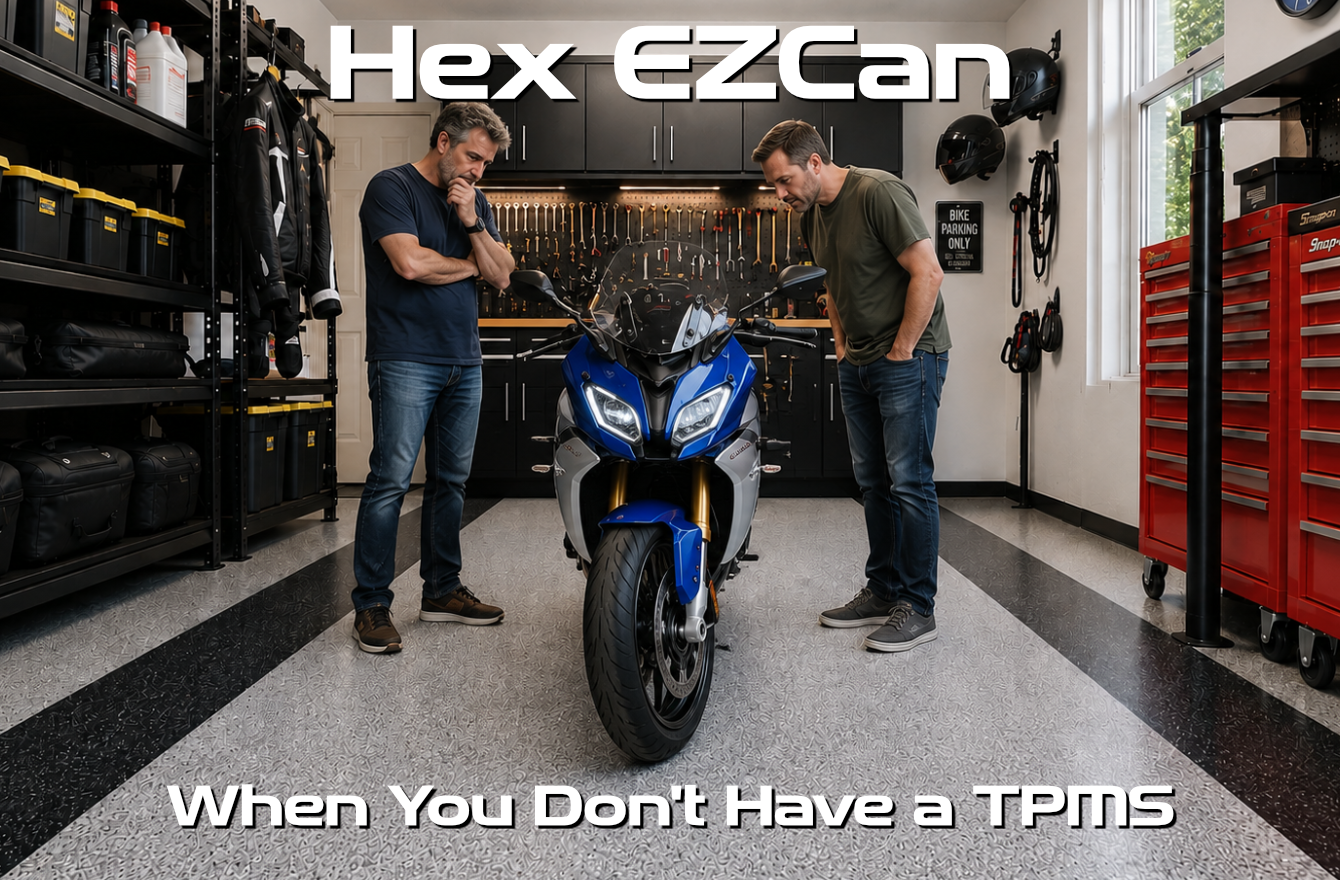
Crash protection, be they crash bungs, bobbins, frame sliders or engine bars, for the Yamaha Tracer 9 GT are hard to come by. Yes, there are sliders and engine bars from Yamaha, and if you have the £207 or £304, respectively, they are a great option.
Just recently, SW-Motech announced they had engine bars available for the Tracer 9 and the Tracer 9 GT, but I’m told for us Brits, they will not be shipping until November 2021.
I’ve been looking in all the usual places for crash bungs, and whereas they are listed on websites, it seems they are mainly “Out of Stock” or “Coming Soon”.
One engineering company that had them in stock and ready to dispatch is MGS Performance Engineering, which I discovered is based a few miles from the office.
Any excuse to ride the bike is always welcome, even if it is only for a few miles, and I get to collect a set of crash bungs and fork sliders for the Tracer 9 GT while I’m there. With the suggestion that there may even be a chance of a mug of tea available … What could possibly go wrong?
MGS Performance Engineering
 Jason Stevens dropped his Fireblade thanks to a substandard rear paddock bobbin. When you are a toolmaker, things like substandard parts annoy you. Not only are you looking at the unnecessary damage to your motorcycle, but your brain can’t resist examining the part that failed and understanding why.
While counting the cost of the damage to the Fireblade, it occurred to Jason that he could CNC machine a better paddock stand bobbin and whereas it might cost a few pounds, his paddock stand bobbins were not going to break.
That was ten years ago, and Jason’s company MGS Performance Engineering has been designing and manufacturing high-quality crash protection, rear paddock stand-bobbins and fork protectors ever since.
Crash Bungs: Just a Bung with a Bolt
True, put very simply, crash bungs are created by drilling a nylon bung and attaching it to the bike with a bolt. However, there is a lot more science to it than that.
Start with the size and shape, and the fact that the lefthand crash bung on my Yamaha Tracer 9 GT has to be spaced away from the frame to ensure it will take any impact first.
 The sheering forces that will impact the crash bung and how that influences the materials used isn’t a question of simply getting a tougher bolt. The crash bungs must not snap on impact and must not place excessive stress on the mounting point. There is no point protecting the bike in a crash if the crash protection bends the frame.
The MGS crash bung retaining bolts are manufactured from 8.8-grade high-tensile steel that will bend rather than crack or snap on impact. The high-tensile steel retaining bolt is married to the crash bung manufactured from a high-density copolymer chosen for its strong impact and abrasion qualities. And if, like me, you have no idea what a copolymer is, look it up on Wikipedia – it is impressive stuff.
And it doesn’t end there. Even the stainless steel washers and aluminium spacers are essential in ensuring the impact forces are absorbed, transferred, and dissipated. Life is already bad enough – you have dropped your bike – you don’t want a substandard crash bung making your day worse.
Aesthetics are also a consideration. Motorcyclists are proud of their bikes, and different sized crash bungs on either side of the bike are not acceptable.
For example, the crash bungs for the Yamaha MT09 and the Tracer 9 GT require different spacing, although many sites list the same part numbers for both bikes.
The difference is subtle, yet the spacing is different on the left-hand side if you want to deliver the proper protection and have the crash bungs symmetrical.
Fork Protection
Considering the science that goes into manufacturing the crash bungs, only some of it transfers to the fork protection.
Whereas the fork bungs can be manufactured from the same copolymer, the retaining bolt that passes through the wheel hub is manufactured from 316 grade M8 stainless steel threaded bar.
Stainless steel can be used for fork protection as the forces on the forks are significantly less compared to those the crash bungs have to endure.
Do They Work?
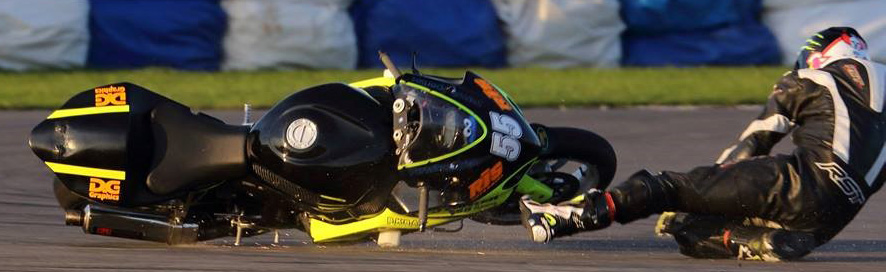 Asking Jonny Panther would be one idea. Jonny departed company with his Suzuki GSX-R1000 at Snetterton, doing something north of 100mph, and the bike was damaged (obviously), but the crash bungs took the majority of the impact and could be easily replaced ready for the next race.
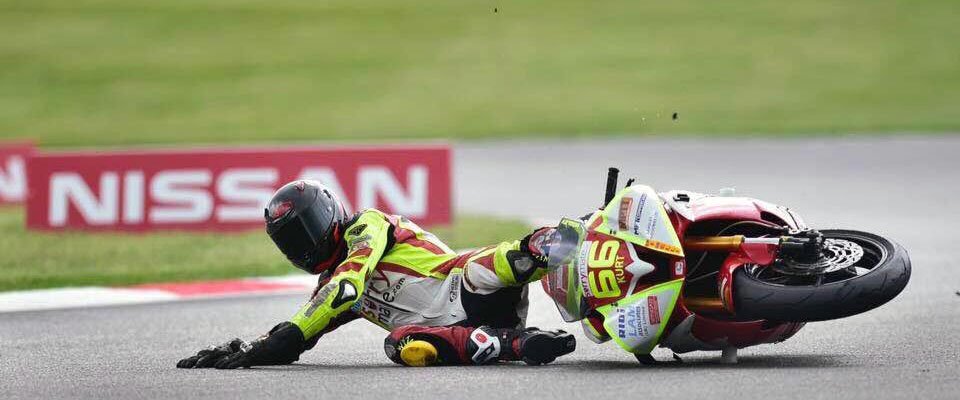
MGS Performance Engineering protection was also used in the 2019 season by the SorryMate Race Team. You can see the MGS logo on the swinging arm of Kurt Wigley’s bike in the header image, and if you have your choice of crash protection products for your race bike, you are going to pick one that works.
I have no plans to test the crash bungs, yet it is reassuring to see them attached to my Tracer 9. If I do ever have a bad day on the Tracer, I’ll let you know how the crash bungs and fork protection performs.
Clarity
I don’t know why I find it interesting that a manufacturer of motorcycle crash protection products is based just a few miles from our office. Crash bungs have to be made somewhere, so why not the middle of England?
Perhaps it is the fact that MGS Performance Engineering parts have been shipped all over the world (Tanzania and Australia, to name but two), and yet MGS are a small UK based engineering company.
Perhaps it is because I could speak directly with the man who designs them. Who knows?
And before anyone asks, Yes, I parted with my own cold hard cash for my Tracer 9GT crash bungs and fork protectors.