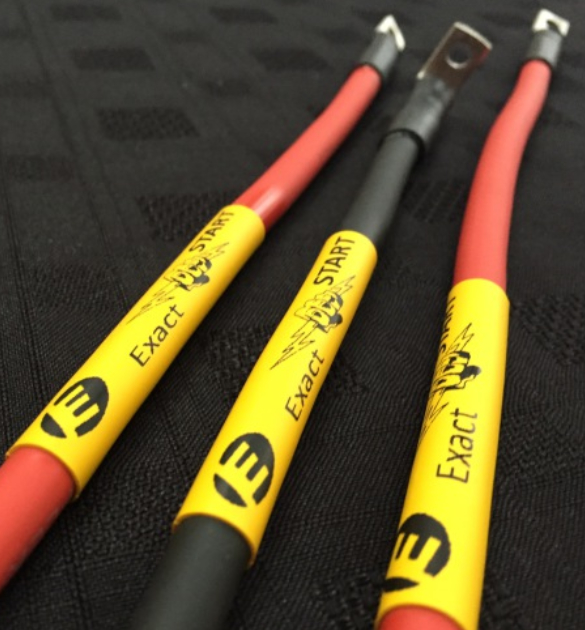
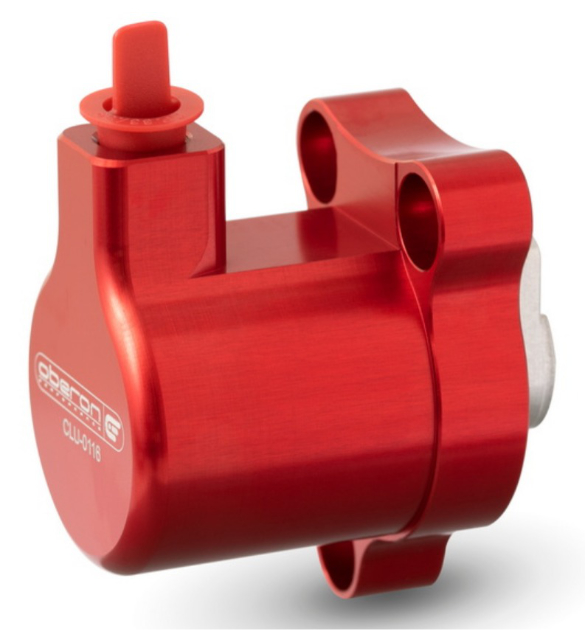
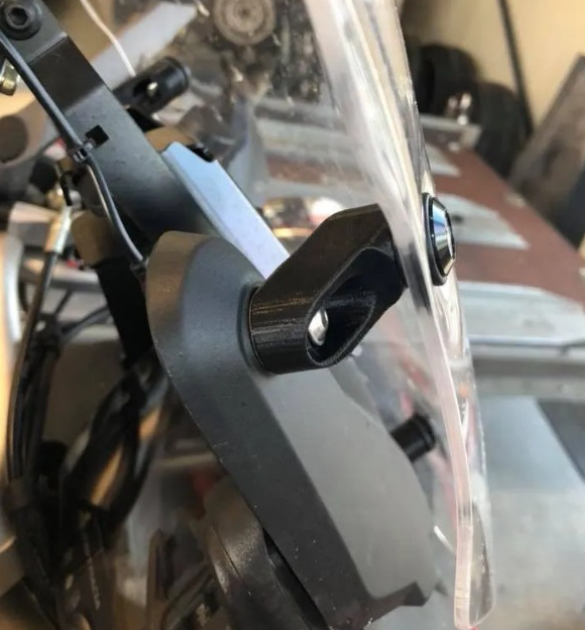
An Exact-Start starter cable upgrade kit, an Oberon clutch slave cylinder and spacers for the MRA Vario screen are the three things I’ve bought for the Ducati Multistrada.
Our theory is that by buying a second-hand Multistrada, which comes with all the fancy electronics, (frustrating) factory luggage and other more desirable extras, we have saved £9,000 over the cost of a new Ducati.
Proving the theory requires that we track the money we spend – excluding routine consumables – on fixing or upgrading the Multistrada.
After five hundred miles, I decided the MRA screen needed repositioning. My paranoia about the Multistrada’s sluggish starting convinced me I needed the Exact-Start starter cable upgrade kit.
All I needed was the incentive to do the work, which came when the Multistrada did what Multistradas do and developed the clutch slave cylinder leak.
Total investment to date £214.50, including delivery, or £215 for cash. Off to the garage I go.
Iconic Parts
 I’m a massive fan of MRA Vario screens. Why motorcycle manufacturers don’t have MRA design the screens for their bikes is lost on me.
I will, however, concede that the air coming from the MRA Vario on the Multistrada needs a direction tweak. It is perfectly smooth but aimed too low. There is no buffeting, but the air has to go somewhere, and I’d rather it wasn’t roaring past my helmet.
Iconic Parts are an engineering company based in Grantham. They produce a range of motorcycle accessories, but as the owner is something of a Ducati fan, many of them are Ducati-orientated.
Angles
As screens are curved, the angle that the screws meet the attachment points changes when they are lifted.
The Iconic Parts spacers compensate for the change in angle by using the bottom mount as a fixed – but raised – reference point and supplying adjustable arms for the upper mounts.
Having raised the screen by 8mm, the spacers deflect the air from the MRA Vario over my head and allow air to bleed under the screen, smoothing the overall airflow.
An excellent £30 investment.
Sluggish Starts
 Ducati Multistrada 1200s have a 12.5:1 compression ratio, 106mm (4 ¼ inch) pistons and are renowned for their sluggish turnover when starting.
Oddly, KTM’s 1290 Adventure has a 13.1:1 compression ratio and 108mm pistons and doesn’t have this problem.
If it weren’t for the information from other Multistrada owners, available through the forums, on a seven-year-old motorcycle, I’d have suspected the battery. The first thing I did after riding the Multistrada home (the long way) was to fit an Optimate lead to the battery and leave the battery optimiser to work its magic.
The Ducati’s problem originates from the quality of the battery leads. A lot of the power output by the battery is lost in the starter cables, resulting in the starter motor not receiving enough volts to crank the engine at full force.
The problem is magnified when the engine is cold, and the oil is thick. That said, the engine has always started. Yet, each time I press the button, there is that moment when paranoia kicks in, and I wonder if the starter will bring the Multistrada to life.
Resistance Is Futile
When I talk to people who genuinely know things, I realise how shallow my knowledge of some subjects can be.
Here in the shallow end of the knowledge pool, I know three main cables deliver power to the starter motor. One from the battery to the starter relay [solenoid]. Another is from the solenoid to the starter motor, and the third cable is the one from the negative side of the battery to the engine block – otherwise known as the ground wire.
For the starter motor to receive full power, the circuit is made up of all three of these cables. The electricity flows all the way around the circuit, not just to the starter.
There is no point in replacing just the cables to the starter motor if the earth cable is made of tin foil. The complete circuit, all the way back to the battery, has to offer the lowest resistance. The lower the resistance, the fewer volts are lost around the circuit, resulting in the starter motor receiving maximum power.
Exact-Start Cables
It had only taken 10 minutes on a couple of Ducati forums to discover Exact-Start cables as the solution to my paranoia.
One chap in America had battery cables custom-made by an auto-electrician, and another had bought his cables as a kit from a US-based website. It became apparent that this was an upgrade worth making.
Even though the Ducati has always started, the load put on the starter and the sprag clutch, through the laboured start, was going to cause problems at some point.
For £89.95 delivered to my door, replacing the Ducati starter cables with the ones from Exact-Start felt like an obvious upgrade to make.
What’s in the Box?
Well, cables. Three of them, to be exact, along with detailed instructions and some accessories for cleaning and protecting the connections.
The cables are beautifully made and surprisingly flexible. The 16mm diameter might appear skinny compared to the average jumper cable, but it is the quality of the cable that matters.
It is easy to make a cheap thick cable. Something that feels substantial but, if tested, would offer high resistance leading to a drop in volts.
The Exact-Start cables are made from 0.2mm strands of pure copper which offer minimal resistance to the flow of electricity while remaining reasonably flexible. Next comes the terminals that undergo a 35-tonne crimping process before being tin-plated for protection.
To complete the cable assembly, they are sealed with heavy-duty heat shrink to prevent anything unwanted from entering the cable. There is a fabric sheath on the longer cables to prevent vibration-induced rubbing.
I never thought I could get excited about starter cables. Such are the joys of motorcycling.
Fitting
I enlisted some help. It is a job you can do alone, but an extra pair of hands makes life easy.
The hardest part was finding all the cable ties fitted at the factory when the bike was being built. As I had changed the air filter, I’d removed most of the Tupperware and removed the tank. That level of strip-down isn’t necessary to install the Exact-Start cables, but it made the deeper recesses of the bike more accessible.
With the cable ties snipped open and left in place so I knew where to fit the new ones, the easiest method was to tie a string to the far end of the cable and then pull the cable out.
Once free, tie the new cable to the string and pull it back in the opposite direction. It worked surprisingly well and needed only occasional assistance to follow the factory cable paths.
The Result
Changing the cables was never going to make the big V-Twin spin like a four-pot, but the laboured start has been replaced by a positive intent to motivate the 600cc pistons. The nagging voice that is my paranoia has been silenced … until it finds something else to worry about, anyway.
Oberon Clutch Slave Cylinder
 Replacing the leaky Ducati original clutch slave cylinder with one from Oberon takes five minutes. Seriously, there are four bolts to remove – three on the slave cylinder and the fluid line. Fit the Oberon replacement and replace the bolts. Bleed the clutch, and you are done.
At £104.65 delivered to my door, the Oberon clutch slave cylinder is a thing of beauty. CNC machined from 6000 series alloy, the finish is superb and, in operation, a significant improvement over the original unit.
The clutch’s action is lighter, and the slave cylinder is designed to prevent the weakness (leaking) found in the original Ducati part.
I can’t think of an upgrade to the Multistrada that would be simpler to fit. Other than replacing the rider.
Clarity
We bought all the parts discussed with our own cash money. It is two hundred and fifteen quid and a long day in the garage well spent. The Multistrada is back together, no bits left over, and running fine.
Time to do some more miles.