



The day I spent at Blyton Park with the British Superbike School was more of a training day than a typical track day.
And if the word “training” puts you off, my chewed-up rear tyre is testament to a day spent learning how to carry speed through corners and get on the power earlier, while also discovering that what I thought was the quickest line wasn’t always correct.
Yes, I could book a day at Cadwell and have an excessive amount of fun riding around. However, a day at Blyton comes with 2:1 instruction to help discover where I could be smoother, fully explore the capabilities of the GSX-S1000GT, and ultimately go faster. None of that would happen if I rode around in circles amusing myself.
Blyton Park
Lincolnshire was once covered in RAF airfields. Many of them are now housing estates. Blyton remained an operational RAF base until the mid-1950s, and then, thankfully, some enterprising soul decided it made more sense to use it as a racetrack than to build houses on it.
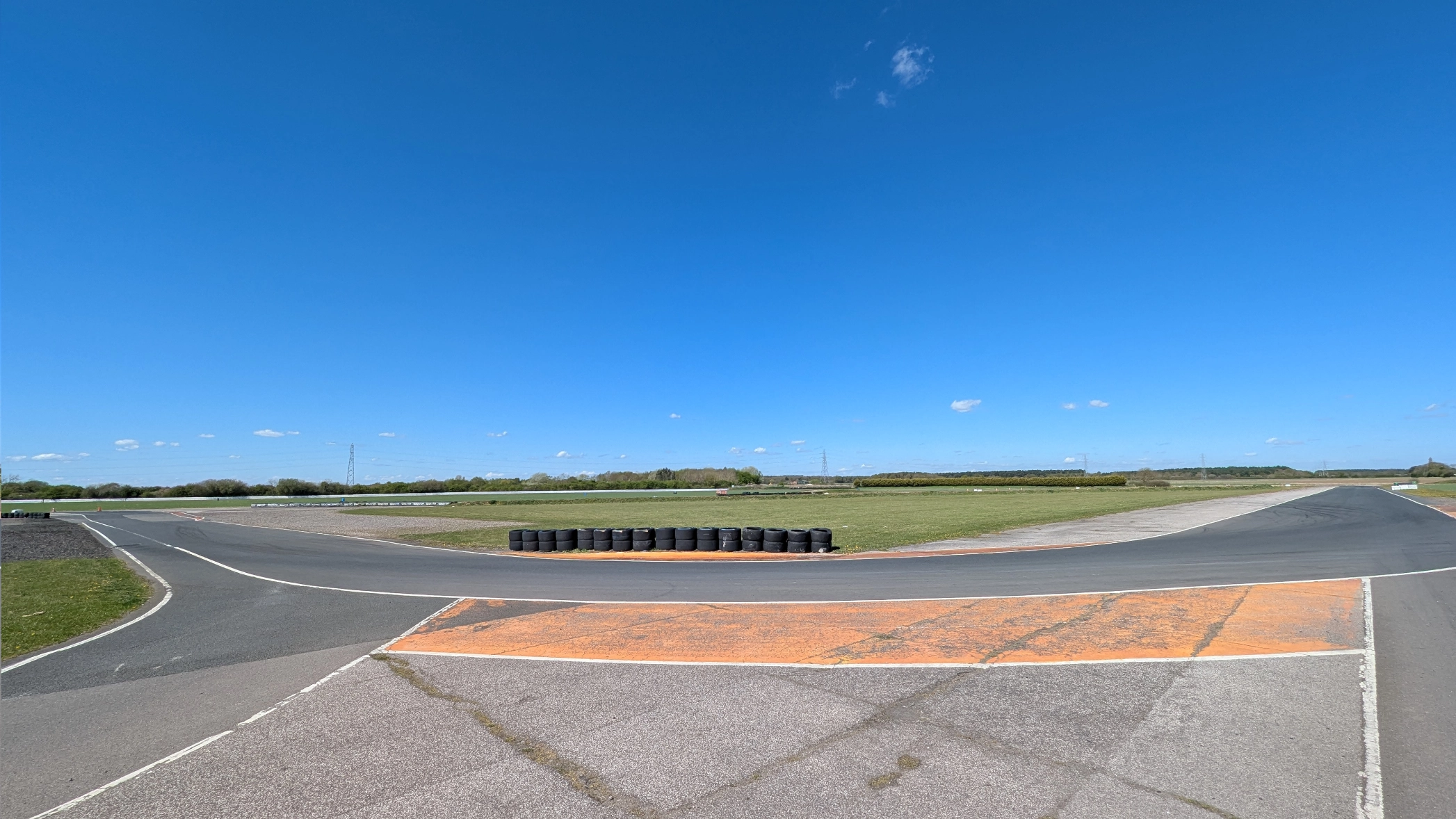
At 1.6 miles, the Blyton Park circuit is longer than Mallory Park or the club circuit at Brands Hatch. Looking at the circuit map of Blyton, you can be tricked into thinking it is simple, but it is very deceptive.
For those who like to pin the throttle, there are two decent straights for you to explore how high you can make the numbers on the speedo go. If fast left-right flicks are your thing, there is a delightful section just for you.
The first of the two chicanes has an unusual entry and exit, making it easy to lose time. And as for Bunga Bunga, the long left at the top of the circuit … well, Roger is still trying to work that out two days later.
When you combine all the corners, you get a track that is not as easy to master as it first appears.
It all looks so simple, and then you notice the instructor isn’t braking, pulling ten meters on you off the corners, and you are using the straights to catch up. And by “you”, I mean me.
The Format
As with all track day (training day) events, first comes the safety briefing. Most of it is common sense, but Mike Abbott reinforces two golden rules – two laps warming your tyres behind the instructor on every session, and do not, under any circumstances, stuff it up the inside of another rider going into a corner.
Once you can see the line the other rider is taking, there is ample opportunity at Blyton to pass someone on the straights or when exiting a corner. The instructors also do an excellent job of making space on track should a faster group need to move ahead.
Split up into small groups of two or perhaps three riders, the day follows a repeating cycle of track sessions, followed by an instructor debrief and then a classroom session.
The sessions are staggered to keep the number of riders on track at any one time low. Riders are also grouped by experience to ensure everyone enjoys their time on track with like-minded riders.
The Classroom
If the idea of classroom sessions is off-putting, relax. They are light and very informative. The theory they cover gives you a chance to ponder what happened during the last track session, the instructor’s feedback, and how you can be smoother and faster next time out.
The classroom instructors are seasoned racers who know their subject and speak in terms we are all familiar with. It is a very relaxed environment and offers the opportunity to discuss anything or any corner that is bugging you.
Where Can I Find …
- British Superbike School – Official Website
- KurvX Data Logging – Standalone IMU for data logging
- Blyton Park – Track Website
- Suzuki GSX-S1000GT – Editor Report Card
- Suzuki GSX-S1000GT – Suzuki’s Official Page
- Crash Bungs – MGS Performance
- James Whitham Track Days – Official Website
Track Time
The first time out, after the compulsory two laps to warm the tyres—even then, we were not going slow—is a chance for the instructor to see where I can improve the most.
I’d been asked where I wanted to improve, which, if I had a high enough understanding of track riding, I might have been able to answer. I recall mumbling something about being comparatively slow (compared to Roger – he of many track days) and wanting to understand why.
Ironically, Roger is standing next to me, and says he wants to work on carrying more speed through the corners. By the end of the day, I was faster, but so was he, so I’m back where I started. (I have a plan)
The instructor shows us the racing line for a few laps, then we swap around so he can get a better idea of where we can find improvements.
At the end of the 20-minute session, we debrief in the sunshine. There is a lot to take in, so we break the corners down and decide to concentrate on the exit first. Then, it is back to the classroom to discuss lines through apexes and how to spot when you might have picked the wrong line through the corner.
Fifty Pence Pieces
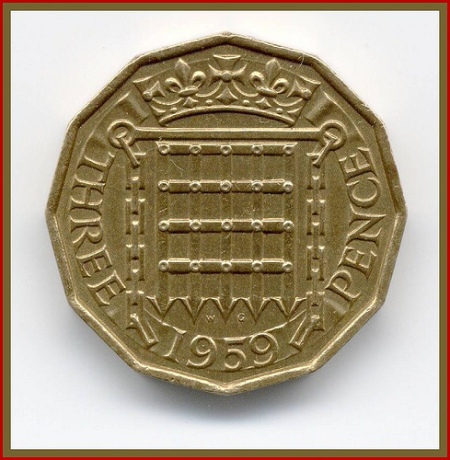 The diagnosis of my track riding is that I navigate corners as if they are a fifty-pence piece—sharp angles, not arcs. Back in the day, this would have been called a thrupenny bit (threepence bit), but I guess that is inflation.
I’m arriving at the corner, having used all of the 150 hp the Suzuki GSX-S1000GT offers to get there, and then I’m climbing on the brakes. Apexes are roughly in the right place, but I’m 50% arriving and 50% hoping I’ll end up in the right place. I’m then looking to stand the bike up and aim it at the next turn-in point.
It feels fast, and there is no problem with lean angle (my “best” was 48 degrees), but ultimately, I’m wasting time and not maximising the entry, apex, or exit. When I open the throttle, I pull away from the instructor (he is on a 600), but he is catching me without even trying through the next corner.
String a lap together and I’m significantly slower. There is work to do.
Improvements
We start by running a few laps without braking to get a feel for letting the bike flow through a corner.
There is something slightly daunting about running towards a corner and remembering NOT to brake. It certainly focuses the mind, but other than a couple of confidence dabs on the rear, it highlighted the difference between the two approaches.
I’m now riding arcs between the turn-in points rather than straight lines. My best example is the 90-degree right that runs into a 90-degree left.
At the start of the day, I was wide to the left on entry, making the right a late apex that gave me a straight line to the turn-in point for the upcoming 90-degree left.
By midday, I was still as wide as I turned in, but I found the bump in the middle of the track on the exit as I arced to the right, ready to turn in for the left.
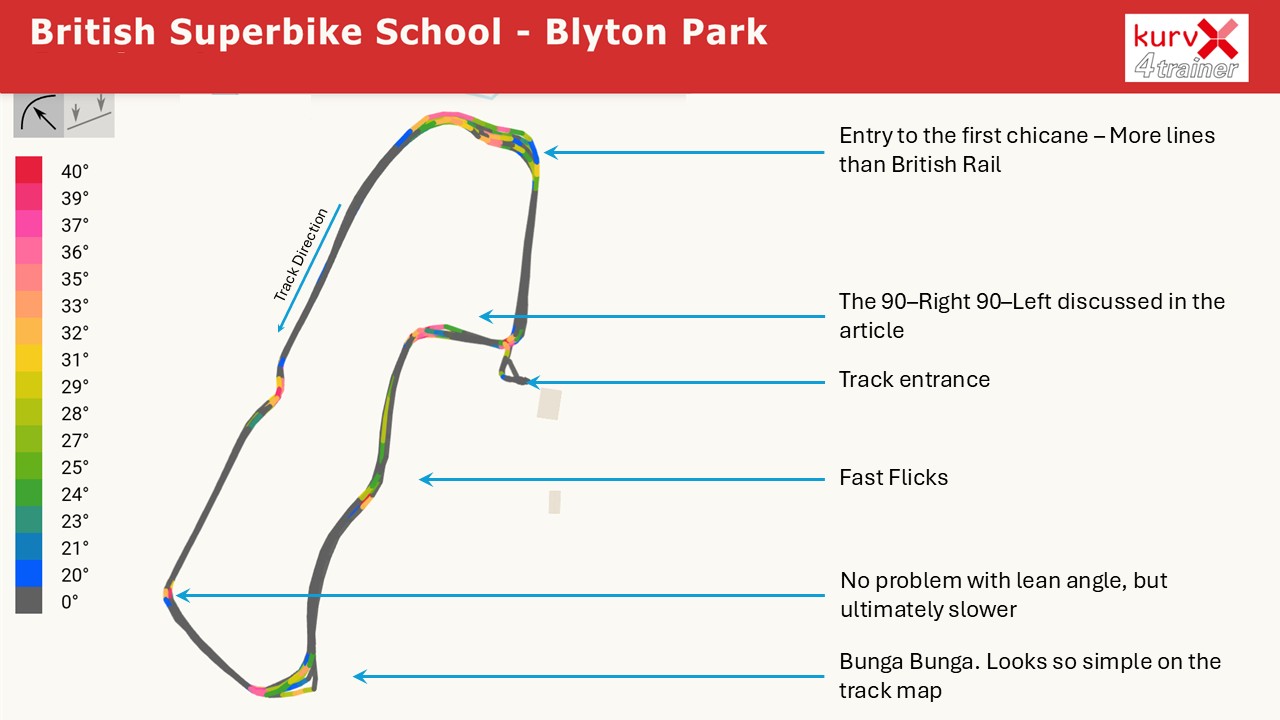
At the end of the day, I was carrying so much more speed through the right-hand corner that I was now on the far side of the bump, swooping back across the track for the turn-in point to negotiate the 90-degree left.
The difference in speed is visible. I didn’t need a stopwatch. I’d turned two L-shaped corners into an S, and although I was travelling a slightly longer distance, I was covering that distance significantly faster.
Lean Angle
Learning to flow corners also reduced the lean angle I needed to apply. Mike Abbott had fitted a KurvX IMU to the Suzuki, a small, standalone device that measured how far over I had the GSX-S1000GT. My lean angle record was a pair of 48-degree corners in quick succession, which I was proud of, but it was actually a waste of time.
Cranked over that far, I can’t get on the throttle early enough to carry the additional speed to the next corner. It looks good, but in terms of lap times, it is the slow way around the track.
It did prove how well the GSX-S1000GT suspension can be set up, but that is a different story.
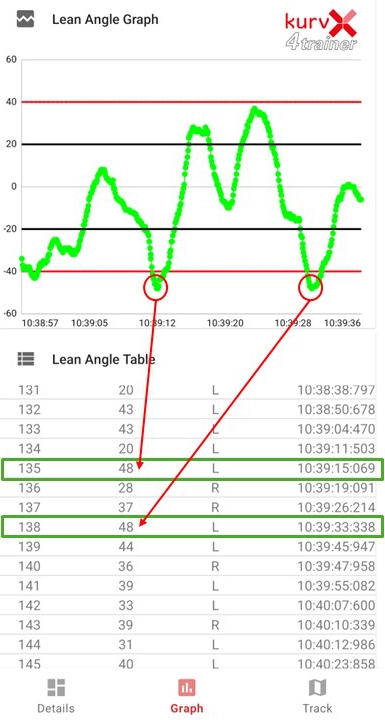 The KurvX data trace also shows my approach to corners and where I made 50 pence piece approaches rather than a smooth arc into the apex. It is an excellent tool for training, as there is nowhere to hide. Looking at the trace from the early session, overlayed onto a track map, I can see that my lines were all over the place.
Road Riding
As I won’t be taking up racing, and an evening track day at Cadwell Park costs around £65, why did I opt for a Track Training Day? I have two reasons.
External factors limit how far I can explore the bike’s capabilities on the road. Speed limits, blind drivers, and mud on the road (I live in Lincolnshire) are all very real possibilities that need to be factored in.
On the track, I can push these boundaries in a safe and controlled environment, highlighting where I start running out of talent.
As a friend with a damaged foot explains it … “You can see me walk and not notice anything different. If I jog, it might look a little strange. When I run, you see that one foot isn’t as good as the other.”
The same is true with road riding. At 60mph on a curving country road, if we know the basics of positioning (Safety Surface Stability and View), we all look like masters of our art. Up the speed, and a few cracks in the veneer can start to appear.
I find track training for road riding beneficial because I can use the safety of the track to discover where I can improve my riding and have tuition on hand to help me make those improvements.
The other reason is I’m still trying to catch Roger.
Bottom Line
Blyton Park may not have the attention-grabbing name that goes with Silverstone or Cadwell Park, but it has everything you need. The British Superbike School is well run (now in its 14th year) and delivers focused individual training rather than using a formulaic meat grinder approach.
Next up in the series of Track Day Tales is a day with James Whitam at Mallory Park. Just don’t tell Roger.











2 responses
This story offers an insightful and relatable look into structured motorcycle training for road riders. What truly stands out is the school’s non-hierarchical, three-tiered approach – Road, Track, and Racing – which allows riders to choose their focus based on personal goals, not pressure.
We particularly appreciate the method of building cornering technique backwards – from exit to entry – showing a highly effective and logical training concept. The author’s honest reflections, especially about wet weather riding and guidance from seasoned instructors, bring the experience to life.
At x-log, we’re thrilled that our kurvX system – based on an ultra-compact IMU – can help riders see not only where they have room to grow, but also where they already perform well. Talking about feelings and comparing them with real data creates a huge opportunity:
first: to build an accurate, honest self-image of one’s skills,
second: and to recognize real potential for growth.
All of this is even more powerful when supported by a coach who is open to fears, needs, and individual struggles – and who is curious and welcoming towards new technologies that support the rider’s journey.
So, a big thank you to Dave and Mike for creating a space where growth, emotion, and innovation come together.
We’ll see you soon – on and off the track!
Charlotte for x-log
Enjoyed meeting you both there, a top day indeed.