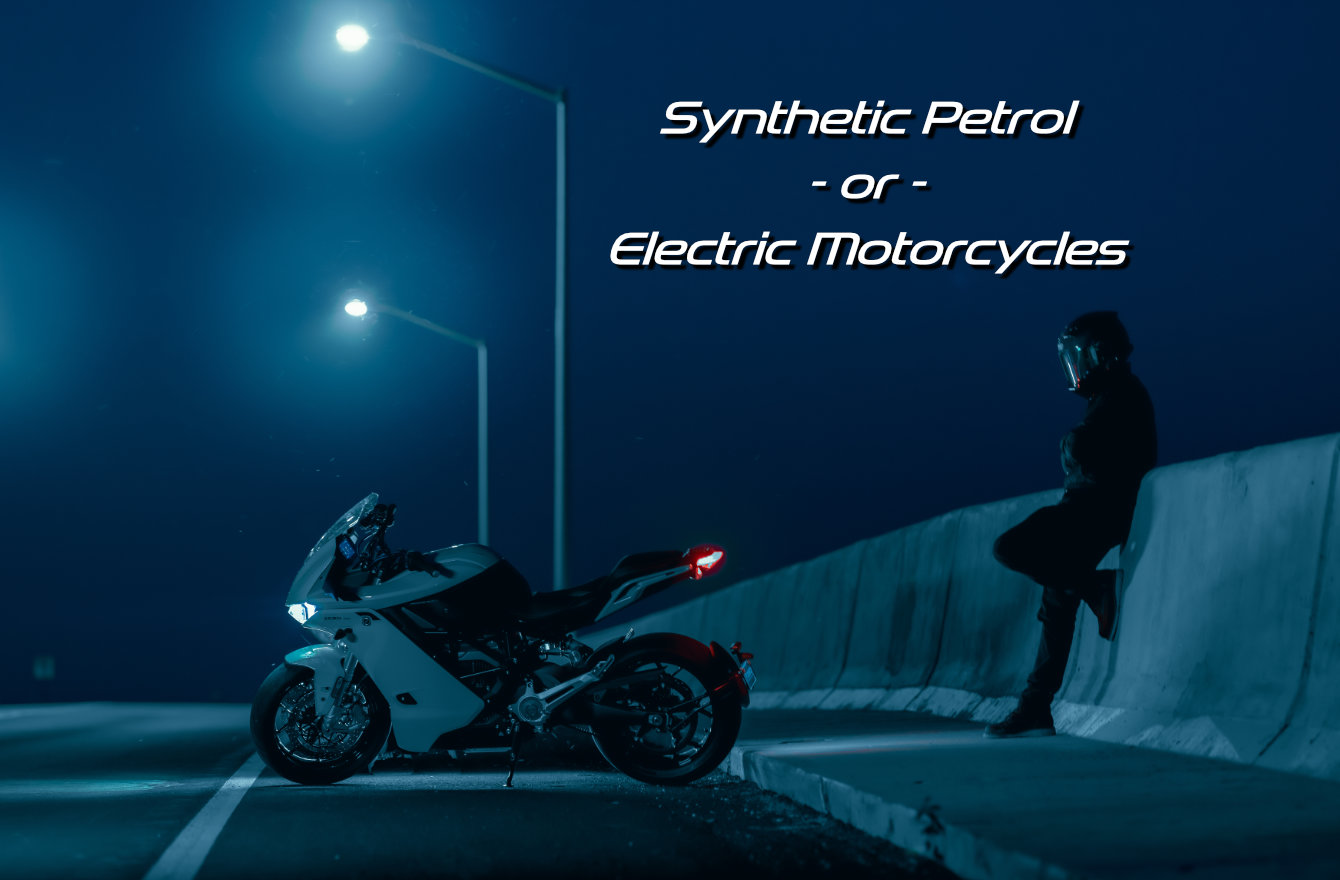

Electric motorcycles and synthetic petrol are currently popular topics in most of the motorcycling press.
MotoGP and Formula One want the fuel they use to be carbon neutral as soon as possible. I do wonder if this will extend to the fleet of transporters both race series use, but I’m already digressing.
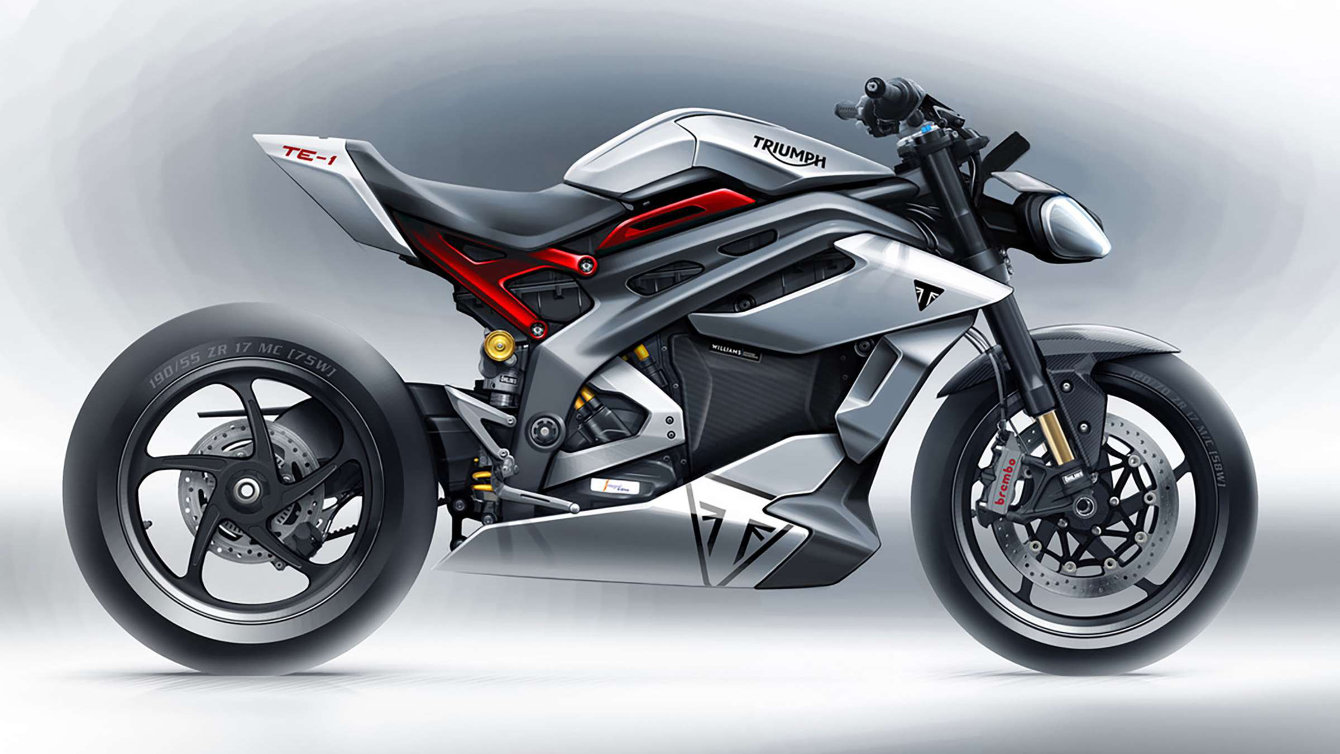
Electric motorcycles are gaining momentum. Triumph and Williams Engineering are in partnership working on the Project TE-1 Prototype. Harley Davidson has spun off Livewire to a dedicated firm with big ambitions, and Ducati (aka Audi) is lining up to supply the motorcycles for the Moto-E series from 2023.
Fascinating. But WTAF does any of that actually mean to me. I just want to ride across Spain and Portugal, enjoy sunny weekends on the backroads, and indulge my passion for riding my motorcycle – you know – MY motorcycle. The one in my garage.
Save The Planet
 The backdrop to all of this is the Government announcement to end the sale of new petrol and diesel cars in the UK by 2030.
As always, there is little mention of motorcycles in the statement, and for once, this has played in our favour. Currently, the changes for 2030 do not include the sale of new motorcycles, but perhaps it doesn’t have it.
The changes for cars and vans are going to alter the refuelling landscape. The demands for traditional dinosaur juice fuels will slowly fade if there are no new cars, to a level where running a petrol station is no longer a viable business.
Adding charging points to petrol stations isn’t a viable answer either as charging takes a whole lot longer than filling the tank. The turnover in customers won’t be high enough.
Adding more charging stations to somewhere you are likely to stay for 30 minutes or more – now that might work, but I want to ride, not spend my life in car parks.
Synthetic Petrol
Not being a chemist, my understanding of how to make synthetic petrol is zero. From what little I know, petrol is a hydrocarbon – something made from hydrogen and carbon. So, you take carbon monoxide from the air, strip off the oxygen, add hydrogen, and you get a hydrocarbon
I haven’t got a clue about how that is achieved, but I’m told that is the basic concept.
The advantage to synthetic petrol is that we have an established distribution network set up and ready to go. In the same way, as we shifted from leaded fuel to unleaded and from E5 to E10 fuel, we have only to change the liquid we are shipping, not build a whole new delivery infrastructure.
The trouble is this appears to run contrary to the Government’s direction. No point in manufacturing synthetic fuel if there isn’t a high enough demand due to stopping the sale of new cars.
Swappable Batteries
In April 2021, Honda Motor Co., Ltd. President and Representative Director Toshihiro Mibe held an inaugural press conference, talking about the future direction for Honda. Honda is, after all, the largest motorcycle manufacturer in the world by value, with over 20% of the market. Yamaha comes second with half (yes half) the market share of Honda.
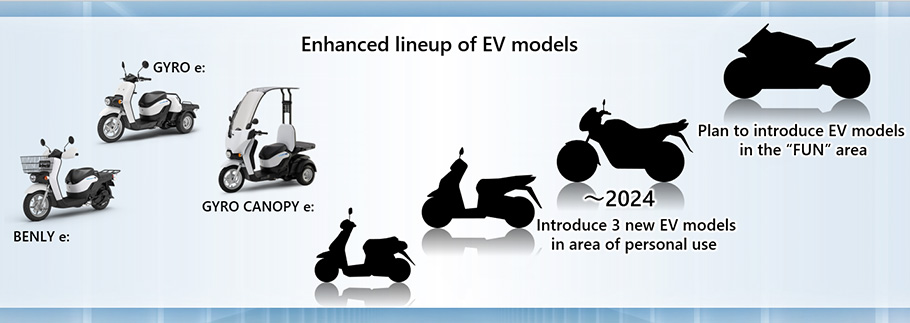
If Honda is going in a certain direction, then it is advisable to take note.
“For personal-use customers, we must not only enhance our product lineup but also make a large number of battery-swapping stations available and ensure convenience to users by making them compatible with EVs of other makers.
To this end, Honda has established a consortium with other motorcycle OEMs in Japan and Europe, respectively, to develop technology standards for swappable batteries.”
The Swappable Batteries Motorcycle Consortium – otherwise known as Honda, KTM, Piaggio Group and Yamaha – was officially created in March 2021. Before that, however, Honda, Kawasaki, Suzuki and Yamaha had already agreed on a standard for a swappable 48V motorcycle battery pack.
The future for swappable motorcycle batteries looks to be pretty set. Pull into the garage, put your credit card in the machine and swap your battery for a charged one. Perhaps they even get clever, and the cost is based on how flat your battery is when you swap it.
The Fun Factor
The remaining challenge is how to get enough electric petrol into the battery to give us enough fun.
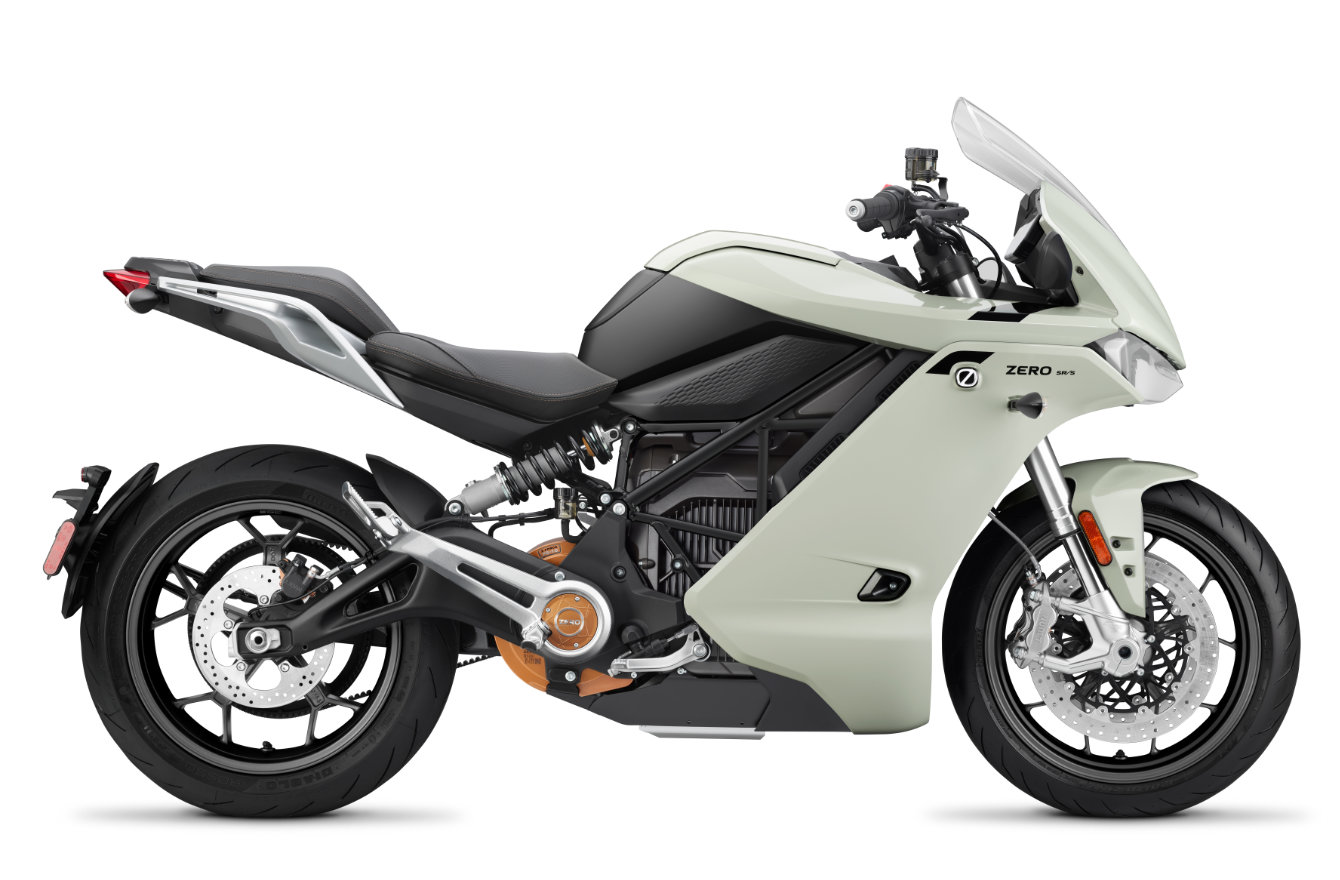
Looking at the wonderful Zero SR/S, the range with the Extended Range Cypher Upgrade and the Power Tank (20.9kWh) is going to be somewhere around 150 miles as an average. In the city, you might get more and on the backroads, perhaps less, if you are enjoying yourself.
The concept of swapping the battery is wonderful, but the battery on a Zero SR/S is going to take some shifting.
Storing enough power for an engaging ride over an enjoyable distance currently needs a fairly substantially sized battery, and batteries of that size aren’t easily swapped at a refuelling station.
Bottom Line
So, where does all of this leave us? Dinosaur juice is considered evil, and Governments want to significantly reduce the CO2 created by consuming it. Fake Dinosaur juice looks to be the simple answer and takes CO2 from the air, but burning it puts it back.
Having fun on an electric motorcycle drinks electricity. Having a battery that you can easily swap is going to restrict the range over which you can have fun before you need to swap batteries again.
To add to the confusion, the UK Government has just reduced the subsidy it was giving for electric motorcycles. Under the old scheme, buyers could enjoy a 20% subsidy of up to £1,500 on any electric motorcycle.
From December 15, 2021, electric motorcycles costing more than £10,000 no longer qualify for a subsidy. A vanilla Zero S costs £14,410.
So, the answer to all of this is to ride your motorcycle – today. Stuff whether it is cold. JFDI, as the saying goes.