



Helmets. Fascinating things. Spring is coming, and looking at my trusty Schuberth C4 I’m wondering if it isn’t time for a new helmet. I think this will be the fourth spring it has seen. It still appears to be in good condition, and it is very comfortable.
And it is at this point that I start having the conversation with myself about need versus desire.
Desire ♥
This is the easier of the two arguments to answer. My desire for a new helmet is simple. They are bright and shiny, and I want one.
 I can give you a mountain of waffle about improvements, aerodynamics, and the other reasons marketing departments give me for buying one, but the bottom line is I’d like a new helmet because … well … just because.
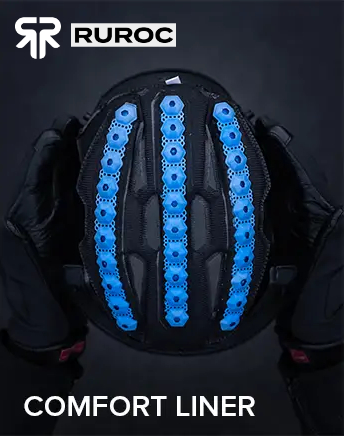
Desire does have its benefits. For example, I wouldn’t know that Ruroc is fitting RHEON™ – an energy-absorbing super polymer – in the liner of their helmets if I hadn’t been generally lusting over what was available.
My lustful desires for new motorcycling goodies are often met with the cold hard logic of Senior Management – aka The Boss, Financial Controller and The Wife – and it is here that my mind switches to the reasons that support the Need argument.
Need
The reasons for needing a new helmet are the “discussion points” most likely to convince Senior Management that I have spent money wisely.
I can talk about improved safety thanks to the new ECE22.06 standard. I can explain how, despite being told I never listen, the new helmet is quieter and, therefore, less fatiguing and less likely to cause any hearing problems.
Inevitably though, part of buying a new helmet will require me to answer the question, “What is wrong with the one I have?”
Age-Related
If we are looking for cold hard facts, then the age of the helmet is the usual catch-all reason for replacement. After all, if the helmet has been in an accident and has visible damage or has worn parts that can’t be correctly and safely replaced, you need a new helmet.
Yet, the age at which a helmet should be replaced is a question I can never get a straight answer to. I can appreciate that different manufacturers may have different answers and that how we treat a helmet contributes significantly to its longevity. Still, I’d appreciate a general indication of when to replace my helmet.
Myth and motorcycling folklore suggests that four to five years is about the life of a helmet, assuming it has had reasonable use and isn’t damaged. The most likely reasons for the perceived age limit are the natural degradation of the resins and glues used in manufacturing the helmet and the assumed life of the EPS Liner.
The EPS Liner
 The layer of highly sophisticated “polystyrene” between the hard outer shell and the soft inner fabric liner – the EPS Liner No.11 on the diagram – will slowly harden with age, mainly due to being in close proximity to our heads and the very politely named “organic solvents” we produce.
It is commonly accepted that the EPS liner compresses when the outside of the helmet receives a blow and having done its job once, the EPS liner will not expand back to its original position.
EPS reduces the energy of the impact by collapsing, converting some of the energy into heat and slowing the transmission of energy through to our skulls.
If you receive a second impact in the same place on the helmet, then the EPS liner can’t collapse for a second time; therefore, more of the effect of the impact is transferred to your head.
Whereas the EPS liner is a wonderful thing, it has more to do with the helmet’s internal shape than true impact protection. The aerodynamic and stylised hard outer shell needs to be head shaped on the inside if we are to find the helmet comfortable to wear.
So, the idea that the EPS liner is how our skulls are protected isn’t as correct as it might sound.
Hard Outer Shell
The majority of the impact protection comes from the hard outer shell of the helmet.
The composite fibre that most helmets are constructed from is designed to take the impact and stop the force of the blow from opening our heads. The shell is designed to fail when struck, and it is this that dissipates the majority of the force from the impact.
Because of physics, Newton’s laws and shock waves, when the hard outer shell takes a hit, some of the force from the impact will be passed onto the EPS liner and subsequently onto your head.
This is why concussion checks are mandatory in motor racing after an unscheduled dismount. Helmets protect our skulls but can’t stop us from feeling the impact.
The hard outer shell dissipates the impact. The EPS liner absorbs some of the force from the impact and makes the inside of the helmet a comfortable shape. The material lining and cheek pads provide the finishing touches. is an energy-absorbing super polymer.
Do I need a New Helmet?
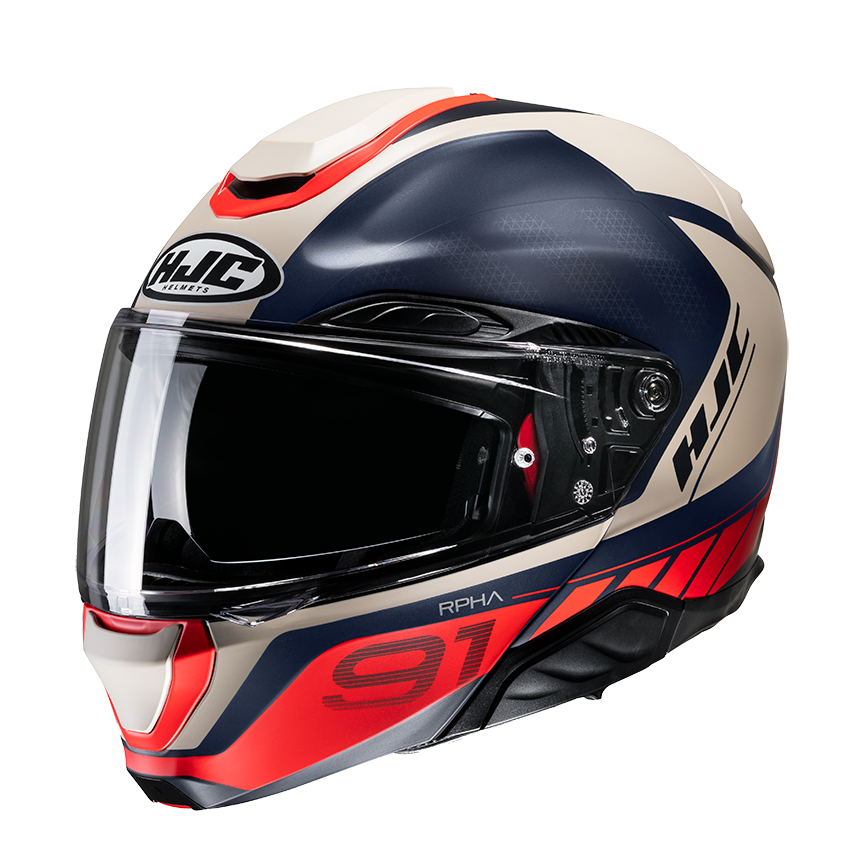
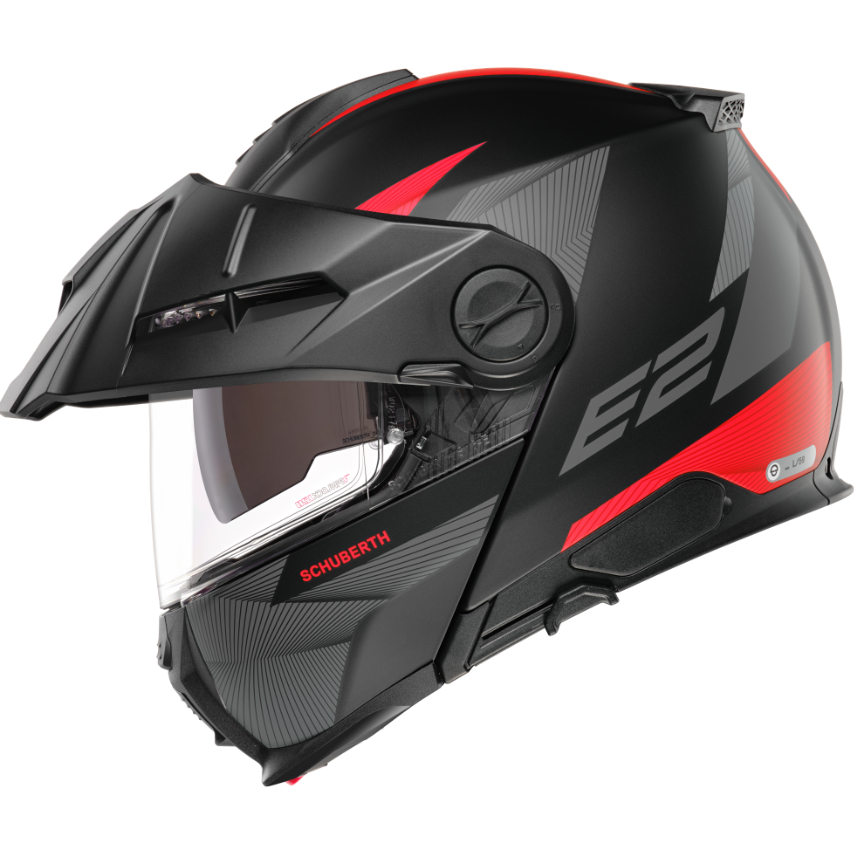
This is a big and important question. The easy answer would be to buy a new helmet and be done with any doubts. The new HJC RPHA 91 or the Schuberth E2 are high on my desire-driven list.
When they become available in the UK – based on the European prices I found – I’m looking at spending around £500 for either of those helmets. But my Schuberth C4 is comfortable, has my Sena 50S installed, and we have covered a lot of miles together without any issues.
So, do I need to spend £500? And so, the argument with myself rages. Need versus desire.
The Helmet Inspection Company ⛑
While pondering all this and wandering about the internet, I came across the Helmet Inspection Company. They offer an advanced testing service that can help me answer the question about needing a new helmet.
It is, however, a double-edged sword. If I have my heart set on a new helmet, then best to go and buy one. But, if I’m looking for reasons to share with Senior Management justifying why there is an HJC or Schuberth box in the house, then The Helmet Inspection Company (HelCo) may be the people to help.
To identify any flaws in the helmets, HelCo uses a process of lasers and holograms to build a base image of your helmet. By changing the temperature a few (less than three) degrees, HelCo then builds a second image of your helmet and compares the two.
The differences between the images are how flaws are identified. If, for example, the inside of the shell is fractured, something the EPS liner would prevent you from seeing, the heat image will be different in that location. This is because more heat would escape to the outside where the fracture is present.
 X-Rays were initially considered as a method for doing this, however, when measuring for defects as small as the common flu virus – which I’m told is 250 nano-meters – X-rays (evidently) are not accurate enough.
Like all clever ideas, it is a simple concept that took a Professor of Optical Instrumentation from the Mechanical Engineering Department of Loughborough University – Professor John Tyrer – to turn into a repeatable diagnostic process.
Bottom Line
Spring is coming. Your helmet may have been sitting in the garage since November, having seen you through last summer. Or perhaps, like mine, it is a few years old and has been a trusted companion on many a trip.
Either way, before we trust our craniums to the protective qualities of our helmets for another summer, perhaps it is worth investing £40 with the Helmet Inspection Company to find out if our helmets are in good condition.
And now, it is time to return to looking at helmets on the internet. All in the name of vital research … obviously.










One Response
I absolutely feel you. Helmets are nice and always visible, no wonder many use them to express themselves by customizing them. I don’t do that, but there are so many great features, graphics, styles… While I have only one head, would love to have half a dozen helmets.
My Shoei Neotec 2 is great, but this will be its 5th season, so in 2024 it will be due for an upgrade. I hope Shoei releases a new version by then.
Why I’m writing is that is that it may be worthwhile to point out that there is no need for a motorcycling accident for a helmet to be damaged, sometime a drop can damage a helmet if it is hard or unlucky enough.