Having upgraded the suspension on my motorcycle by fitting a Maxton NR4 rear shock, the improvement in ride quality is quite dramatic.
The standard Honda (Showa) unit wasn’t “bad” even though it was only preload adjustable; it was just exactly what it was designed to be – a unit built for the worldwide market with a spring that would handle a global selection of riders.
Having decided during a ride across the Pennines from Moffat that the rear shock needed upgrading and having looked at numerous options [see the Search For Shocks], why did I decide on Maxton Suspension, and how is the ride improved?
Kettle on, a mug of tea and away we go …
Rear Shock Options
Having read no end of different manufacturers’ websites and spoken to several resellers, my upgrade options are divided into two main groups.
In the first group, there are off-the-shelf upgrades, which are an improvement over the factory-fitted rear shock but follow the same underlying philosophy.
A suspension manufacturer, in my case Showa, builds a rear suspension unit that can accommodate a wide range of rider weights and is built to a budget.
The off-the-shelf upgrades offer more features and better-quality components, but they are suspension units for the mass market. There is zero personalisation involved.
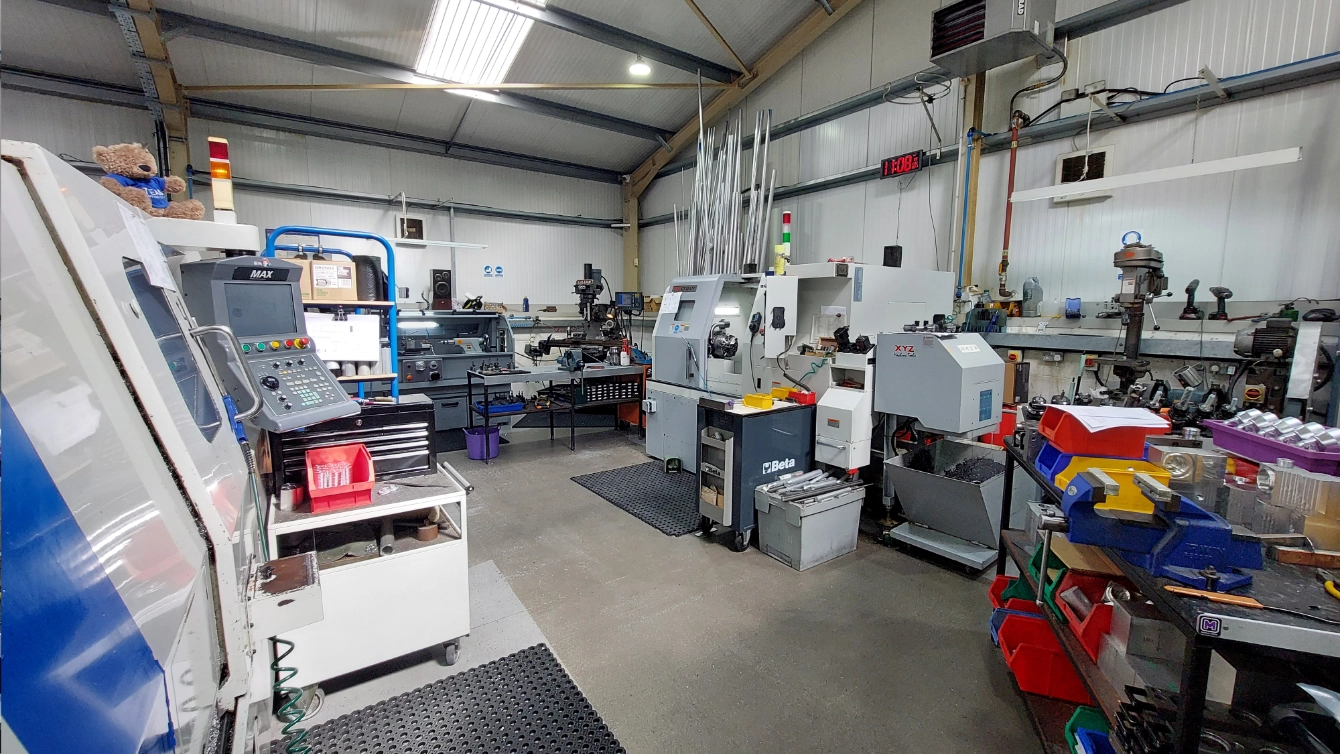
The second, much smaller group are the suspension manufacturers, who use a standardised base unit(s) but customise the components to match your weight and riding style. The cost of the customisation is minimal, as the same number of components are used. It is only the selection of the correct parts to build a rear shock that matches your requirements that differs.
For example, one of the popular rear suspension unit upgrades for the NT1100 looks very cost-effective at a few quid under £500 until you realise that the spring is limited to a rider weight of 100Kgs in full riding kit.
If you weigh more than that or have a more specific need from the shock than the baseline damping provides, changing the spring or modifying the damping significantly increases the price.
Remember that 100 kg is the spring’s maximum weight. The optimum weight might be 80 kg. The spring will work with a 100 kg rider, but you are sacrificing suppleness and shock performance.
These shocks will be better than standard, but if you don’t fit the off-the-shelf parameters the after-market shock is set for, you are taking the long and expensive way of upgrading the rear suspension.
Spring Weight
Springs are much more complicated than they look. Firstly, the more you compress a spring, the harder it becomes to compress it further because it pushes back, wanting to return to its resting length.
Yet, a spring is designed to be compressed, and it operates best when under a little pressure.
As a spring absorbs additional pressure from the bumps in the road, it will want to return to its resting length. It often does so with enough force that without damping, it would overextend and then want to contract, taking several attempts to balance the forces out.
All suspension units – even the non-adjustable ones – have compression and rebound damping. The weight of the motorcycle and the rider place a static load on the spring (SAG), which should compress sufficiently to support the load without over-compressing the spring, making it resist further compression, resulting in a harsh ride.
If there isn’t enough weight, the spring won’t compress and smooth out the bumps.
The trick is to have a spring that matches the load (weight) and is in the sweet spot where it is easy to compress initially so it absorbs the undulations in the road surface and with enough travel (often called stroke) remaining to take the bigger hits and keep the ride supple.
Preload
A shock designed around your solo weight (including all your gear) ensures the spring operates in the sweet spot. But the initial load can change, and not just because we ate too many biscuits.
Luggage and pillion passengers often require we change the initial resistance the spring gives us by increasing the preload. Without adjustable preload, adding a pillion passenger would lower the rear end, make the front light, and make it less effective at gripping the road.
Adding preload may take the spring out of its optimum operating range – the sweet spot. It will still function, just not at its best. This is why getting the right spring for your weight is so important.
Damping
 This prevents the spring from being overly bouncy. The spring must compress to keep the wheels in contact with the road, but we want this compression to be controlled and predictable.
The same applies when the spring returns to its resting length. We want the spring to expand in a controlled manner and not overextend (bounce).
This is why every shock has compression and rebound damping, but not all shocks allow you to adjust them.
The shim stack inside the shock controls the rate at which damping occurs. As the piston moves inside the shock, oil is forced through the shim stack, restricting the speed at which the spring can compress or release.
In the same way that springs have a sweet spot, so does the shim stack. You can accept an off-the-shelf shim stack, which will most likely be an upgrade to the setup in the factory shock, or you can have a shim stack built around your weight, the spring, and your riding style.
The Sweet Spot
Combine all of these elements – spring, shim stack, compression, and rebound damping -and the objective is to keep the suspension unit in the sweet spot of the stroke, thereby delivering a supple and smooth ride where the tyres stay in contact with and grip the tarmac. There also needs to be enough travel left over to accommodate changes in load and big bumps.
Why Maxton
All decent suspension units have similar components. What differs is the quality of the components and how tuned they are to your individual requirements. I could have bought an off-the-shelf unit, which would be an improvement over the standard one, but I decided to take a more direct route to getting the best from my investment.
Maxton manufactures the components used in its shocks and assembles each unit to order. There isn’t a warehouse full of prebuilt generic shocks. By only building what they need when they need it, Maxton builds shocks that match each customer’s requirements.
The shim stack in my Maxton NR4 isn’t “special”; it uses the design Maxton has been continually evolving and improving over two decades, but it has been assembled by selecting the most suitable components for my riding style and the spring, which matches my weight.
Maxton’s knowledge and skill help eliminate a lot of suspension guesswork, so my NR4 is within about 10% of the perfect setup as it comes off the bench. I’m not buying something generic and then chasing the settings to get the most out of what I have.
Maxton History
Maxton has over fifty years of experience and a race-winning history that includes the first World Super Bike Champion, Fred Merkel, riding a Honda RC30 that was running a Koni rear shock modified for motorcycle racing by Ron Williams, Maxton’s founder.
In 1971, Ron noticed that the shock on the Yamaha TZ250 and TZ350 stretched the frame and set up Maxton to build better alternatives.
With a race-proven reputation, Ron became involved in refining the Kawasaki chassis used by Mick Grant in the late 1970s. Grant recommended Ron to Honda when he switched manufacturers a year or so later.
Ron Williams’ partnership with Honda lasted many years, and he worked alongside Wayne Gardner, Joey Dunlop, Ron Haslam and a host of other riders in the Honda Grand Prix team.
Ron has now stepped back, leaving the day-to-day management to his stepson, Richard Adams, as Maxton embarks on its third major expansion. Having moved from the Old Chapel House, which you can still see from the current factory, the builders are expanding the workshop to accommodate the new five-axis CNC machine that is coming online.
Manufacturing
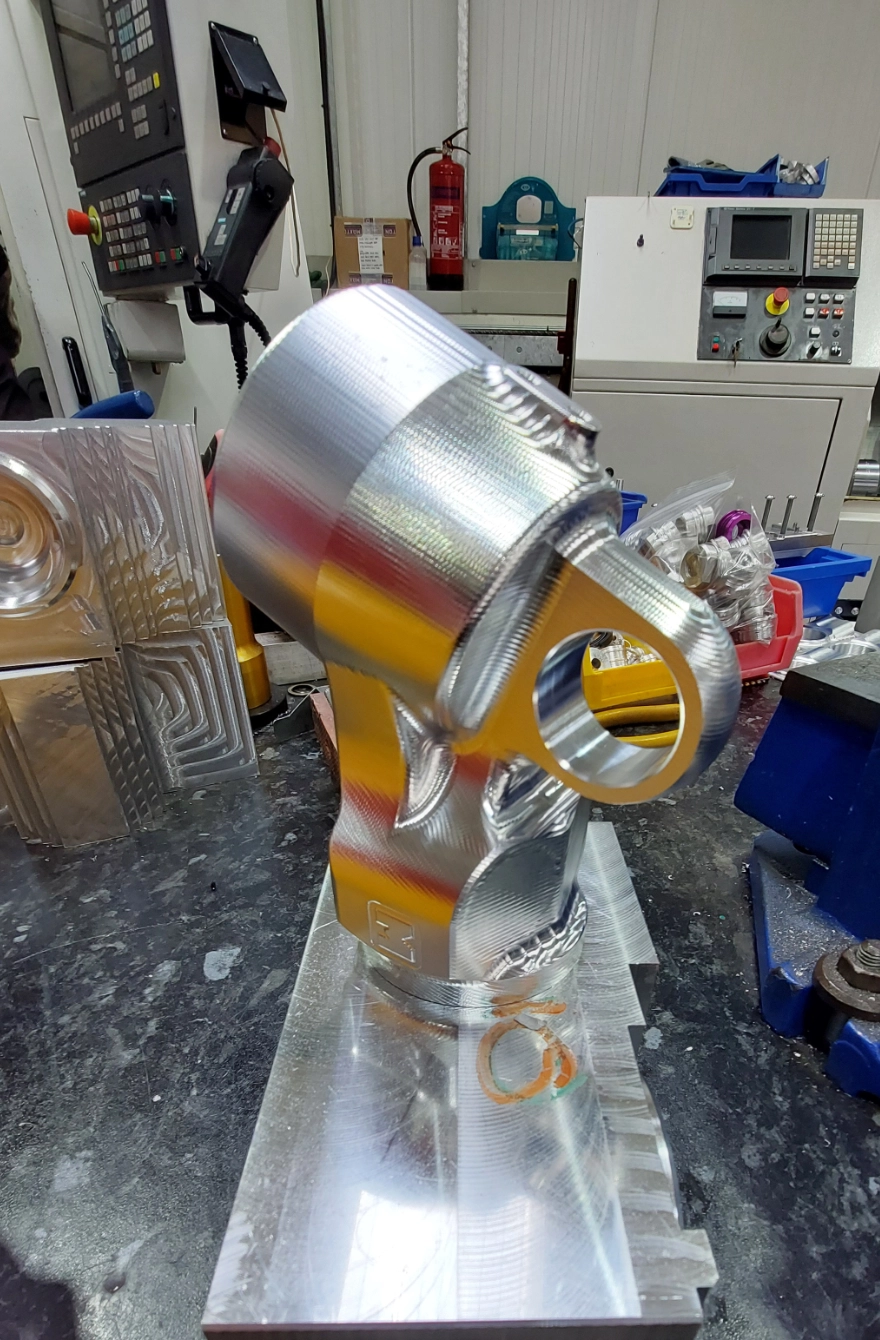
True to Ron Williams’ claim, made over twenty years ago, all of the parts of Maxton shocks are still manufactured in the UK. Parts aren’t imported from overseas, and the shocks only assembled in the UK; they are machined from aircraft-grade aluminium billet, primarily on-site in Frodsham in Cheshire.
Holding the components that will make the Maxton NR4 going in my NT1100 is a surreal experience. I know they have been machined from aluminium, but they are incredibly smooth.
The finish on each component is exquisite. There are no rough edges or a cold mechanical feel to the components. I catch myself fondling the preload adjustment ring – I know it is metal, but somehow it doesn’t feel as if it is, such is the finish to each component.
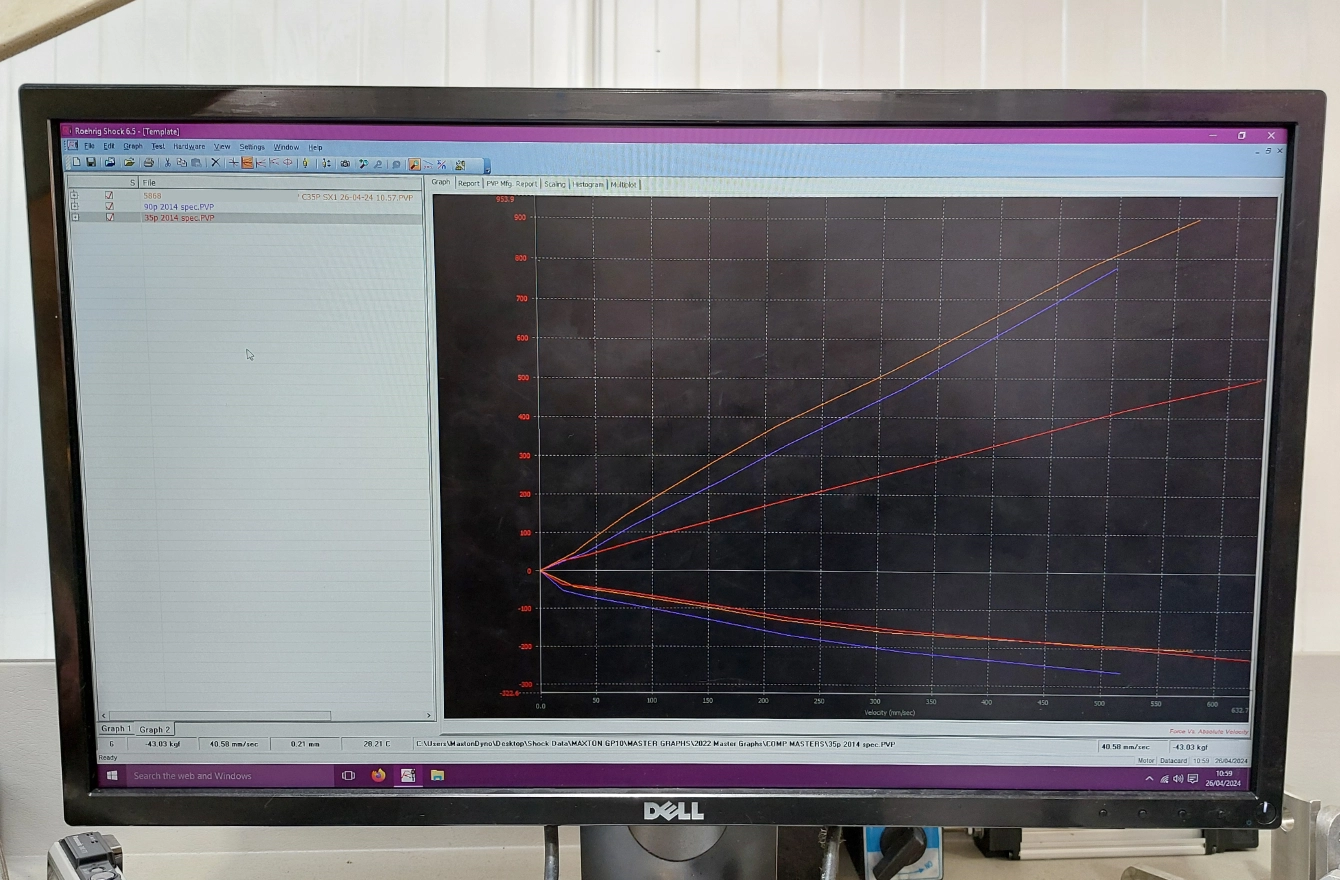
Nate, the engineer working on my shock, explains that by manufacturing the components in-house, anything that isn’t “perfect” is rejected as it is made.
There isn’t a single quality check at the end; quality control exists throughout the machining and assembly process. When the shock is in the final stages of assembly, to ensure all of the components are working together harmoniously, the shock is run through a computer-controlled simulation, the results of which must be within acceptable tolerances.
On The Road
Until I ride the bike, this is all hypothetical. The Maxton unit will be better than the generic Showa unit Honda supplies worldwide, but I’m hoping that the research that led me to Maxton will prove correct and a shock sprung and shimmed for my weight will be better than an off-the-shelf upgrade.
Two miles after leaving the Maxton factory, I knew I’d made the right choice. Maxton’s factory is situated off a country lane, which isn’t in the best condition. I wonder if they chose this location because of the road. What better way to impress clients than to have them feel the benefit as soon as they ride away?
The NT1100’s tendency to react to uneven road surfaces has gone. I can no longer feel the Honda gently squirming as the road outside the factory, which could do with resurfacing, deflects the tyres. The Honda smoothly glides to the T junction at the end of the road.
The Journey Home
The route back to the East Midlands will give me a little of everything. I have backroads, pothole-festooned town centres, fast A roads and a lot of the A54 and the Peak District National Park to consume as I test out my new Maxton shock.

The ride is much smoother, with the suppleness of the Maxton shock blending out the road’s undulations. Accelerating from a roundabout onto an arcing slip road, I have the confidence to get on the power with more urgency.
I can still feel the potholes; you would need to be numb not to, yet there is a difference. Rather than a hard thud, they are more of a wave. They are still bloody annoying, nonetheless.
I stopped at McDonald’s in Matlock (don’t judge me) for coffee and to consider the last 100 or so miles. I enjoyed skimming the edge of my boots on some of the tighter corners as I crossed the National Park, and my backside didn’t ache despite this being the first stop in a couple of three hours.
The stand-out moment, though, was riding over the speed bumps in the residential area I was diverted into due to roadworks.
Usually, speed bumps are more of a hazard than a hindrance. The standard rear shock would thump over them if I were doing more than walking pace.
After fitting the Maxton shock, I can still feel them, but the bike remains stable, treating the speed bumps as just another bump in the road and nothing to irritate the rider about.
The only worrying thought I’m now having is how I explain to the Financial Controller that I need to buy a Maxton upgrade for the fork internals. Obviously this is so I can extract even more benefit from the Maxton NR4 in the rear.
That’s my excuse …
Clarity
My thanks to Richard at Maxton for answering my never-ending stream of questions and to Nate for showing me around and explaining the manufacturing, testing, and quality control processes.
I paid Maxton for my shock and used my own money, too. It is easily one of the most cost-effective upgrades I’ve made to a motorcycle.