

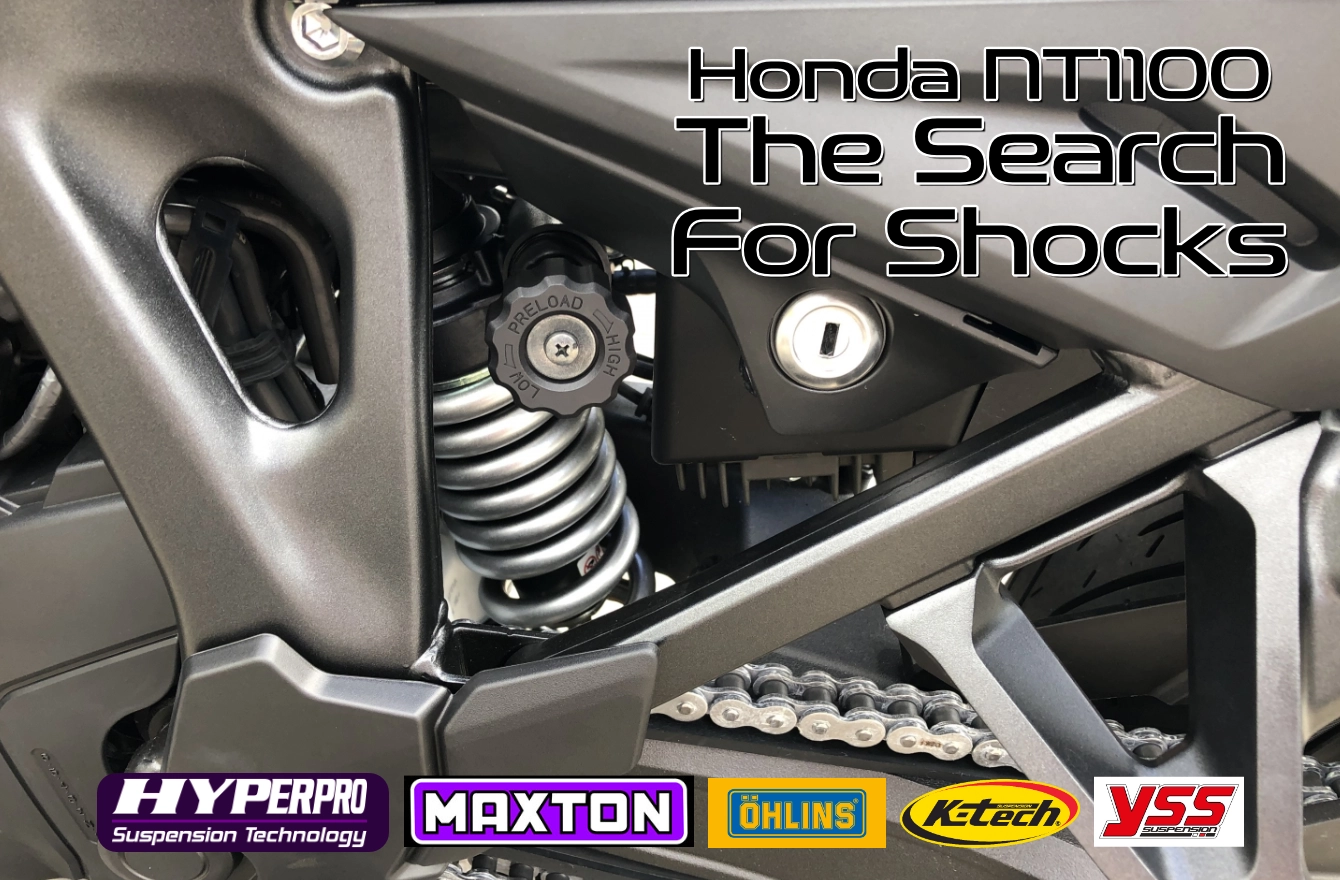


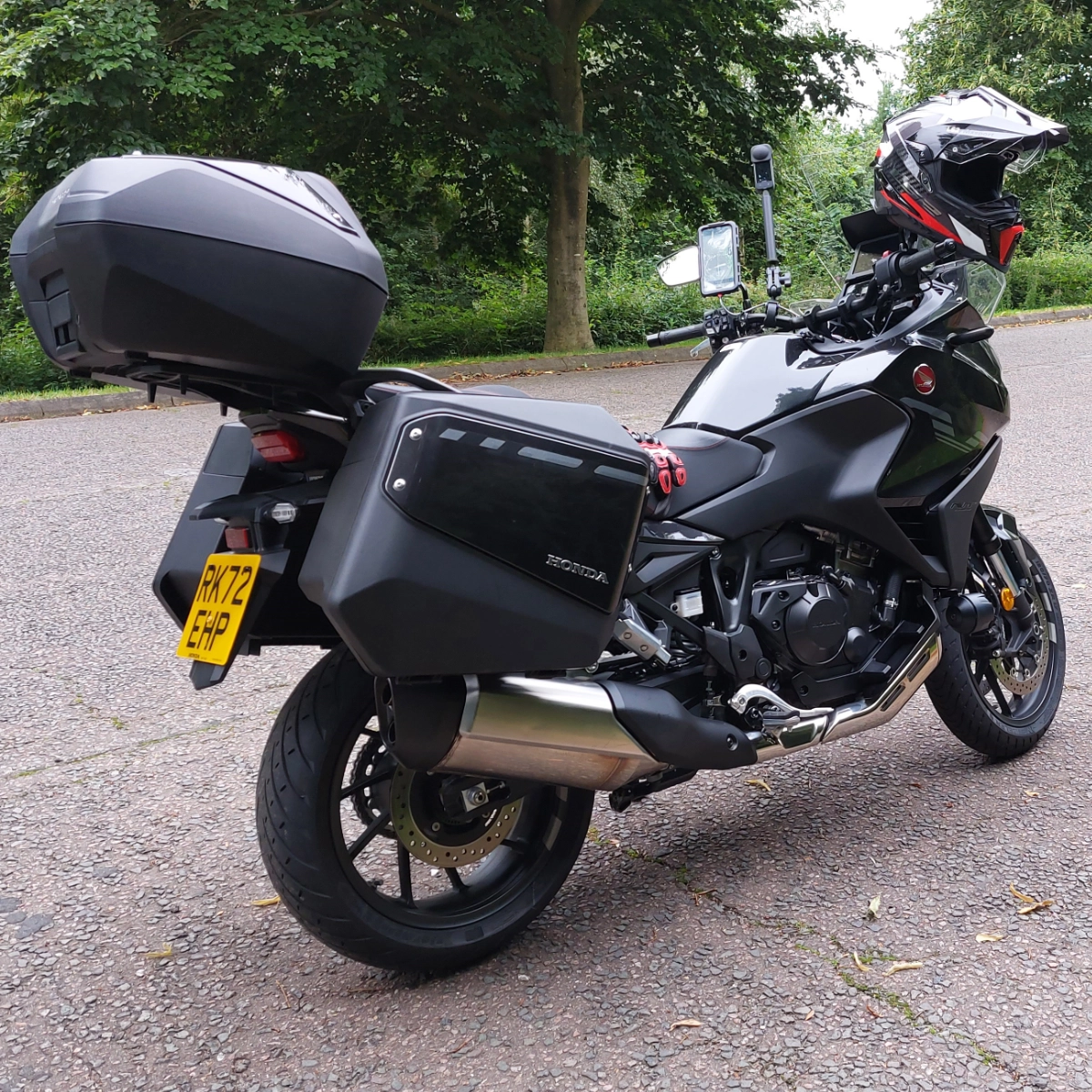
If the road is smooth, then the standard NT1100 suspension is adequate, but B-road scratching is the quickest way to highlight the rear shock’s limitations, especially if there are a few bumps.
Add braking, which takes weight from the rear, plus the desire to change direction, and it doesn’t take much for the rear end to get frisky.
Needs and Wants
Five minutes with a mug of tea and the internet, and I have pages open for all the usual aftermarket suspension suspects – Maxton, Nitron, K-Tech, Öhlins, YSS, BiTurbo and a Dutch company called HyperPro, which I found thanks to the NT1100 Forum.
Knowing how to extract the best performance from motorcycle suspension is a dark art, and there are people with a lot of specialist knowledge who know more than I do. The basics, though, go like this:
The springs cushion the forces acting on the wheels, giving us a smooth ride and keeping the wheels in contact with the road surface. As these forces constantly change when riding, the springs are always compressing and rebounding.
Spring rates measure the force required to compress the spring a set amount. It also defines the force with which the spring will return to its unloaded length when the compression force is removed.
Typically, we think of springs as having a linear compression rate, whereas most motorcycle springs have a progressive rate. The more the spring is compressed, the harder it becomes to compress it further. This is done by altering the distance between the coils across the spring’s length.
If you look at your rear shock and the spring is more tightly wound at the top than the bottom, you have a progressive rate spring.
Preload is the amount of compression we apply to the spring to set it for the weight it is carrying and our preference for how we want the bike to feel.
Compression damping slows the rate at which the spring compresses. As the force is applied, the spring absorbs the load, and the compression damping controls the rate at which the spring compresses.
Rebound damping is compression damping in reverse. Once the force that compressed the spring is removed or reduced, it will want to return to its natural length.
Without rebound damping controlling the rate at which the spring expands, it would quickly release all the energy that made it compress, resulting in a bouncy ride.
Double Bumps
Two or more bumps in close succession can create problems without good rebound damping.
The first bump compresses the spring, and once the load from the first bump reduces, the spring starts to expand back to its natural length, creating a downward force on the rear wheel.
As the second bump arrives, it tries to push the wheel up while the spring is still pushing the wheel down.
If the two forces are strong enough, this causes the rear wheel to skip, destabilising the rear end.
Rebound damping slows the rate at which the spring expands (unwinds), reducing the forces and making the second bump more easily absorbed.
I’m a long way from having a deep understanding of how it all works, and I’m sure I’ve oversimplified that explanation, but (very) roughly, that is what is going on.
There is an excellent series of short videos on the Power Drift Channel on YouTube explaining motorcycle suspension in more detail. Well worth watching.
HyperPro Suspension
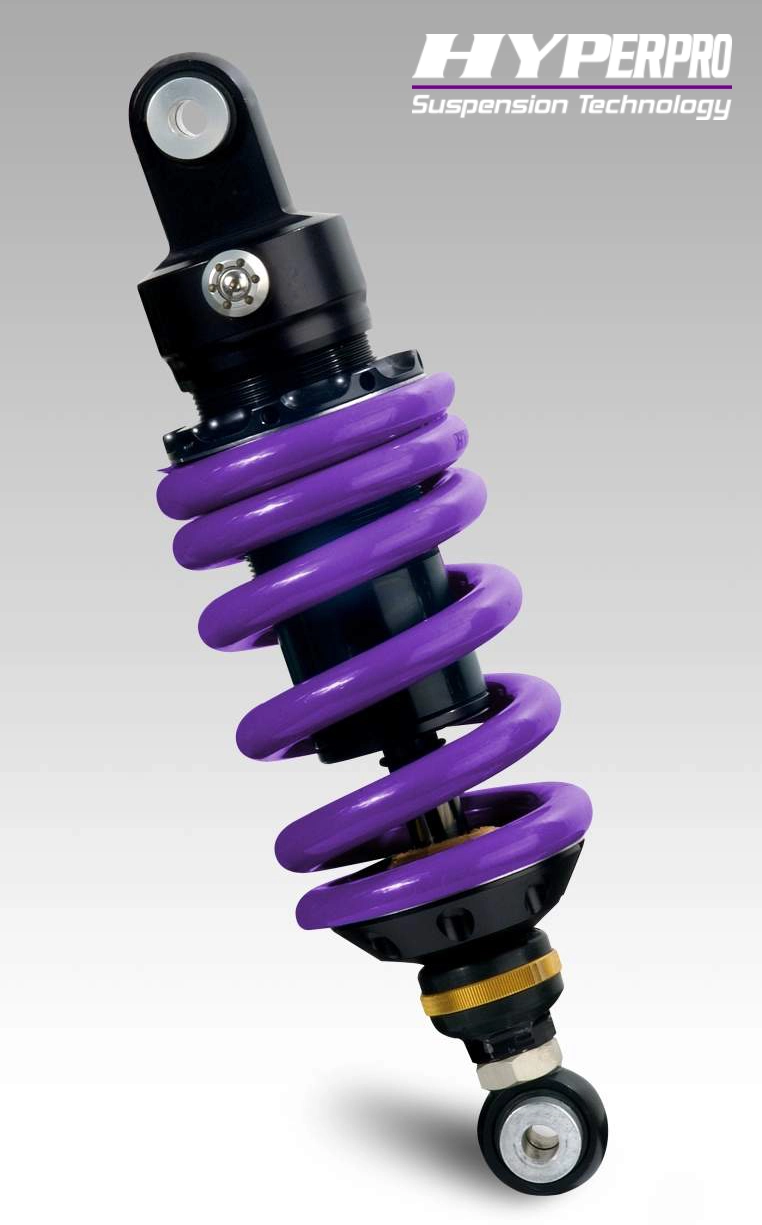 Ignoring how each manufacturer builds their shocks and the patented methods by which the springs are controlled, the difference between shocks is the granular levels of control that we have over how the springs react to changes in the road surface and our inputs as we ride.
The standard NT1100 shock can only be adjusted for preload. Adjustment to rebound or compression damping isn’t possible.
Fitting a top-of-the-line Öhlins rear shock with fast and slow compression damping to go with almost infinitely adjustable rebound damping and ride height adjustment would be the perfect answer. Yet when the rest of the motorcycle – let alone my skills – can’t extract the advantages such a rear shock would bring, it would be more bling than beneficial.
Which leaves me looking for the best solution at a reasonable cost. I need a shock with a remote preload adjuster (HPA), as the NT1100’s bodywork hides the top of the rear shock, preventing the use of C spanners or a Tommy bar to make adjustments.
I need to ensure that the spring has the correct rate for my weight and the range in the preload to compensate for luggage and pillions. In an ideal world, I’d have compression and rebound damping, but that is likely to drive the cost up. If I have to lose one, then compression damping could go. I need rebound damping.
After searching the internet for available options, I think I’ve settled on the HyperPro Emulsion Shock with the hydraulic preload adjuster, as it offers the best balance of features, design and quality for the money.
Cheap isn’t a word that can be used with any of the after-market suspension upgrades, and I need to talk to a suspension guru before parting with my cold, hard cash.
But now that I’ve started down this path, it is more of a question of when, rather than if, I upgrade the rear shock on the NT1100.
It is only money – what could possibly go wrong?














One Response
Two more options.
EMC Shocks made in France look a good option and Hagon made in the UK.
Choices, choices ….