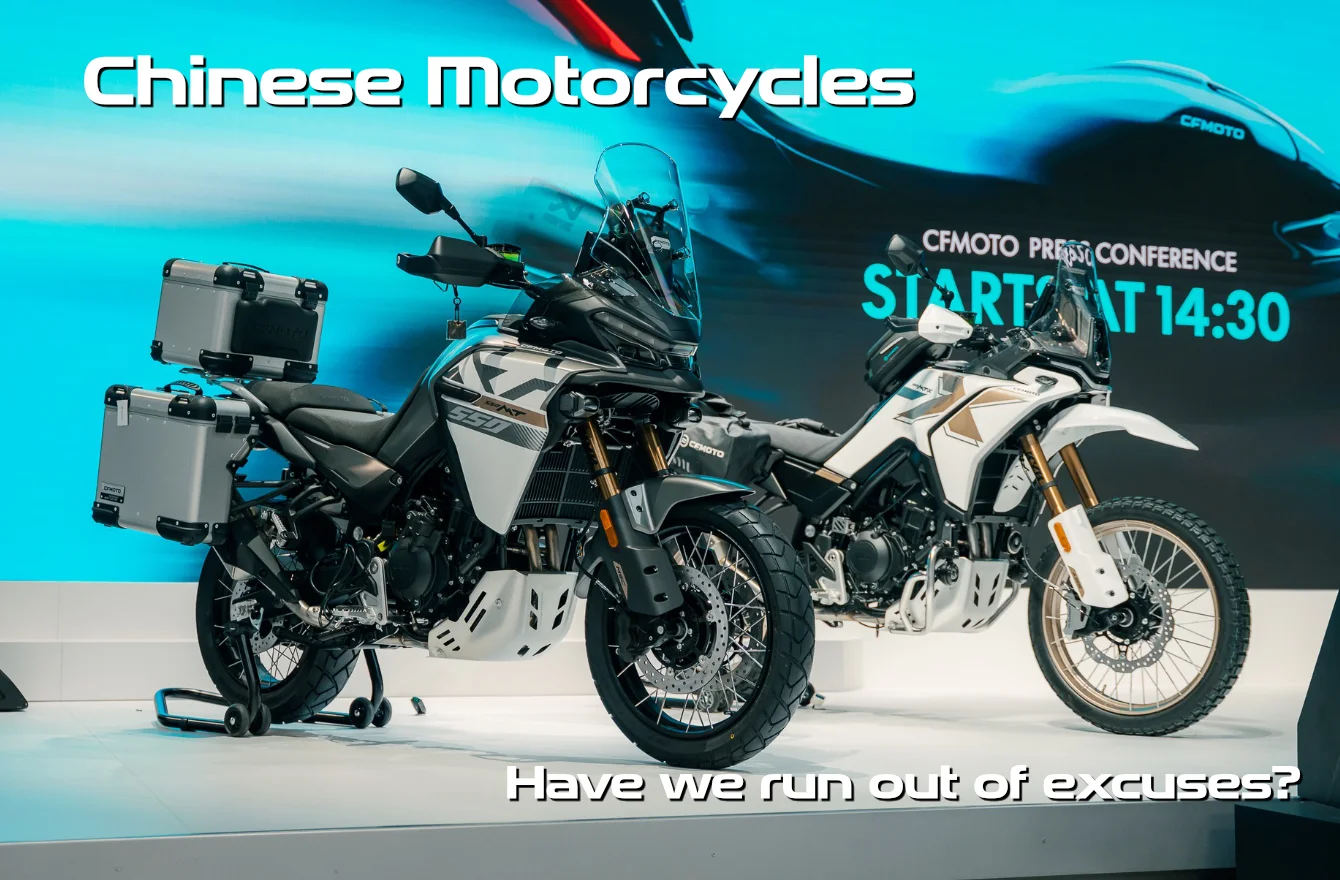

I’ve been to Motorcycle Live at the NEC, and, as usual, there’s a lot to digest. New models, new technology, new paint schemes and enough marketing departments telling us their latest creation will change motorcycling forever to fill the NEC several times over.
But two Chinese motorcycle manufacturers stood out for me this year: CFMOTO and Qianjiang’s QJMotor.
Not because they had the biggest stands, the loudest presentations or the most expensive coffee machines. It was the quality of the motorcycles themselves.
Now, quality is a subjective measure, and the real proof of the pudding is when you actually ride a motorcycle, live with it and discover what happens when the initial excitement wears off. We plan to fix this as soon as the show-shock subsides for the marketing departments and their lives return to something near normal.
However, the finish on the machines I looked at was impressive. Panel fit, paintwork, switchgear and general presentation were all considerably better than the stereotypical image of a Chinese motorcycle that some of us still carry around.
Looking for something I think they may have overlooked, I decided to investigate pillion pegs on a CFMoto. I realise it is a strange habit, but check the video. It is the smallest of details, but they took the time to get it right.
Even the welding looked impressive. The Chinese robot welders appear to be doing a rather better job than some of their Japanese counterparts. Perhaps somebody should send a few photographs to the Japanese factories.
And that got me thinking. We’re now three or more years on from the first significant wave of Chinese motorcycles arriving in the UK. Is the difference between these machines and their Japanese competitors still primarily the dealer network and the badge on the tank?
Or have we reached the point where the Chinese manufacturers are producing genuinely competitive motorcycles?
Money Talks
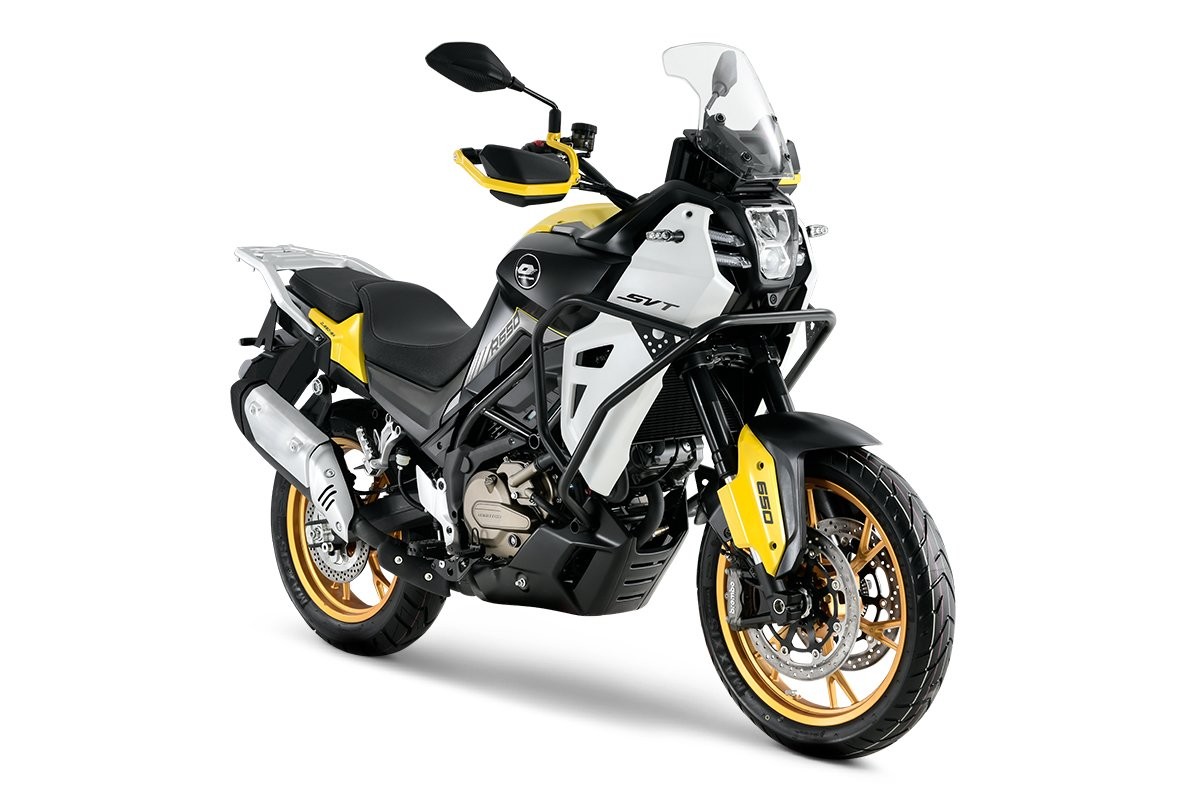
Take the QJMotor SVT 650.
This is a 645cc V-twin producing 75bhp and 65Nm of torque. It comes with Brembo radial front brakes, Bosch ABS, Marzocchi adjustable suspension, a 20-litre fuel tank and a seven-inch TFT display.
That’s already a respectable specification.
Then there’s the equipment. Heated grips, a heated seat, adjustable screen, crash bars, handguards and a three-piece lockable aluminium luggage system.
The current UK promotional offer puts that luggage at just £1.
The standard SVT 650 is advertised at £5,699 plus on-the-road charges. Allowing approximately £300 for OTR, that’s around £6,000 ready to ride away, including the luggage promotion.
The SVT 650 X, with its spoked wheels and additional adventure-oriented specification, is £5,999 plus OTR.
It’s a rather compelling package.
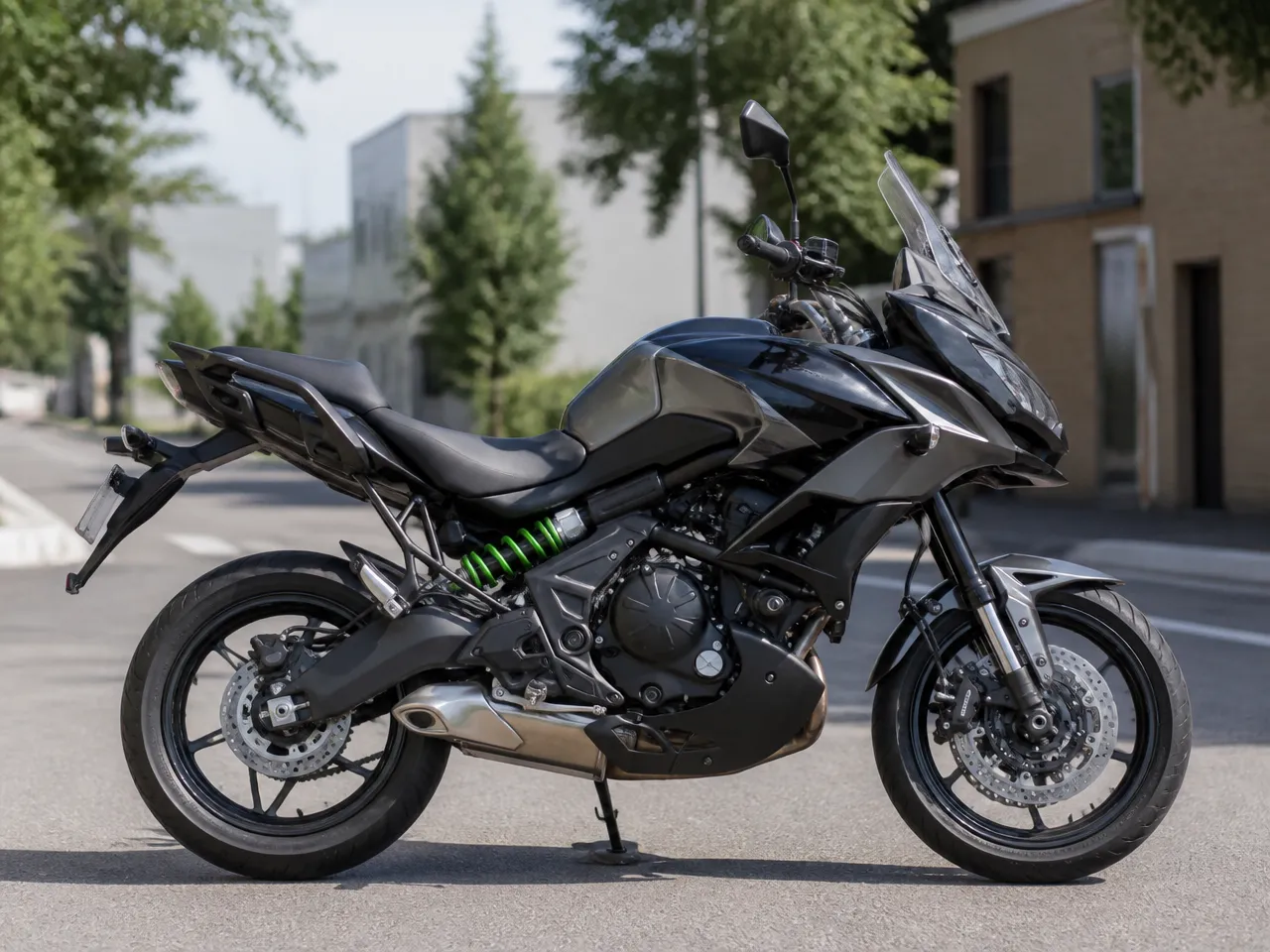
For comparison, the Kawasaki Versys 650, a useful Japanese alternative in the middleweight touring category, starts at £8,049 for 2026. That’s before considering luggage. Kawasaki’s Grand Tourer version, which includes panniers, a top box and various touring accessories, is advertised at £10,049.
The comparison isn’t entirely like-for-like: the QJMotor has a larger front wheel, a V-twin engine and a different adventure bias, while the Kawasaki has its own established credentials. Nevertheless, the price difference is difficult to ignore.
CFMOTO
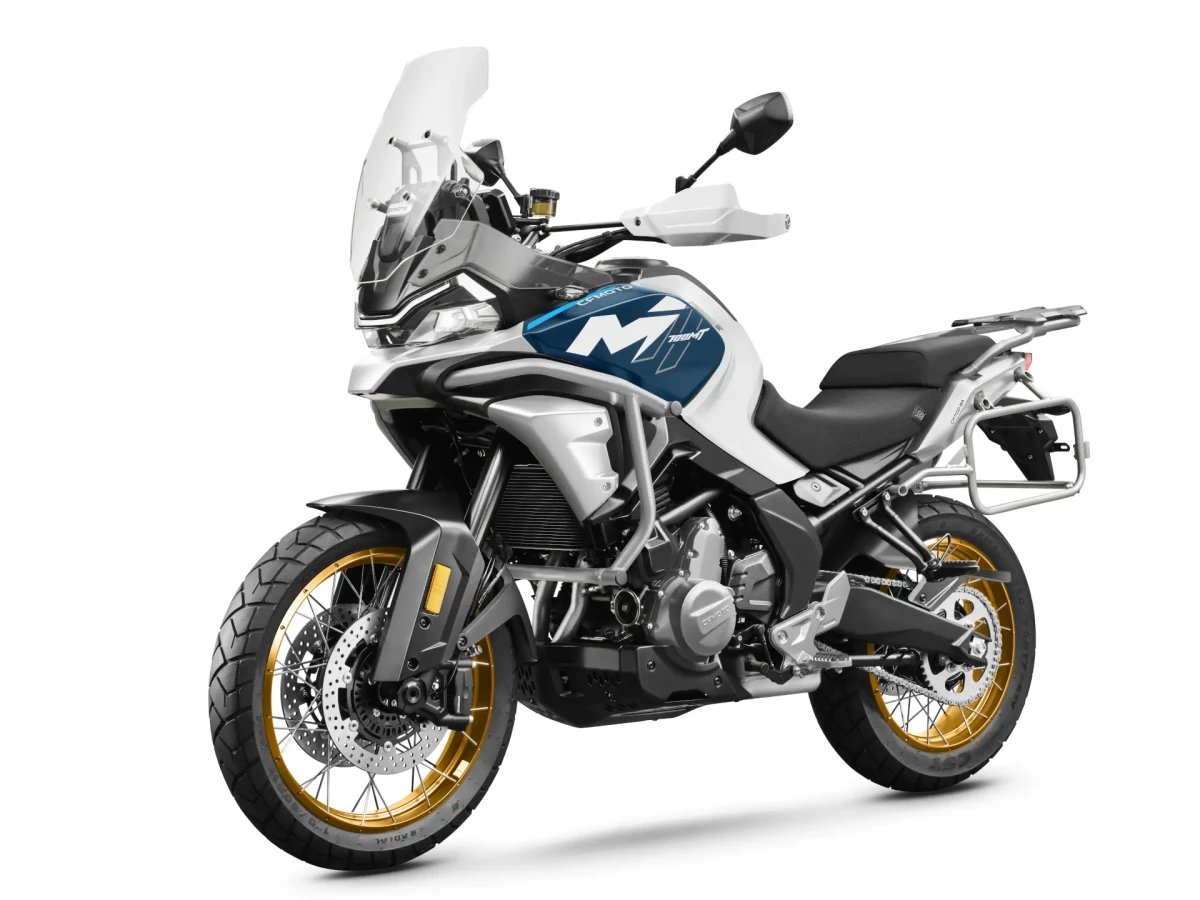
The CFMOTO 700MT makes a similar argument.
Its 693cc parallel twin produces 67bhp and 60Nm, with fully adjustable USD front forks, adjustable rear suspension, switchable rear ABS, traction control and a 20-litre fuel tank.
It also includes heated grips and a heated seat, tyre pressure monitoring, an adjustable windscreen and a five-inch TFT display with Google Maps navigation projection.
The UK list price is £6,199 plus OTR. CFMOTO’s published finance example gives an actual on-the-road price of £6,398, including a four-year parts and labour warranty.
That’s a substantial amount of equipment for the money.
The obvious Japanese comparison is again the Kawasaki Versys 650, with its 649cc parallel twin producing 67PS. The Kawasaki has a familiar, proven engine and a well-established dealer network, but its standard specification doesn’t include the same combination of heated equipment and touring technology.
The CFMOTO also has a 19-inch front wheel, compared with the Versys’s 17-inch wheel, giving it a slightly different adventure-touring character.
Neither is necessarily the better motorcycle. But the CFMOTO makes a very strong case on specification and price.
By The Numbers
| Motorcycle | Advertised price | Touring equipment |
|---|---|---|
| QJMotor SVT 650 | £5,699 + OTR | Three-piece metal luggage for £1 promotion |
| CFMOTO 700MT | £6,199 + OTR (£6,398 published OTR) | Heated seat/grips, TPMS and navigation projection |
| Kawasaki Versys 650 | £8,049 | Touring luggage extra |
| Kawasaki Versys 650 Grand Tourer | £10,049 | Panniers, top box and touring accessories |
Prices are UK-advertised 2026 figures. QJMotor OTR charges vary by dealer, and its luggage promotion is subject to terms and conditions, including registration within 14 days.
The difference is not a few hundred pounds. Depending on the specification being compared, we’re talking about thousands.
And that’s before you start adding heated grips, seats, luggage, crash protection and other accessories to the Japanese alternatives.
But Are Chinese Motorcycles Any Good?
This is where things become more complicated.
A well-finished motorcycle on a brightly lit NEC stand is one thing. A motorcycle that has covered 20,000 miles, survived a couple of British winters and still has all its electrical systems working is another.
And there is no reason to suggest they won’t be, yet Benelli electrics have a reputation.
The Chinese manufacturers have made considerable progress in component sourcing, manufacturing and presentation. Seeing familiar names such as Brembo, Bosch and Marzocchi on the specification sheets is reassuring, although component branding alone doesn’t guarantee the quality of the complete motorcycle.
CFMOTO also has an established relationship with KTM, including manufacturing and engineering collaboration. The four-year CFMOTO warranty is another positive indication of confidence in its products.
But I’ve had direct experience with KTM warranty. It seems changing the brake fluid invalidates the warranty on the whole bike, and the switchgear was once described to me as “being made of cheese”
Long-term reliability, parts availability, dealer competence, resale values and the ability to obtain warranty support when something goes wrong are all part of the ownership experience.
A motorcycle is only as good as the support behind it when it breaks. Perhaps it is time for the Chinese to stand up and be counted rather than badge-engineering existing names.
Bottom Line
I came away from Motorcycle Live thinking that the conversation about Chinese motorcycles needs to change.
Three or four years ago, much of the discussion centred on whether these bikes were cheap for a reason. Today, the more relevant question is whether the traditional manufacturers can justify their price premiums.
I’m not suggesting that a QJMotor is automatically as good, or worse, as a Honda, Yamaha, Suzuki or Kawasaki. Nor am I suggesting that a shiny finish and a long list of equipment tell us everything about engineering quality.
But dismissing these motorcycles because they’re Chinese is becoming an increasingly difficult argument to defend.
Chinese manufacturers are investing, improving and offering increasingly attractive alternatives. They are also pressuring established brands to deliver more for the money.
So, perhaps the biggest question isn’t whether the Chinese have caught up. It’s whether the Japanese have noticed.