Which motorcycle tyres should I fit is perhaps the most asked question on forums. The tyre question is asked so often that it has spawned its own set of memes.
Often these memes suggest that the question is inappropriate, but there is a lot more to the question than the obvious.
Some motorcycle tyres are better in the rain. Some tyres have a softer compound than those giving excellent longevity. And sometimes, a motorcycle can outperform a tyre, giving a weave at higher speeds.
So, when two sets of motorcycle tyres claim the same features, how do I answer the frustrating question … Which motorcycle tyres should I fit?
Tyre Markings
The side of the tyre is covered with all sorts of scribblings, all of which are highly informative but don’t address the tyre’s profile.

In the example, the 150/70 refers to the width of the tyre in millimetres (150) and the height of the tyre (70) given as a percentage of the width. In this case, 70% of the 150mm width is 105mm.
 Compare the height of a 150/70 tyre (105mm) to the height of the fat arse 190/55 rear tyre on our Multistrada. At 190mm wide and 104.5 mm high (55% of 190), it is just half a millimetre shorter in height than a 150/70 tyre.
The numbers tell part of the story of how the tyre will behave, but a triangle with a very narrow surface contact patch can be described at 190/55, as can a tyre with straight side walls and a correspondingly bigger surface contact patch.
The Avon Speed Master or the Avon Safety Mileage – tyres often found on classics – are great examples. The size description doesn’t tell you these tyres have an almost rectangular cross-section.
Other than ensuring I buy the right size of tyre, the numbers on the side of a motorcycle tyre tell me very little about how they will feel on the bike.
Manufacturer Differences
Some manufacturers once made their motorcycle tyres with a steep cross-section. If everything else were equal, then the older – I’m talking 10+ years ago – tyres would have turned into a corner faster.
Faster turn-in might sound great, but the trade-off is a less predictable feel to the handling, and predictable is the feedback most riders desire.
Yes, we want responsive handling, but the drop-into-a-corner needs to be consistent, not something that gets faster the more we lean into a corner.
The OE tyres I had on a Kawasaki 1000SX some years ago did this. It was a novelty when riding around town, but limited commitment on twisty backroads and could be disturbing in the wet.
Pressure Differences
According to the handbook that came with the Ducati Multistrada, the correct tyre pressures are 36psi front and rear for solo riding and 36/42psi if riding with luggage or a passenger.
Meanwhile, in all of the manufacturer’s technical data I’ve read for Multistrada-sized tyres, the recommendation is to run 36psi in the front and 42psi in the rear all the time.
One combination of tyre pressures isn’t going to be perfect for every rider in every situation. What the manufacturer is stating is that these are the pressures that will typically extract the maximum performance from your tyres.
Assuming we are talking about motorcycle tyres on tarmac, then over-inflated tyres won’t flex as the manufacturer intends resulting in a reduction in grip. Under-inflated tyres will flex more than designed or desired, decreasing stability, especially in corners.
Pressure is how the cross-section shape of the tyre is maintained. If I want the tyre to handle as the manufacturer intended, I need to run something close to the manufacturer’s recommended pressures.

Construction Differences
Sports tyres are designed to give stability at high speed along with excessive amounts of grip – sometimes called mechanical grip – created by the friction between the tyre rubber and the road surface.
This makes sports tyres less inclined to change direction without positive motivation, which is partly how they achieve their high-speed stability.
Touring tyres are typically better in the rain due to enhanced tread patterns and are designed for high mileage rather than ultimate levels of grip.
Sports touring tyres often give lighter steering and faster direction change than a pure sports tyre. Sport touring tyres will give you stability at speed, the feel to enjoy the twisties, and work well in the wet.
Generations
But the most significant construction difference comes from whether a tyre is still the top dog – the pinnacle of a manufacturer’s range.
It is standard practice amongst tyre manufacturers to constantly push tyre technology forward. With the release of a new tyre, the previous top dog is relegated to a lower division.
At this point, the manufacturer won’t continue to produce the previous generation tyre to the same high specification, so beware of people recommending a tyre if they do low mileage. They may have bought their tyres when they were the top dog, and purchasing the same tyre today may not get you the same high specification.
The same goes for OE tyres. They are often budget look-alikes and not manufactured from the same quality materials as the tyres they copied. There is more detail on these two aspects of tyre development in the Life of a Tyre article.
Which Motorcycle Tyres Should I Fit?
If you pick any of the top tyre brands, buy their latest generation, get the correct tyre for the riding you want to do, and the weight and speed of your motorcycle, then once the tyres have scrubbed in – about 60 miles – you will love them.
 All mainstream tyres are good when new. After that, it will depend on how the tyre compares to your needs as the rider. There is only one of you, and you are the one hanging onto the handlebars. A motorcycle tyre that everyone else dislikes might be precisely what you are looking for.
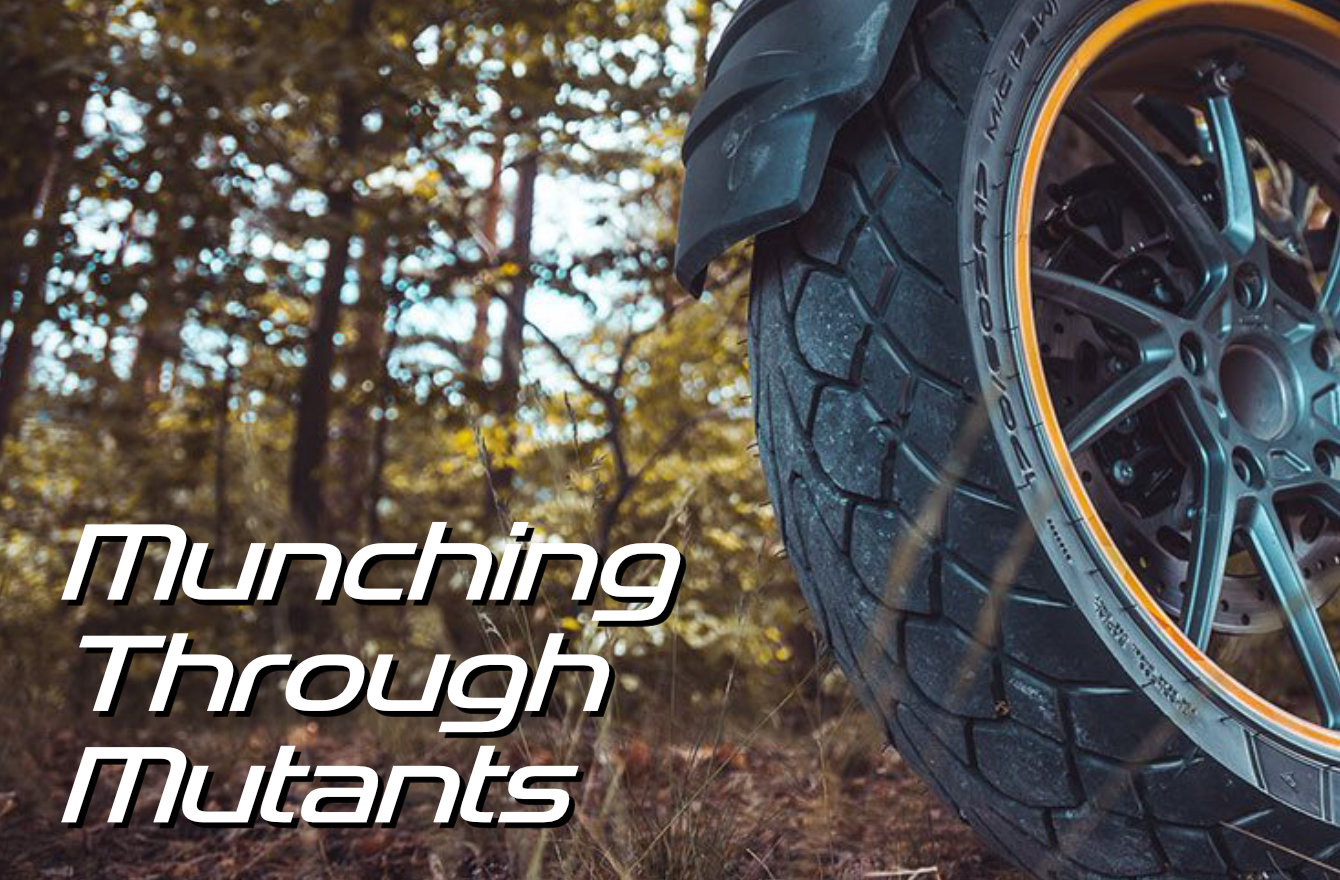
My colleague Roger disliked Dunlops until he ragged a set of Road Smart IVs around Portimão, and now Dunlop tyres are fitted to all his bikes. Carle is impressed with the Mutant tyres on his KTM 1290 and is generally happy with most modern tyres, except for some generations of Road Pilots.
I find Metzelers square off faster than other tyres, and the tendency to twitch when crossing white lines in the wet ended my love affair with Bridgestone A41s.
Bottom Line
We have stayed away from answering the question “Which motorcycle tyres should I fit” because no one can answer that question for you. We all have opinions. I like Dunlop tyres, and for summer, I have a set of Sport Smart 3 on the Multistrada.
As the colder months approach, I’ll change these for Dunlop Mutants. For me, they are the best cold and wet weather tyres I’ve ridden on (so far). They’re no slouch in the dry either.
But that is me. Some will say I’m wrong and that Pirelli is the tyre of choice. Others will say Avon, Continental, Michelin or Bridgestone are the tyres to be with.
All of us speak the truth, just from our point of view.