Fitting sports motorcycle tyres – Dunlop SportSmart 3 to be exact – a tyre that Dunlop describes as a Hyper Sport tyre, just as the weather starts to turn damp, cold and soggy, is, perhaps, a little crazy.
The accepted logic is that I should replace the worn RoadSmart IV tyres on the Tracer with another set of RoadSmarts or switch to Dunlop Mutants because the rain will soon be with us.
But here is my logic, and if this turns out to be wrong, we get extra marks for doing stupid things, so you don’t have to.
Tyre Technology
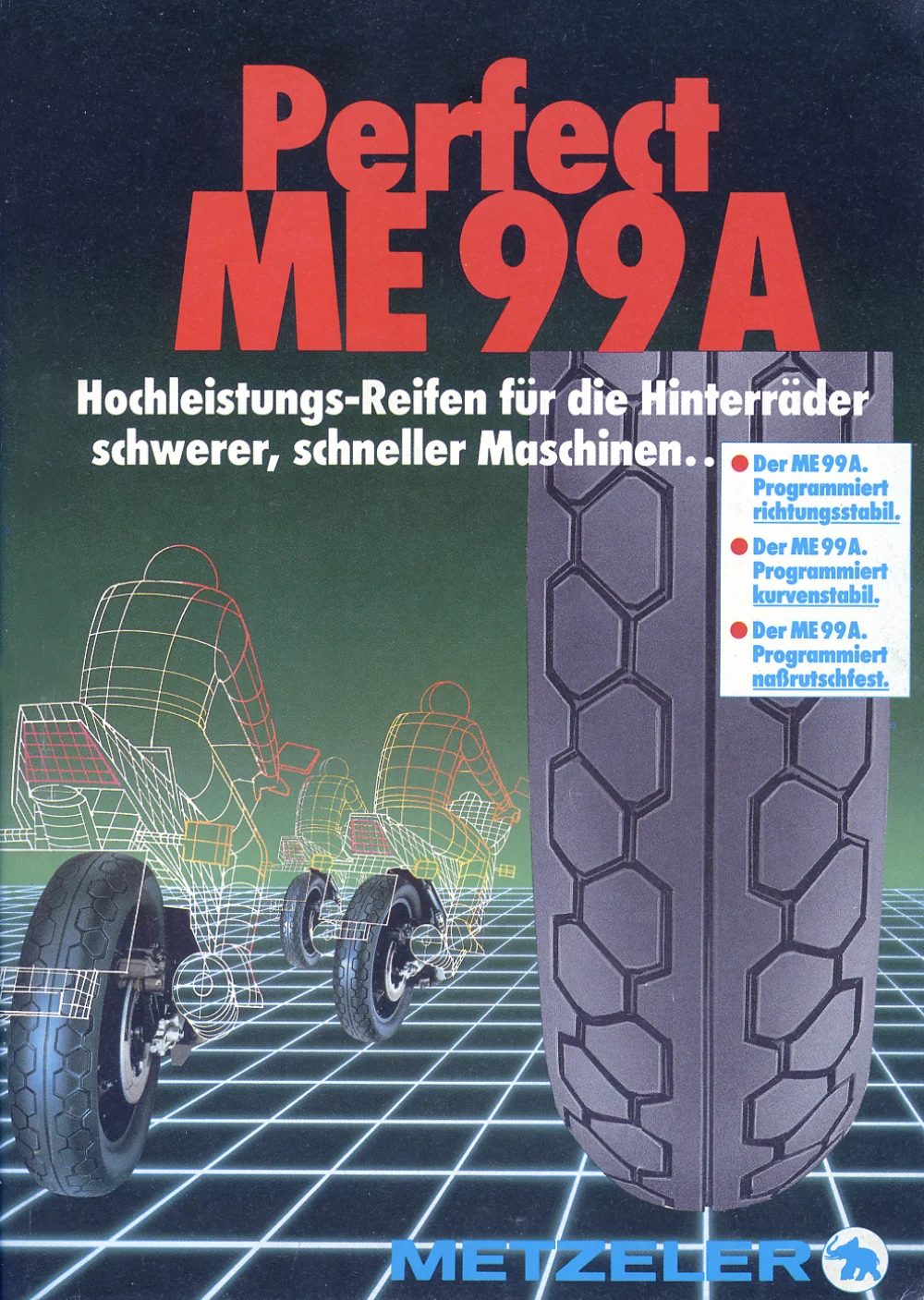 In the early 1980s, the nylon never-grip tyres fitted to most motorcycles were dreadful. Then Metzeler released the ME33 Lazer tyre, the first motorcycle tyre to change from the traditional longitudinal tread pattern to the transverse patterns we expect today.
A few years later, Metzeler released the ME99, the first of the mushroom-design tyres, with an extended sidewall and a much wider contact surface.
The ME99, with its aramid-fibre belt construction, coupled with the tread pattern changes the ME33 had delivered, gave improved stability, especially when braking, along with enhanced water clearance.
In releasing these tyres, Metzeler started a motorcycle tyre war that is still raging. All of today’s high-performance motorcycle tyres follow the design concepts of the early Metzeler tyres to one degree or another.
It was also in the mid-eighties that Michelin introduced Silica into their motorcycle tyres. First appearing in race tyres, by the early 90s, Silica was present in most manufacturer’s motorcycle road tyres.
Silica & Carbon Black
Silica (silicon dioxide) is weird stuff. On the one hand, it increases wet weather grip while at the same time reducing the rolling resistance of the tyre, which gives better MPG.
The trouble with Silica is that it wears quickly, so it is often combined with Carbon Black, which toughens the tyre’s compound and ensures longevity. Fun fact: it is also the reason motorcycle tyres are black.
Getting the right balance of rubber, silica, and carbon black is the holy grail of motorcycle tyre manufacturing. The right amount of silica delivers the grip, and enough carbon black gives decent mileage.
How much is used depends on what you want from a tyre. There isn’t a one-size-fits-all compound, hence, the range of motorcycle tyres that manufacturers offer.
Modern Motorcycle Tyres
Fast forward forty years and the tyres we have today would blow the mind of a 1980s biker. The advancements in compounds, construction, and tread patterns are both staggering and, at the same time, largely ignored by us all.
Often, tyres are chosen on brand loyalty or crowd popularity rather than objective reasoning. So advanced is motorcycle tyre technology that almost all the tyres from the top tier manufacturers – the genuine tyres, not the OE copies – are a damn good tyre, each with their own “personality”.
It is a broad-brush claim, and to be accurate, this assumes that the correct tyre for the bike’s weight was chosen, they are running the right pressures, and the tyre matches the riding you are planning to do.
It might sound as if I’m stating the bloody obvious, but I had one guy tell me with all sincerity that I’d only get a thousand miles from a pair of Dunlop Mutants before they were knackered. I assume he was speaking from personal experience.
It was a strange story because I got six thousand miles from the set fitted to the Tracer 9GT, which included over three thousand miles lugging overstuffed panniers the long way to Portimão and back.
Commentary from the “guy at the tea stop” aside, choose any of the top-tier motorcycle tyre manufacturers’ headline tyres, and you will enjoy the experience. [Life of a Tyre is worth a read]
Weather or Not
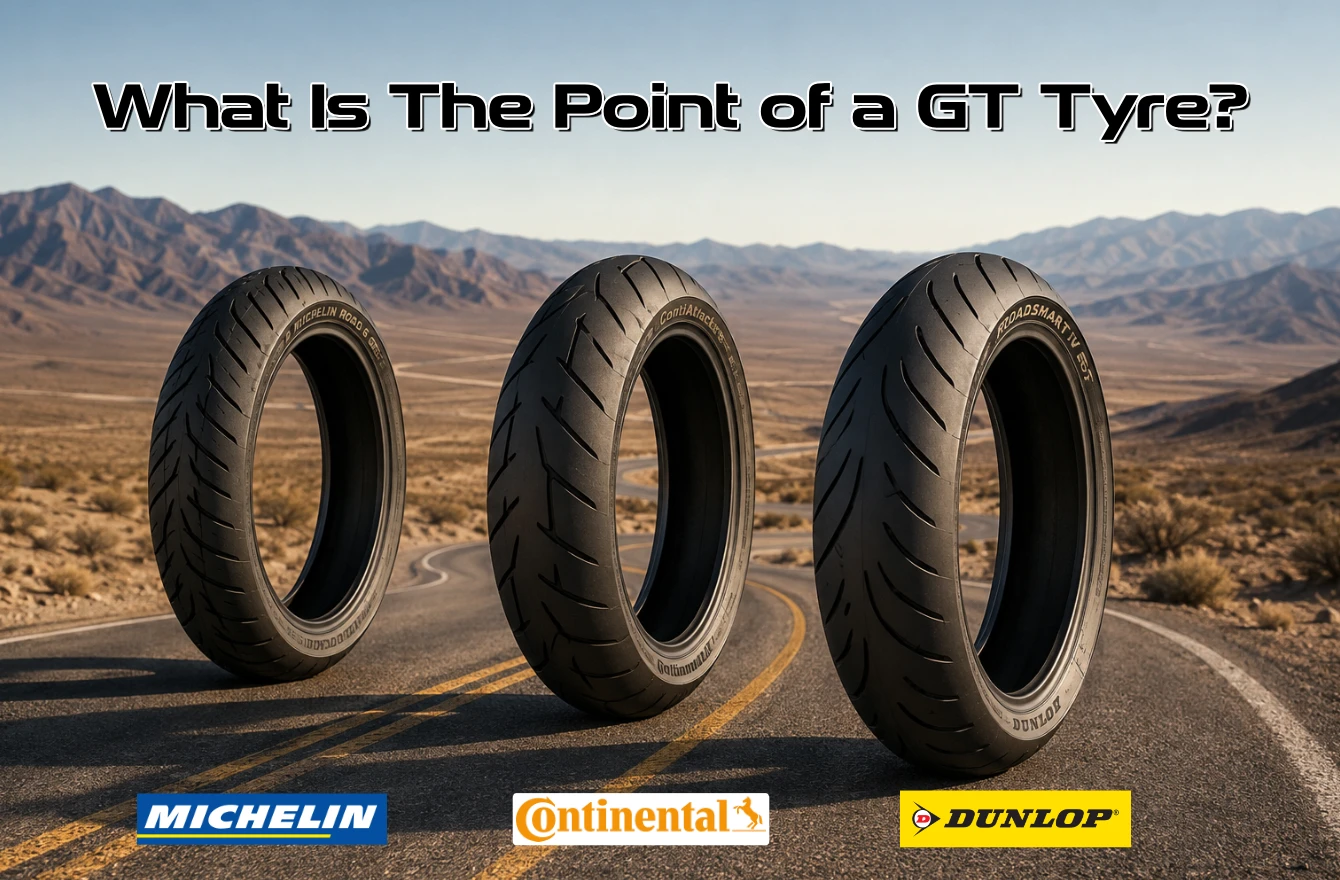
All major motorcycle tyre manufacturers offer a range of touring tyres, sport-touring tyres, sports tyres, and very sporty motorcycle tyres.

Considering the typical weather in the upcoming damp and chilly months, my brain tells me to fit another set of Dunlop Mutants based partly on personal experience; their ability to shift a shit ton of water, plus the multiple blocks in the tread pattern, results in a fast warm-up time.
Instead, assuming that the advancements in tyre technology are what I think they are, I’m fitting a pair of Dunlop SportSmart 3 tyres to the Tracer because … according to Dunlop, they … “combine fantastic grip and handling on the road with impressive mileage, this true hyper sport tyre can also hold its own in the wet.”
And if all of that is true, they should see me happily through the damp, cold and soggy months.
The Test
The problem with tests of this kind is that the skill of the rider has an impact on the outcomes. Ideally, we would have a larger sample group, but due to financial constraints, you’ll have to make do with me and Roger.
Example: I was at an Advance Motorcycle Training Day, otherwise considered a track day to the attendees, and it was raining the proverbial cats and dogs.
I’m out there on decent road tyres, giving it everything I dare for the conditions, and the instructor, on knackered track day tyres, is leaving me for dead on corner exit.
Comparing our riding styles, Roger’s is much more direct than mine. I float towards an apex while Roger attacks them. Between us, we should cover most situations.
Dunlop SportSmart 3
Why do this? Good question, and mostly, I think it is because we wanted to know how far advancements in tyre technology have taken us.
I already have a set of Dunlop SportSmart 3 tyres on the Multistrada, and while riding in the rain on a recent Welsh Weekend, they never did anything other than stick to the road. That said, the temperature would have been in the mid-teens centigrade. Not exactly chilly.
As the days get shorter, the temperature will drop, and with fewer tread blocks, I’m expecting the SportSmart 3s to take longer to warm up than the Mutants or RoadSmart IVs would.
Then again, the Dunlop SportSmart 3 is a softer compound with slightly less carbon black and will offer more grip, assuming I can get it up to temperature before I do something stupid.
There is only one way to find out. What could possibly go wrong? Let’s do it and find out.