

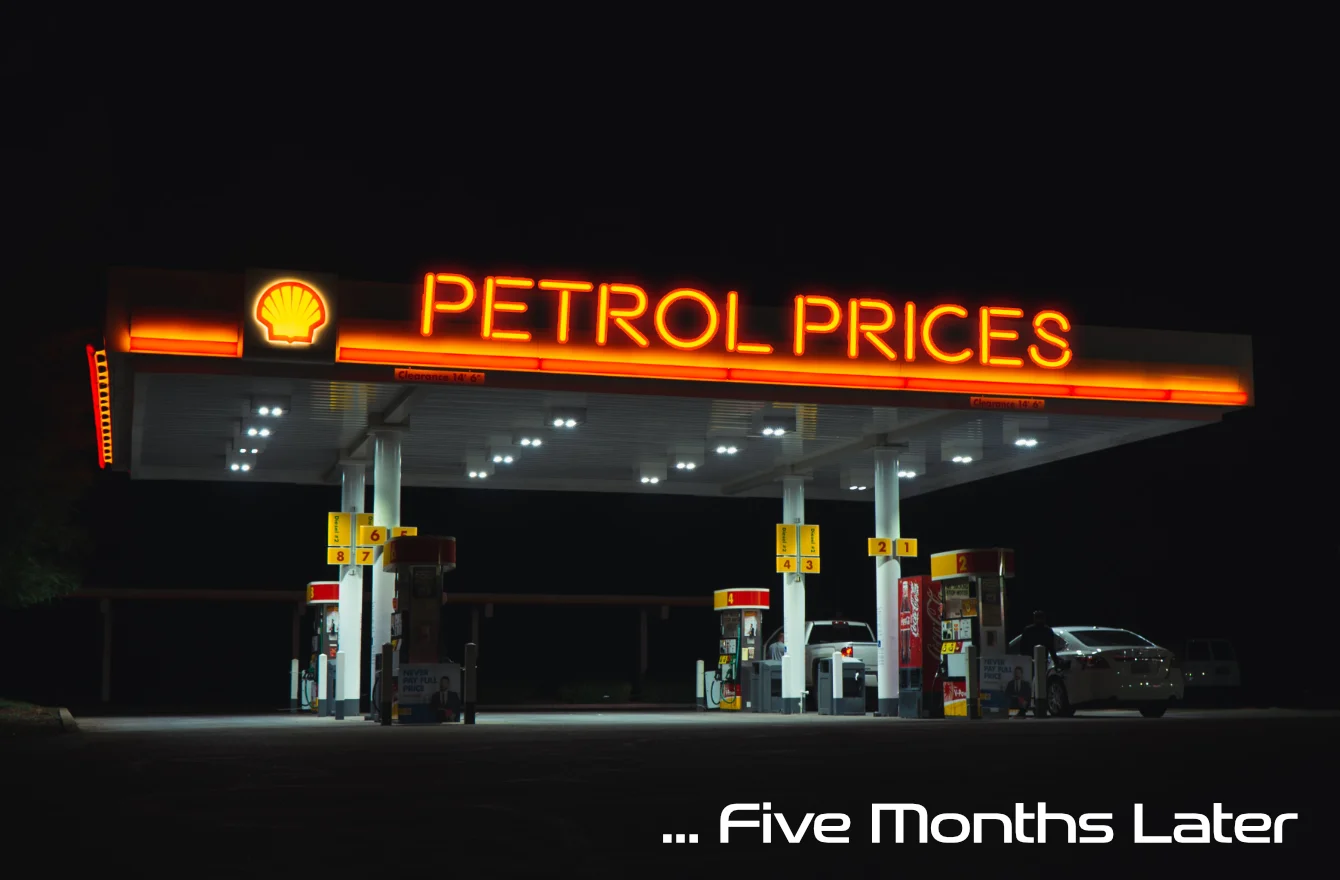

With the cost of oil falling, we decided to take a second look at petrol prices and try to work out why they appear to be reluctant to follow the downward trend.
We tried to work out the costs back in October when a few retailers had set their petrol prices at 10p litre cheaper than other petrol stations – You can read that story here – Petrol Prices October 2022.
Our rough-and-ready calculation goes like this: The price of a barrel of West Texas Crude Oil – as I write this – is $75.67 USD, and one British Pound will buy you $1.23 USD.
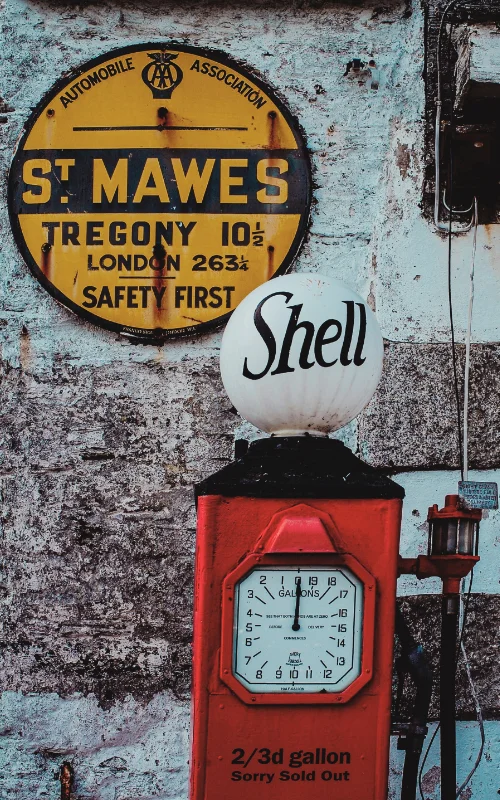 Oil is cheaper, and the number of British Pounds we have to exchange for the required number of US Dollars to buy the oil is also less, thanks to a stronger British Pound. This is all good news for petrol prices or should be.
If a barrel of oil in October 2022 costs $84.92, or £75 using the exchange rate back then, and today (April ’23), that same barrel of oil costs £61.59 ($75.67 divided by $1.23), we have a drop of around 18% in the cost of a barrel of oil.
If oil costs 18% less, then it makes some sort of sense that in the five months between the two sets of figures, petrol prices should have dropped by a similar amount.
If the average pump price for petrol in October ’22 was £1.65 and I subtract the 18% drop in oil prices, I get £1.35, while according to the RAC Foundation, the same source I used last time, the average price at the pump today is £1.46 per litre.
Meanwhile, the wholesale cost of petrol, to which I’ve added fuel duty and VAT as the quoted price often excludes it, has only fallen from £1.44 to £1.34, which, if oil prices are down 18%, should perhaps be closer to £1.19 according to my simple calculations, giving us a pump price of £1.32 … I can only dream.
Don’t Blame Retailers
It is worth pointing out that back in October ‘22, the difference between the wholesale and retail prices suggested that retailers, on average, were making 23p per litre. That has now fallen to around 13p per litre, so it isn’t all their fault.
With increased fuel sales, retailers can make less per litre, cover their costs and still make a decent profit. If that is true, then thank you, retailers, for being stand-up guys.
The pump price for fuel appears to be caused by the wholesale price at the refinery gate not dropping in line with crude oil.
There will always be a cost to producing petrol. Even if oil were free, running a refinery and transporting the petrol to the petrol stations for resale would still cost money.
If challenged, I’m sure the oil companies would tell me that they have cut costs to the bone, and this is how much it costs to produce petrol.
Bigger Profits
 So, who isn’t playing along with falling prices? Of course, it would be easy to write “Big Oil” and rant about corporate greed, and perhaps all of that is true.
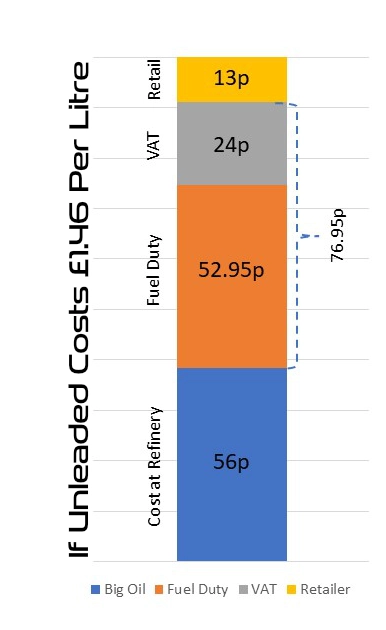
Perhaps I can blame the Government, which lowered the duty they charged on petrol in February ’23 by 5p per litre while still charging 52.95 pence in fuel duty for each litre of petrol.
Add VAT and fuel duty together, and at £1.46 per litre, the Government gets 76.95 pence for every litre of petrol sold in the UK as VAT is added to the pump price, not the wholesale price. Yes, we pay VAT on the fuel duty the Government charges. Tax on a tax. Nice.
Add it all together, and if the average retail price is £1.46, then the VAT is 24p, the fuel duty is 52.95p, the retailer is making 13p, and Big Oil is charging 56 pence for a litre of petrol from the refinery.
At least I know why it costs £24 to fill the Ducati. But it is still worth it. Motorcycling always will be.
Bottom Line
And that is the problem. Filling the tank on my motorcycle once cost less than £20. It rose to £26 in a surge of price increases, and I was outraged. I bitched, moaned and wrote about it. Now I expect to see £23 or £24 every time I fill up.
As I’m now used to paying that much and no longer kick off at the cost, where is the incentive for anyone to lower the price?
Clarity
The old petrol pump image is based on an original work by Photo by Aleks Marinkovic, and the header image is by Bryan P.M. Both are used under license.













One Response
Regional variations don’t make any sense other than big retailers profiteering. Our local Tesco currenntly sells unleaded at £1.41 ltr. Tesco in Stockport, less than 40 miles away is £1.36 ltr. Because they can.
Even Tesco stores just a few miles away are a couple of pence per ltr cheaper.