

GPS Mounts
Another example of motorcycle manufacturers not thinking things through is the official Tracer GPS mount.
The handlebar clamps on the Tracer 9GT are black and secured with polished silver hex head bolts. It is an aesthetically pleasing set-up.
The genuine Yamaha GPS mount uses the handlebar clamps as a mounting point, and Yamaha provides spacers and longer bolts to secure the mount. But the bolts are unfinished and ugly.
You could forgive the unfinished bolts if the location of the GPS mount were natural and in your eye line. Unfortunately, if you use this mount, you will be spending a lot of time looking down, away from the road, to read the GPS.
 Finally, the people who designed the Tracer 9 mount must have had a tiny GPS. Mounting a TomTom, Garmin Zumo or a reasonably sized phone in Yamaha’s chosen location would all but block access to the ignition key.
This time the better solution comes from Printed Parts, who you can find on eBay. We have covered this GPS mount before, and you can read about it here.
The Printed Parts GPS mount fits over the screen adjustment clamp and places the GPS or Phone exactly where you want it. And yes, the screen adjuster still works.
For Sale
It isn’t just Yamaha that do this. I still have the GPS mount for a Kawasaki Versys 1000, which also mounted the GPS out of my eye line.
When I look at the intricate design work that goes into something as simple as how a side panel attaches, why manufacturers allow their design masterpieces to be sullied with thoughtless “genuine” accessories is beyond me.
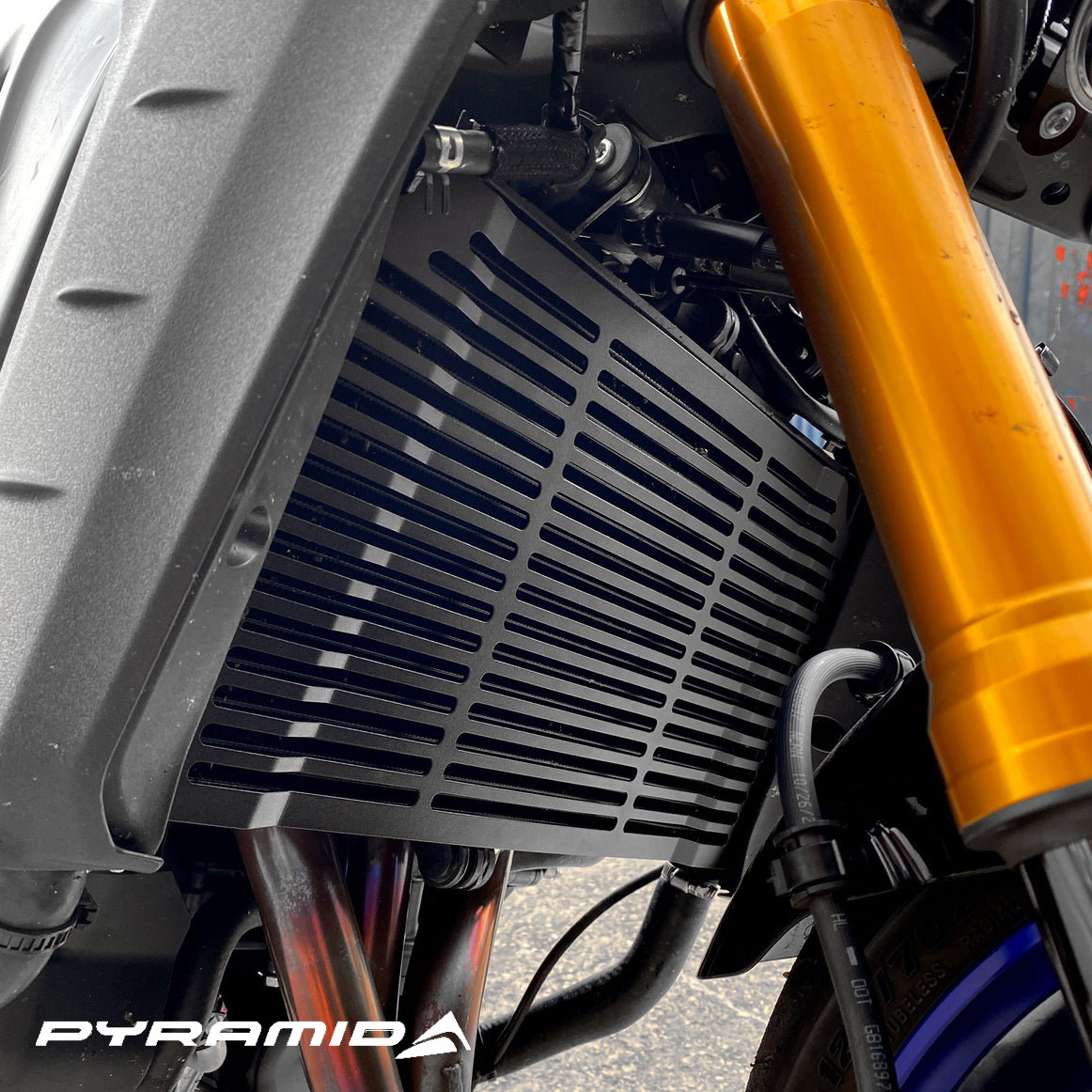
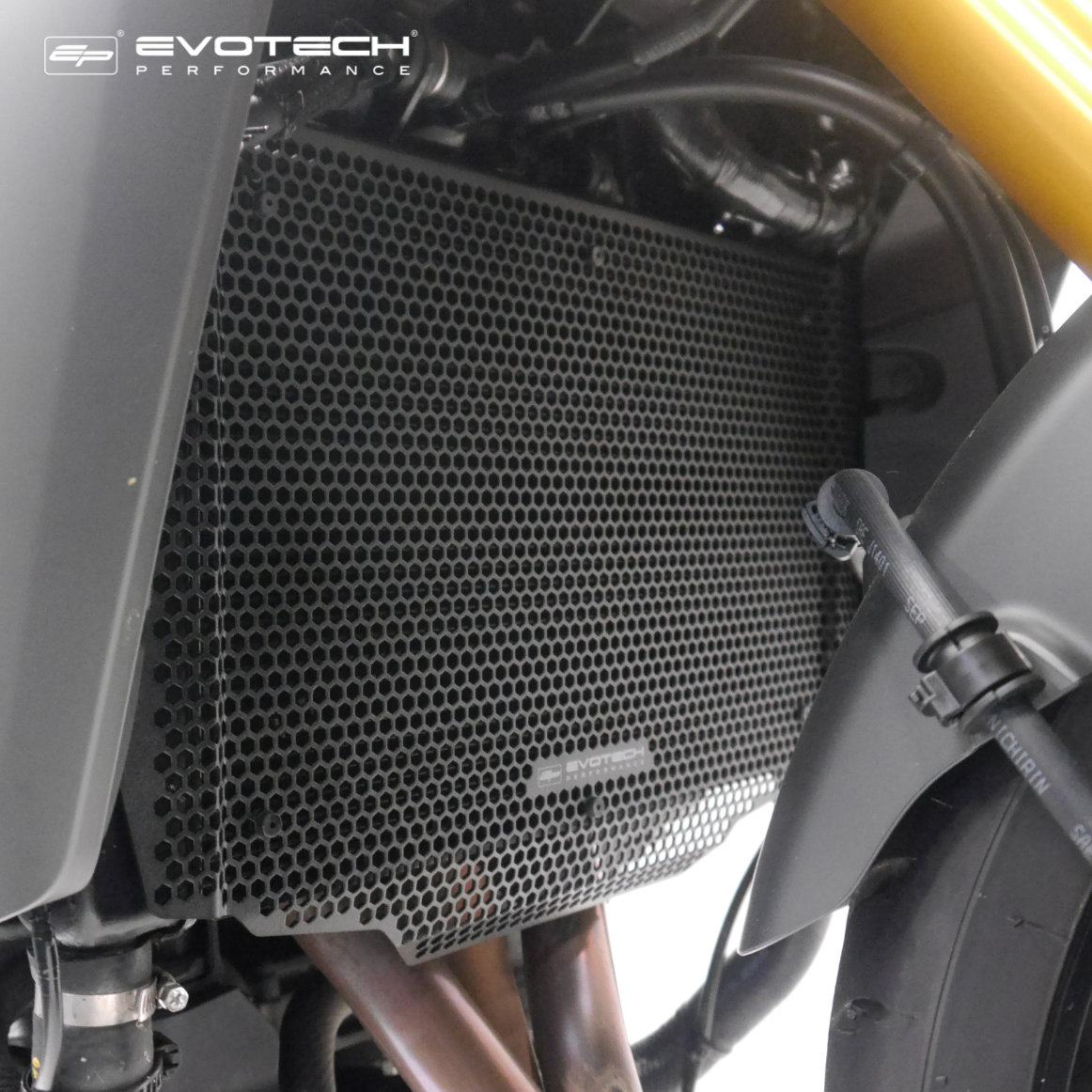
All Yamaha would need to do is appoint someone like Evotech Performance or Pyramid Plastics as the supplier of their accessories, and they will get a much better solution at a lower cost.
Meanwhile, email the editor if anyone can use a genuine Yamaha GPS mount and radiator guard for a 2021 Tracer 9 / 9GT. But why you would want to use these travesties of motorcycle design on your beloved Tracer 9, would be lost on me.