


It is cold and dark more often than it is light. The dark, damp and soggy days are upon us, and some of our beloved motorcycles are parked up, waiting for the warmer days to return.
ACF50, FS365 and a liberal coating of WD40 are helping to keep our loved ones from corroding, but how can we prevent winter skill fade from eating into our riding skills when our road miles are significantly reduced?
If in doubt, ask a professional. Although Neil’s immediate response was, “Who is that then?”.
Jewell Bike Training
Neil Jewell is a motorcycling instructor of some renown with more qualifications from RoSPA and the IAM than most. Just as significant, though, is the ability to impart that knowledge to others, and for that, Neil can point to a Certificate in Education (Cert. Ed).
Having asked Neil for input on an article about reducing motorcycling skill fade over winter, I expected a couple of paragraph suggestions. What I received back … well, you best get a mug of tea. It is fascinating stuff.

Winter Skill Fade
Those immortal words, “Winter is Coming”, are ringing out crisp and clear from our favourite motorcycle media outlets, and many of us choose to hibernate the bike over the winter months.
It’s that age-old balance between want and need. Do you want to ride? Vs Do you need to ride? For some, there is no choice. Others, without the need, choose not to ride and then there are those who are just crazy enough to ride through winter because … well … who knows. Maybe it is simply because they can.
Parking Up
As you ride your bike into its cosy winter accommodation for the last time for what will be a few months, you are on your game. Those amazing summer miles will have dialled in all of your motorcycling senses.
Once the salt and grime have been washed off the roads by the April showers, and you venture out into the sunlight, you will not be as sharp as you were. That time off the bike will have caused skill fade.
There is a genuine danger here if you do not recognize that skill fade is a thing. Your sense of speed, gaps, grip, grunt, anticipation & judgement have all taken a winter break, and you will need to work at getting them back on point.
You can try the shock and awe approach of bringing your skills back to life. You just need to hope that before your senses and skills recover, nothing tests your dulled abilities.
Slowing Skill Fade
Parking the bike up, covering it in a dust sheet and simply forgetting about its existence is the worst-case scenario. Staying engaged is one way of keeping the motorcycling neurons firing.
Sit on your bike: Yes, really. Take a mug of tea to the garage each week and spend some time with the one you love. Muscle memory, as it is commonly called, is a real thing. Memories of rides use many of the same mental pathways as the actual ride itself, which is why racers visualize laps. They are honing their skills.
[If you would like to know more about Process and Outcome visualization, then drop Neil an email. It is a fascinating subject – Ed.]
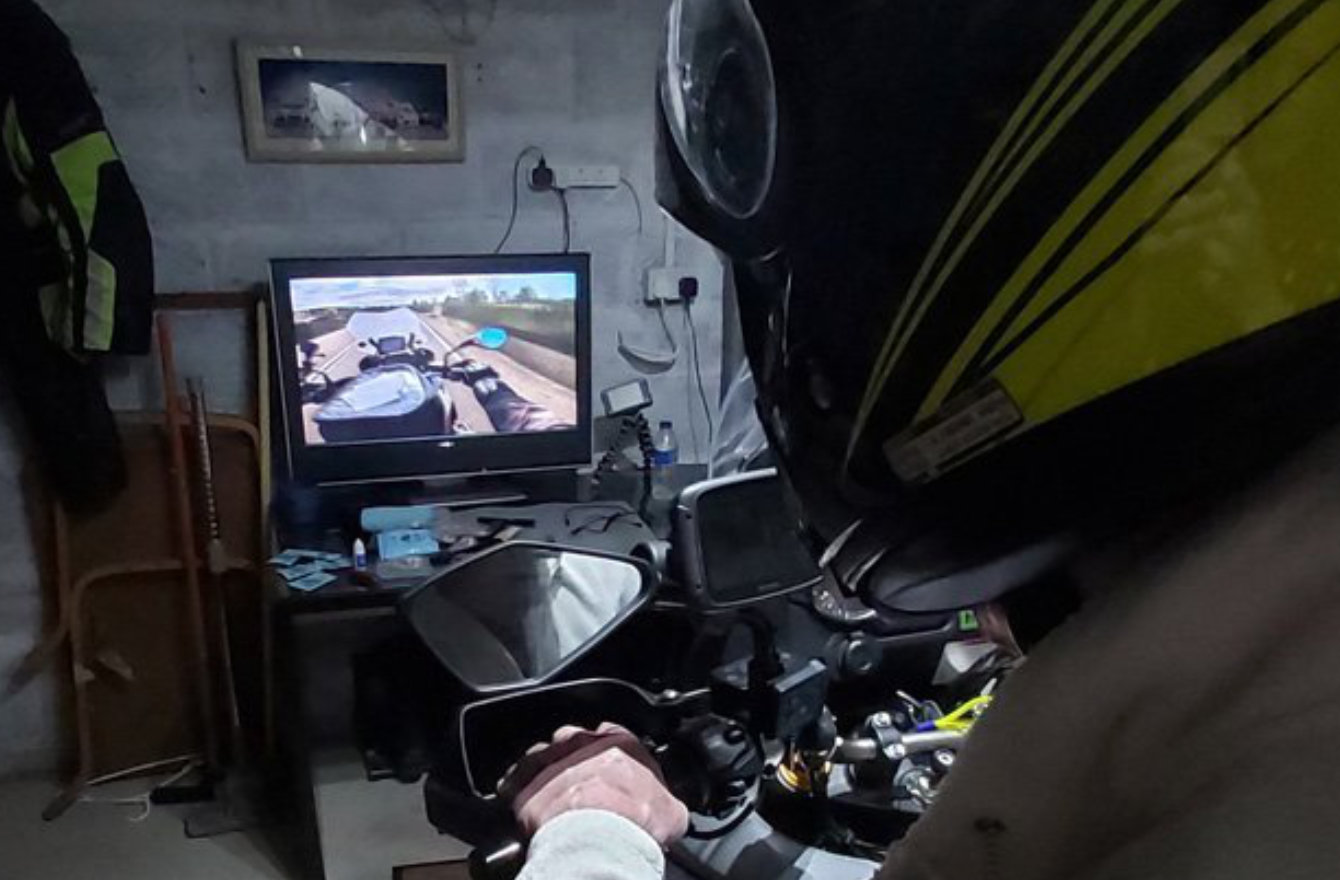
Watch videos of rides: There are many, many hours of rides on the internet. Subscribe to a rider that rides a bit like you and watch them. Turn the sound off if they are talking drivel and start reading the road. Look for hazards, clues, turn in points, camber changes, signage – all the things you were doing in summer without thinking about it. Although doing this in the garage with your helmet on is perhaps taking it too far.
Use computer games: Finally, a genuine reason to play Mario Kart, MotoGP or alike. You are looking for a game with unfamiliar tracks so that you can hone your road reading skills. And yes, even Mario Kart works for this. Look for the vanishing points. Are they opening up, or are they closing in? Avoid tracks you are familiar with as the objective is to keep the skill of reading the limit point sharp.
Talk to your mates: We ride bikes because we love them, we also love our mates. We miss them when we don’t see them at the local bike meet. Call them up, chat about the crap you’d normally chat about, make plans. Check-in on them. Plan a visit or a meetup. You don’t have to take the bike. Keeping your riding mates close during the winter months has many benefits, and chatting about bikes is good for the motorcycling neurons. Get a discussion going about tyres, gloves, overtaking, anything to get you talking and thinking about how you ride.
Polish the bike: Take the time to really get hands-on with your bike, remove all the panels, get in behind places that ACF50 can’t. Biking was your downtime, and you still need that. Use the peace and tranquillity that a tube of Autosol offers and try to remember where that stone chip came from or that time where you were awesome because remembering and recalling rides keeps us sharp.
Winter Riding
There are dry winter days when the sun will make a short but welcomed appearance. Having curbed your enthusiasm long enough to give the bike a solid once over before riding, there are a few other things to consider.
Cold saps concentration: If you are cold, admit it to yourself. Pressing on while not being able to feel your fingers and toes isn’t great, especially when you need to use the controls. Cold fingers move as if they are in a bucket of treacle, which is terrible when you need to use them quickly. [Did someone mention Keis heated gloves? – Ed.]

Micro Climates exist: I’m not talking about the stories of it always drizzling in Manchester or continuous rain in Wales. This is about how small sections of the road can be affected by shadow, especially in winter. If there is a danger of ice, bridges can be colder than the road because air flows under and over them. Damp patches of road that are in shadow may still conceal ice patches.
The low winter sun: Check your shadow. If you can see the shadow of your bike stretching away directly in front of you, then you can bet that oncoming drivers are being dazzled. Watch for cars pulling out at junctions that may be blinded. You’ve heard of fighter pilots coming out of the sun to surprise their enemy, and this is exactly what you could be doing to a car driver.
Use heated kit: Heated Grips or gloves are wonderful but consider adding a heated vest. This will keep your core temperature warm. With a warm core your body is less likely to pull the blood away from hands and feet as it tries to keep your vital organs warm and functioning. [Yes, someone did mention Keis Heated Clothing]
Change your riding style: Wet, leafy, cold B roads are not the place to be trail braking. Use the advantage of no leaves in hedges to get a good view around and through corners. Brake progressively before you commit to turning and keep all riding inputs smooth.
If it’s too bad, don’t ride: Take the car. Get a taxi, the bus or call in sick. Ask yourself if that trip is really worth it.
So, whether you ride in winter or not, there are still plenty of motorcycle-related things to be involved with to keep the motorcycle neurons firing. So, if you know you will be having a few months off, consider what you can do to get yourself back to your best.
Money Off
If you would like a session with Neil, you can secure a back to biking skills polishing session by clicking here – Jewell Bike Training.
For an added bonus, if you use Discount Code FOTV20 at checkout before the end of 2021 to get £20 off your session, which you can then arrange for that sunny spring day … whenever it is that it finally appears.
Clarity
Our thanks to Neil Jewell for the majority of the content in this article. Neil – IAM Master with Distinction and RoSPA Gold (x2) – rides around 20,000 miles a year in all weathers. When not observing for the IAM or mentoring for RoSPA, Neil can be found track day riding his beloved Kawk-Tank (Kawasaki 1400) and delivering one-to-one road riding training.










2 responses
Some other options:
– If you tracked the ride via GPS, great. If you didn’t, you can still follow your route via Google Maps. You can even look at that tricky corner that you came into too hot, by using Street View.
– Having a journal is a great way to reflect on your own self, but keeping a riding journal is even better. A couple of days after day-rides or tours I love to write essays documenting my experiences, thoughts, observations, ideas. During the downtime it is lovely to read them back.
– Plan you next trip(s). Check the route, look it up via Google Maps (see above), anything that puts you on the bike, mentally.
Some really good points. If you can keep riding