A few weeks back, I bought a 17-year-old Suzuki GSX650F, which has become known as “Screamer”, due to the 12,500 RPM red line.
It took a while to find the rose among all the thorns that were on sale, but after a few weeks scouring the classifieds and a couple of wasted trips, I found an 11,300-mile GSX650F with a good service history and all the paperwork to back up the mileage.
But there are a few things that I can’t find on the service history, such as brake line and brake pad replacements and no record of the clutch fluid being changed.
The paperwork says that the 650F was serviced just 120 miles ago, and since then, it has stood in a dry garage for the best part of a year. The last time it was ridden was to renew the MOT.
And let’s face it, I’m looking for an excuse to take it apart and see if there is anything to be worried about.
The forecast was for rain all day; that was all the excuse I needed.
Tupperware
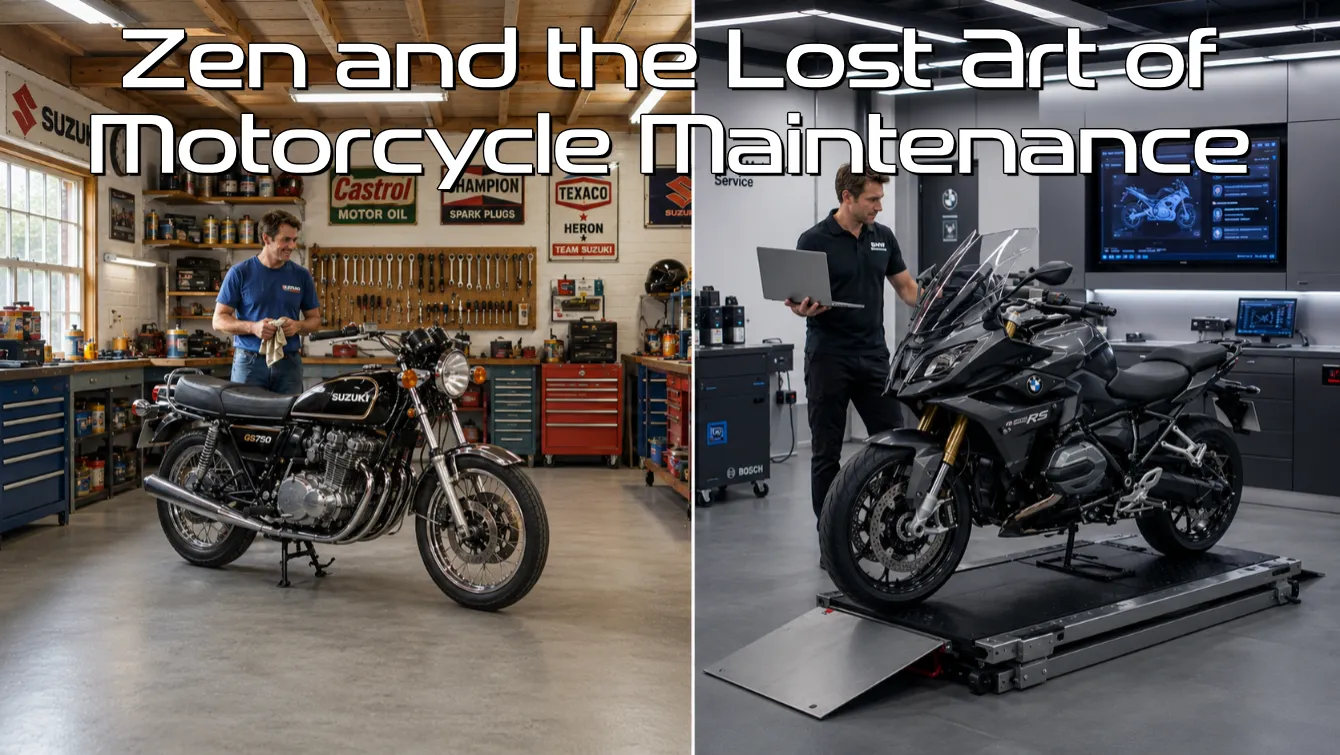
In the last ten years, motorcycles have become complicated to work on. Stripping the lower fairings off the 650F is refreshingly simple, involving five – maybe six – fasteners and a couple of lug mounts on either side.
Compare that to the KTM 1090 I owned, which would have used at least fifteen fasteners and half a dozen interconnecting plastic panels to achieve the same result.
Removing the tank to get to the airbox on the 650F is the same, wonderfully simple solution. Two bolts secure the tank, pull back, lift up and disconnect one electrical connector and three pipes. Job done.
Removing the tank on the Ducati Multistrada 1200S I had was a nightmare unless you had split the hoses and fitted quick-release connectors. After that, it was still a pain, but it was easier.
I appreciate that the KTM and the Ducati are in a different league from the 650F. Still, they are all motorcycles with a fuel tank whose job is to supply fuel to the injection system, under which the manufacturer has put serviceable items.
The Suzuki V-Strom 800DE is perhaps the first modern motorcycle to reverse this trend by making the air filter accessible without the need to remove the tank.

Venhill Brake Lines
According to the GSX650F service schedule, the brake hoses should be replaced every four years. If I go with genuine Suzuki parts, the bill will be well over £150, so that isn’t going to happen.
Thirty seconds later, I’m looking at the Venhill GSX 650 F 2008-2012 ‘RACE’ brake line kit, which uses two lines direct from the master cylinder rather than the bridge over the mudguard. Total cost for the kit … £70
Not only are they half the price and come with new banjo bolts, washers and everything else I need, but they are also stainless steel braided lines that will help sharpen up the 650F brakes, which are a little too soft for me.
The history of Venhill Engineering goes back to 1969 when Chris Ventress and Colin Hill started manufacturing flexible drive cables in their garage. Steel braided hydraulic lines were introduced in 1982 with TUV and DOT approval following a few years later.
Today, every steel-braided line is tested to 1,500 PSI before it leaves the factory, and every 30 days, one line at random is tested to 10,000 PSI. As a reference, the average pressure in a motorcycle braking system is under 50 PSI.
Where Can I Find …
- Venhill Engineering – Steel Braided Brake Lines and Cables
- Motul NGen7 – Regenerated Oil Article
- Motul RBF660 – Not All Brake Fluids are the Same
- Motorcycle Parts Warehouse – Crash Bungs for GSX650F
- Just Bandits – One Stop Shop for Everything Bandit Related
- KayFast – Great Place for Marine Grade Stainless Steel Fasteners
- Pro-Bolt – World Leaders in Fasteners
Fitting
In 2008, ABS was not a requirement on motorcycles, so fitting the Venhill steel braided lines is a simple job. Two lines direct from the master cylinder, following the original route, and then take one to the left and the other to the right calliper.
At least that is what I thought at first. I put everything together finger-tight, but couldn’t get the banjo connectors and the line routing to be smooth. Either the lines were routed neatly and as straight as possible, or the double-length banjo bolt went into the master cylinder cleanly, but not both.
It turned out that all I needed to do was take the master cylinder off the bars and assemble everything, then remount the master cylinder, and everything fell naturally into place.
It also helped that I finally noticed that one of the banjo connectors has less bend than the others. This one goes on at the master cylinder first. I believe the expression is “Doh!”
Getting the Air Out
 Having routed the lines and attached them to the callipers to ensure the lines wouldn’t catch when I moved the bars, I tightened everything up and filled the system with Motul RBF660, inadvertently creating another problem for myself.
By far the worst brake to bleed is the rear brake on a Ducati 1200S because the bleed nipple is at the bottom of the calliper. To do it successfully, the calliper has to come off and be raised above the rear master cylinder with the hose straight.
Removing the air from the Venhill lines was nowhere near as frustrating, but it was necessary to remove the callipers and let the lines hang down, as vertical as possible, before I made any real progress.
Once enough air was out of the system to start the pistons moving, I could bolt everything up and bleed the system as normal, finishing off with a cable tie on the brake lever and leaving it overnight.
Fifty miles to bed the pads in the next morning, followed by a final bleed to remove the few remaining bubbles, and I now have decent brakes on the 650F.
What’s Next
The joy of working on a motorcycle built before designers went crazy is perhaps tempered slightly by the absence of a choice over parts.
I tried AliExpress for a radiator guard and was sent one 2 inches too wide, so I cut my losses, did the sensible thing, and called Just Bandits for one made from stainless steel rather than aluminium, with the added bonus that it fits!
I then spent an hour on the Kayfast website ordering an array of fasteners to replace the tarnished or odd ones I’d found. A source for stainless steel flanged, socket head, button screw with a 3mm shoulder still illudes me. Pro-Bolt is the obvious answer, but I don’t need them in titanium.
I found some crash bungs at Motorcycle Parts Warehouse, which look easy enough to fit, but the radiator appears to need to come off to access one of the frame nuts. I need another rainy day to sort that out.
And last on the list is changing the oil for Motul Ngen7 10w-40, but as the oil the 650F is currently running has only been used for a few hundred miles, I’ll wait until after a visit to Cadwell Park and then send a sample of the old oil for analysis.
What is there not to like about motorcycles?