
What is it that possesses me to attempt to fix neglected motorcycles? Do I have a masochistic streak or something? Raising the dead should be left to mad scientists in horror films.
It is the same every time. No matter how bad it is, it ends up in the back of the van, and when I decide that today is the day to raise the dead, my first reaction is to let out a long, disappointed sigh and wonder what I was thinking.
The GSX‑650F I’m working on — not Screamer, but a distant, and currently feral cousin — had been standing in the open long enough to have developed a crust of aluminium oxide, faded paint and a cataract‑clouded headlight.
What once was a howling banshee now needs a defibrillator and a lot of blind optimism.
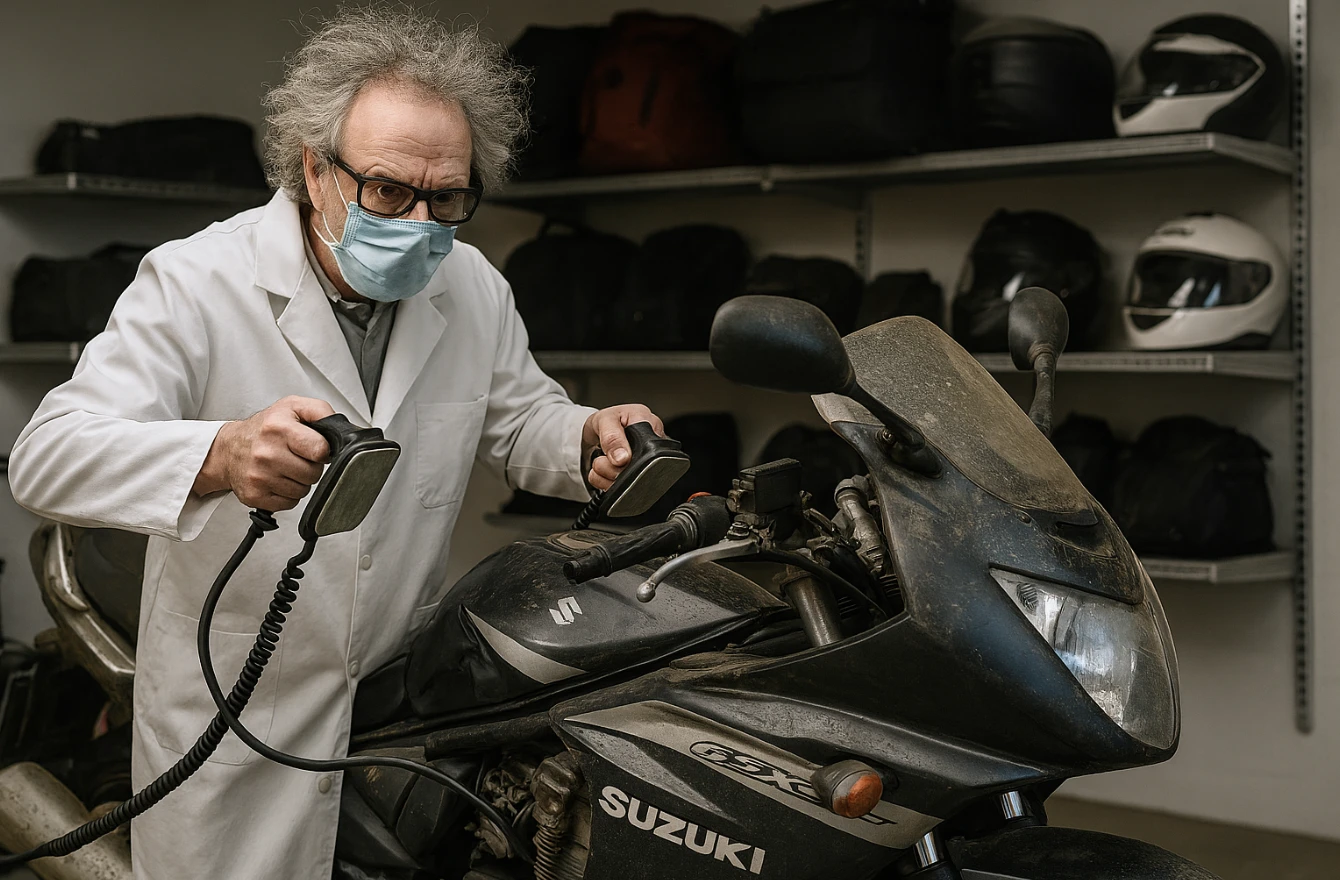
The battery was, of course, flatter than flat. Devoid of volts, amps and any other signs of life. An Optimate and a long time in recovery mode were one option, but I had a spare battery, and so, using some of that blind optimism, in it went.
A click of the ignition key, the dashboard lit up, and the fuel pump whirred. OK, that is a good start … I wonder … surely not … clutch in, press the start button, one cycle and the GSX-650F came to life.
18-month-old petrol. A “Tea Bag” that is known to be clogged, yet the irrepressible 650 four pot burbled into life, on all 4 cylinders. Impressive, and they talk about Honda reliability … Suzuki needs some of that love.
Three Days Later
I’ve spent the last three days coaxing some semblance of life back into a machine that had been quietly decomposing. Three days of twiddling spanners and swearing, and I’m not there yet.
There is no end in sight for the stream of parts and Amazon deliveries at the garage door, as I discover yet another item for the growing list of jobs to do.
But it isn’t all bad news …
Brakes
The brakes were the first to get attention. Or rather, the brakes demanded attention by not existing in any meaningful sense.
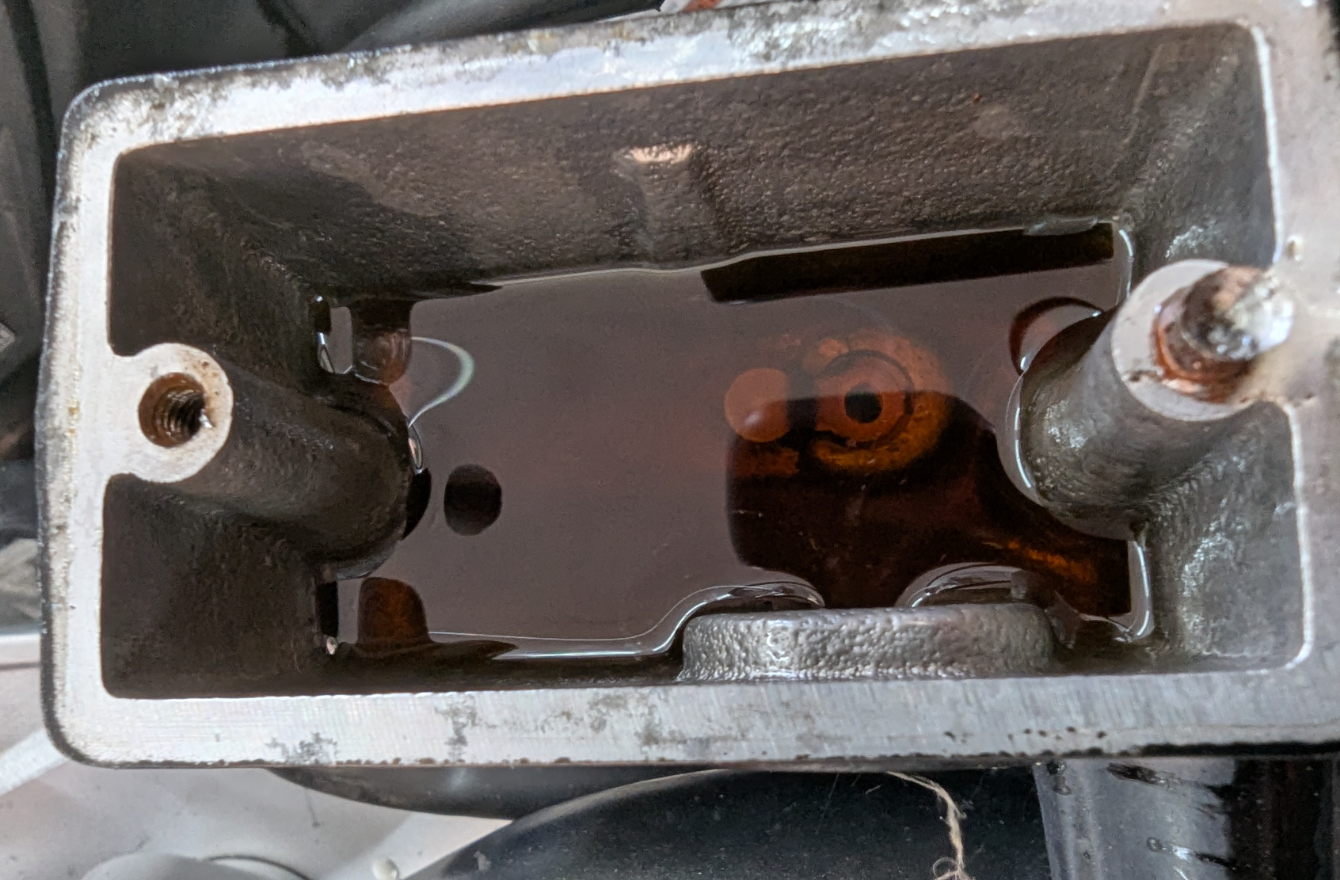
The original lines had all the structural integrity of boiled linguine, so out they went, replaced with Venhill braided lines that gleam with the smug confidence of parts that know they’ll outlive the rest of the bike.
The callipers have been stripped and cleaned, revealing pistons that looked like they’d been living in a swamp. But they eventually cleaned up after enough scrubbing to qualify as an exfoliation treatment.
The callipers still look tired, but they work better than when they left the factory, thanks in part to Motul RBF 660 racing brake fluid and Venhill brake lines that don’t balloon when you grab a large handful of stop.
Bar End Weights
Often, the problems that need the most ingenuity are not the issues you can see – wait until I tell you about the engine paint – it is the things that are hidden.
One of the bar end weights was loose, so I decided to remove it to get a better idea of what was going on. Simple enough, until I discovered that the screw rotates and does little else. Time to apply a little outward pressure to see if I can get the thread to catch, and the whole thing came out.
A 4mm-thick wrapping of insulation tape around the screw was what had been holding the screw in place, but that was only half the problem, as along with the screw came the remains of the tube into which the screw fits … bollards.
Inspiration comes in many forms, and while hunting through the drawers and cupboards in the garage looking for ideas, I happened upon a box of expanding dry‑wall fixings.
I stared at them for a long moment, wondering if this was divine intervention or stupidity, but with a little lateral thinking, the factory M6 screw went into the expanding fixing, and as I tightened the screw, the fixing expanded and locked inside the bars.
Better than factory … sort of.
The Parts Bin
One of the “fun” parts of restoring life to the mechanically inert is parts shopping. The 650F is 18 years old and was discontinued in 2015. Parts are available, but shopping is required.
| Part | Supplier Links | Cost |
|---|---|---|
| Fork Seals and Clips | MSP – Netherlands | £42.20 |
| 10w40 Fully Synthetic | Westway Oils | £32.99 |
| Oil & Air Filter | SportsBikeShop | £20.98 |
| Fork Oil (Castrol 10W) | SportsBikeShop | £13.72 |
| Braided Brake Lines (Front) | Venhill | £69.92 |
| Braided Brake Line (Rear) | Venhill | £35.90 |
| Motul RBF660 Brake Fluid | SportsBikeShop | £14.99 |
| ATOM ATX9-BS(Gel) Battery | Motorcycle Parts Warehouse | £28.00 |
| Fuel System T-Bag | Ebay | £4.97 |
| Fuel Pump O-Ring | Ebay | £10.75 |
| Bulldog BDX | MDS Europe | £12.99 |
| Swear Jar | Snr Management | £164.50 |
Plus that array of stuff that accumulates in the garage over the years … Priceless.
Fork Seals
The forks were next. Stripped, cleaned, and reassembled with new oil seals. The manual says each leg should contain 460ml of fork oil. I drained 200ml from each. Two hundred. That’s not fork oil, that’s a polite suggestion. As I was fitting genuine Suzuki seals, I noticed they were subtly different from the ones that came out, so someone cut a few corners the last time.
The rebuild process is simple enough, unless it is an eejit (me) who is working on them. Fully reassembled and back in the bike, one fork leg is longer than the other.
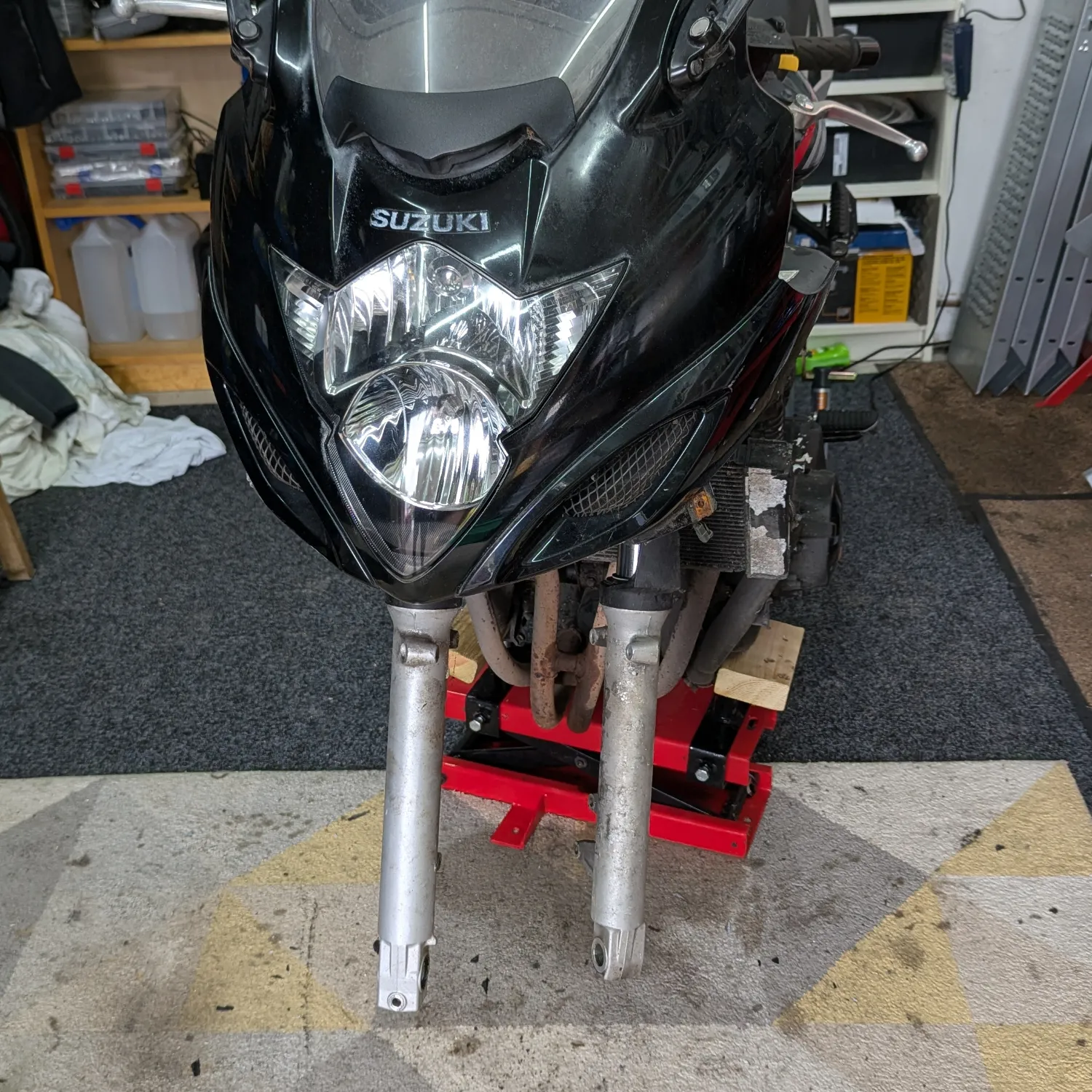
Now you have to admit that takes talent. Take a succession of parts that fit inside each other and assemble them so that one is longer than the other. Now the question is, which one is wrong, and which one is right? Of course, it isn’t the one that I stripped down first. Oh no.
What I’d done was put the bottom of the stroke spring in the wrong place. The damper rod was long enough to reach the retaining screw, which is why everything looked fine when I put it together.
Several rebuilds later, and having covered everything in 10w fork oil, the front end was reassembled, and I only had to replace one of the mudguard bolts, as yes, it decided that breaking off was easier than being separated from the retaining bracket.
Seized Bolts
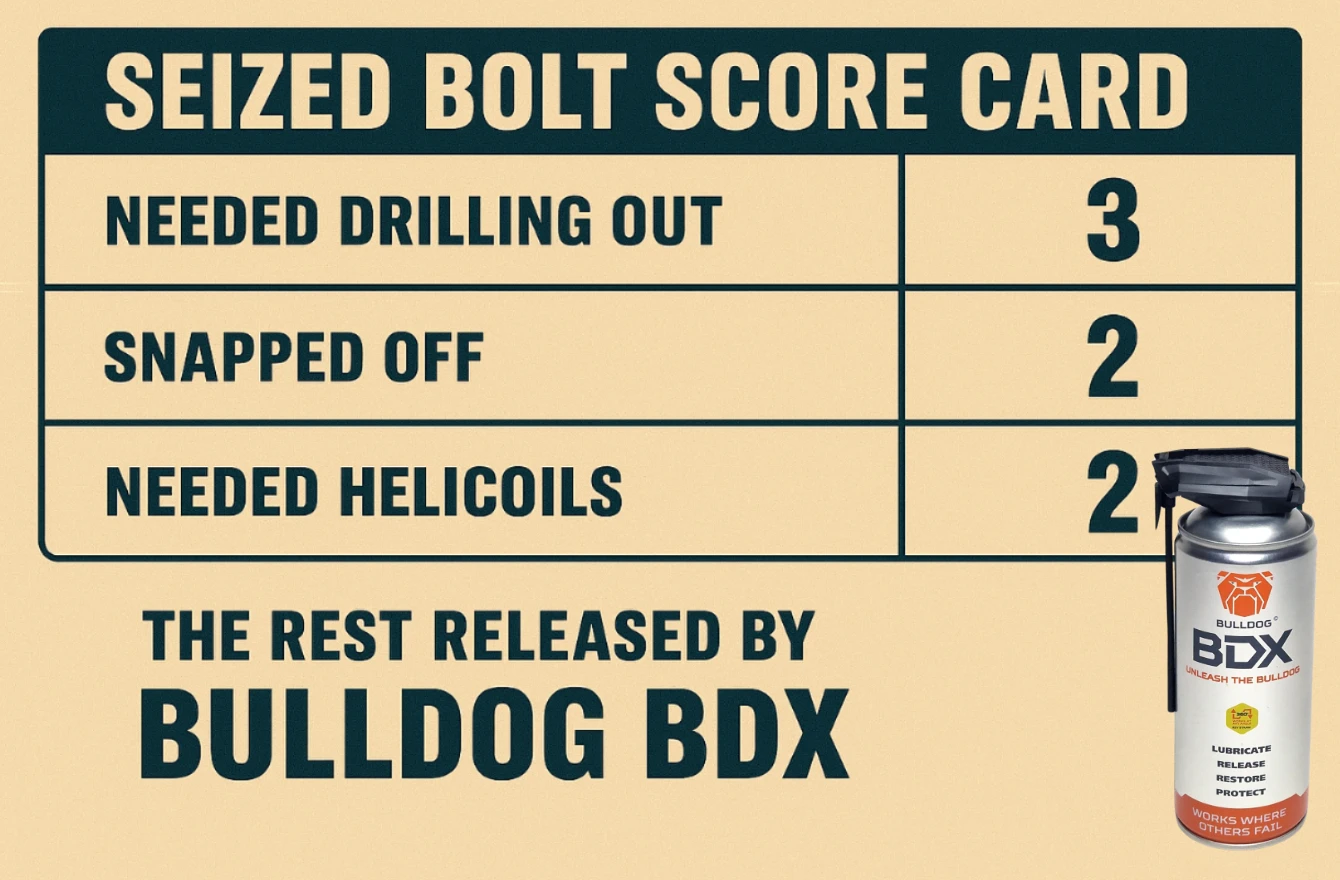
Ah, yes — the bolts. Every resurrection story has its villains, and a collection of the usual suspects, corroded, stubborn, or determined to die before they loosen.
Some snapped clean off, choosing martyrdom over cooperation. Others stripped their threads in a final act of spite. A few, after a long soak in BDX, finally surrendered, which of course I had to mock, in a fit of childish behaviour.
If I ever get caught, asking a bolt, “Whose ya Daddy now?” … well, best not say more.
The heads gave way on a few, leaving the drill as the only option. The delicate surgery of removing the head of the bolt so the cover comes off, followed by fevered abuse of the bit left sticking out.
Rattle Can Black
The aluminium surfaces were another story. Corrosion everywhere, the kind that blooms like a fungal infection. And then — the pièce de résistance — someone had sprayed the entire engine black.
Not a tasteful black. Not a heat‑resistant, carefully applied black. No. This was “I found a can in the garage and got bored” black.
A 2008 engine should be silver, but this one looked like it had been dipped in treacle and left to dry in a sandstorm. Naturally, the paint is now flaking off in sheets, thanks to the aluminium oxide bubbling up from underneath.
Oxide on plain aluminium, I can deal with using Autosolv and a toothbrush, but when it comes to removing what is left of the paint, what’s the best way to remove badly applied rattle‑can paint from aluminium without taking half the metal with it?
- Chemical stripper – Not my favourite idea, there are hoses and wires to worry about.
- Soda blasting – The stuff they use for restoring the clarity of headlights, perhaps.
- Angry thoughts and wire wool – I do hope not?
- Suggestions welcomed in the comments, please.
Tea Bagging
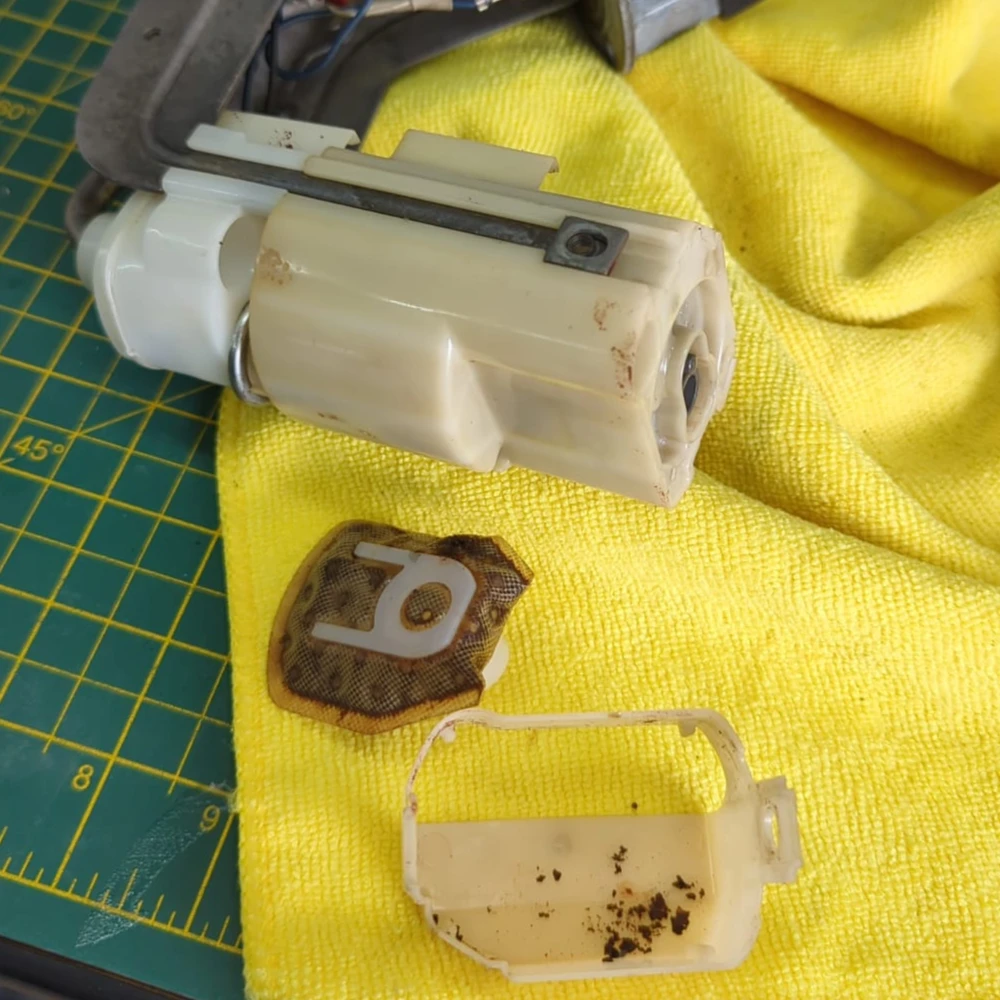
Then came the fuel system. The tank itself wasn’t too bad, but the fuel filter — the infamous Suzuki “tea bag” — was full of a substance that can only be described as a bio-hazard. Debris, flakes of rust, and primaeval goop.
Getting the fuel pump out of the tank is more fiddly than difficult. Putting it back in requires a fanatical dedication to the task, several mugs of tea and chanting “if only they made this hole bigger” several thousand times.
Mystery Machine
And then there’s the odometer. It shows just 8,500 miles, which is… odd. Very odd.
To spray the engine completely black, it must have been out of the frame. Yet the fairings still have all their original padding, untouched, unmolested, as if the bike had never been apart.
The engine colour was a choice, as several other parts of the bike have also been badly sprayed blacker than the soul of a traffic warden having a bad day.
There are also signs of a previous “tart up” too. Silver overspray on the back of the mudguard. Looks like someone tarted up the lower triple clamp.
It will remain a mystery. Every resurrected bike has at least one. A secret it refuses to share. A whisper of its past life that stays locked behind the odometer glass.
Raising the Dead
There’s still more to do, of course. There always is. Raising the dead isn’t a quick job. It’s not a Hollywood montage where you tighten a bolt, wipe your brow, and suddenly the Job’s a good ’un and the triumphant music plays.
No. It’s a slow, patient, occasionally (very) sweary process. You coax. You persuade. You undo the sins of previous owners and create sins of your own for others to wonder about in years to come. You question your life choices and are thankful for tea by the mugful.
Somewhere along the line, the project bike changes from being known as “that fecking thing” to having a name. I’m not there yet, but the fact that I’m thinking about it is a positive sign.
Until then, pass the BDX.