What’s The Point?
Sitting with Neil in the paddock at lunchtime, enjoying a sausage sandwich courtesy of a gentleman we christened Merlin due to his ability to make things appear, I had to ask the question. Well, two questions, really – Why a CB500, and why cover it in (fireproof) fur?
The answer to why a CB500 turned out to be because it was cheap and as it was originally a winter garage project to be sold in the spring, which bike it was, wasn’t important.
As to the fur, apparently, Neil has a history with fur. There is a step-through scooter somewhere, complete with fur and fake horns, that is another of Neil’s creations – The GruffaloScoot.
In the face of such evidence, I decided to skip over any fur-related questions and start talking about lap times.
Cadwell Park Lap Times
 Asking someone how they do something is usually a wasted question. When a skill comes naturally to someone, they usually can’t explain how they do it. To them, it is as natural as breathing.
On the other hand, if the person you are talking to is a qualified lecturer, then explaining why things happen is another of their skills.
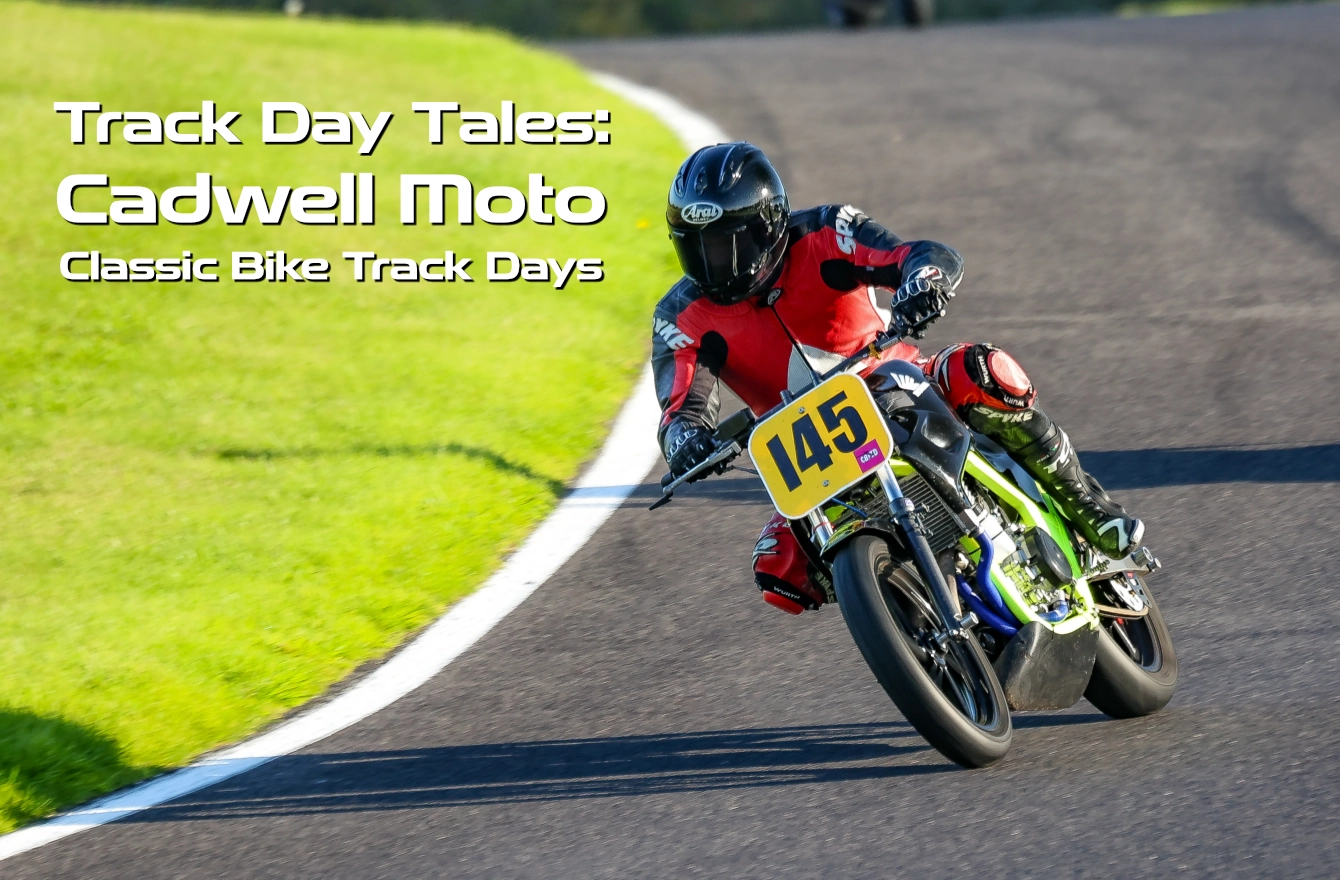
As explaining things (Teaching) was Neil’s career before motorcycle training, I decided to take advantage of his abilities. Under the guise of buying Neil a mug of tea, we wandered off to watch one of the other groups riding Cadwell Park’s infamous Hall Bends.
Neil’s primary observation is the lack of active counter-steering. We all counter-steer as it is an inherent part of making a motorcycle go where we want, but commanding a rapid change in direction through counter-steering is different.
While editing the video, I noticed the difference between Neil’s speed when following other riders on more powerful motorcycles and when Neil can do his own thing on a bike with just 45BHP.
Three Seconds
In the section of Cadwell Park from the chicane as you approach the Mountain to the Hairpin after Hall Bends, there are three seconds to be found through a more positive approach to counter steering.
The timing on the video is from 1:40 to 2:18 when following others and from 3:48 to 4:23 when given an empty track. The roll rate that the CB500 can be encouraged to deliver is impressive.
Changing direction faster allows you to enter the corner later, so you are upright and, on the throttle, longer … evidently. The technique is easily explained and simple to demonstrate – if you are Neil, that is.
And, if you are interested in how this applies to road riding, get in touch with Neil at Jewell Bike Training. His regular ride is a Kawasaki GTR 1400, thankfully without fur.
Acknowledgement
The photo used at the top of this article was taken by Peter Wileman and is used here with his permission.
Peter covers the majority of the No Limits Track Days in the UK and Europe. You can view his work from Cadwell Park and other tracks here.