The BSA Gold Star is an icon, and the modern version is an enigma. The performance figures are almost identical to the original, but the modern Gold Star is exquisitely built, liquid-cooled, starts at the touch of a button, and doesn’t leak oil, petrol, or any other fluids.
BSA has taken seventy-plus years of motorcycle development and arrived back at the starting point.
All of which begs the question: Why?
BSA Gold Star – Origins
The Birmingham Small Arms Company Ltd, BSA, was founded in 1861 and, as the name suggests, manufactured firearms. In truth, they manufactured all kinds of machinery, as well as weapons, but the company’s original purpose gave it its name.
The motorcycle division was established in 1903, and the first motorcycle followed in 1910. Between then and the 1950s, BSA produced munitions, bicycles, and cars (Daimler) and even investigated aircraft manufacturing.
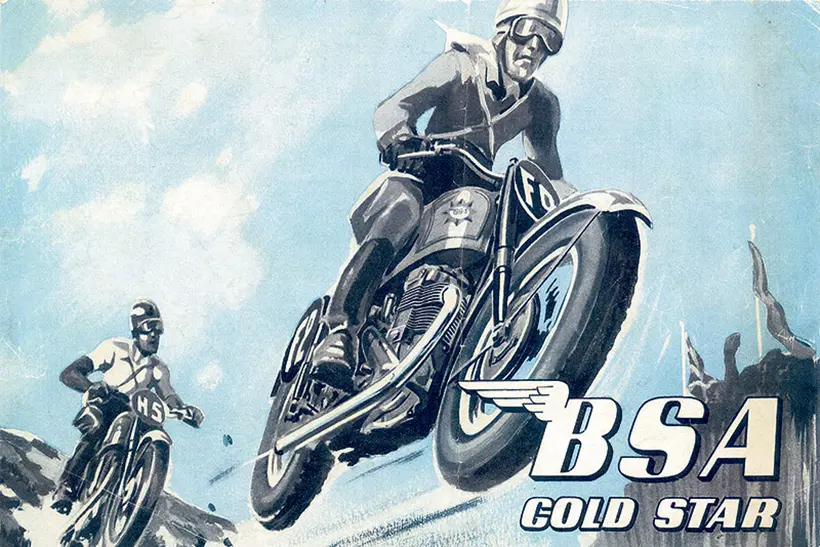
Following the purchase of Triumph Engineering, BSA Motorcycles was created as a standalone company in 1953. At that time, they accounted for one in every four motorcycles sold worldwide.
And the Gold Star name … This goes back to 1937 when Wal Handley won a race at Brooklands on a BSA Empire Star with a lap in excess of 100 mph (107.5). For his achievement, he was awarded the Brooklands Gold Star.
The End and the Beginning
Come 1963, some say BSA management spat the dummy after an argument with an American distributor, while the more accepted version is that Lucas stopped making the magneto the single-cylinder Gold Star used. Either way, in 1963, the last Gold Star rolled off the production line.
It turned out to be the start of the end. By 1973, BSA motorcycles were trading at a loss, and production suddenly stopped in the summer of that year.
For the next 43 years, not much happened. Then, in October 2016, Classic Legends Pvt. Ltd. – a division of the Indian giant Mahindra – acquired the rights to the Gold Star and set about reproducing the iconic motorcycle for the 21st Century.

The All New BSA Gold Star
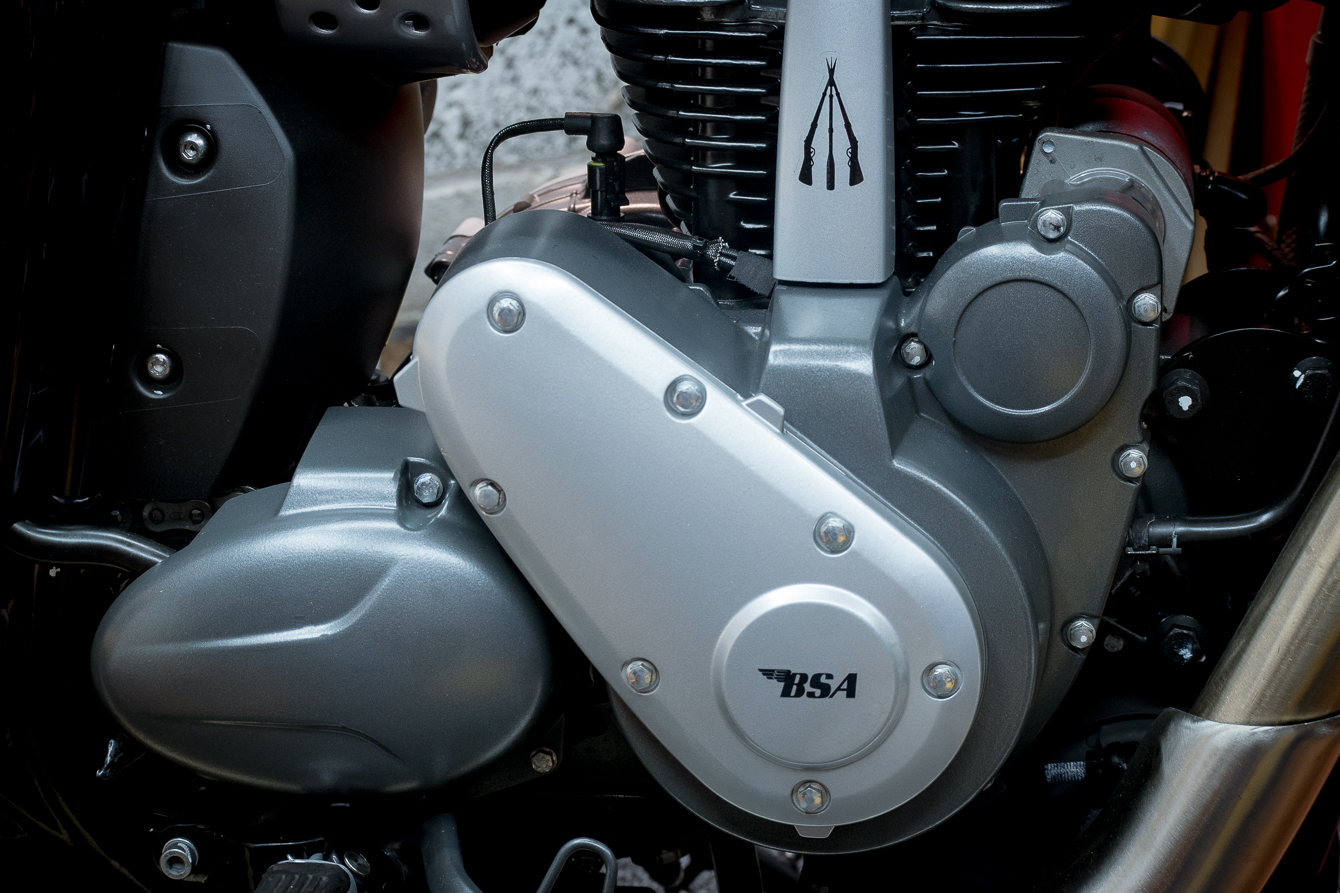
Modern electrics, a cleverly designed exhaust that looks like the original but includes a catalytic converter, Brembo brakes with ABS, and a cover for the final drive sprocket—on the right, naturally—that at first glance looks like a pre-unit gearbox.
The engine, whose origins can be traced to Rotax and the BMW F650GS, is liquid-cooled, yet the cylinder and head retain cooling fins. Even the fuel injection components are cleverly hidden behind a 1950s-style airbox shroud.
Superb design touches are everywhere, and in them, I think I found the answer to the question, “Why?”
If you could perfect an icon, what would it look like? That, I think, is the question BSA asked their engineers.
Why build yet another 200 BHP tyre-shredding missile – that is all too easy. What’s the point of loading the motorcycle with every possible rider aid and electronic wizardry? It’s been done.
If you want a real challenge, rebuild an icon from 60 years ago. Recreate the riding experience without losing any emotional engagement, and while doing that, remove the flaws that were once considered acceptable.
That is WHY.
And the price? In 1960, a BSA Gold Star DBD34 would have cost approximately £280. Convert that figure to 2024 money, and you get £6,500, which – perhaps not surprisingly – is the cost of a modern BSA Gold Star – if you ignore the generous £1,000 off summer deal that is currently running (September ’24).
First Impressions
At 210kgs, ready to ride, my first impression of the Gold Star was how small it felt. It isn’t, but neither is there any wasted space.
I can comfortably wrap my six-foot, soggy-in-the-middle frame onto the bike. Everything falls naturally to hand – or foot – although it is a little strange to be able to flat foot on both sides and then stand up.
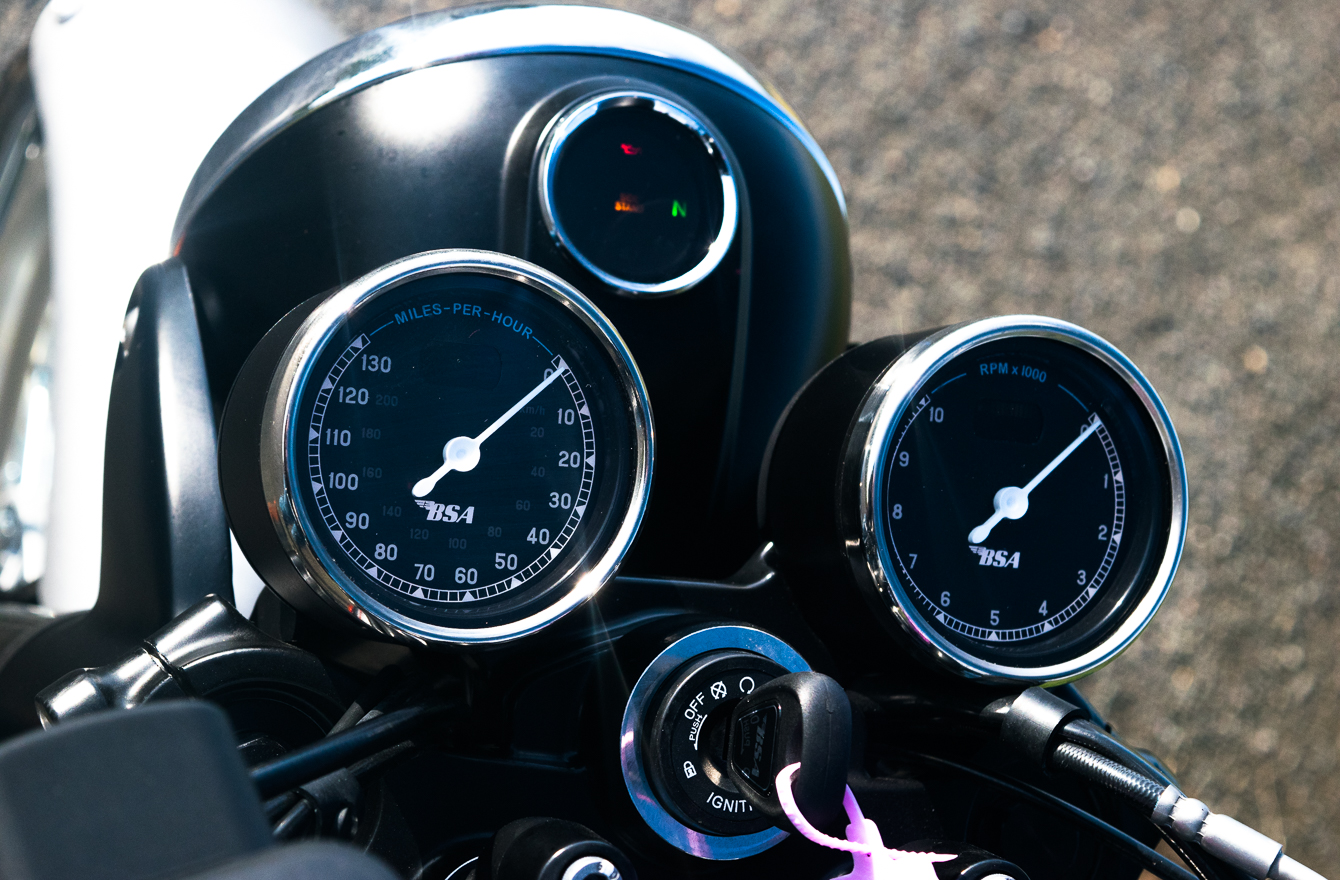
The layout is minimal. A single annunciator panel—an inch in diameter—is installed in the headlight and visible between the “clocks.” The switch gear is uncomplicated, and all of the buttons are in their usual places.
There are no menus to scroll through, no automatic indicators or cruise control to configure. The switches let you go, stop, turn and sound the horn. Anything else is superfluous.
 The discreet USB pod over the left-hand switchgear is a welcome concession to modern-day motorcycling.
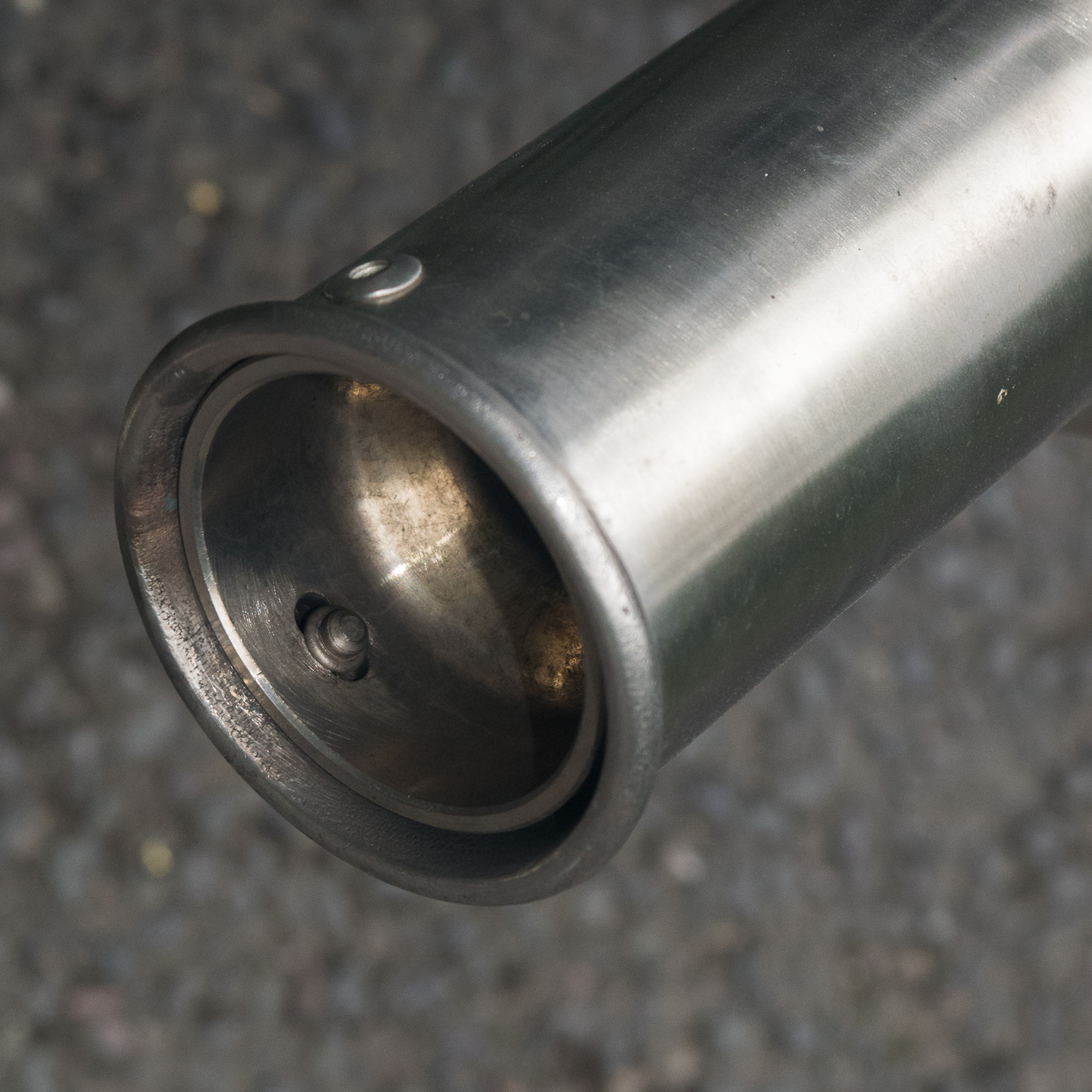
One not-so-welcome concession is the exhaust note. For a 650cc single, it is much too muted, almost strangled. An emotional part of the ride would be a deep-throated resonance growling from the exhaust.
But such things are no longer allowed, so don’t even consider replacing the easily accessible pop rivets that retain the baffle in the exhaust end can with self-tappers. That would be naughty.
The Ride
Engaging the lightweight clutch and snicking first gear, my experience of life at 45hp begins, and it is an engaging trip.
The weight of the Gold Star, the low saddle height and the tyre sizes pull me in and encourage me to throw it into the roundabout at the end of my road.
There is a hint of understeer, and considering I’ve travelled only half a mile, I’m reminded that getting to know the bike would be a good idea regardless of how easy and welcoming it feels to ride.
We often use a 100-mile loop when road testing. It is mostly B roads with a few quieter arterial roads mixed in. I head off through the woods and start developing an understanding of the Gold Star.
Suspension
The twin rear shocks have five preload positions, and I’ve opted for the middle setting. The ride is firm. Just as I’m considering my choice of suspension setting, a patchwork section of the road appears, and as I suspected, I get rattled and bumped.
Despite this, the Gold Star tracks true. The ride isn’t the most comfortable on the uneven sections, but the bike goes where I point it and doesn’t need correcting. It is just a rough ride.
A quick internet search reveals several options for replacement rear shocks. Obviously, I’m not the first to think the OEM shocks need upgrading. Smooth out the tarmac, and the stock suspension does a good job.
Power
Up ahead, I can see the rear end of a white urban assault vehicle, and I’m catching it. The road is a little on the narrow side, but if the driver of the 4×4 plays along, there will be enough room if I have enough horsepower.
A velocity overtake would be easy, but I expect I’ll catch the 4×4, the driver will take a few moments to work out I’m there, and then I’ll have to accelerate past.
With 45HP on tap, the Gold Star isn’t a point-and-shoot motorcycle. I’m going to need to plan this out. Thankfully, the driver sees me before I’ve slowed down too much and gives me room.
Accelerating the Gold Star from 45 to 60 mph takes a moment, but I’m effortlessly past and on towards the next bend.
The power delivery is exactly what you suspect it would be. The Gold Star engine is a 45hp, 650cc single. It isn’t going to win any traffic light grand prix, but you knew that already.
Vibration
As the speed and RPM increase past 50mph, the mirrors vibrate. Get to around an indicated 70mph, and they are all but useless.
Other than the mirrors vibrating – what did I expect from a thumping single – there is nothing to talk about. The footpegs and bars are comfortable. It is a massive improvement over the original.
The 1961 BSA catalogue contained the statement, “The Clubman’s model Gold Star has been developed for competitions in road and short circuit events, and its specification is such that it is neither intended nor suitable for road use as a touring motorcycle.”
While that doesn’t apply to the modern Gold Star, it reinforces the point that the Gold Star is a motorcycle for a specific mission.
Quality
Whereas the Gold Star is built to a price, nothing is cheap. The weld leading to the headstock is blemish-free and evenly spaced. Whoever did the first weld, which I’m guessing the robot is now reproducing, was a master of their art.
The wiring harness under the seat follows the contours of the frame tightly. It was so tight that finding a gap to install the rip cord for my Helite Airbag required some thin plastic blades to help me feed it through.
The switches are crisp and have a reassuring tactile feel. Perhaps the only area for improvement is the warning lights, which are small and not overly noticeable.
The digital fuel gauge is equally inconspicuous, hidden in the rev counter face. It does exactly what it needs to do, and changing the design would require a departure from the retro styling. It is a massive improvement over the petrol cock found on the original.
So … Why?
The modern Gold Star fulfils the desire to experience the iconic 1950s motorcycle without having to endure the headaches.
There are a few concessions to modern life, but as far as possible and practical, BSA has stayed true to the original.
Everything that made a Gold Star a Gold Star is still there.
It isn’t a copy or a replica, and it won’t be a motorcycle for everyone. But those who understand the passion will get the “Why” that went into creating it and will adore it.