
It isn’t often that we publish opinion pieces. We prefer to write about tangible things rather than talk about MotoGP, World Super Bikes (WorldSBK) and other headline motorcycle racing events.
If MotoGP, WorldSBK etc., are giving you enthralling racing and are value for money, then the opinion below will differ from yours. As the Kiwis say, no worries or dramas – scroll to the bottom and look at the free motorcycle touring routes.
For those of you sticking around, this is one opinion – mine – and like noses – everybody has one. Perhaps I have it all backwards.
Is It A Sport?
Looking up the definition of “Sport”, the most straightforward explanation I found went along the lines of Sport: a form of activity, often organised and competitive, undertaken for the enjoyment of participants and spectators.
It says nothing about money, advertising, social media, brand awareness, global reach, return on investment or sponsorship.
Once external money becomes involved in sports, it ceases to be a purely sporting event, as so many other influences affect the outcome.
The more money available, the more that can be invested in achieving better results, assuming you are receiving the same amount of money as the next person.
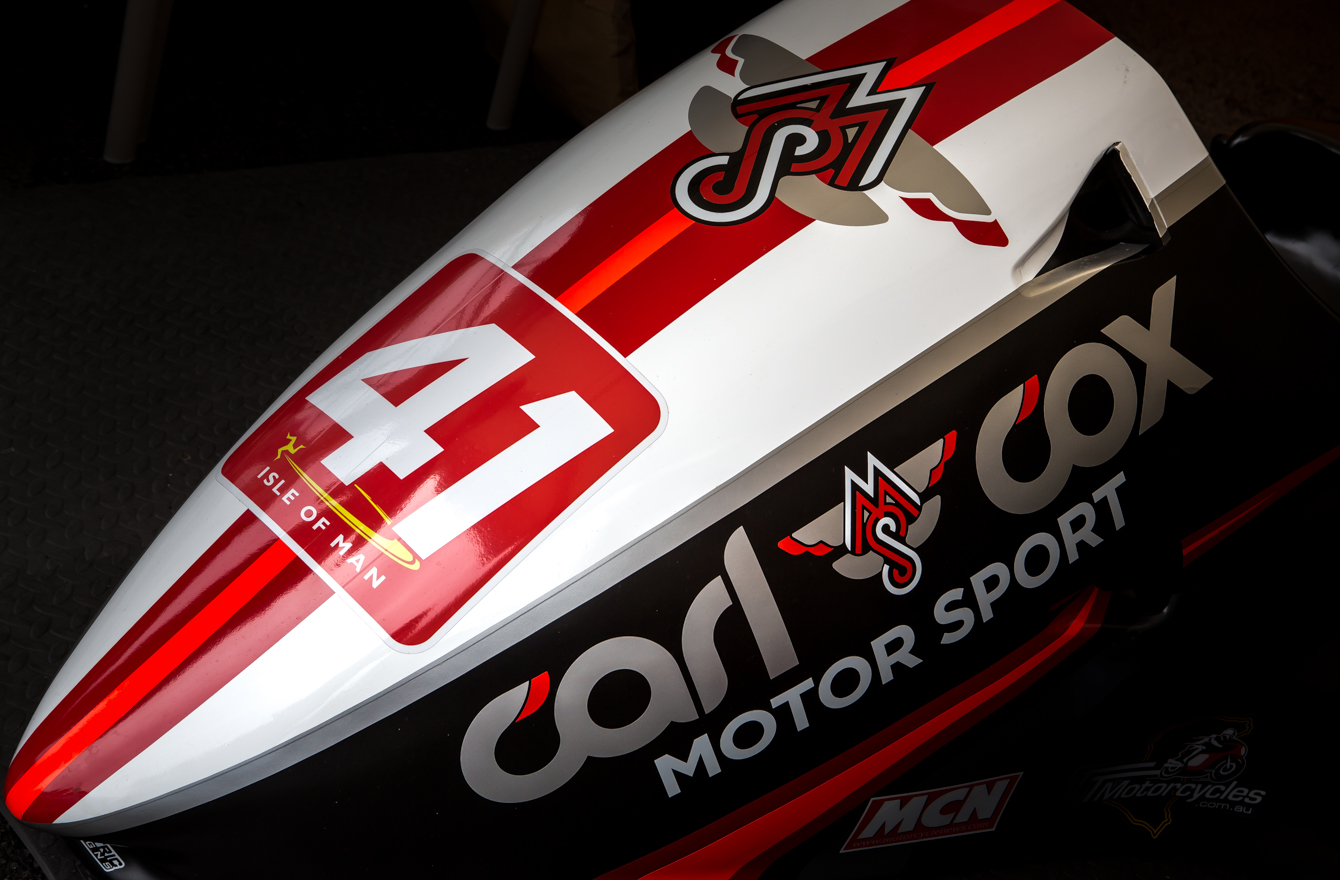
Money doesn’t get involved because it likes you. In most cases – there are exceptions like Carl Cox Motorsport – money is looking for a return on its investment. The sport is simply the way that return will be achieved.
This applies to a greater or lesser extent to any professional sport. They are marketing activities designed to generate profits rather than the dictionary definition of sport.
Fish Transport
Stick with me here – there is a point to this story.
I spent a lot of years photographing motorsport, and one day was asked to create some press photos for a new sponsor – I’ll call them “Fish Transport”. I did wonder why a fish transport company was interested in sponsoring motorsport, but it wasn’t my job to ask such questions.
Several months later, having become friendly with the CEO of Fish Transport, he told me the sponsorship had been a major success, but they wouldn’t be back next year.
One of the team’s other sponsors was a fishing company that Fish Transport had been trying to attract as a customer. Three salespeople had tried and had little success.
Comparing the costs of the salespeople – salaries, cars, expenses, office costs etc. – against the cost of sponsoring the team, it wasn’t too much more. What the sponsorship did do, was place the CEO of Fish Transport at the same event as the CEO of the fishing company, and over time, the two of them got talking and came up with a deal.
The sponsorship had nothing to do with the sport. It was about access to people at an organised event with enjoyable hospitality. Which sport it was, was irrelevant.
Sporting Events
Creating a sporting event with sufficient glitz and glamour that will attract people, such as the CEO of Fish Transport, takes investment. It would be a brave or unwise investor who funds the whole thing themselves and hopes to make a return.
It starts with the concept of an event or series of events pitched to investors. They get involved if they like the idea and believe it makes financial sense.
From this, we get the title sponsors for rounds of championships and the “powered by XYZ” style slogans at the end of championship names.
I’ve oversimplified it. Putting an event together isn’t a simple task. However, you have asked for a truckload of money to run an event, and the title sponsor wants a return on their money, and that is the point. From the absolute start, a return on their investment is the objective.
Assuming the title sponsor agrees, there will be clauses and conditions attached to the money, and to deliver the required exposure, the event has to be entertaining and feature famous participants.
Start Money and Ticket Prices
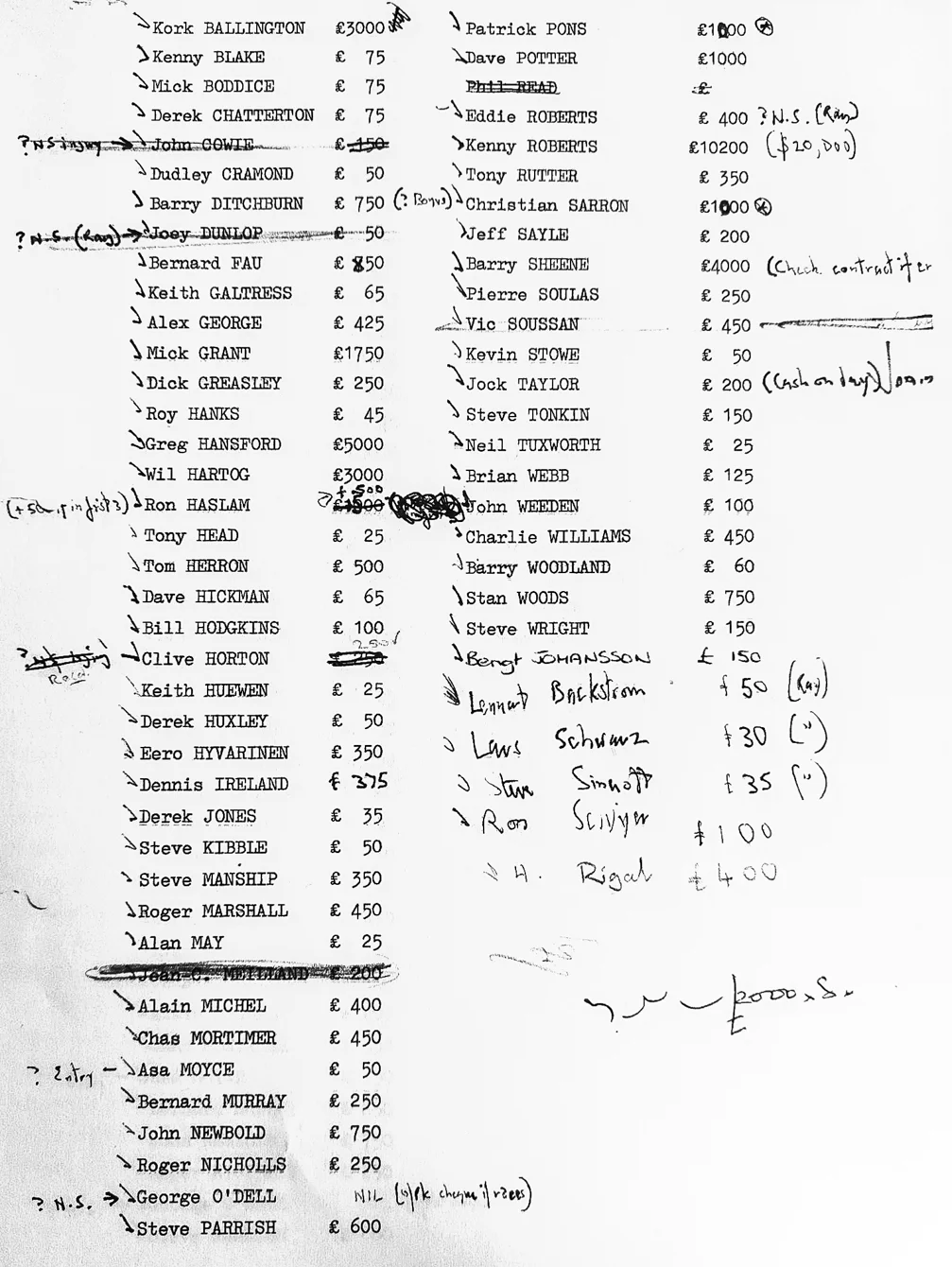 The participants will have costs, and if you invite them to turn up and take part in your (now) sponsored sporting event, then it’s not unreasonable for the participants to expect part or all of their costs will be covered.
The more popular they are, the more prestigious the event is thought to be and the greater the appearance or start money the participant can request. This isn’t new. It has been going on since the early 1980s when Kenny Roberts could ask £10,200 to race at Mallory Park – that is c.£41,800 in today’s money.
The same calculation applies to ticket prices. The greater the popularity of the participants, the higher the ticket price can be – or needs to be – to cover the event’s costs.
Venue Costs
This is the point where things go off the rails for me. I can understand a sports event staged by a promoter who attracts sponsors. Part of the sponsorship money is used to attract top-tier participants by offering to pay them to attend.
I’d also expect that hiring the venue would be one of those costs, but it seems that sporting events can themselves charge to turn up to a venue.
Can you imagine the conversation … “Hi, you give me money, and I’ll bring my event to your venue. Oh, and I’ll need your venue to meet our standards, or we won’t come.”
What happens if the venue says No? Get enough venues saying the same thing, and the sporting event suddenly has a dent in their finance model. However, it doesn’t happen because the venues have fixed costs, and they hope that staging such an event will increase their popularity, and they can use this to attract other – this time fee-paying – events.
When the event is popular enough, venues pay substantial amounts to promoters for them to bring their events to a venue. The venue negotiates to get part or all of the ticket sales, hospitality deals and often looks to find their own title sponsorship for the event, to try to recoup the cost they incurred.
And So What?
Up to now, I’ve talked about venues rather than circuits, sporting events rather than naming a race series and participants rather than riders because this applies across any number of sports, not just motorcycle racing. Golf is a great parallel.
They are promoted as sports but are more closely aligned to a business model than a sporting event. The sums of money involved are eye-watering and financial security for a series of events is often based on the need to keep the money machine churning.
It is not uncommon for the promoter to borrow money – they use fancy words like bonds, factoring and leverage – secured against future revenues from broadcasters and venues. The perceived value of a series of events is calculated in part by how much money the events are forecast to generate.
An event yet to be held has now become something tangible with a value attached to it. The event – that hasn’t happened yet – can now be sold to someone for real money.
Yes, I’m a cynic, but when someone says, “It is good for the sport”, why do I hear, “This will make us more money?”

Money-Go-Round
And now comes the conspiracy theories and questions unlikely to be answered, so tin foil hats at the ready.
If corporation ABC sinks an unholy amount of money into a series of events and doesn’t get the return they expect … what happens next?
Can a promoter balance the needs and desires of three or four significant investors and allow one to dominate, or does everyone get their turn at being the top dog in recognition of their contribution?
If a team or an individual dominates for an extended period, does it make the spectacle of the event better or worse? If the one I don’t want is happening, what can be done about it? Concessions?
Then again, does it matter who wins as long as the event is considered important and attracts the right people? Then again, which participant wants to come second or third?
Perhaps the deals – such as Fish Transport – are what it is about, and the event is simply an enjoyable way to spend a day surrounded by something that was once a sport while talking business.
How do you keep the participants happy if the sport is just a glitz and glamour sideshow? I can think of one way …
TNT Sports
Although the details are yet to be announced, TNT has brought Eurosport and BT Sport together. Already massive in the USA (Warner Bros own TNT), bringing together Eurosport and BT Sport gives them access in some regions of the world to MotoGP, WorldSBK, British Super Bikes, a host of fragile millionaires chasing a ball around and a long list of other sports.
 Figures of £600 million are bouncing around the mainstream press as the cost of pulling everything together under one streaming service.
All of the “sports” – for which read promoters – will be looking to sell the rights to broadcast their events to TNT Sports when their existing agreements expire.
Meanwhile, the venues will be looking to get more people through the gates so that they can meet the promoters’ charges, and so will be spicing up the live event with anything they can to make coughing up a large chunk of change for a ticket an attractive alternative to the streaming service.
One thing appears to be certain, the £35 per year I currently pay for WorldSBK and BSB on Eurosport isn’t going to get cheaper. DORNA currently wants me to pay £200+ for a season’s subscription to their MotoGP feed, and I don’t expect to suddenly find it included in my existing package without a price hike.
And the last dynamic in all of this is social media, where I can find the results, whether I want them or not, mere seconds after the race finishes. On-demand streaming doesn’t really work if I already know the outcome.
The very thing that promoters see as a way of engaging new audiences is also the knife in the back when it comes to making the content exclusive.
So Where Does This Leave Me?
Like any good hamster wheel, everything will be fine as long as it keeps spinning. The wheels will keep turning as long as the promoter can sell the concept and desire to enough people, and those people can recoup their costs. Assuming, of course, it isn’t over-leveraged, and the banks suddenly want their money back.
As for me, I want to watch motorcycle racing. Amazingly, the Imatra Road Races were on YouTube for free and with English commentary. The Isle of Man TT charges £15 a year for practice week, all the races and a whole back catalogue of TT-related content.
I’ll get a trip to Oliver’s Mount arranged to watch some live road racing, where £40 gets me a weekend ticket and paddock entertainment on Saturday night.
Beyond that, it will depend on how much the promoters, streaming services and venues will ask me to cough up to keep their hamster wheel spinning. That will be the deciding factor.
The fact that I wrote this article would suggest they are going to have a problem separating me from my cold hard cash.
It’s interesting that, apparently, the events delivered directly to people who want to watch, without all of the spinning wheels of cash and promotors, cost significantly less and deliver what I wanted in the first place – the sport of motorcycle racing