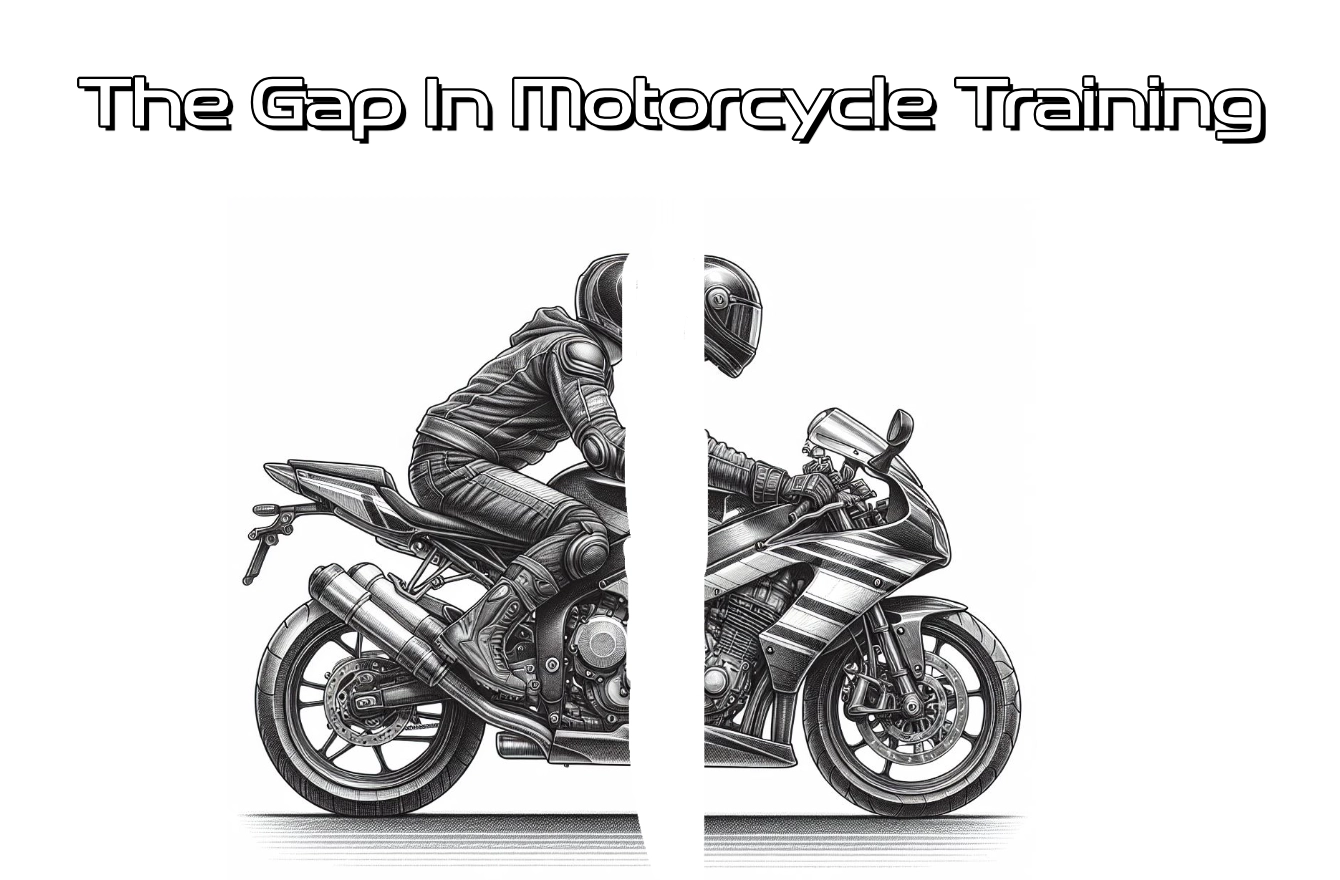

Over the last few months, I’ve been taking a long, hard look at Advanced motorcycle training courses in the UK. Two of the most prominent organisations providing such training are the Institute of Advanced Motorists (IAM) and the Royal Society for the Prevention of Accidents (RoSPA).
While these courses significantly contribute to improving road craft, they often fail to address the holistic abilities required to ride a motorcycle efficiently and safely under various conditions.
Courses that focus more intently on riding and controlling a motorcycle typically come from independent training specialists – we use Jewell Bike Training and the British Superbike School – but overall, the focus of most advanced motorcycle training centres around roadcraft.
Where Can I Find …
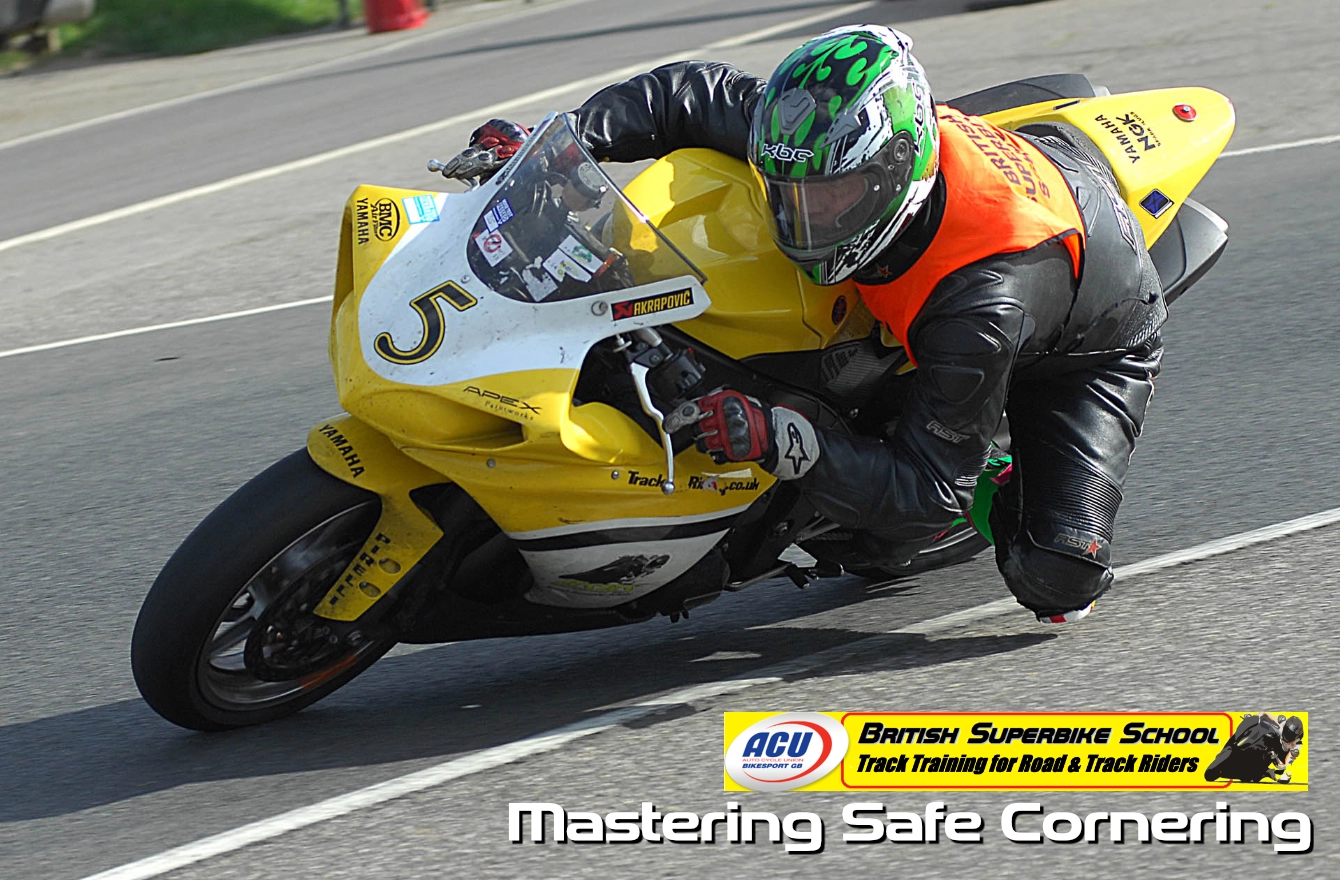
- Mastering Safe Corning – Deep Dive on advanced cornering technique
- British Super Bike School – Track Training For Road Riders
- Jewell Bike Training – Excellent Road-Focused Rider Training
- A Demon on the Brakes – Wishing I Could Brake Like Toprak
The Focus on Road Craft
Road Craft, or Reading the Road, is the ability and application of advanced riding techniques that emphasise safety, observation, and anticipation. These techniques enable us to predict the actions of other road users and master defensive riding strategies.
Looking at cars waiting at a junction to see if a wheel starts to move, understanding that if your shadow is in front of you, other road users are looking into the sun and have less chance of seeing you, or spotting a car on the inside lane closing on an upcoming vehicle and anticipating them pulling out are all part of roadcraft.
This constant circle of Information, Position, Speed, Gear, Acceleration/Anticipation/Analysis (IPSGA) is the cornerstone of roadcraft.
It is an excellent skill to master, but none of it addresses the technical skill of controlling the bike.
Limitations
While the IAM and RoSPA provide comprehensive training in road craft, they do not adequately address the technical and mechanical aspects of motorcycle handling.
This limitation can be critical, as mastering a motorcycle’s physical control is as essential as understanding road craft for overall rider safety and performance.
Reading a summary of motorcycle road incidents (no longer called accidents), it was reported that more accidents (incidents) are caused by the rider’s inability to control a motorcycle than by poor roadcraft.
The typical scenario for an “incident” reported that excessive speed wasn’t the factor, nor were the motorcycle or the road conditions. The rider, however, lacked the skills required for the developing situation.
We can’t ignore roadcraft in favour of motorcycle handling. Still, with the predominant focus of advanced motorcycle training being on roadcraft, we are not addressing the area where the most significant gains in road safety could be made.
Both the IAM and RoSPA assume that the rider has the required skills to control a motorcycle, and most do, provided they read the road effectively. But how were those riding skills developed? By practising on public roads?
Even something as fundamental as an emergency stop (See A Demon on the Brakes) hasn’t been a skill I’ve been taught since the STAR rider course in the 1980s.
Core Riding Skills
I consider myself a relatively competent rider. I’ve completed courses, learned to instruct, and helped others develop their skills. Yet if I ride with Andy (AKA the Quicker Vicar) or Neil Jewell from Jewell Bike Training, it is obvious that I’m not as skilled as they are.
A motorcycle has a limited number of controls, and those gentlemen can achieve more with those controls than I can.
- Throttle control: Precise management of throttle inputs to maintain stability and control, especially in varying weather conditions and during cornering.
- Braking techniques: Using both the use of both front and rear brakes, including the application of techniques such as threshold braking and trail braking.
- Cornering: The ability to navigate bends smoothly, maintaining the correct line, and adjusting my body position for optimal balance and grip.
- Balance and stability: Managing the motorcycle’s weight and centre of gravity to prevent low-speed tip-overs and enhance manoeuvrability in tight spaces. (Andy’s favourite)
The Need for Comprehensive Training
To address the limitations of current advanced motorcycle training programs, an approach that integrates road craft and technical riding skills is necessary.
This would ensure that riders are adept at navigating traffic and road conditions and proficient in controlling motorcycles to a level beyond that required in everyday circumstances.
I’m told that motorcycle training once included both requirements, but the nanny state, overtures of “teaching Bikers to speed”, and worries over litigation sanitised the courses to roadcraft and positioning.

Bottom Line
By now, I’m sure some people are avidly disagreeing with me, which is cool because constructive debate moves things forward.
In my defence, I’ll offer you a link to this article on cornering. It is also in the block above.
You might do this already, but my point is, where did you learn this technique? Did you work it out by yourself, and if so, how long had you been riding before it all became clear?
Practice is required to keep skills sharp, and after a period of restrained riding through the dark and soggy winter months, my session at the British SuperBike School in April will be highly “engaging“.