The LS2 Spectrum intercom, developed in collaboration with Midland, represents a significant step forward in helmet communication technology.
I’ll get to the dominant players in the motorcycle Intercom market, the value and projected growth and all that stuff in a minute. The important thing is how the LS2 Spectrum’s noise-cancelling works and whether it is effective.
How Noise Cancelling Works
The Spectrum uses AI-powered noise cancellation, which is more advanced than traditional DSP (digital signal processing) that you find in most other high-end motorcycle intercoms.
Here’s what sets it apart:
- Real-Time Sound Filtering: The system uses “artificial intelligence” to identify and isolate unwanted noise—like wind, engine rumble, and road hiss—while preserving voice clarity.
- Adaptive Algorithms: It continuously adjusts based on ambient conditions, meaning it learns and reacts to changing noise levels as you ride.
- Microphone & Speaker Synergy: The microphone captures your voice while filtering out background noise, and the 40mm RCF high-definition speakers deliver crisp audio even at high speeds.
It is a neat concept, but why ….?

Power House Players
The global motorcycle intercom market is growing rapidly, with a projected value of $623 million in 2024 and expected to reach $1.18 billion by 2032, representing an annual growth rate of 9.5%. This growth is driven by the rise in motorcycle tourism and the increasing popularity of group riding.
Naturally, Sena Technology and Cardo Systems dominate both volume and value of sales globally. Their technology focus has been on mesh networking, long-range Bluetooth, and integration with action cameras.
Sena is arguably the stronger brand in North America and Asia-Pacific, while Cardo tends to be more popular in Europe and is known for its PackTalk series.
In short, Sena and Cardo are the titans, and if you want to make a dent in their market, then you need to bring something innovative to the table.
Why LS2 and Midland
LS2’s strap line, “Always Ahead,” may be considered a bit cheesy, but look beyond the marketing hype, and it is a statement they strive to live up to.
LS2 visors, for example, are the most optically clear I’ve found. Their price point for a carbon helmet is significantly lower than that of other brands, which appear to be setting a premium price for carbon.
Midland has been a pioneer in wireless communication since its founding in 1959 in Kansas City, USA. Focused initially on CB radios, Midland quickly expanded into two-way radios and became a trusted name in outdoor, motorsport, and emergency communication.
Rather than more of the same from Sena and Cardo, Midland and LS2 have looked to make a statement – a real difference – in the motorcycle intercom market, with sophisticated noise cancelling.
LS2 Dragon FF807 Carbon
We completed an extended road test of the LS2 FF807 Carbon at the start of 2025, and our opinion hasn’t changed. It is a superb helmet.
You can read the full article here [LS2 Dragon FF807 – Road Test], but a condensed version is available below.
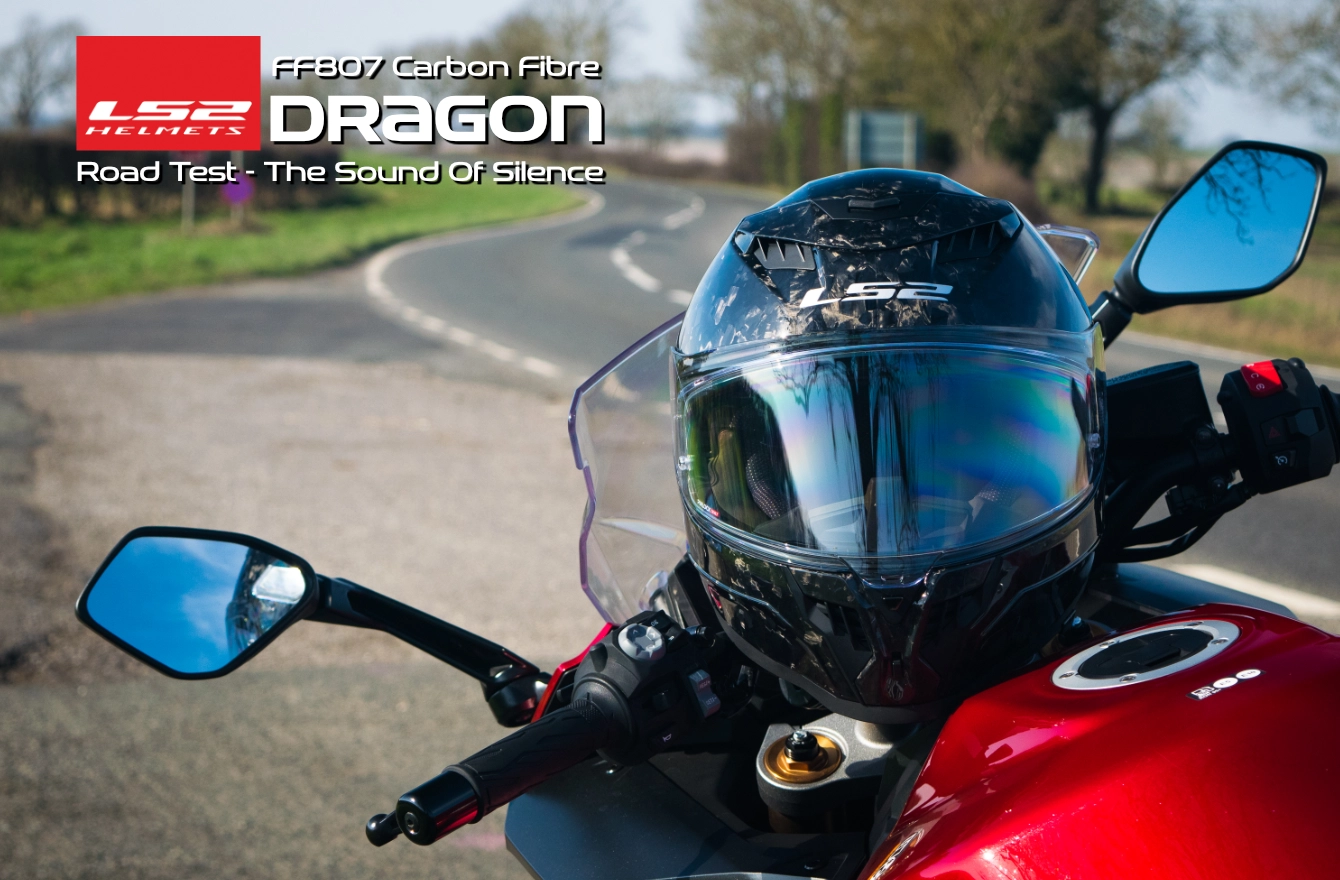 Despite being lightweight and carbon fibre, it is exceptionally quiet—even at motorway speeds. The fit is snug yet comfortable, with close-fitting cheek pads and a well-designed neck roll.
The optical clarity of the visor is a standout feature, especially in the sun visor, which reduces glare without distorting colour. LS2 includes both clear and dark visors, as well as a Pinlock 120 insert, in the box.
The helmet is stable and aerodynamic, making head checks and cornering feel natural and effortless. Visibility is excellent, with a wide viewport that supports a relaxed riding position.
At £350–£380, the FF807 offers premium features at a competitive price. LS2’s direct manufacturing model ensures quality without middleman markups, making this helmet “boringly brilliant” in all the right ways.
LS2 Spectrum Install
Installing the LS2 Spectrum in the LS2 FF807 took about an hour. It is one of those tasks that, once you have done it, you can do again in half the time. It is simple enough, just don’t make the mistake I made and remove the skull cap – you don’t need to.
And so, given that I’m starting with a naturally quiet helmet and have added an intercom with high-quality speakers and active noise cancellation, my expectations for a two-hour test ride are high.
Spectrum Road Test
There is a noticeable difference in the quality of the noise when the Spectrum intercom is on. I can still hear the engine and some wind noise, but overall, the background noise is deeper and significantly less annoying.
 The turn-by-turn navigation instructions coming from the Kurviger navigation system I’m also testing are clear, and when I started playing music on a long motorway stretch, I had to turn the volume down, which is a first.
Even through the exceptionally good ACS earplugs, the music was clear, and my normal test of listening to see if I could spot some of Mick Fleetwood’s drum flourishes took no effort.
Battery life is good. I rode for a couple of hours, playing music, listening to Nagging Nardia for navigation instructions and the wonderful CamSam for speed camera alerts. After all of that, the battery state was reported as full.
LS2 claims 20 hours of operation per full charge, so even the longest rides are easily catered for.
Bottom Line
In a market dominated by Sena and Cardo, LS2 and Midland have brought something extra to the world of motorcycle intercoms.
Naturally, it performs all the everyday Bluetooth functions and will connect with Sena and Cardo devices via Bluetooth, something neither of those companies appears to want to do by themselves. It is IP67 waterproof and works with Siri and Google Assistant.
But it is the active noise cancellation feature sets it apart from manufacturers who have focused on mesh and large group communication.
You can connect up to four riders into a group over Bluetooth, and personally, I can’t find the upside of listening to more than one or two other people talk while riding.
The range of LS2 helmets the Spectrum fits is long, and it has added the finishing touch to the FF807 Dragon.
And now, in the name of more research, I’ll see if I can find an excuse to use the LS2 Spectrum on one more tour, before the damp and soggy months arrive.