



Judging by the numerous forum posts, lots of us are thinking about European Travel this summer. Naturally, being an impatient bunch, we couldn’t wait that long and are booked on the first ferry out of Portsmouth in early April.
Whether touring with an established firm or doing what we do and make it up as we go along, it is worth noting that the European Travel rules have changed. Most of the differences are easy to remedy, but there are one or two “gotchas” to look out for.
Below, we have broken the rule changes we know about into sections. It is worth remembering that we write about motorcycles and are not experts on travel regulations.
Plus, these are Governments we are talking about. You know they will mess about with the rules to keep us all guessing.
No More GB Stickers
 It seems that Great Britain has been replaced by the United Kingdom in a motoring sense and gone is the GB sticker. The new rules say we must display UK on the back of our bikes, and remove any references to the EU or the EU flag.
Those of us with fancy number plates showing the EU circle of stars and the letters GB need to cover them up with a Union Flag and the letters UK.
Amazon has lots of suitable stickers available. The official word on what is acceptable can be found on the HM Government website here
90 Days in 180 Days
When the UK left the EU, the amount of time we could spend in the Schengen area – rather than the EU – changed. We are now limited to 90 days in any 180-day period, for counties in the Schengen area.
Ireland, Croatia, Romania and Bulgaria for example are all part of the EU but not (at the time of writing this) part of the Schengen area. They operate their own visa requirements, so depending on which passport you hold, the visa requirements even as a tourist may differ.
Iceland, Norway, Switzerland and Liechtenstein are not part of the EU but are part of the Schengen area (confused yet … all I want to do is ride my motorcycle).
However, for countries that are part of the Schengen area, there doesn’t appear to be a limit on the number of trips, just as long as you don’t stay more than 90 days in any 180-day period.
Who is in and who is out of the Schengen area can be found on the European Commission website here.
ETIAS – Sometime in 2022
By the end of 2022, ETIAS – which stands for the European Travel Information and Authorization System – will go live, and people in the UK will need an ETIAS visa to visit the EU.
It may sound draconian compared to what we have been used to, but it will be very similar to the US Visa Waiver scheme from what we can work out. Once live, even if you are visiting on holiday, you’ll need an ETIAS visa.
It is worth checking the website – ETIAS – a couple of weeks before you travel to ensure it hasn’t gone live, but do take care there are lots of fake ETIAS websites that look just like the official EU pages.
Goodbye EHIC, Hello GHIC
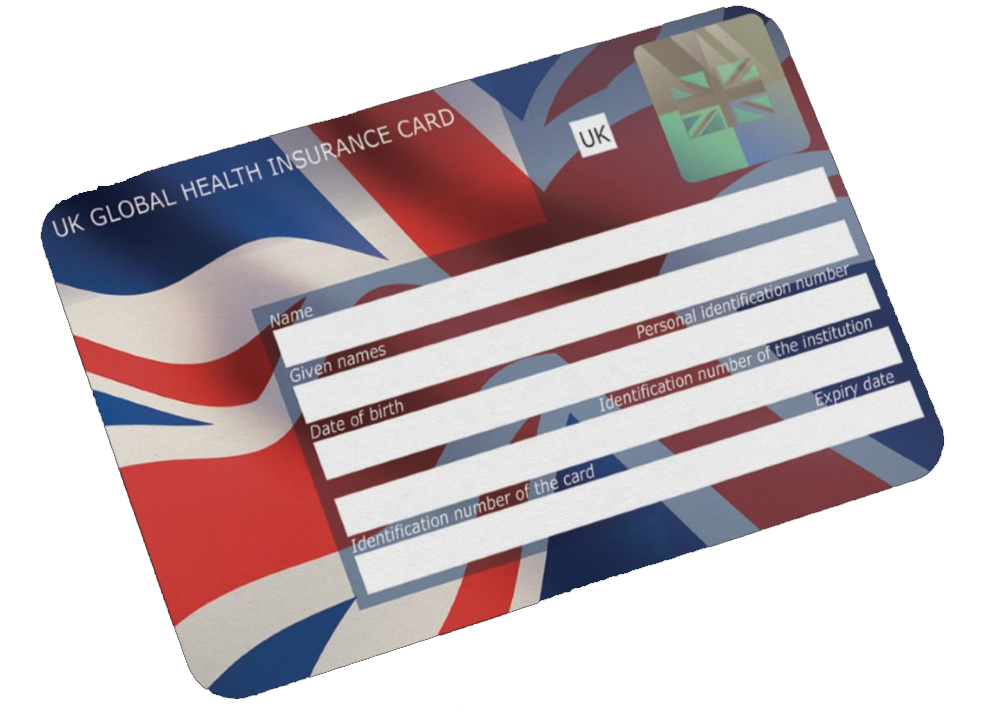 The European Health Insurance Card is dead, and in its place, you need a Global Health Insurance Card. Like the EHIC, the GHIC is free. You apply online, and it arrives in the post.
The purpose of the GHIC is to provide evidence of entitlement to healthcare services under the UK’s reciprocal healthcare agreements with the European Union and Norway.
Why the name had to change, I’ve no idea. Nonetheless, you want one. Your EHIC is good until the expiry date, after which you need a GHIC.
Passport Dates
This is where things can get a bit silly. If your passport is red or one of the new fancy blue ones, it is typically valid for 10 years and a passport issued for 10 years is required for European Travel.
Next, you are required to have a minimum of 3 months validity remaining on your passport when you leave Europe.
However, if you renewed your passport early, you need to check the dates carefully. The expiry date will be 10 years from when your old passport expired, BUT the issue date will be when you applied for the replacement passport, and it is the issue date that the EU counts the 10 years from.
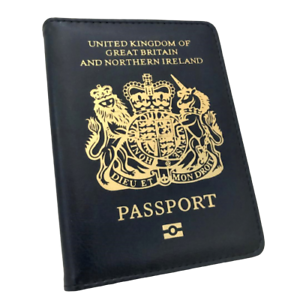
In my case, my passport expires January 2024 but was issued in September 2013, giving it a validity period of 10 years and 4 months. But I can’t use the last 4 months because most of Europe counts the 10 years from the issue date, which ends in September 2023.
See, I told you this was silly.
Here is how to avoid passport date problems, for European travel anyway. Take your passport issue date, add 9 years and 9 months to that date, and that is the last day you can be in Europe on that passport.
As I write this in February 2022, the UK Government is asking the EU for clarification on this rule. By the time they have an answer, I’m sure I’ll be on my next 10-year passport.
Green Card and V5
When the UK first left the EU, there was a period when an Insurance Green Card was required. Thankfully this has now stopped. You do, however, need to carry your insurance certificate with you.
You will also require the V5 Registration Document for the motorcycle.
International Driving License
As long as you have a photo ID style of driving license, there is no longer a requirement for an International Driving License. These driving licenses do require renewing, so check the date to make sure yours is still valid.
Photocopies
On one of the first long motorcycle tours I went on, I noticed people swapping envelopes at the meeting point. Inside these envelopes were spare keys and photocopies of all the paperwork.
The idea is that if someone loses a key, wallet, passport or any other piece of documentation, then someone else has a copy to give you. Apart from keys, the modern version would be to photograph everything and have it on your phone.
Other European Travel Stuff
Despite being the European Union, there are also a number of local laws. The French require you to carry spare bulbs and speed camera warning devices are illegal. Nearly every country requires you to carry a warning triangle, a first aid kit and a hi-viz vest.
Whether the hi-viz panels in your jacket – assuming you have them – count, we have no idea. Some sources also report motorcycles are exempt from triangles while others say “…all motor vehicles”.
Personally, I’ll stuff one in my top box so I can avoid an in-depth conversation on the finer points of motoring law with the local constabulary.
Visors with more than a 50% tint are banned everywhere, but no one seems to want to enforce this rule. If you wear glasses when you ride, you will need to carry a spare pair, and I’m told that cruise control is banned in Belgium, although quite how they check you are using it is a good question.
Norway is geographically part of the European landmass, but like the UK isn’t part of the EU, the 90-in-180 rule doesn’t apply. The Norwegian police have a simple solution to speeding – massive fines – so take care.
The Bottom Line
All of the rules and regulations considered, there is nothing there that is a reason not to enjoy some European Travel this year. So, get online with Brittany Ferries, P&O or the Channel Tunnel and have at it.














4 responses
Thank you for all this, it’s good information. Roll on the touring season!
We have updated the article in a few areas to address the finer points of European and Schengen area travel. Our thanks to the people who were kind enough to email us about some of the subtleties we had missed.
Roger thinks he has found a requirement to carry two triangles in Portugal … more news if we can confirm it.
Some useful information here, even for the EU-to-EU traveller. I wasn’t aware that a warning triangle is mandatory in “nearly every country”. In Hungary motorcycles are exempt from having to carry it. One more thing to pack…
On the more positive side, this year Slovenia has introduced digital highway tolls instead of the traditional vignette.