

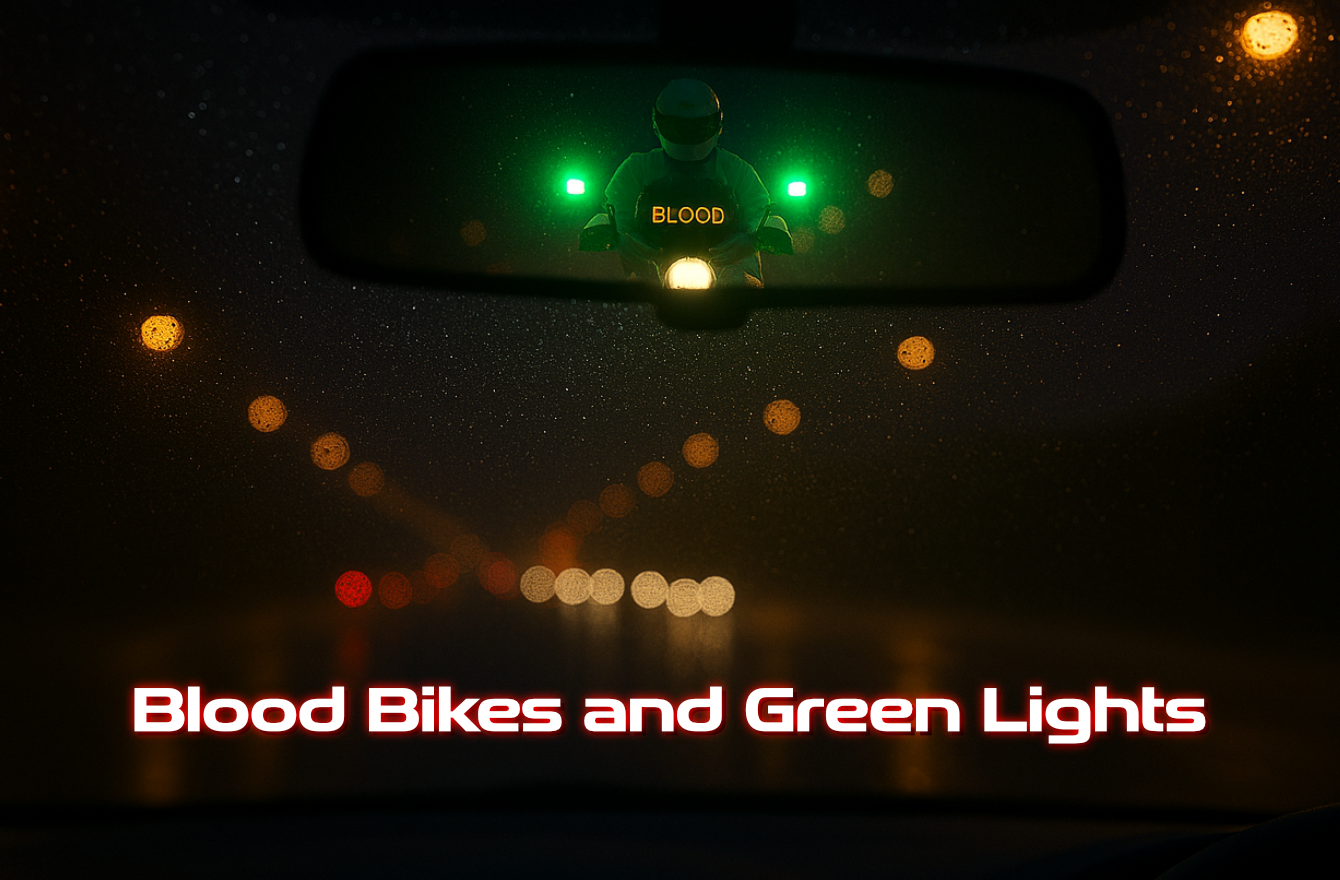

As a petition to allow Blood Bikes to use green warning lights gathers momentum, we decided to take a look at what they mean and what, if any, concessions they bring.
But before any of that – Sign the damn petition – it takes less than 30 seconds, costs you nothing and helps the fellow bikers who volunteer in all weathers to help others.
Sign it and don’t be an oat milk decaf latte drinking, helmet polishing, Sunday-only seat warmer – sign the petition and be somebody.
Green Flashing Lights
Across the UK, volunteer Blood Bikers quietly keep part of the NHS moving. They carry blood, plasma, surgical instruments, donated breast milk, samples and other critical medical items—often overnight, at weekends, and in all weathers. They do it for free because lives depend on it.
The petition’s ask is simple: the legal right to fit green flashing lights to their motorcycles to make themselves more visible during urgent deliveries.
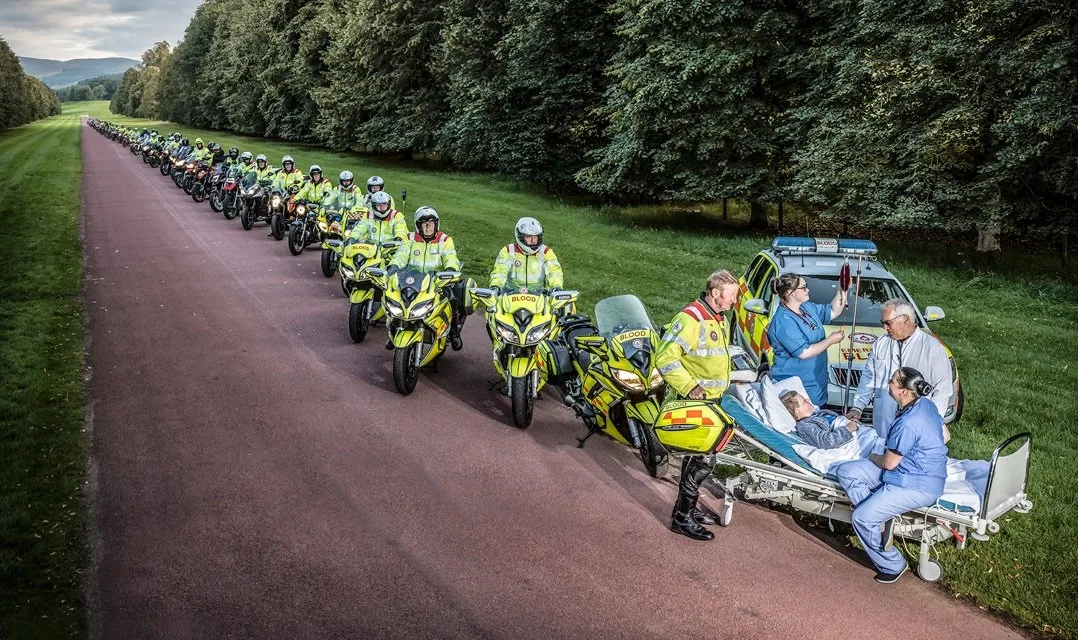
Green lights are already used in the UK, but for a very specific purpose: vehicles carrying doctors on emergency call-outs may display a green flashing beacon.
Green Lights do not grant priority on the road, allow speed limits to be exceeded, or allow other traffic laws to be ignored — they simply improve visibility and encourage other drivers to give space.
Blood Bikers are not asking for emergency vehicle road privileges; they simply want to stand out more, reducing the risk of collisions and improving the chances that medical supplies reach their destination safely ➤ especially at night.
Green lights are already covered in the Highway Code Rule 219, stating that “…Other road users should allow them to pass when safe”, but the green light is a request for courtesy, not a command.
I appreciate that, for some [Hello Tesla Drivers], courtesy on the road is a stretch, but we can but hope.
Why the Petition Exists
The fact that the petition is even needed is sad. It is just common sense, but that is the problem with common sense, especially when it comes to the Government – sense isn’t very common at all.
In recent months, several tragic on-duty crashes have reignited concerns about Blood Biker safety.
Two volunteers were killed while performing emergency deliveries, with another fatality occurring previously in Lancashire.
Reports highlight that, even with large, luminous motorcycles and reflective gear, “sorry mate, I didn’t see you” remains a reality.
As a result, volunteers and supporters launched petitions—most notably on Change.org—calling on the Department for Transport (DfT) to allow green warning lights on Blood Bike motorcycles.
These lights wouldn’t grant emergency driving privileges (like blue lights and sirens). Still, they would make Blood Bikers more eye-catching and easier to spot, especially when approaching junctions or filtering through traffic.
One petition surpassed 25,000 signatures within a few weeks of launching in January 2026, underscoring the public’s enthusiasm for the proposal and concern for volunteer safety.
As a side note, all of the Blood Bikes I’m aware of have GPS trackers. If the rider speeds, then it is reported to the controlling Blood Bike Group, and the rider is called to account for their actions.
A Brief History of Blood Bikes
 Blood Bike groups began forming in the UK in the 1960s and 70s, initially as small, grassroots efforts to help local hospitals transport blood and samples outside regular courier hours. Over time, the movement grew into a nationwide network.
Today, there are more than 30 regional Blood Bike charities across the UK and Ireland, all staffed by vetted, advanced-trained volunteers.
They operate mainly in the evenings, at night, and on weekends—precisely when NHS transport options are limited. The National Association of Blood Bikes (NABB) now provides a collective voice and promotes training, governance, and safety across the network.
These volunteers collectively save the NHS millions each year through free, rapid transport.
Despite this professional-level contribution, the law still treats Blood Bike motorcycles as ordinary private vehicles. They cannot use blue lights, sirens, or legal exemptions afforded to emergency vehicles, even though their cargo is often time‑critical.
Legal Implications
Allowing green lights for Blood Bikers would require the Department for Transport to amend vehicle lighting regulations. While such changes are uncommon, they are not unprecedented—recovery vehicles, for example, are permitted to use amber lights to increase roadside visibility.
As with any other road vehicle, Blood Bikers cannot claim the right of way, and they must obey all traffic laws.
Green lights would not alter this. Instead, they would act purely as a conspicuity measure—a request for greater awareness and courtesy from other road users.
Green Lights Benefits
Based on the petitions, expert commentary, and safety data, the proposed benefits include:
♦ Improved Visibility This is the core aim. High-visibility lighting has been shown to significantly reduce accident risk in various road safety studies, which petitioners cite as evidence for the change.
♦ Enhanced Volunteer Safety Given the recent fatalities, many supporters view green lights as a proactive step to protect those who give their time—and sometimes their lives—to supporting the NHS.
♦ Clear Identification Because no other emergency service uses green lights on moving vehicles, Blood Bikers would instantly stand out without being mistaken for police or ambulance responders.
♦ Minimal Disruption to Law This is a “visibility only” change. No new road privileges would be introduced, keeping expectations clear for both riders and drivers.
The Naysayers
What appears to be a simple five-minute decision will always draw detractors. None of the objections that we have seen appear to have much weight, but there are always those who see only obstacles and drawbacks when it comes to any change:
♦ Training and Insurance Requirements If green lights imply semi-official status, insurers or governing bodies may require additional training or oversight—something charities would need to manage carefully.
Our Response – What utter waffle. Green Lights are a flashing Dayglow Jacket. Read the Highway Code; there are no changes to the road rules governing green light users.
♦ Regulatory Complexity Changing lighting regulations is slow, and the DfT will likely want evidence of safety benefits and clarity on liability.
Our Response – This isn’t a change; it is an already established rule in the Highway Code. Liability …? What liability? It doesn’t grant the Blood Biker any privileges, so where is the liability?
But as we said earlier, “Common Sense” is often in short supply.
Green Lights and Insurance
There is no evidence that fitting or using green warning lights would automatically change the legal insurance requirements for a Blood Bike or a volunteer rider.
However, there are insurance considerations, as highlighted by the National Association of Blood Bikes (NABB).
When the green‑light petition gained traction, NABB noted that introducing any new lighting permissions “brings questions of training, safety, insurance, and the responsibility carried by charity trustees”.
Green Lights and Road Fund Licence
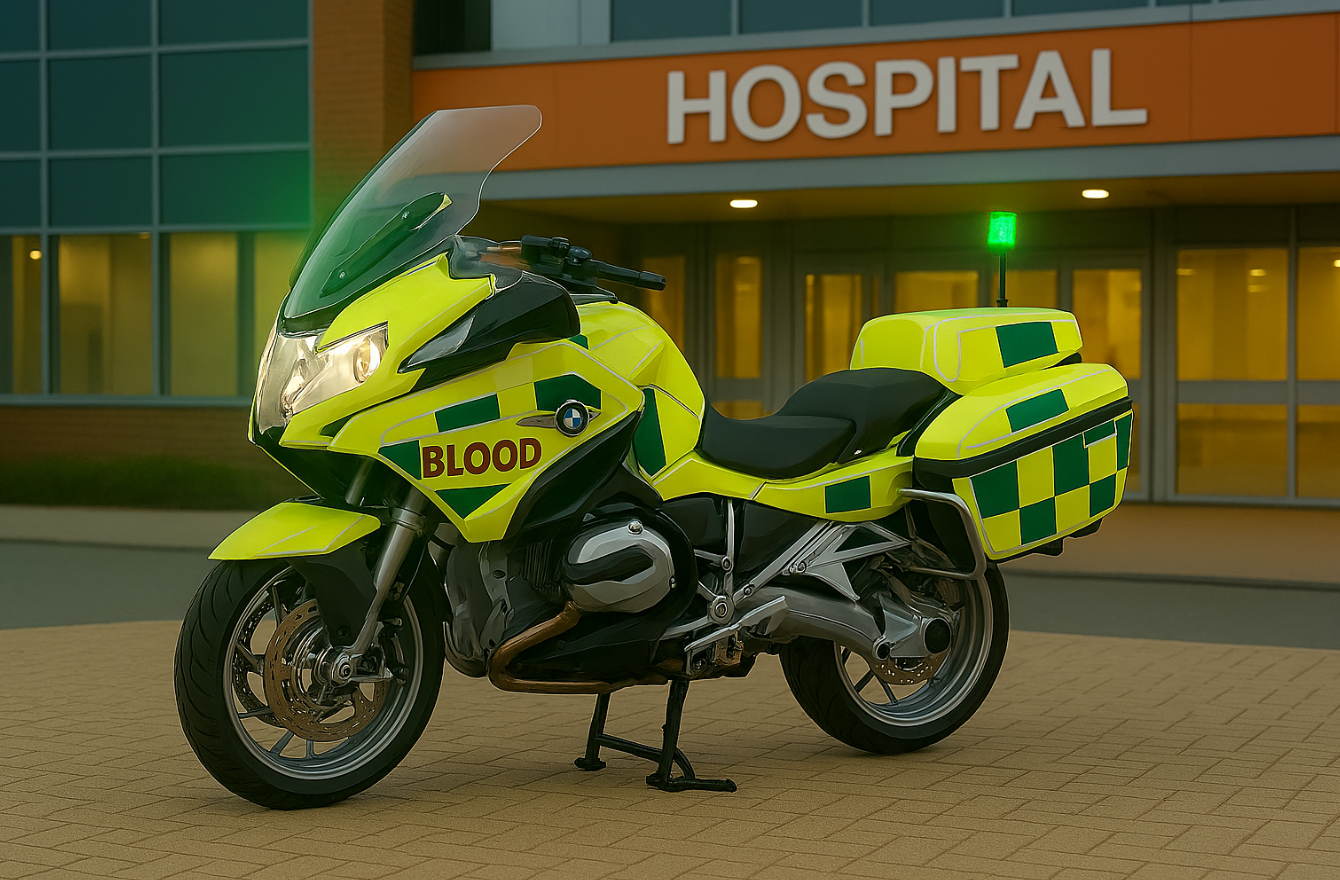
No. They still have to pay the same as any other motorcycle.
Blood Bike motorcycles are legally treated as ordinary private vehicles, and nothing in the petition or government commentary suggests that fitting green lights would change that. Thus, vehicle tax remains unchanged.
Bottom Line
The growing petition reflects a simple truth: Blood Bikers perform a vital public service. Allowing green lights wouldn’t change their legal status or introduce new privileges.
But it could save lives—both their own and those of the people waiting for the medical supplies they carry —and encourage other road users to help them navigate traffic more easily.
Whether Parliament and the DfT ultimately support the change remains to be seen. Still, the debate has unquestionably shone a spotlight on a remarkable community of volunteers who deserve to be seen—both metaphorically, and perhaps soon, quite literally—in a new light.
And if you haven’t signed the petition and shared it with every living, breathing person you know … Have another oat milk decaf latte.












One Response
♦ Training and Insurance Requirements If green lights imply semi-official status, insurers or governing bodies may require additional training or oversight—something charities would need to manage
—
I can’t comment on other areas, but certainly to join my local Blood Bikers you have to be IAM/ROSPA and even then undergo (and pass) a futher observed ride. Being an advanced rider/driver puts you into the top 1% of drivers already.