I’m reading Motorcycle Accident Statistics. Not exactly a page-turner and perhaps a little morbid. I’m reading them because I was intrigued by recent advancements in motorcycle safety equipment, and – sadly – accident statistics are the catalyst for advances in safety.
If I get the statistical bit out the way first, we can get to the cool innovations.
Simple fact. Falling off a motorcycle hurts. I hope you never find out this is true, but if you work on the basis that everyone else on the road is a blind moron, and get some advanced motorcycle training, you will reduce the chances of confirming this fact.
We also know that shit happens regardless of whether I’m riding a motorcycle or not. My interest is in safety innovations. I’m not looking for an excuse for a tiresome moan about accidents statistics.
I’ve had two broken collar bones plus numerous bruised or cracked ribs. I’ve busted my nose and been knocked out cold. It was the last one that finally stopped me playing competitive rugby. Motorcycles ..? Nothing yet, other than some knocks and a few bruises.
So this article is all about forward-thinking. To quote the fabulous, Dr John Hinds – may he rest in peace – “Primary Prevention is one of the biggest things that influences the outcomes“.
Helmets
If you bang your head, statistically it is a head injury. Banging your head is a lot more common than you think. Ever knocked your head on a door frame or a cupboard door?
That said if you take a slide on a motorcycle doing 30mph the last thing you want is your head taking a knock. Even back before helmets became compulsory for motorcyclists in the UK (1st June 1973) people had enough sense to wear a bone done.
Since then, helmet technology has continued to evolve at an exponential rate. My Schuberth C4 even has strakes on the visor to reduce air turbulence.
In terms of safety standards though, not a lot has happened until recently.
The Snell and DOT standards only require the testing helmets against the Head Injury Criteria (HIC) defined in 1972. In short, if it is ONLY Snell or DOT approved, then put the helmet back and pick something different.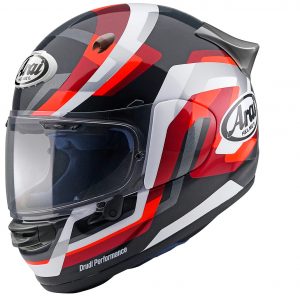
In 2013 the Brain Injury Criteria (BrIC) standard was defined. This is a big deal because they took into account your brain rattling around inside your skull, rather than just your skull being damaged.
You won’t find BrIC written on the side of your helmet. The minimum standard you are looking for is ECE22.05 or ideally ECE22.06 certified. These are the two helmet standards that govern whether a helmet is road-legal in most of Europe. Typically the approval standard is on a label stitched on to the chin strap.
Even then the most up to date part of ECE 22.05 is dated 24th September 2002. Yes, it is almost 21 years old. If you want to check it out for yourself, you can find a copy here. Even at 21 years old, it is much more advanced than the 47-year-old DOT & Snell standard.
ECE22.06 was issued in 2020 and took into account the BrIC rotational impact tests. Helmet certified to the 21-year-old ECE 22.05 standard can remain on sale until around July 2022 before selling them for road use will be considered illegal.
Meanwhile, those amazing people at Arai appear to lead the market yet again with their Arai Quantic 2021, which looks to be the first ECE 22.06 approved helmet on the market.
The FIM Standard
On the 1st January 2020, the FIM introduced a new standard for helmets used in top-flight motorcycle racing – FIM FRHPhe-01.
It was a major shakeup, and for a while, the number of helmets approved by the Aragon Institute of Engineering Research, who conducted the FIM approval tests, was rather limited.
The FIM standard was such a large step forward that I’m told if you look carefully at the MotoGP grid from that year, you can see a few helmets sprayed to look like brand X, but are actually brand Y.
As an example of the difference between the standards, ECE 22.05 defines the “head form” that goes inside the helmet for the tests as “A metal head form fitted with a tridirectional accelerometer and a measuring assembly“. It is in Section 7.3.2.1(d) if you want to look it up.
Whereas I’ve been accused of being a bit thick at times, but my head certainly isn’t made of metal.
Meanwhile, FIM FRHPhe-01 redefined the “head form” to include a silicone coating that mimics human skin thickness. The FIM then went further to include revised impact zones to reflect the asphalt surface’s coefficient of friction and the angles at which the test impacts hit the helmet surface.
It will be a while before FIM FRHPhe-01 reaches the helmets we buy for street use. However, it is reassuring to see helmet manufacturers innovate to meet the advancements in testing.
It is my head we are talking about, and I’m quite attached to mine.
Scaphoid Sliders
These have to be one of the most understated safety innovations ever. Carle has become a huge fan of this motorcycle safety equipment enhancement as it would have saved his wrist when the front tucked on some spilt diesel as we were leaving a garage in Spain a few years back.
As Carle can confirm, it is pure human instinct to reach out when falling. I’ve been told it is to fend off the approaching ground and that it is a natural reaction to reach out searching for something to that might stop you falling.

Whatever the reason, extending our arms when falling is a reflex reaction, and then mother nature doubled down on the problem.
Somewhere back in time, evolution decided that hands would be useful and went on to package the maximum amount of breakable bits, along
with a complex set of levers and pullies into what we call hands.
Consequently in motorcycle accidents, the most prevalent injury by far, with a joyous 47% chance of you sustaining it, is a Radial Fracture of the wrist – one of those parts that evolution and mother nature thought would be useful.
Reducing this 47% probability is so simple that it is hard to understand why all motorcycle gloves don’t come with them as standard.
When our hands come into contact with the ground, they come to a stop – or slow down dramatically – while our body keeps going at the original speed. This typically leads to our wrists getting bent beyond mother nature’s designed limits, leading to the Radial Fracture.
To stop our hands coming to an abrupt stop or dramatically slowing down, we need our palms to slide when they make contact with the ground. To do this, look for gloves that have hard – not extra padding – hard palm sliders or to give them their fancy name Scaphoid Sliders.
Once you have a pair of gloves with scaphoid sliders, the cherry on top of a great pair of gloves is if the ring and small fingers on the gloves are connected. Webbing between the two-fingers or some other form of connection helps to prevent your smallest finger – Digitus Mi’nimus Ma’nus – from getting abused.
Attaching the ring and pinky finger isn’t a deal breaker when buying gloves, but great if the manufacturer has thought of it.
In October 2020, we took part in the trials of the new Keis G701 Heated Gloves. As well as being excellent gloves for keeping your hands warm, Keis didn’t skimp on the protection.
Along with the hard scaphoid slider helping your hand to slide, the Keis G701 gloves have flexible soft armour across the knuckles. They are also reinforced in key areas to provide gravel protection and the Keis G701 is EN 13594:2015 certified.
And on top of all of that, they are heated. if you have never tried Keis heated gloves, do your self a massive favour and get a pair … but I digress.

Air Vests and Air Bag Jackets
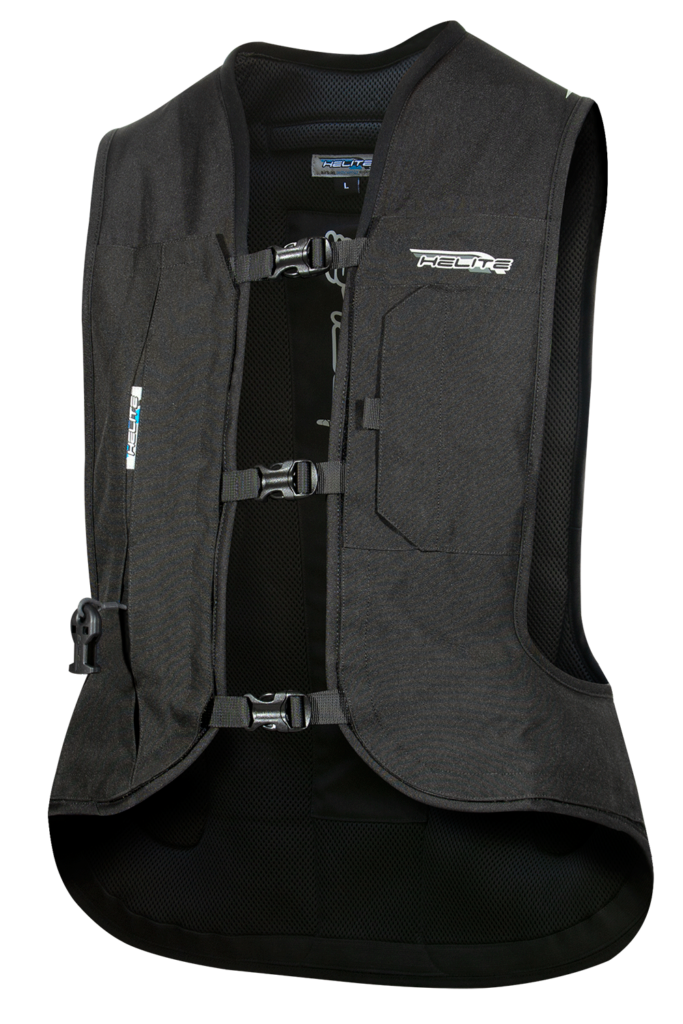
At this point, I was going to launch into a long diatribe about Air Vests and Airbag jackets. The price has dropped from a wallet denting £2,000 when they were exclusively found in race suits, down to around £400 for an external Air Vest.
Whereas £400 is still expensive, the impact [pun intended] Air Vests make on injury reduction is undeniable. I’m currently testing the brilliant Helite Turtle 2, but if I start talking about it, we’ll be here for another thousand words.
To give you an idea of how effective Air Vests are, what follows comes from a conversation with a Police Riding Instructor, who told me about the two accidents he had seen involving Helite Air Vests.
In both cases, he described the accidents as “only avoidable by not being there“. The sort of accident where someone pulls out of a blind-side turning and takes the front off your motorcycle.
In both cases, he reported that he could see the Helite Air Vest trigger and protect the rider before the rider had even had time to register what had just happened, let alone hit the ground.
Such advancements in motorcycle safety equipment definitely deserve their own story, which you can read here