
It is always a gut-churning moment when someone takes a slide. We call them “unscheduled dismounts” to cover up the wretched blend of adrenaline and horror.
The worst-case scenario is when you are the central player in the sequence of events, and a close second is watching it happen while being helpless to do anything about it.
Our colleague Carle found himself in this situation several months back. The motorcyclist had passed their test and was on an A2 bike. Riding the bike wasn’t the problem. What was missing was experience – sometimes called roadcraft – that ability to see what is likely to happen next and not get involved.
This unwanted sequence of events resulted in Carle having scratches on the side of his car. The motorcyclist was deeply shaken, having just gotten the bike back from a previous incident, but thankfully was unhurt.
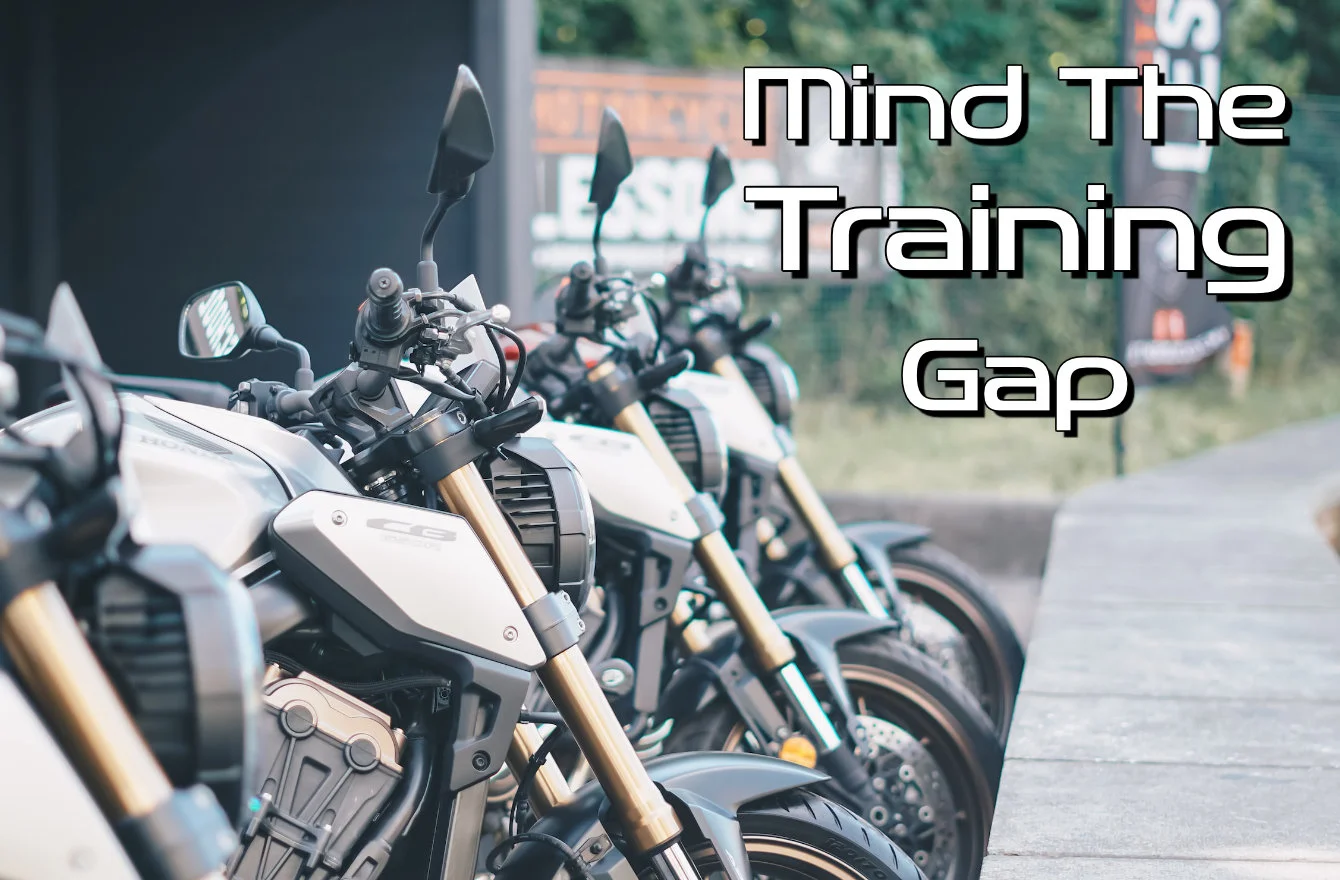
Training Gap
The motorcyclist offered to pay for the light damage to Carle’s car but being the sort of person who can turn his hand to most things, he declined. Filling a couple of scratches and blowing over the paint, so you would never know it happened, is just another one of those things he just does because he can.
Carle’s counteroffer was that the motorcyclist kept their money and used it to receive some advanced training, and that is where the problems started. Where does someone who has recently passed their test, but is lacking in roadcraft, go for training?

IAM & RoSPA
Both organisations have excellent tutors, trainers, observers or instructors … pick the word you like the best. There will be a few book bashing, “I know best” types in both organisations, yet the vast majority are genuine people who adore motorcycles, but – and it is a big but – never doubt the wealth of information to be gained from those courses.
I will argue with anyone who says that there is nothing for them to learn about riding a motorcycle and that those courses are useless. Well, in truth, I wouldn’t, as there is no point arguing with a closed mind.
But back to the issue at hand. The problem is that neither organisation is focused on newly qualified riders. There you are with a freshly minted motorcycle license, and other than the training to pass the test, you are free to gain experience through misadventure.
What is needed is a development course. Something to help newly qualified riders gain vital experience.
Solving the Problem
If I’m going to try and solve the training gap, I’d better ask someone who knows what they are talking about. So, I asked Neil at Jewell Bike Training. He spends hours training motorcyclists at all levels, including all of us [See Advanced Training – Who Needs It]. What follows is a blend of his advice and my inane ramblings.
The very best next step is to talk to your riding school. Many will offer the DVSA’s Enhanced Rider Scheme (ERS). This is a recognised advanced qualification and can give you some insurance discounts. It is worth remembering that it is the experience/knowledge you want. A few quid off your insurance is a bonus.
If you don’t fancy the idea of ERS, then an excellent way to dip your toe into gaining more skills for the day you need to reach into your toolbox looking for something extra would be to book a Bike Safe course run by your local police.
For around £60, you will have half a day of theory followed by a few hours on the road. It’s not an advanced qualification but a stepping-stone into the world of better riding. And above all, they are a hoot.
The more fun you have, the more you get out of it. There are no expectations on ability or time spent riding. Seriously – Zero. You are who you are. Turn up and enjoy yourself.
Advanced Courses
Then there are the established advanced riding organisations, but these need you to have some experience and are not – perhaps – the answer for newly qualified riders.
The Institute for Advanced Motoring (IAM) course is underpinned and validated by the IMI, which ensures your qualification is of a set standard across the country.
The IAM offers different levels of courses from the standard advanced course (can you have a standard advanced … Ed?) through Fellow and Masters. You’ll need to be a member of your local IAM group too. Most IAM Groups do taster sessions, typically involving a 20-minute ride, tea, cake and a debrief.
RoSPA is long established in the advanced motorcycle training world. After the training, you will hopefully be awarded a gold, silver or bronze level pass, and you’ll need to do it all again after three years.
These organisations are run mainly by volunteer groups who will work on your roadcraft before putting you forward for a test with an examiner.
It is in the nature of those who have not tried either of these organisations to moan about them, suggesting that they are a bunch of dayglow-attired, flat cap-wearing, book bashers who aren’t as good as the person who is certain they have nothing to learn.
What utter bollocks. Go on a taster and make your own mind up.
The BMF
 The British Motorcycle Federation (BMF) also offer an advanced qualification. The training is more intensive and generally delivered by an independent company local to you. The BMF examiner will examine you when ready, so expect to travel a bit. BMF also use the gold, silver and bronze scale.
Bespoke Training
This is where it can get a bit more complicated. With the structured courses from IAM, RoSPA and the BMF, there is a framework they are working to. A national level of consistency underpinned by re-evaluation of the trainers and examiners.
Yet pretty much anyone can set themselves up and offer bespoke motorcycle training. Choose carefully, and you will get some of the very best training available. Pick unwisely, and who knows what happens?
I’ve seen adverts for a half-day training that costs £250 each for a group of four, working solely on corners. I think the technical term for that is “rip-off”. For that sort of money, you can get the complete BMF, RoSPA or IAM courses, which cover much more than just corners.
Alternatively, I’ve spent a weekend in Wales with my colleagues, having the winter rust knocked off our riding skills for that sort of money.
Back To The Start
Returning to the unfortunate sequence of events mentioned at the start, ERS and Bike Safe are good courses, yet there is still a training gap. We need something that builds roadcraft before you take your ability to ride a motorcycle to the BMF, RoSPA or the IAM.
It is NOT legislation, more staggering of licenses or compulsory training courses. These annoy people. The more fun you have, the more you learn. Inevitably when someone legislates, there is a target to hit, and it all turns into rote bullshit.

Some people are lucky and have an experienced (and sensible!) friend who can act as a tail gunner. But having survived isn’t a reflection of their ability to read the road or impart knowledge to others.
Bespoke training is highly effective and, as the name suggests, can focus on where it delivers you the maximum benefit, regardless of where you are in your motorcycling life. Right now, to solve the training gap question, it seems to be the best – perhaps only – option.