
Discovering if a motorcycle lives up to the marketing department’s rhetoric or if clothing and accessories are everything the manufacturer hopes they are, is part of what we do. It is rather weird at times. You are riding while also considering if something is better, worse, or indifferent to whatever “normal” is.
The intriguing part is that no one decided to make something substandard. Despite the end result, there is always blood sweat, and I’ve no doubt a few metaphorical tears that went into the design and manufacturer of just about everything we motorcyclists use.
When it comes to testing, we have a set philosophy. You can read it in full here [Testing Philosophy], but the short version is: If it is good, tell people – If it is crap, tell the manufacturer and explain why.
Sceptics
The sceptics reading this will still be thinking it is all boozy lunches and wads of twenty-pound notes in a brown envelope. Reality, though, is a bit different.
Testing mainly comes in two parts. There is the initial “Does it do what it says on the tin” part and then the longer-term “What is it like to live with” review.
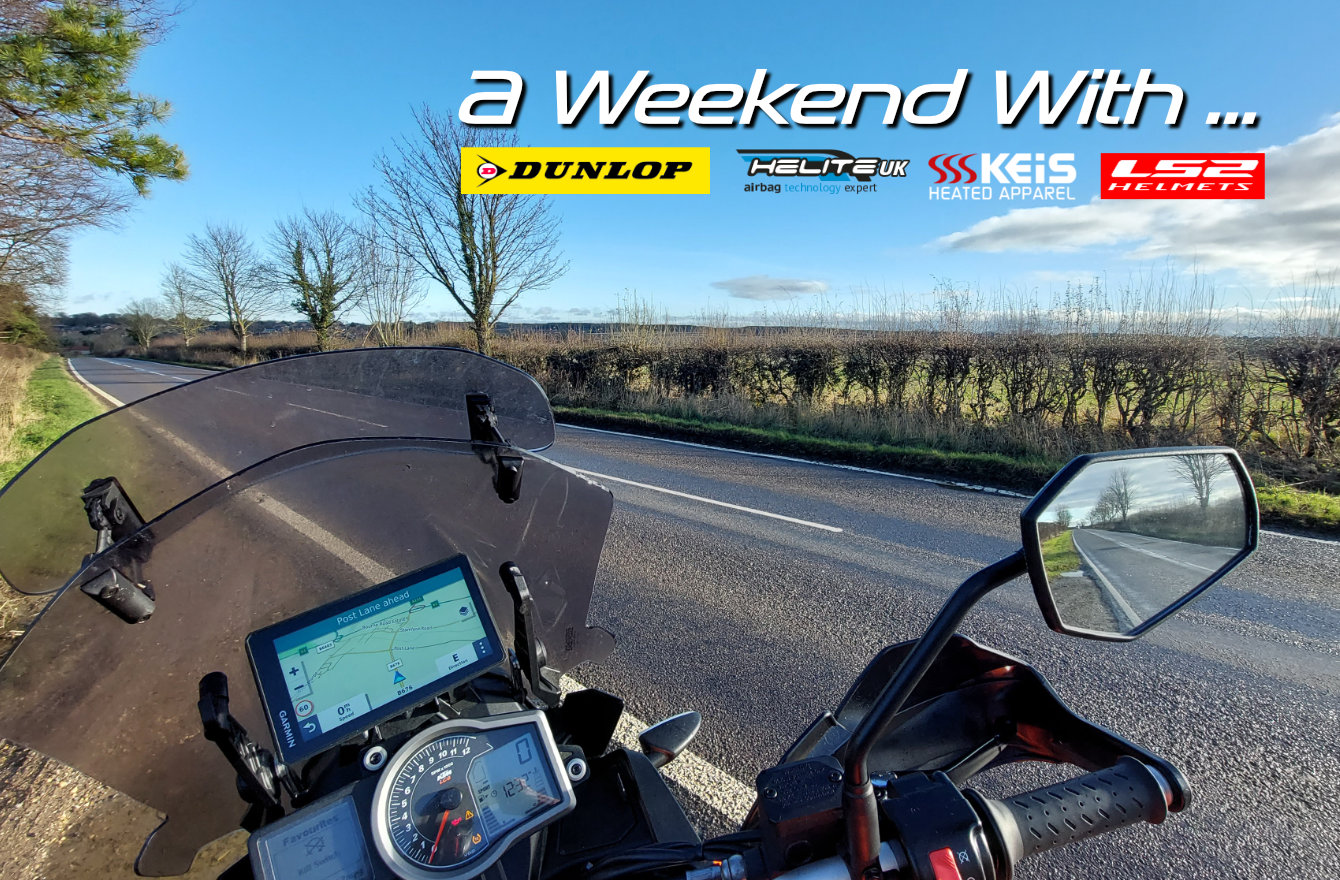
This gives me the none too subtle segway into last weekend’s ride. What was I doing out on a motorcycle in five-degree temperatures and filthy roads? Other than having an excellent time riding motorcycles and pretending it is work.
Keis G301 Heated Gloves
Had you asked me a few weeks ago, “How do I keep my hands warm on a motorcycle?” I would have pointed you at the Keis G701 Heated gloves. But life moves ever onwards and if warm hands are your desire, the new Keis G301 gloves should be on your shopping list.
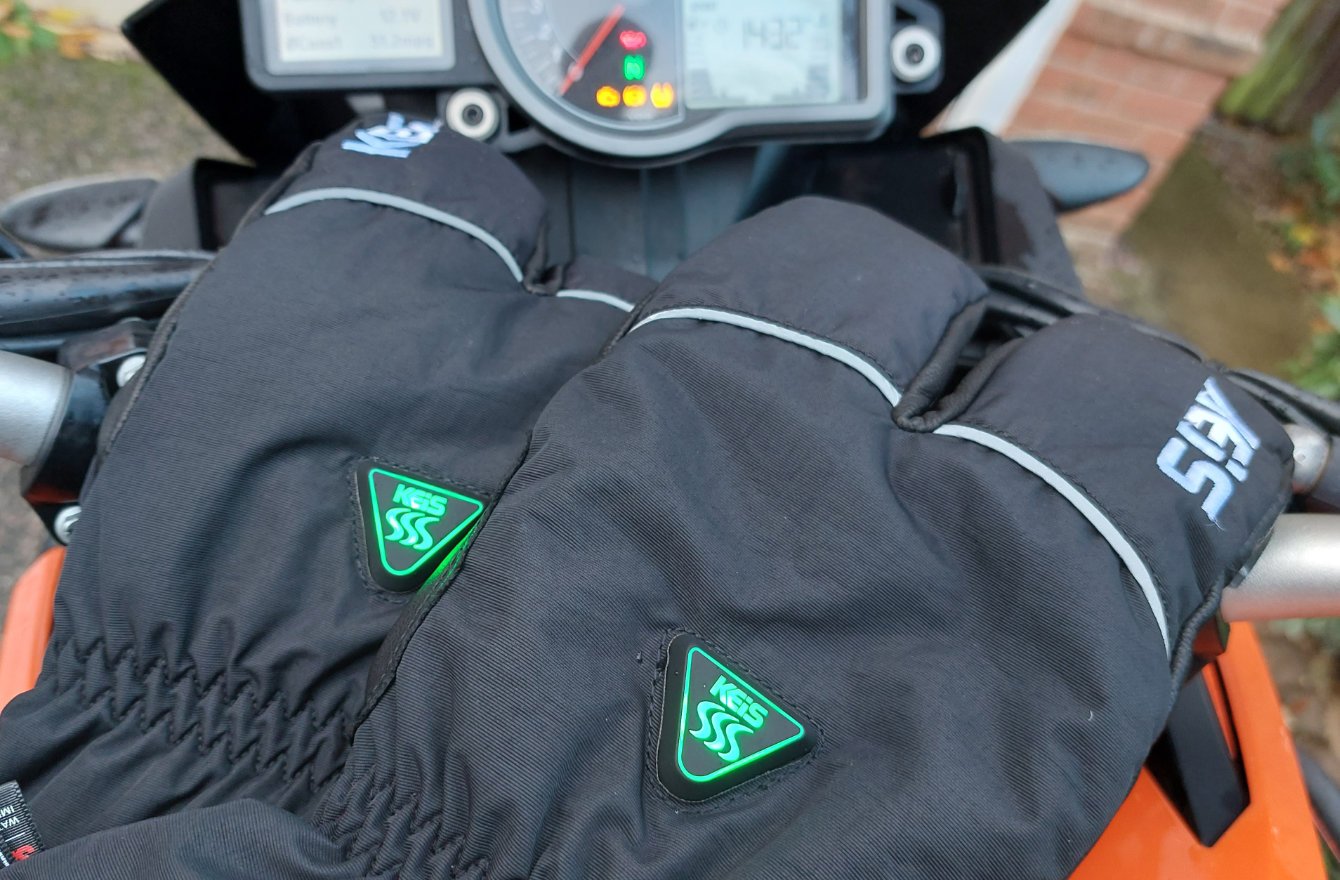
The Keis G701 gloves are five-fingered, heated and have armour on the palm and knuckles and are excellent. The G301 are three-fingered, don’t have armour but offer more warmth.
I’ve used the G701 for hundreds of miles. The Keis G301 are relatively new, but I have used them on an extended ride in near-zero temperatures and on several typical damp December days.
The three-stage heating controller on the back of the glove will be familiar to anyone who already has any Keis heated clothing.
The short explanation is – The controller is built into the gloves. Add 12v and press the triangular controller on the back of the glove to turn it on. To change the temperature setting, press the triangle again. There are three settings Low, Medium and High.
There is a fourth setting – Off – in which case you still have a pair of waterproof and warm, even without the heating on, gloves.
These are now my first choice for any winter ride. They are cosmic, and if you are wondering about the three-finger design. It takes all of two corners to get used to.
LS2 Explorer Helmet
 Being someone who has spent the last few years in flip fronts, the LS2 Explorer is quite a change. My initial impression after a 50-mile ride on a sunny winter afternoon was the helmet was comfortable, quiet for a carbon helmet, and the visor was amazingly clear.
One dry day does not a road test make, and since then, I’ve covered many more miles and fitted a Sena 10C to the Explorer.
The helmet remains comfortable and quiet, and the visor is a work of art. The optical quality is outstanding.
Sadly, it hasn’t rained on me in any significant volume. I’ve had lots of drizzle but no substantial rain, so I’m still waiting to see if the peak on the helmet is as good at keeping rain from the visor as it is low winter sun.
Helite Touring Air Jacket
The jacket impressed me when I first started wearing it, and it continues to do so. Somethings you only find out about a jacket when you live with it, and the Helite Touring Air jacket keeps on surprising me.
 Last weekend I discovered that I could get to the chest pocket by opening just one stud. It is a small thing, but when reaching for my phone to pay for petrol, it saves a lot of faffing about.
I’ve used the jacket with and without the liner and have worn my Keis heated jacket underneath on some of the colder days. As with the LS2 Explorer helmet, I’m still hoping for a good solid downpour to try the jacket in the rain, but in the damp and the drizzle, there have been no problems.
And did I mention it has a built-in airbag? An airbag in a top-quality jacket that costs the same as a decent quality jacket and a back protector. That has to be worthy of investigation.
The best bit though is that feeling I get when I remember there isn’t a subscription for the airbag. Once you have bought it, there is nothing else to pay. Helite offers a safety check service, but that is only required after a few deployments or a couple of years.
It is worth repeating – Helite Airbags do not have a subscription charge.
Dunlop Trailmax Meridian Tyres
 A few months back, Dunlop sent a set of Dunlop Trailmax Meridian tyres for the KTM 1090, with a note asking us to test them and report back.
Roger said he preferred Bridgestone, Carle put Pirelli tyres on the other KTM, and we started a summer-long tyre test.
Now that the summer is over and the roads are covered in that damp, slippery goo that hangs around until we get some proper winter weather, I’m still running the Dunlop Meridians, and the performance of the tyre has persuaded Roger and Carle to run them next year.
Having ridden around 100 miles on the wet roads last weekend, I could still feel the warmth in the rear tyre 10 minutes after parking up and getting out all of the cleaning equipment.
Never once have the tyres shimmied on me as I crossed white lines in the wet or given me any reason to doubt them. They heat up quickly and give the KTM sharper handling than the previous tyres.
I’m certain the Dunlop Trailmax Meridians have a limit, but it is beyond me to find it, and when this set wears out, I’ll be replacing them with another pair.
And that was me last weekend … What about you?