When we asked the question “Do Modern Motorcycles Corrode?” we mainly received the answer: Yes. a short and to-the-point response, but I’m not so sure it is that black and white.
Thanks to Honda and the loan of an XL750 Transalp, we are riding through the worst of what winter has to offer, including several visits to the coast for some of that lovely salt-filled air to see if our corrosion theories are correct.
But as usual, I’m getting ahead of myself and need to backtrack a little.
Science Stuff
I last did some serious science stuff last century, but assuming my brain remembers science stuff correctly, it is important to have a control element. Something that establishes the natural order of things so that any changes are measured against a known baseline.
Our baseline is a degreased, then washed and dried Honda XL750 Transalp. When the bike arrived from Honda, it had covered two thousand miles and was showroom fresh. At first glance, it could have easily passed for brand new.
This isn’t unusual for press bikes. The bikes are always inspected, and any sins inadvertently committed by the previous rider are consigned to the parts bin. After a trip through the workshop, the bikes are cleaned and polished, and it was that layer of polish we wanted to remove to establish the fully naked baseline.
Protection
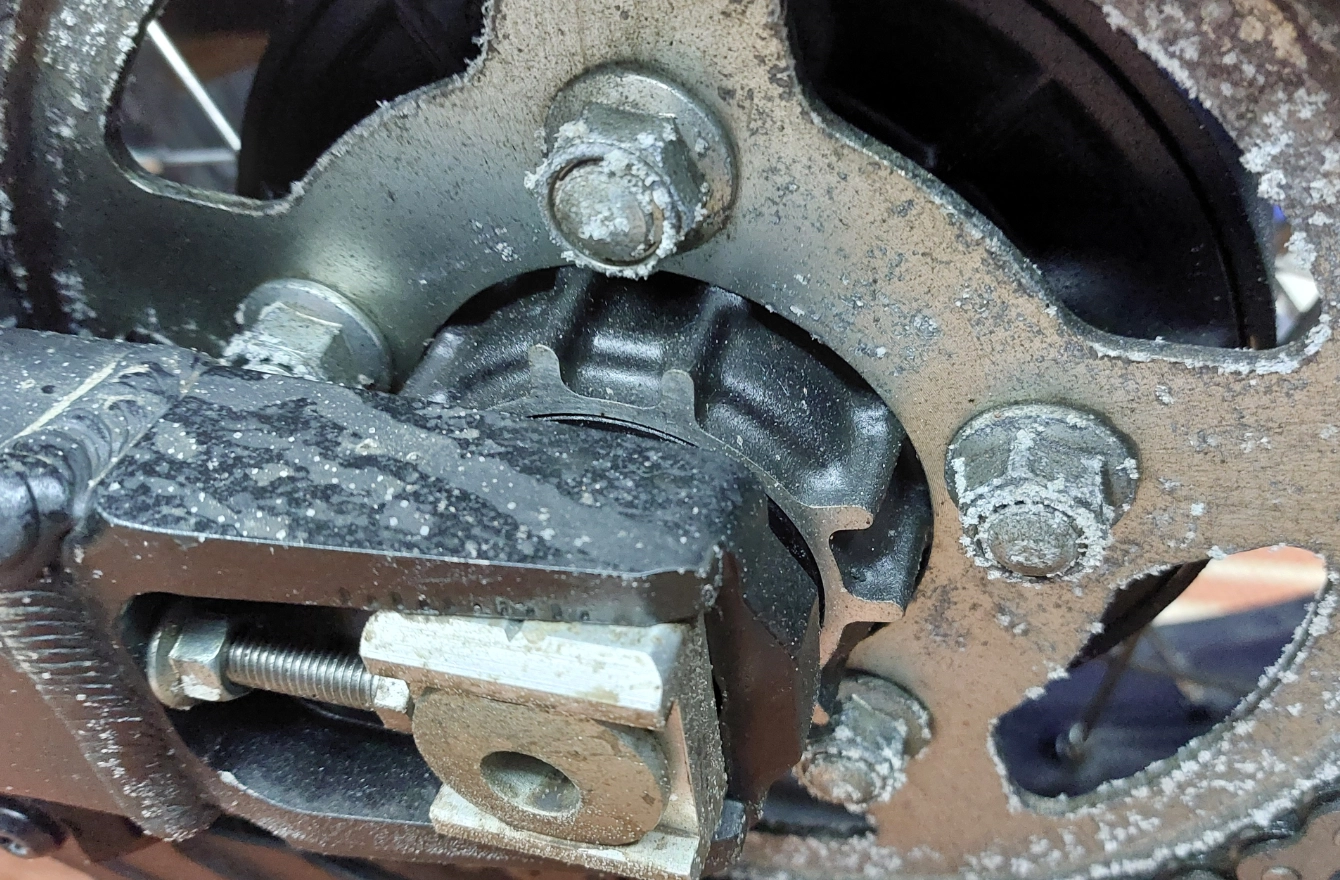
If you have never considered using Scottoiler’s FS365, ACF50, XCP or any other motorcycle corrosion protection – heck, even a covering of WD40 – the photo above shows you what happens during a cold snap when the gritters are out every night.
After a couple of days, without any protection or cleaning, the build-up of corrosion on the bolt heads and other fasteners was remarkable.
For the unprotected nuts and bolts, which are typically made of alloy, the oxidisation, rather than rust, was expected. Even without salt, this will happen; it just takes a little longer.
The salt-infused road grime, helped by the heat from the brakes, engine and exhaust acting as a catalyst, accelerates the oxidisation process. The most affected part we found was the brake pad pins. There was a build-up on the head of the brake pad retaining bolt, and when I removed it to get a better look, I could see the corrosion build-up on the exposed section of the pin.
Conversely, the brake callipers, which were anodised at the factory, show no signs of corrosion.
The rest of the motorcycle is corrosion-free, with only nuts and bolts in some specific regions showing the signs of winter’s abuse. The engine casings, frame, exhaust and fork stanchions are all grubby, but there is no sign of corrosion.
The rear sprocket and the retaining nuts were a surprise. Having drunk several mugs of tea and tried to work out why, exposure and spray from the rear wheel appear to be the cause.
Pro-Bolt
A few years back, I owned a KTM 1090 that suffered from juddering brakes. KTM didn’t want to know because, despite being under warranty, the disks were within spec and for KTM, that was the end of the matter.
I stripped, cleaned, and rebuilt the brakes, improving things for a while, but eventually, the judder returned.
While my colleague’s KTM 1290 was undergoing a Pro-Bolt “Bolt-up” – the process of replacing most of the bolts, nuts and washers on a motorcycle with Pro-Bolt stainless steel and titanium versions – I mentioned my brake issue to the Pro-Bolt technician who confidently announced, “I can fix that”, and presented me with a pair of Pro-Bolt Titanium brake pins.
Once fitted, the brake judder disappeared and, more importantly, never reappeared.
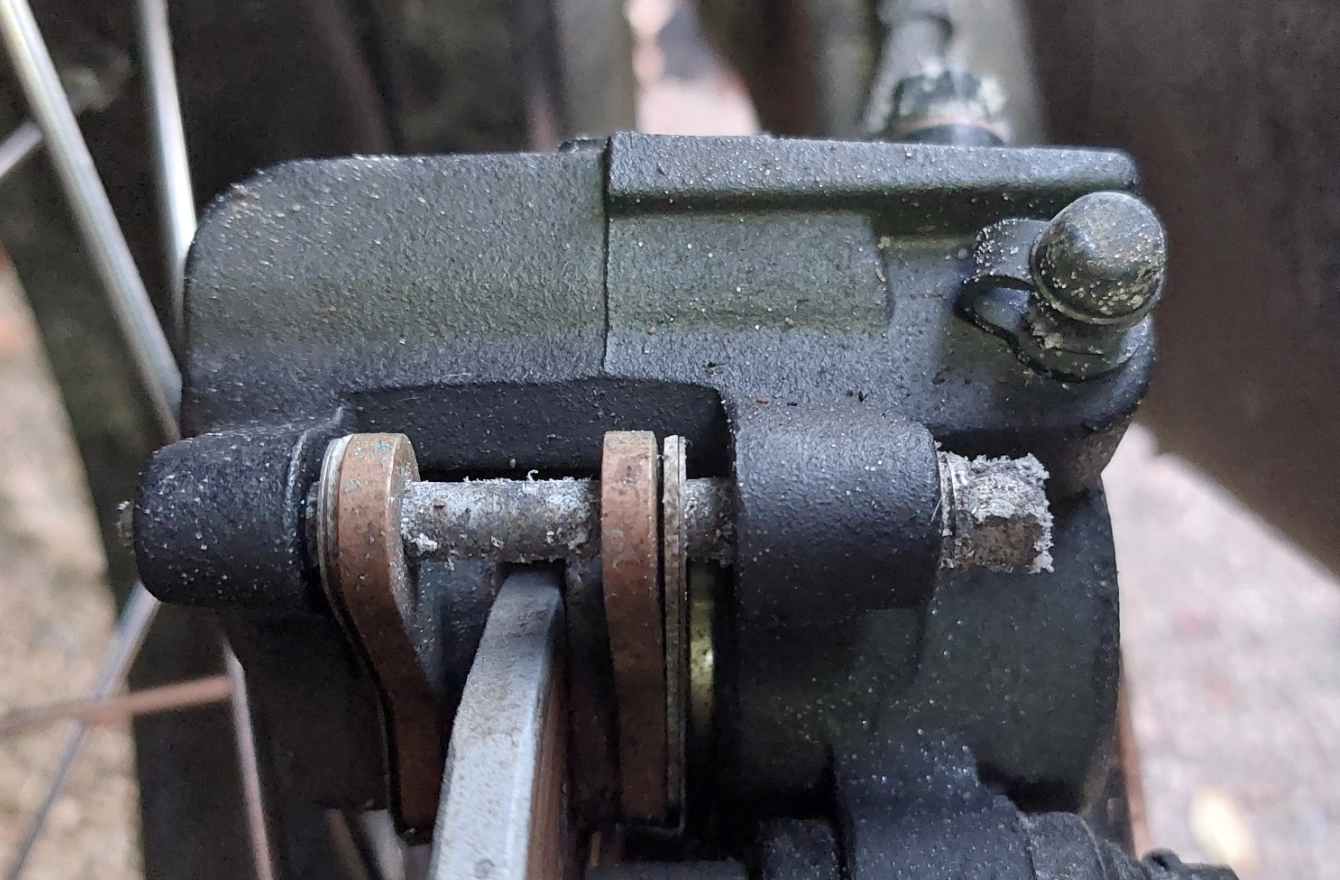
The foul weather has already started to oxidise the brake pins on the Honda. The brakes are still as sharp as you like and smooth to operate. Adding cleaning the brake pins as one of the items to be done with each service would prevent any problems. But eventually, the pins will become pitted and need replacing.
Or you can cheat by fitting the Pro-Bolt Titanium ones and forget about them.
To prove my theory, I contacted Pro-Bolt, who are kindly sending us a small selection of fasteners for the Transalp, including two brake pins for the front callipers.
I’ll fit these at the next wash and then – as we now have our control baseline – ensure the Transalp has a complete covering of FS365. Then, it’s back to riding in as much nasty weather as possible and comparing the Pro-Bolt fasteners against those covered in FS365.
I’ll also clean up a couple of the rear sprocket retaining nuts but not treat them with any protection so we have an indication of what would have happened if the bike had been left unprotected.
Judging by the thickness of the ground-up salt on the A52 in Lincolnshire at the weekend, there won’t be any difficulty when it comes to finding nasty stuff to ride in.