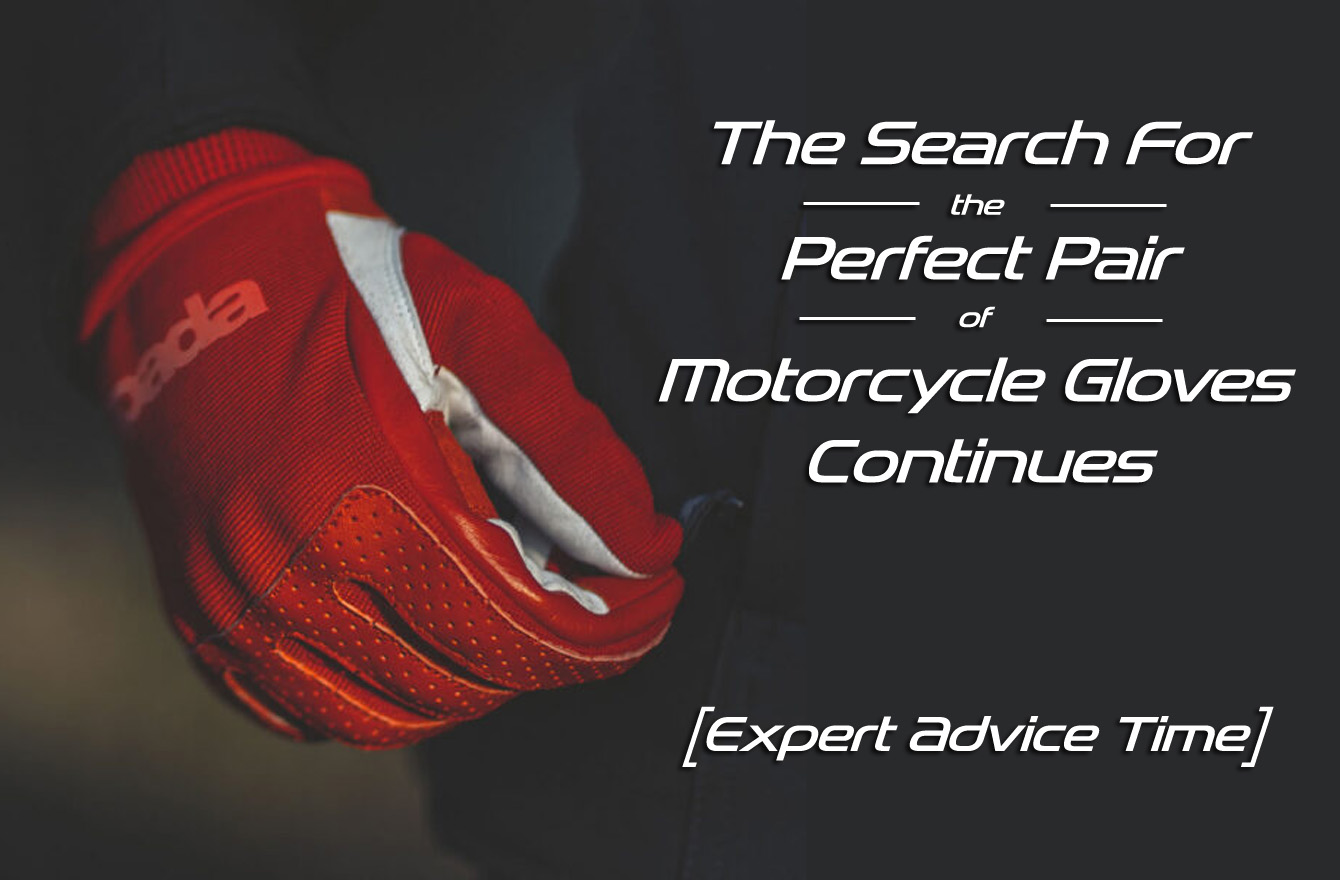

Humans have had hands for so long that I wonder what makes finding the perfect pair of motorcycle gloves so tricky?
Of course, I want the gloves to do more than keep my hands warm, yet in the 100 and something years we have had the delight of motorcycles, I would have thought the humble motorcycle glove would have evolved into the perfect specimen by now.
I’m obviously missing something, as my search for the perfect pair of motorcycle gloves has been getting me nowhere. It is time to take some professional advice.
Gloves or Motorcycle Gloves
In 2016 the European Union decided that anything sold for “Motorcycling” would be considered Personal Protection Equipment (PPE) and therefore required independent testing to a set of standards, with the results certified by an official body. Leaving the EU didn’t change this rule for the UK, as it was already baked into UK Law by the time we departed.
This nifty rule applies to gloves, jeans, jackets – in fact, anything sold as motorcycling clothing with the single exception of dedicated rainwear. To ensure that this wasn’t used as a loophole to avoid testing, if “rainwear” does anything other than keep the rain off you, such as featuring pockets for impact protectors, then the entire garment has to be tested for seam strength, tear strength and abrasion resistance.
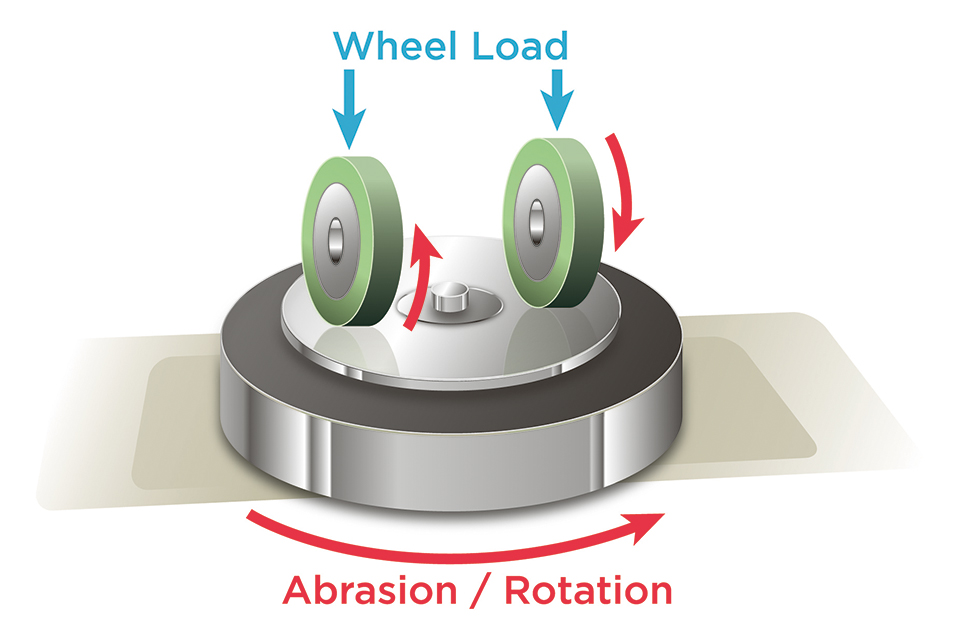 The origin of the 2016 EU Regulations goes back to a Directive from 1989 when a set of largely ignored rules were put in place, in the hope of giving motorcyclists some idea of what they were buying.
In turn, the 1989 legislation evolved into a series of standards published between 1997 and 2002.
Compliance was still voluntary. If a manufacturer did not claim their motorcycle clothing was protective, there was no need to comply.
As the 1989 legislation and the subsequent standards continued to be ignored, the EU doubled down and slapped PPE legislation on all motorcycle clothing and on balance, this has been a good thing.
Regardless of where you buy your motorcycle gloves from or where they are manufactured, if they are sold in the UK or Europe as Motorcycle Gloves, then they must comply with the Personal Protective Equipment Regulation 2016/425.
The realist in me knows that not everyone is going to play by the rules. You can buy motorcycle gloves from places that just won’t care about the rules. You can buy gloves from cleverly worded adverts that tiptoe around the words Motorcycle Gloves and so avoid the regulations.
I’ve seen one such advert running on Facebook. There are lots of motorcycle images in the adverts, but they are “riding”, not motorcycle gloves. It is a neat trick, but given the cost of a pair of motorcycle gloves, I think I’ll look for all of the right words and standards.
The Standards
If you would like to read the standard, there is a copy here, if you don’t mind paying for it. The short and by no means definitive version is that the standards check motorcycle gloves for abrasion resistance; two levels of knuckle impact protection; tear strength; seam strength and cut resistance.
Even after all of that, though, a few brands are still attempting to dodge the rules. You are looking for EN 13594:2015, and with KP if you want knuckle protection. In the UK these are often shown as CE and UKCA approvals.

Level 2 offers better protection than level 1. However, it is worth noting that many motorcycle gloves fail level 2 testing probably due to the thread used when seam stitching rather than the glove being substantially weaker.
Concept to Production
Knowing there are standards still doesn’t answer my question of how motorcycle gloves are designed and why I’m still searching for the perfect pair. Only one thing for it, I contacted several motorcycle glove manufacturers and asked them how the design process works.
Chatting with the people at Spada (via eMail), they kindly explained the process they went through when they were designing their new Oslo WP CE Gloves.
[Spada …] As you might imagine, it begins with what we call a range planning meeting. We are looking for a gap in our current range and if it is possible to fill that requirement while balancing cost-effectiveness with quality.
Once the idea for the gloves is outlined, an initial design and technical pack are created by the product development team and sent to manufacturing to produce the first sample.
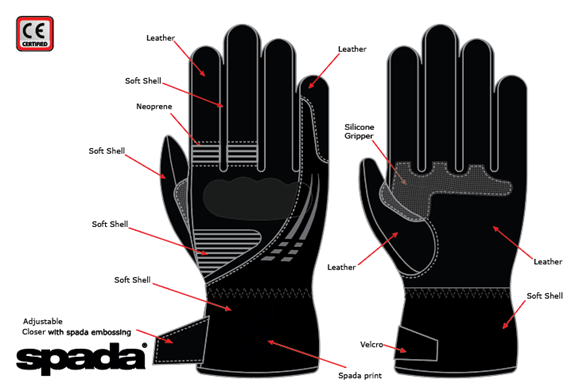 All design concepts at Spada are created with the CE certification process in mind. We will only develop a new glove style if we believe that the glove will exceed CE/UKCA testing requirements and deliver value to our customers.
Style is an obvious consideration, but our customers’ safety is at the forefront of our designs. Safe, Cost-Effective and with Style is how we approach the design process.
Manufacturing will produce an initial set of samples, and the process of refining the design begins. We are looking for how the design transferred from the concept to reality.
We then use a repeated cycle of continuous improvement, moving from sample production back to design and then on to the next generation of samples. Throughout this process, we are always looking for how we can improve the fit and performance of the glove.
Real-world testing provides invaluable information, as you can never really know how a product will perform until it is used on a motorcycle fulfilling its ultimate purpose.
At the end of the process, a Gold Seal sample is produced, and the motorcycle gloves are ready to go into bulk manufacturing and are added to the Spada range ready for customers.
When are Spada Gloves Standards Tested?
[Spada …] CE (EN 13594:2015) certification begins once the glove has been signed off at the sample stage. We want to be sure that the glove will achieve its CE status before being manufactured.
Equally, we wish to bring the glove to market as quickly as possible as it represents the next evolution of the product. It is a delicate balance, but after 27 years of designing and manufacturing motorcycle clothing, it is a balance we know how to achieve.
The CE/UKCA testing process is a series of tests designed to ensure that motorcycle gloves or any other motorcycle clothing delivers the intended protection against ambient conditions without unduly reducing the user’s dexterity in operating the controls and switches. In addition, the gloves are intended to give mechanical protection to the hands and wrists in accidents.
The CE and UKCA certifications that Spada motorcycle clothing has been awarded can be downloaded from the Spada Website.
Once the testing is complete and manufacturing is ready, the design teams go back to the start of the process, searching for the next gap, and begin designing the next pair of motorcycle gloves, boots, or any item of motorcycle clothing to add to the Spada range.

Clarity
My thanks to Spada for taking the time to explain their design process and to Alpinestars, who kindly wrote back to check that I had all of the information I needed.
My thanks also to Paul Varnsverry from PVA-PPE, who kindly talked to me for hours about motorcycle clothing testing standards and truly made the subject interesting and informative. A lot of the clever stuff in the article comes courtesy of Paul’s knowledge.
As for my search for that perfect pair of motorcycle gloves. I’m still looking but with a much deeper appreciation of what I should be looking for. Much better than the “hit and hope” approach I’ve been using.
That perfect motorcycle gloves are out there somewhere.