After spending the previous week delving into the wonders of Honda’s Africa Twin Adventure Sports ES [click here for part one], it was time to stop messing about, load the bike, and go somewhere … err… “adventurous.”
My colleagues had badgered me into trying motorcycle camping, so the arrival of the Africa Twin only increased the pressure to use the bike as Honda intended.
Whereas the Africa Twin is highly adept at ferrying the rider between trendy coffee shops, Honda didn’t invest the time and effort in refining it so we could drink lattes.
Given my off-road abilities and being in England, the chances of me going somewhere exotic and pushing back the boundaries of motorcycle touring were doubtful. However, we have our fair share of less-travelled roads that are worth investigating.
So, I loaded my newly acquired camping equipment, a couple of clean T-shirts, and the essentials of life and set about exploring the North York Moors and the coastline north of Whitby. Yorkshire—That is bandit country where I come from.
Luggage
The thing they never tell you about motorcycle camping is the space the equipment takes up.
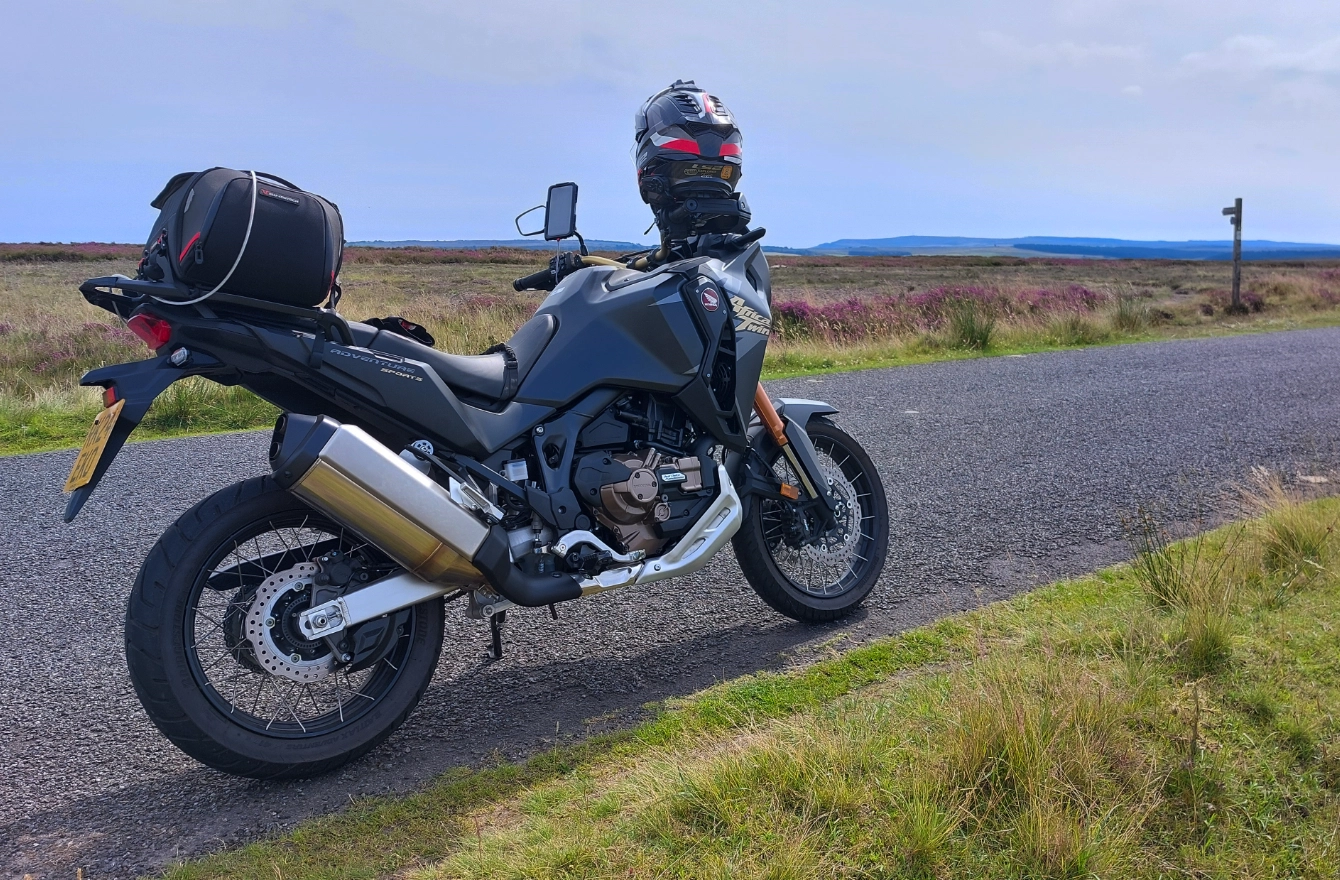
Modern camping equipment doesn’t weigh much—around 15 kg for everything—but it fills an SW-Motech 35-litre dry bag. As I’m sure my colleagues would prefer if I took a change of clothes and other essential supplies, this necessitated a second bag.
Granted, if the ATES I’m riding had some DUSC cases or the excellent soft pannier SysBags, it would be a lot easier, but adding two large bags, one across the ATES’s rack and the other across the pillion seat, was going to give me a good test of the handling with an odd load.
DCT in Manual
As I mentioned in the first article, the normally excellent DCT on the ATES I’m riding doesn’t always agree with my riding style. Now that the bike was loaded and I was riding with two of my colleagues, mainly on backroads, the issues, which are more irritations than any real problem, seemed to be magnified.
I tried every blend of throttle map (Sport 1 – 2 Drive, etc.) and rider modes (Urban, Rain, Tour, etc.), but I couldn’t find one that matched what I thought should be happening.
Perhaps the most perplexing situation occurred when riding through the hills and dales around Goathland. After being stopped, I made a tight right turn, followed by an uphill climb that curved away unseen to the left. The DCT was in 4th, and the engine was labouring at 30mph.
I couldn’t understand why the DCT had the revs so low, and while the engine was pulling, it felt as if it was making tough work of a simple requirement.
The answer is to go manual. The gearbox is slick, and there is still a little Honda magic working. If you get slow, DCT will auto-downshift for you, ensuring you are never chugging out of a corner, and if you get near the red line it will upshift. Everywhere inbetween though, its your choice of gear.
DCT is a technological marvel, but for me, and it might be just me, there is something left of centre with the latest version and the mapping on the ATES. In manual mode, though, the seamless gearbox is a delight.
A slightly more tactile feel to the gear lever “switch” under my left foot would be welcome, but if you think the best quick shifter you ever used was “buttery smooth”, try a DCT in manual. That defines smooth.
The Moors
Having lived with the Africa Twin for a week and now discovered the sweet spot where my desires and the flexibility of the ATES met, I was off over the Moors and loving every minute of it.
The run from Elizabeth Botham’s Tea Room in Pickering, along the Wheeldale Road, across the ford and on to Egton was the start of fully appreciating the ATES.
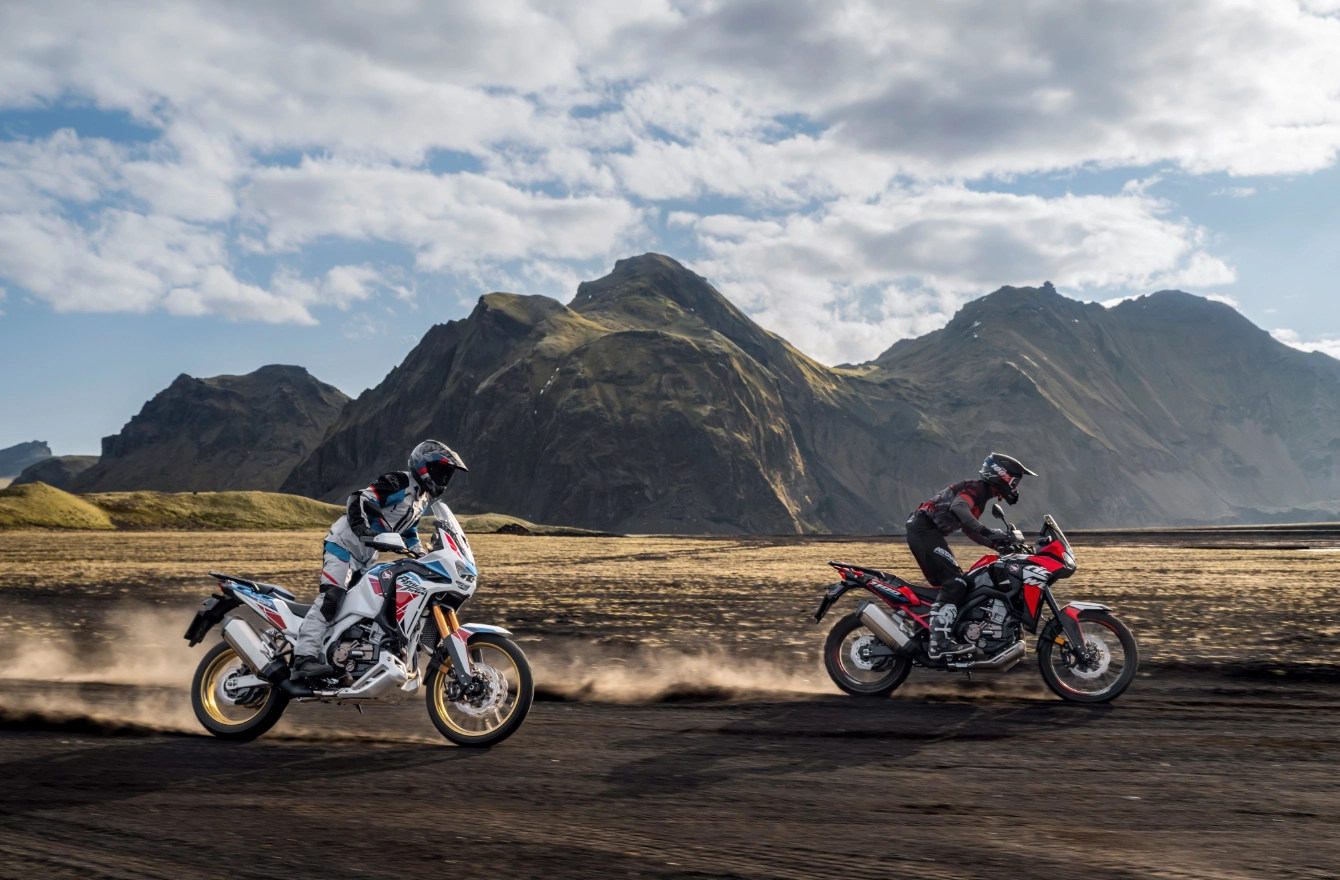
It is a very capable touring road bike, and in the right hands, I’m sure it could be made to do all sorts of fancy stuff on rough terrain. But you don’t need to ride through volcanic ash to understand what Honda designed the Africa Twin to do. Just take it to the North York Moors.
The tarmac’s bumps, undulations, and vagaries are smoothed out. Tight turns and uphill climbs are an absolute non-event when running in pseudo-manual mode. Gravel tracks go unnoticed, and that is before thinking that the fancy gravel mode might be needed.
Coffee shops be damned. This is why you buy an Africa Twin.
The Morning After
The next morning, rather than head directly home, the desire to repeat the ride across the Moors was too strong to resist. I had half an idea to return to Wheeldale Road, but my enjoyment overpowered my navigation skills.
I rode on whatever strip of tarmac or gravel was in front of me, and I didn’t really care where I was. Cool morning air, bright sunshine, stunning scenery, and with another vehicle only occasionally coming into view, I was having one of those memorable rides. [Check out the short YouTube here. Ed].
All things come to an end, and eventually, I ran out of back roads and found myself somewhere on the A64 near York. From there, it was an easy route south on the A1 towards home.
One More Challenge
For what feels like forever, there have been road works and the inevitable traffic jams on the A1 between the M62 junction to the north and the A638 junction to the south. Although the work is scheduled to end in September 2024, it feels more like a permanent feature that impacts both sides of the carriageway.
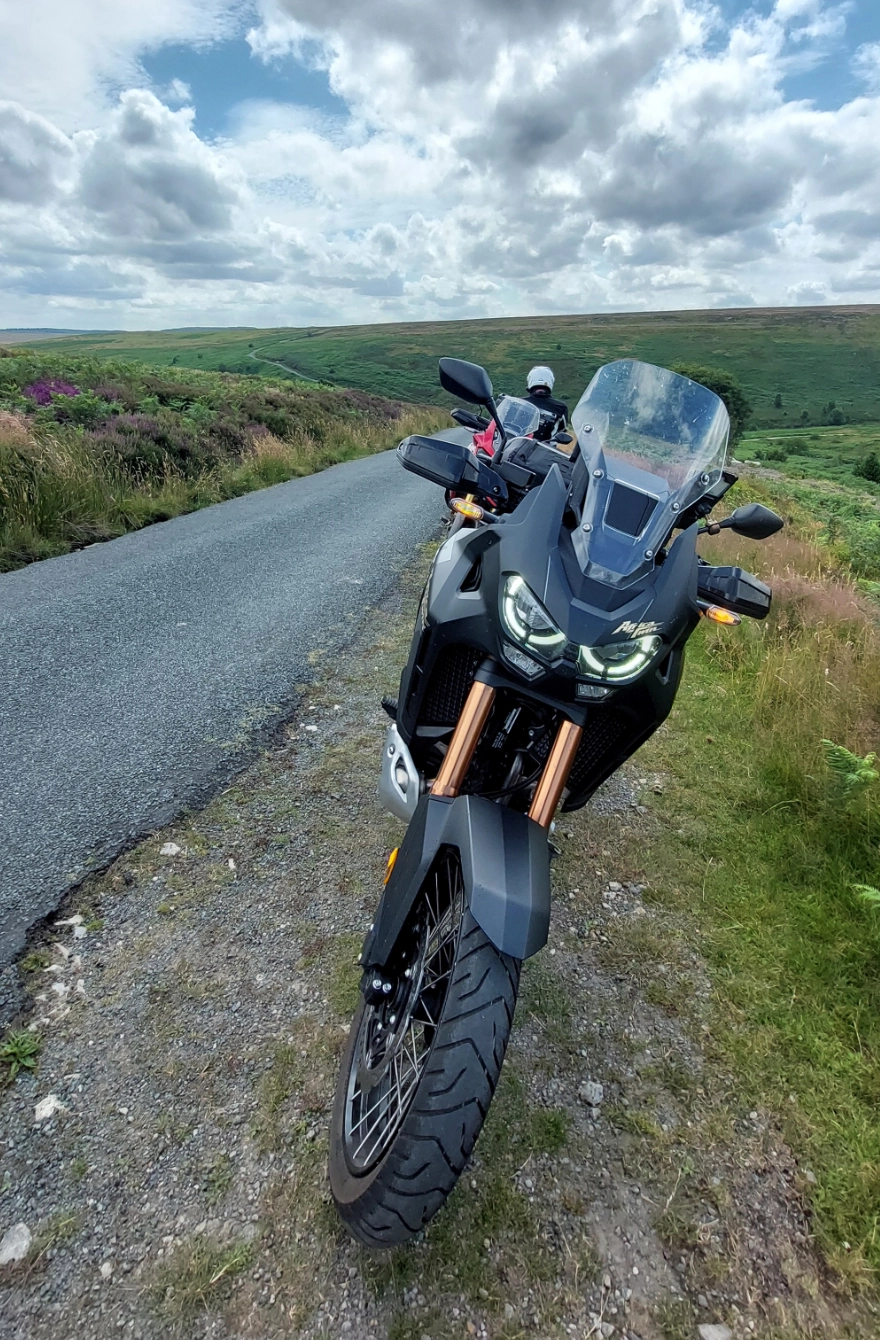 Typically, it is never an issue, as you’ll find us on a B road somewhere, staying away from the traffic, but if I wanted to know what the ATES is like on a motorway haul, I needed to do the miles. Having forgotten about the road works until I arrived at the back of the traffic jam, it was time to discover what the ATES was like when filtering.
With the DCT gearbox in any mode, filtering is simple. There is no clutch to nibble at when travelling at less than walking pace, and the fuelling is smooth and predictable.
Even the self-centred arse, who was determined to block my path between the two lines of traffic, wasn’t an issue.
The driver behind the self-proclaimed enforcer of his personal set of road rules had kindly left me a gap, so a quick flick right, left, and down the outside of the 4×4 roadblock was all it took to continue my merry way. It is the simple things in life that bring us pleasure.
Once clear of the roadworks and with ample fuel thanks to the 24-litre tank, I could comfortably finish my 187-mile one-stop trip home at an indicated 80mph with my music playing. There may have even been some singing, but it’s best not to mention that.
When you need to do boring long-haul miles to get somewhere interesting, the ATES is a willing companion. Perhaps the only consideration is to cut back on the morning coffee to maximise the advantage the larger tank brings.
Bottom Line
The Africa Twin Adventure Sports ES is a highly capable motorcycle. It can do it all but comes into its own when you head to the road less travelled and get away from it all. Honda built it with that sort of journey in mind.
Green lane riders may say it is too large and heavy, but perhaps the more difficult question would be whether Honda’s own NT1100, which costs £5,000 less, is the better all-rounder… It is a tough call.