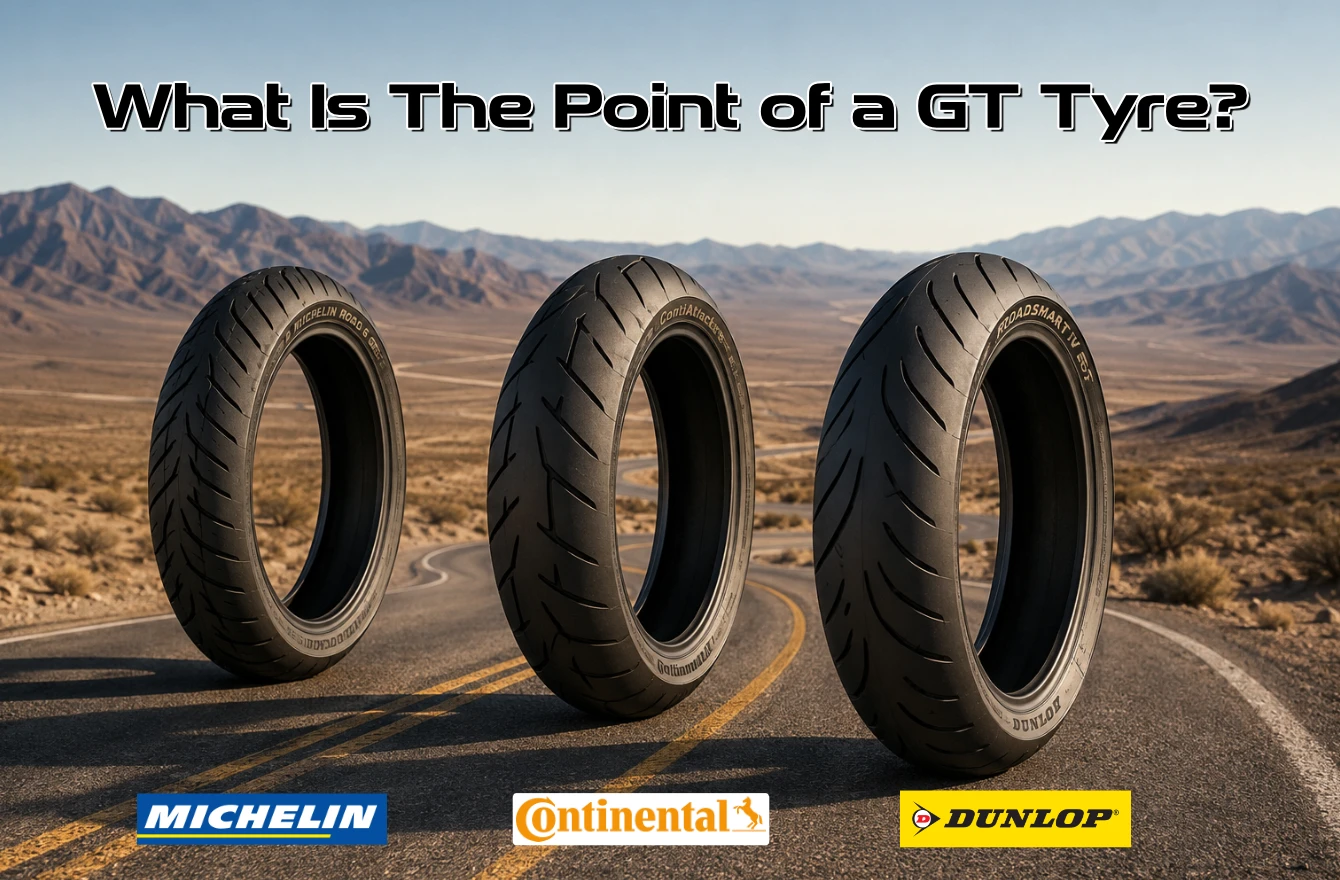
I fitted Dunlop SportSmart Mk3 tyres to my Multistrada at the start of August. Considering the weather has now turned cold and damp, most riders would tell me that they are not the best choice for a winter tyre, but I have a theory I want to test.
It is fair to say that we all have an opinion on motorcycle tyres. As the performance of the tyres can contribute in equal measure to our joy or frustration when riding, I guess it is to be expected that we become emotionally involved with tyres.
I’ve had some that fell into corners and some that didn’t work for me despite other people raving about them. Roger had some nasty OE tyres that put him off an entire brand until the manufacturer gave him a set of genuine tyres and pointed him at a racetrack. Billy gets astounding mileage out of whatever he fits to any bike and, therefore, loves whatever he is currently using. And Carle likes anything he can buy for significantly less than retail.
Emotions play a big part in our tyre choice, so I decided to do something more scientific, and that is why I’m using Dunlop SportSmart Mk3 tyres – a tyre thought to be for summer sports riding – in winter.
Dunlop SportSmart Mk3
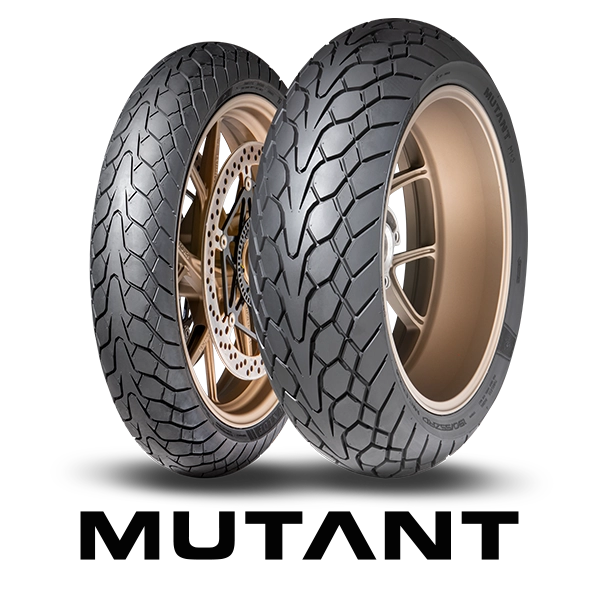
The selection of tyres Dunlop manufacturers for the Multistrada ranges from the all-weather Dunlop Mutant – akin to a Supermoto wet, which is designed to give the grip of a sport tyre, but with the tread pattern of a racing wet – through to the SportSmart TT – a road legal track day tyre.
 Except for the Mutant, the core tread pattern of the excellent Roadsmart IV can be seen on the SportSmart Mk3 and the TT. The sportier the tyre becomes, the tread markings at the edge reduces to increase the amount of rubber available at the edge.
As you would expect, the compound also changes through the range. The TT has the softest compound, which heats up quickly but will wear a little quicker as it trades longevity for stickiness. The RoadSmart IV gives longer life as the compound is designed to wear better with heat being extracted from the tread block movement.
Tread Blocks and Compounds
The tread blocks in a tyre serve several different purposes, but the main one is to give the water under the contact patch a way to escape.
As the water under the tyre is squeezed by the weight of the bike, the water – which can’t be compressed – needs somewhere to go, and the tread grooves provide that exit route, allowing the raised block of the tyre tread pattern to grip on the dry (drier) road surface.
Take the grooves away, and the water sits between the tyre and the road. At slow speeds, this isn’t too much of an issue, but ride fast enough, and the bike will start to “float” on the water under the tyre – aquaplaning.
 The secondary effect of the tread pattern is to help the tyre compound to heat up. The tread blocks move as we ride, generating heat in the tyre. Then, there is friction with the road surface and the tyre compound to factor in.
In short, tyres are very sophisticated pieces of motorcycling technology, all of which brings me back to why I’m running “sports” tyres in Winter.
Wales
The idea started in Wales 2,000 miles ago when I noticed Roger would drop back whenever it started raining. As soon as the rain stopped and the roads dried up a little, Roger would catch back up.
The amount of water being thrown up by the Dunlop SportSmart Mk3 was impressive, and Roger was dropping back to avoid the spray. If he had been on the Africa Twin, the fairing and screen would have deflected the spray, but as this was Wales, Roger had opted for his naked Suzuki GSX.
If Dunlop SportSmart Mk3 tyres work well in the rain and will heat up quickly as they have a softer compound, is it necessary to change them for Winter?
Naturally, I’d rather be on Mutants or RoadSmarts IV when it is pouring with rain, but that isn’t anything to do with Winter; that is just the desire to be on the perfect tyre for the conditions. If I could change my tyres every time the weather changed, I would.
The question seems to boil down to heat. Will the SportSmart Mk3 tyres, with a reduced tread pattern but a softer compound than the RoadSmart IV or Mutant, get warm enough, quickly enough, to stop me from losing the front or high siding myself?
I think they will, even in the coldest months in the UK, as long as my ego doesn’t do something dumb for the first 10 miles.
But never mind emotional belief; it is time to get scientific.
Ground Rules
I may be knuts, but I’m not crazy. This isn’t a find the limit by crashing the motorcycle tyre test. I’ll be riding “normally” – whatever that means – not holding back but riding to the conditions.

I’ll take road and tyre temperature readings at the start of a ride, work out how quickly the tyres warm up and what the temperatures are like after 50-plus miles. Speed is going to have a lot to do with how fast the tyre warms up, so the first 10 miles will always be on fast A roads.
I’m also going to need two sets of figures: one for the dry and another for the wet. [Remind me again why I’m volunteering to ride in the freezing rain – oh yes – research]
Baseline
All scientific research – apologies to any real scientists – needs a baseline. A set of figures to compare the data against. None of the equipment I’m using has been calibrated. It is the same tyre pressure gauge I’ve used for the last 4 or 5 years, and the temperature gun might look fancy, but cost £15 from Amazon. A little latitude in the figures should be expected.
The SportSmart Mk3 tyres are in good condition, and I’ve ridden 2,500 miles (2,521 to be exact) on them. The tyre pressures are set according to Dunlop’s recommendation for the SportSmart Mk3 on a 2015 Multistrada 1200 at 36/42 Psi when cold.
On a strangely warm December day, starting with the Multistrada having been in the garage for a few days, here is the baseline data.