
In what feels like my never-ending challenge to keep up with my colleague Roger, I have been sneaking off on track days, trying to learn how to go faster. My problem isn’t opening the throttle more or braking later; it is about being on the right lines so that I can carry more speed overall.
One of the biggest obstacles to working out what I’m doing wrong, while being heavy on the herbs and trying to nail an apex, while cranked over, scraping my boot, is having the brain space to realise that what I’m doing is wrong.
I’m scrubbing the tyres to the edges, using fuel at an alarming rate, and even catching some people, but others I watch slowly pull away from me.
Horsepower doesn’t make that much difference. I’ve tried track days on 150 HP bikes, 100 HP and even 80 HP, and other than the obvious power out of a slow speed corner, once I’m into the faster, flowing bends, my speed is the same.
What I need is more brain power.
Brain Space
It isn’t uncommon in all forms of top-level sport to find performance coaches – essentially psychologists with a focus on stopping your brain from getting in the way of itself.
Having decided that using a performance coach when I’m messing about on a track day is sillier than having a ZX10 on slicks with tyre warmers and then going out in the novice group, I opted to read a few books to try to understand how to stop my brain from redlining.
Where Can I Find …
Anticipation
Many of the books discuss telemetry, data analysis, and using this to anticipate what comes next rather than react when you arrive. As you know what to expect, you are not burning up brain power grappling with a situation as it occurs, what the books refer to as “reducing cognitive strain and improving consistency”.
It would be a wonderful idea to have a data engineer to understand what was happening, and a chassis engineer who could take that feedback and adjust the way the motorcycle reacts. It’s never going to happen, and the good news is that I don’t need any of that stuff.
The metronomic efficiency exhibited by some racers comes from using reference points around the track. Typically, these are thought of as braking markers, turn-in points and apexes. Points on the track side that you pass.
One of the texts I read discussed expanding these reference markers to specific locations on the track where I needed to be. Not a point as the side of the track that I brake when I pass, but the place on the track where I need to be when I start braking.
The concept is that rather than thinking of the apex as a destination, it becomes a clipping point between the entry and exit points, to make as smooth a line as possible between the two.
Repeating this process, lap after lap, creates familiarity, from which comes anticipation and helps build the brain space to make adjustments for an even better line.
It won’t happen in one lap, but replacing reactive riding with repetition frees up brain space to make changes and improve.
The Hive Mind
Sometimes called the lemming effect (those suicidal birds rodents (thanks Carle) that follow each other off cliffs), the hive mind is a dangerous place to be.
The hive mind effect stems from having an overloaded brain and following the actions of the pack, as our cognitive abilities are impaired. In plain English, this is why we make poor decisions when we are under pressure.
Even after all the reading I’d been doing over the preceding weeks, I found myself joining the hive mind and almost doing something stupid.
Cadwell
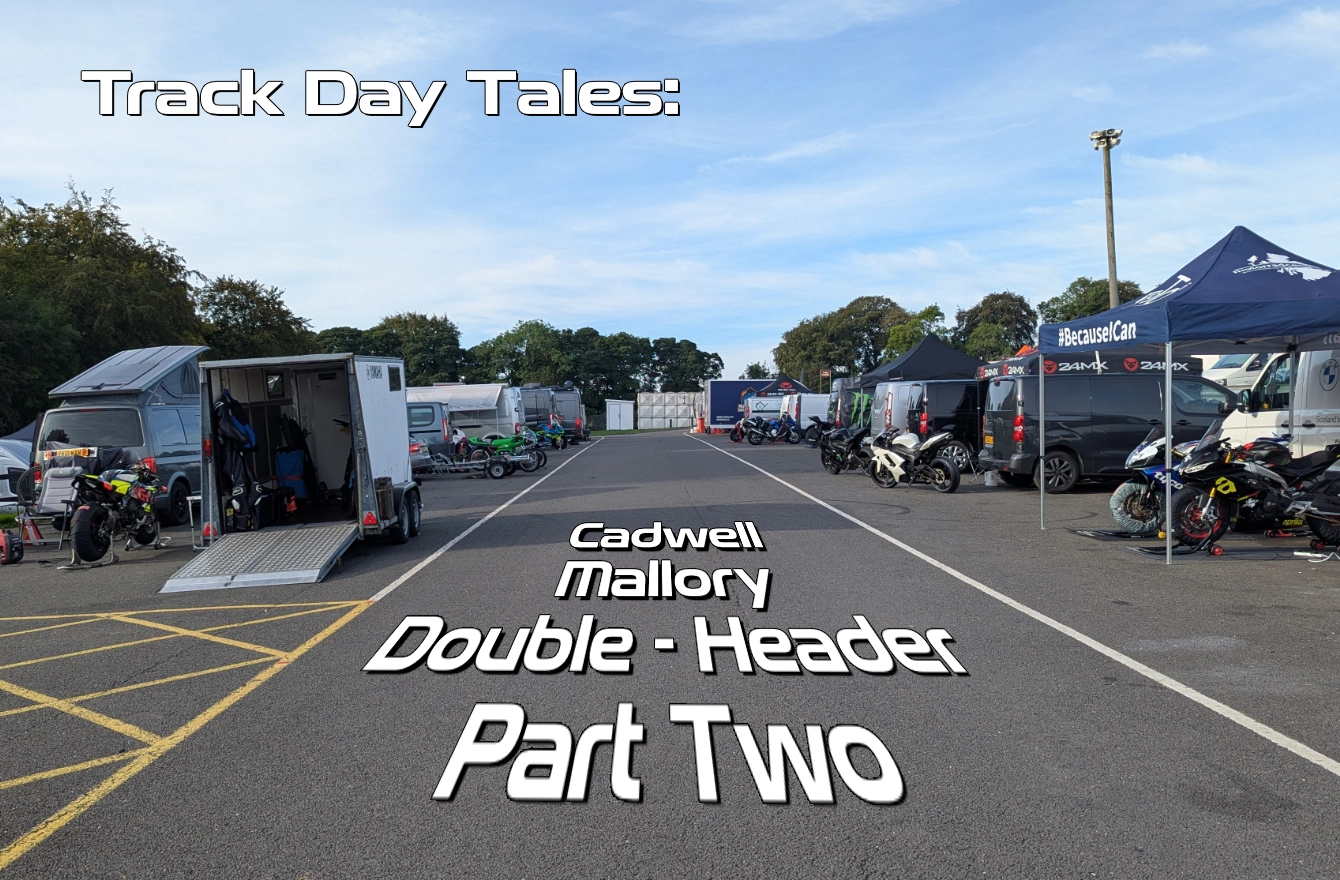
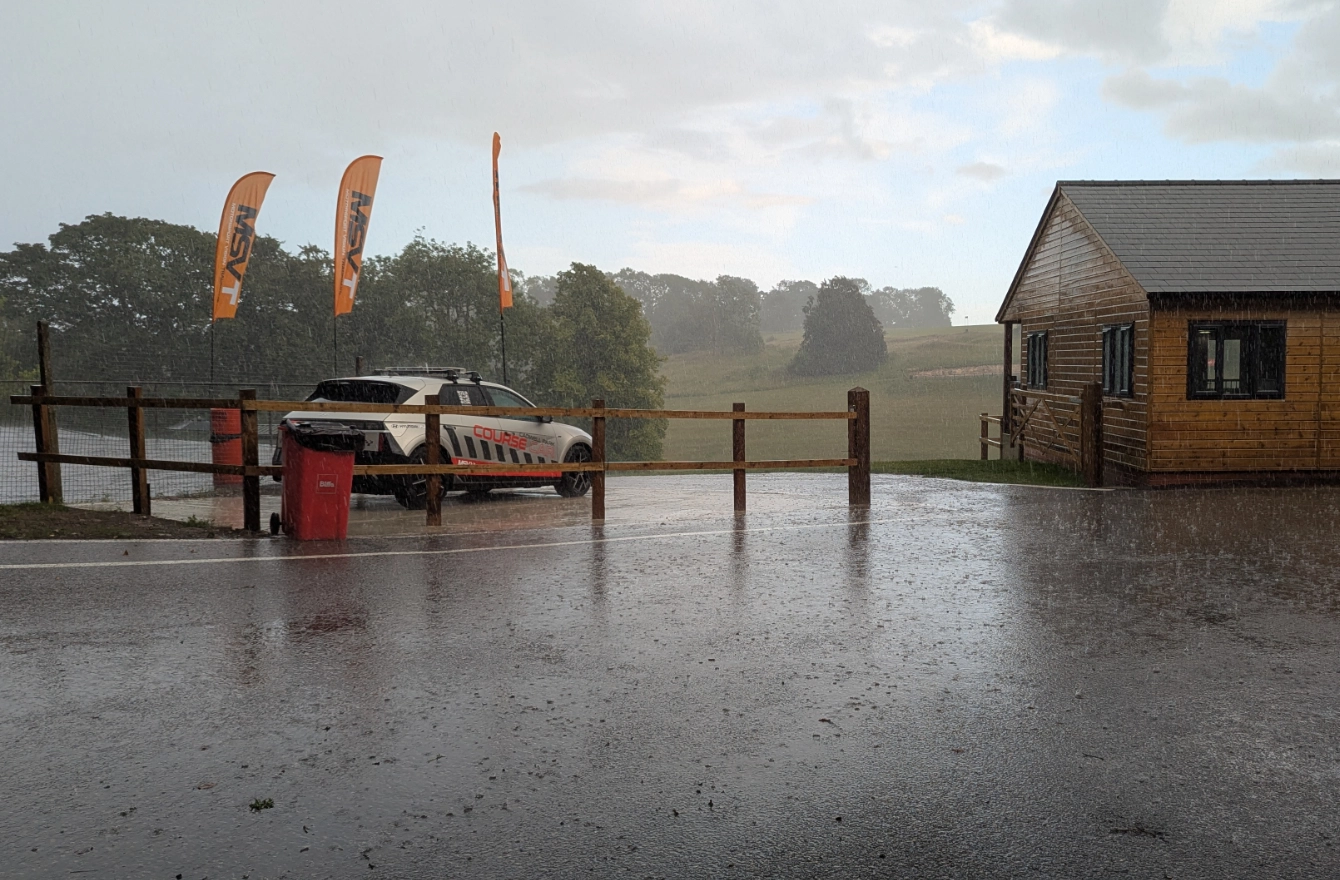
Having arrived at Cadwell Park for an evening track day, I was counting myself lucky that the rain storm I’d ridden through on the way there had been heavy but brief, and it hadn’t soaked my leathers.
Having gone through the noise testing, signed on, and attended the briefing, I stood in the paddock waiting for the call.
Out on the horizon, an ominous black cloud loomed, appearing to be passing by, but could just as easily come in Cadwell’s direction.
The call went out for the advanced group to assemble for their sighting laps, followed by the second, and then the final call. The assembled pack in the paddock started their two laps behind an instructor, and as the second lap started, the first raindrop fell.
The rain was falling constantly as the advanced group finished their laps, while those of us in the other group had all answered the Tannoy calls to assemble in the paddock.
By the time I joined them, the rain was falling with dramatic purpose, but because the others were lined up in the pouring rain, I found myself sitting there ready to go.
The marshal checked my helmet strap and back protector, reinforcing my crazy notion of riding around Cadwell, and there I sat, fully connected to the hive mind, in the pouring rain on three-year-old fake Michelin tyres (OEM), waiting for the session to start.
Thankfully, the desire to follow the hive mind was broken by the first cold trickle of water to my nether regions, which happened at the same moment that the Clerk of the Course told us to go away and wait.
In those conditions, the only person who was going to be setting lap times was Noah in his Arc.
The Racing Line
I’m still searching for the optimum racing line at any track, and joining the hive mind and following others is one way of learning, which assumes that what they are doing is correct.
Following others also occupies more brain power than you might imagine. You aren’t anticipating what comes next; you are reacting to what the other riders are doing.
Having decided that a soaking wet Cadwell wasn’t for me and that giving up the cost of the evening track session was cheaper than throwing Screamer at the scenery, I wrestled my way into the excellent Oxford Rainseal waterproofs and headed home to book another track day.
Ironically, two miles south of Cadwell, the roads were dry and the sun was out. There is always an upside, and in this case, it was an evening ride through the Bardney Bends, taking the long way home.